Lodi Eye
LodiEye provides additional information on trending stories / topics published by local media and shared on local social media accounts.
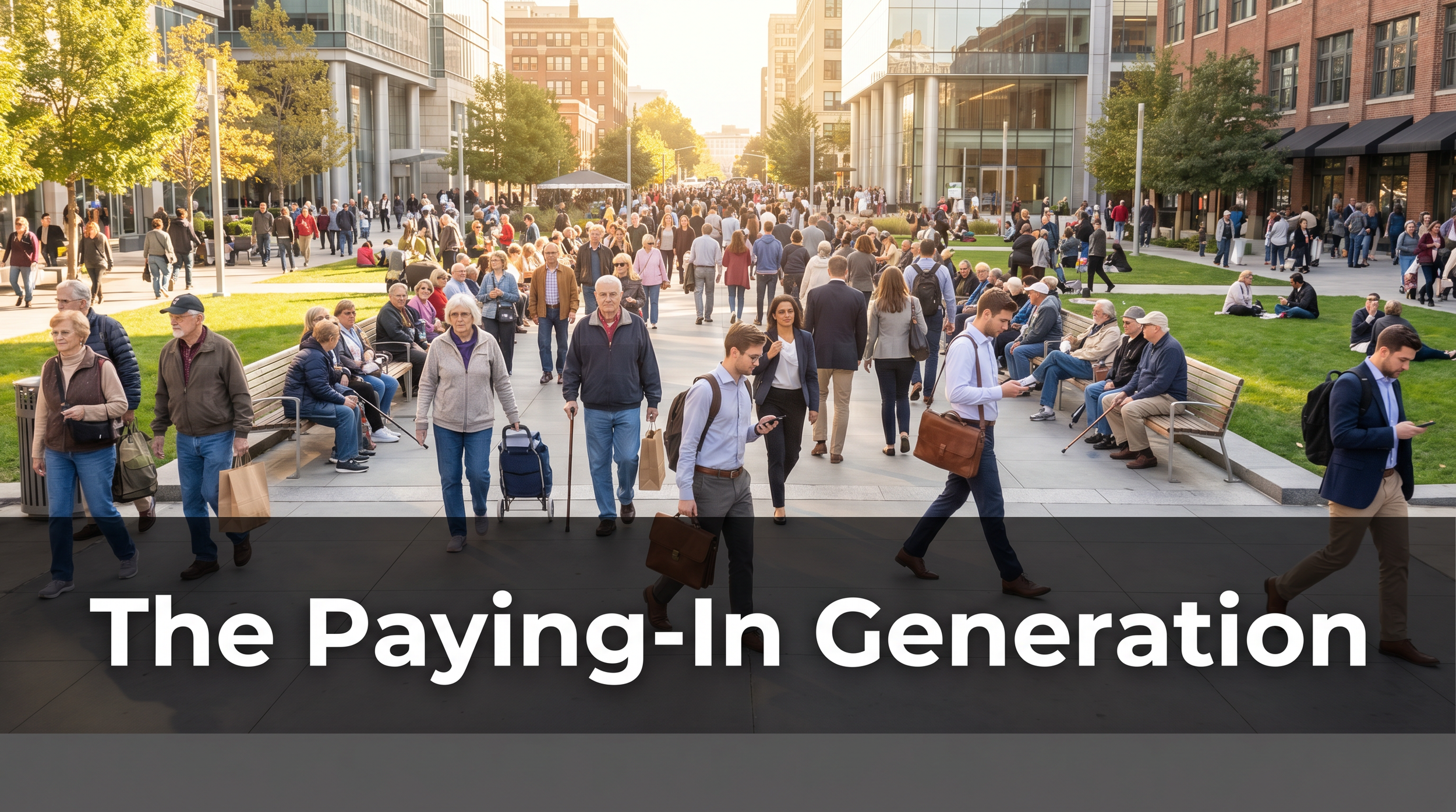
The Paying-In Generation
The United States now runs three demographic and fiscal clocks simultaneously: an aging population entering retirement at the fastest rate in the nation's history; a working-age population that has depended almost entirely on immigration for growth since 2019; and a federal debt service bill that is the fastest-growing line item in the budget and projected to more than double by 2036.
Current administration policies have contracted the second lever while enlarging the third — a combination that nonpartisan fiscal forecasters, including the Social Security Administration's own actuaries, project will accelerate the depletion of the Social Security and Medicare trust funds. This report documents what the underlying data shows, using primary sources from the Congressional Budget Office, the Social Security trustees, the Federal Reserve research banks, Penn Wharton, the Peterson Institute, the Committee for a Responsible Federal Budget, and ideologically varied policy research institutions.
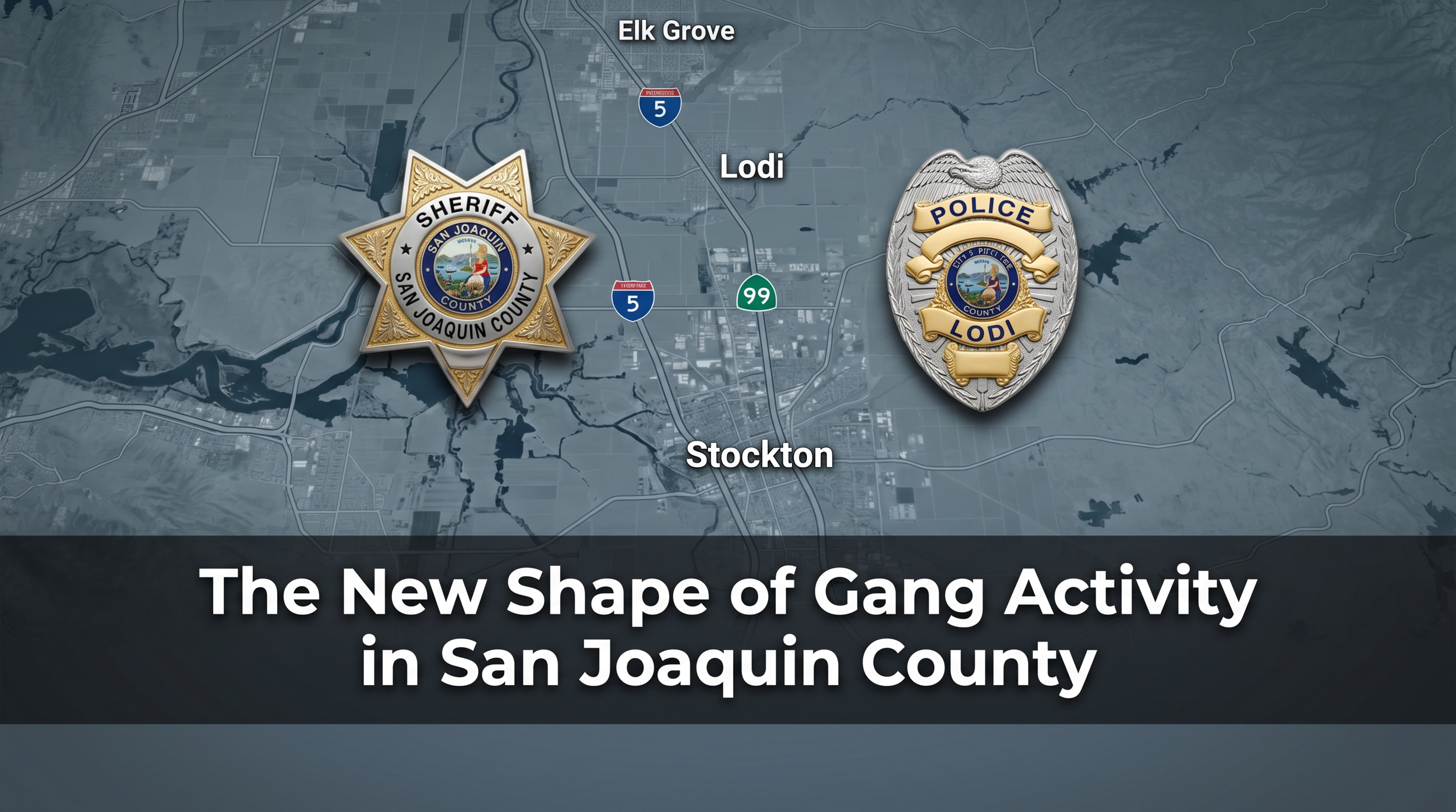
The New Shape of Gang Activity in San Joaquin County
For three decades, organized crime in San Joaquin County could be explained through one rivalry: Norteños versus Sureños. That framework is no longer sufficient. In 2026, at least five distinct gang ecosystems operate across the county — the legacy Hispanic street gangs, African American sets concentrated in west Stockton, Southeast Asian gangs forged during the refugee era, a newly visible transnational Punjabi-diaspora extortion network directed from Indian prisons, and outlaw motorcycle clubs using the Highway 99 corridor. Lodi, long treated as a safer northern neighbor to Stockton, sits at the intersection of all five. This LodiEye report maps who operates where, documents the recent federal and state cases, and highlights what it means for Lodi residents specifically.
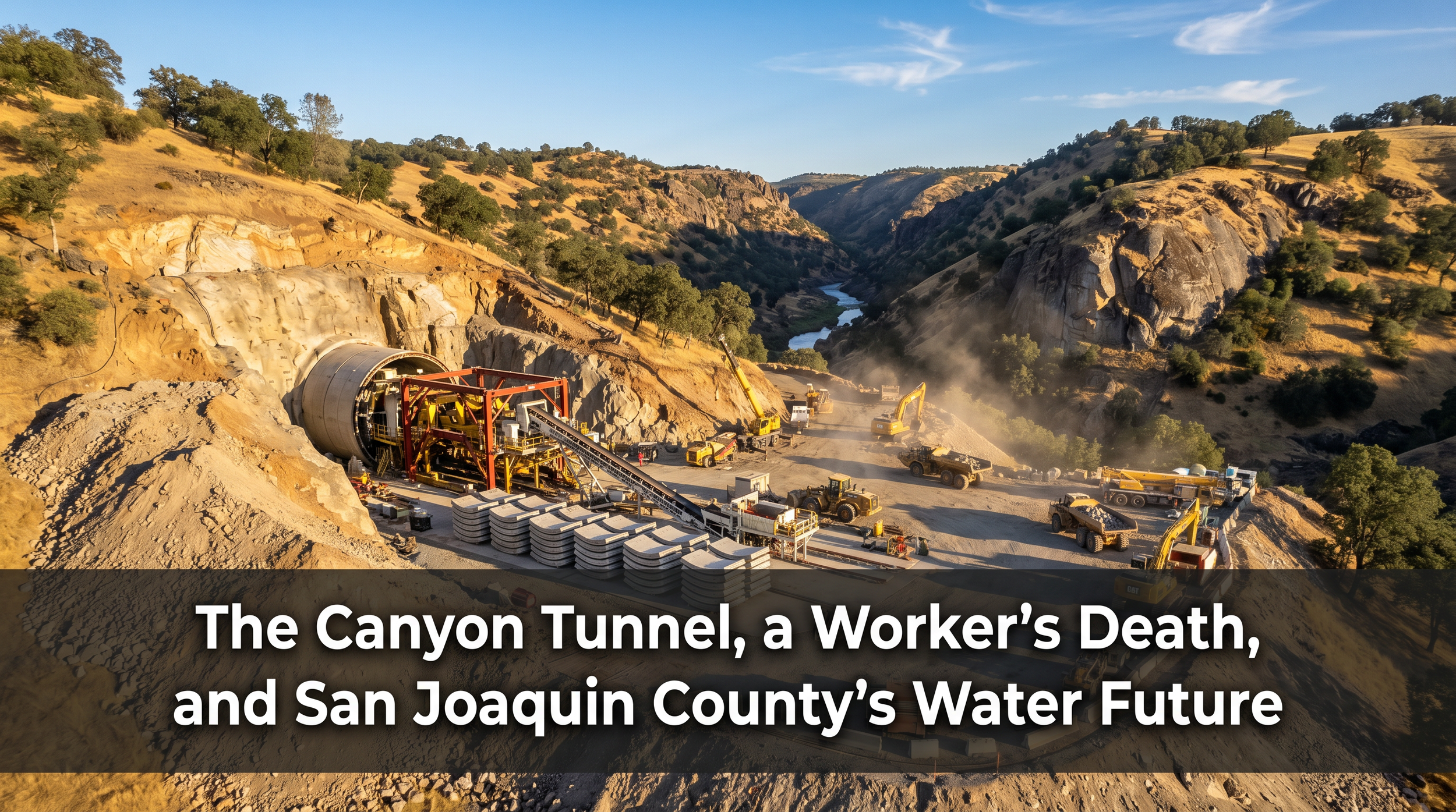
The Canyon Tunnel, a Worker's Death, and San Joaquin County's Water Future
A 35-year-old engineer was killed inside an $84 million bypass tunnel being dug beneath the Stanislaus River canyon this week. The project she was working on — a joint effort of the South San Joaquin Irrigation District and Oakdale Irrigation District — is meant to secure water reliability for three San Joaquin County cities and 50,000 acres of farmland into the next century. Cal/OSHA has opened an inspection. Work is suspended. LodiEye examines what the project is, why the county has tens of millions of dollars riding on it, and what the incident means for the schedule ahead.

The Colorado's Fever Reaches the Delta
The Central Valley doesn't drink a drop of Colorado River water. So why does a standoff over Lake Powell tighten the screws on Delta pumping and squeeze San Joaquin County growers? Because Southern California's biggest water wholesaler treats the two systems as a single checkbook — and when one account runs dry, it draws harder on the other.
Federal intervention: The Trump administration has warned the seven Colorado Basin states to reach a post-2026 deal or face federally imposed rules.
Drastic cuts imminent: The Bureau of Reclamation is preparing emergency actions to protect Lake Powell — holding back releases and tapping upstream reservoirs.

Washington's Debt, Tehran's Oil: What the $10 Trillion Rollover Means for San Joaquin County
Three forces collided in the first quarter of 2026: a shooting war with Iran, a $9.8 trillion US Treasury rollover, and an accelerating shift of oil settlement out of dollars and into yuan and gold. Together they are pushing long-term interest rates higher even as the Federal Reserve cuts short-term rates, tightening the cost of credit for San Joaquin County farms, small businesses, home buyers, municipal borrowers, public pension funds, and household 401(k) accounts. This briefing connects Washington's bond math to the ledgers that matter locally — from Lodi Avenue storefronts to the wine grape trellises of the Mokelumne River appellation.
County Funds Flow to Lodi: $38,200 Across Nine Nonprofits
Nine Lodi-area nonprofits will share roughly $38,200 in one-time county funding after the San Joaquin County Board of Supervisors unanimously approved a $67,700 round of District 4 discretionary allocations on Tuesday. The awards — directed by Supervisor Steve Ding, whose district covers Lodi and surrounding communities — land at a moment when local nonprofits are navigating rising operating costs, tight municipal budgets, and shifting grant cycles. This report pairs the county data with a verified accounting of Lodi City Council nonprofit allocations for FY 2025–26 through April 16, 2026.
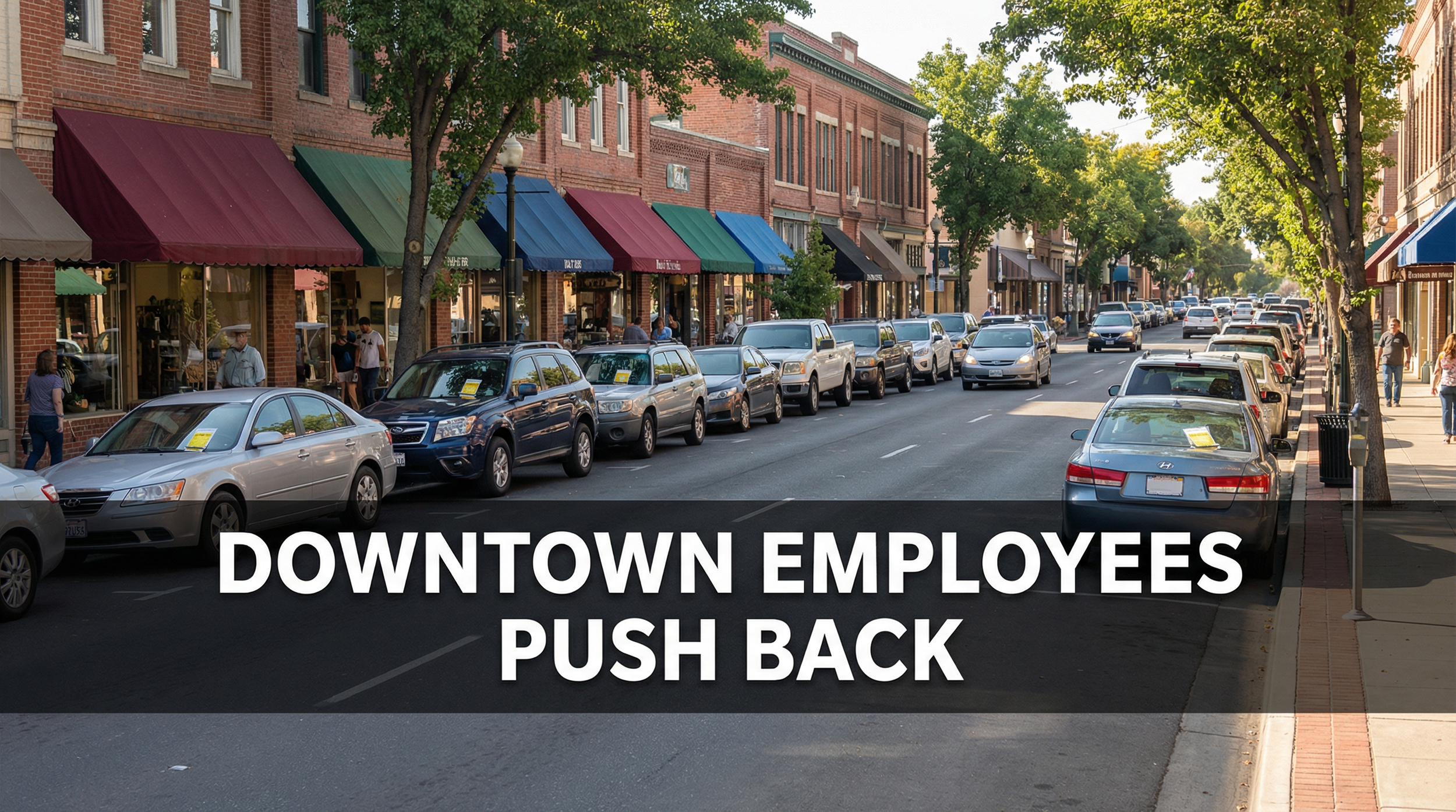
Downtown Employees Push Back
On Tuesday evening, April 14, 2026, the Lodi Improvement Committee voted unanimously—4 out of 4—in support of ending the ticketing of downtown employees during their shifts and establishing safe, dedicated employee parking. The vote comes as over 140 downtown workers have signed a petition calling on the Lodi City Council to act. A key council hearing takes place tonight—Wednesday, April 15 at 7:00 PM at Carnegie Forum. LodiEye examines the parking crisis, safety concerns at Lodi’s parking structure, how neighboring San Joaquin County cities handle employee parking, and potential solutions.

Water Infrastructure And Stormwater: What San Joaquin County’s $19 Million Federal Ask Means for Lodi
San Joaquin County submitted nearly $19 million in federal funding requests in March 2026 for the FY2027 budget, including $2.4 million for the Victor Storm Drain Retention Pond just east of Lodi and $2 million for the Acampo Innovation Drainage Project to the south. Both projects have been submitted in prior years without receiving funding. Meanwhile, aging water mains across the county — some nearly 80 years old — are causing leaks and service disruptions. This report examines the county’s federal requests, Lodi’s own water and stormwater infrastructure, and the broader landscape of state and federal funding programs that could shape the region’s water future.


The Fuel Tax on Lodi
Lodi's economy depends on three streams of workers — an estimated 2,000 to 4,000 Bay Area commuters whose professional wages fuel local spending, thousands more commuting to Stockton and Sacramento, and the majority who live and work locally. With no BART, no light rail, and no direct commuter rail, every household's budget is priced per gallon. This analysis maps the tipping points at which elevated fuel prices trigger permanent changes: commuters pivoting from Lodi homeownership to renting near transit hubs, families cutting the discretionary spending that sustains local businesses, and the compounding revenue impact on a city already facing a $4.8 million structural deficit.

The Invisible Chokepoint: How Sulfur and Aluminum Shortages Are Rippling Through the U.S. Economy
The closure of the Strait of Hormuz has cut off nearly half of the world’s seaborne sulfur supply and 9% of global aluminum production — disruptions far less visible than oil but potentially more consequential. On April 13, the U.S. Navy began enforcing a blockade of Iranian ports, further tightening supply after peace talks collapsed. Sulfur, a byproduct of petroleum refining, is the feedstock for sulfuric acid — the most-used industrial chemical on earth. Without it, phosphate fertilizer production halts, copper and nickel refining slows, EV battery supply chains seize, and U.S. defense manufacturing faces critical shortages. This investigation traces the sulfur and aluminum cascades from Persian Gulf terminals to California farm fields and American factory floors.

Lodi Finance Committee - April 15, 2026
This special meeting of the Lodi Finance Committee features four agenda items focused on strengthening the City's fiscal governance. The centerpiece is a comprehensive overhaul of the Purchasing Policy — last updated in May 2022 — with updated procurement thresholds, new federal compliance provisions under 2 CFR Part 200, and stronger documentation requirements. Staff also proposes raising the City Manager's purchasing authority from $60,000 to $100,000 to align with comparable Northern California cities. A new framework for accepting donations without individual Council approval rounds out the agenda, following up on discussion from the March 11 meeting.

Forensic Audit Closes the Books on Carney-Magee Fraud Allegations
After a year-long investigation involving five independent firms and costing taxpayers well over $1 million, the Hoslett Forensics final report — to be presented to the Lodi City Council on April 15, 2026 — finds no intentional fraud at City Hall. Credit card policy violations totaled $8,625 over five years, and a utility deposit discrepancy originally claimed at $1.2 million was determined to be approximately $67,000 in clerical errors. By state, national, and private-sector benchmarks, Lodi’s violation rate of 0.077% ranks at the extreme low end of the scale. The report confirms that real internal control weaknesses exist and recommends structural reforms — several of which are already underway.

The Dust Belt Rising
In the 1930s, Dust Bowl refugees fled the Southern Great Plains for California’s San Joaquin Valley. Nearly a century later, the Valley itself — along with agriculture and tourism-dependent communities across California, Arizona, and Nevada — is becoming a new dust bowl. Six converging forces are driving the decline: water depletion, tariff destruction of export markets, soaring input costs, climate extremes, collapsing consumer demand, and immigration enforcement that is dismantling the workforce these economies depend upon. Unlike the 1930s, when migration served as a brutal safety valve, today’s Americans are locked in place — household mobility hit its lowest rate ever recorded in 2024. This report maps the highest-risk cities and regions, examines what recovery looks like when the forces of decline are not merely economic but geological, and asks the Dust Bowl’s central question: which communities will adapt, and which will simply empty out?

After 16 Years, Hungary Changes Course: What Orbán's Defeat Means — and What It Doesn't
On April 12, 2026, Hungarian voters ended Viktor Orbán's 16-year hold on power, handing a decisive victory to Péter Magyar's center-right Tisza party. The election carries significance well beyond Central Europe: the Trump administration invested extraordinary political capital in Orbán's reelection, including dispatching Vice President JD Vance to campaign on his behalf days before the vote. This analysis examines the Orbán record honestly from multiple perspectives, explores what the Hungarian experience may and may not tell us about American politics, and considers what lies ahead for both countries as the U.S. approaches its own consequential midterm elections in November.
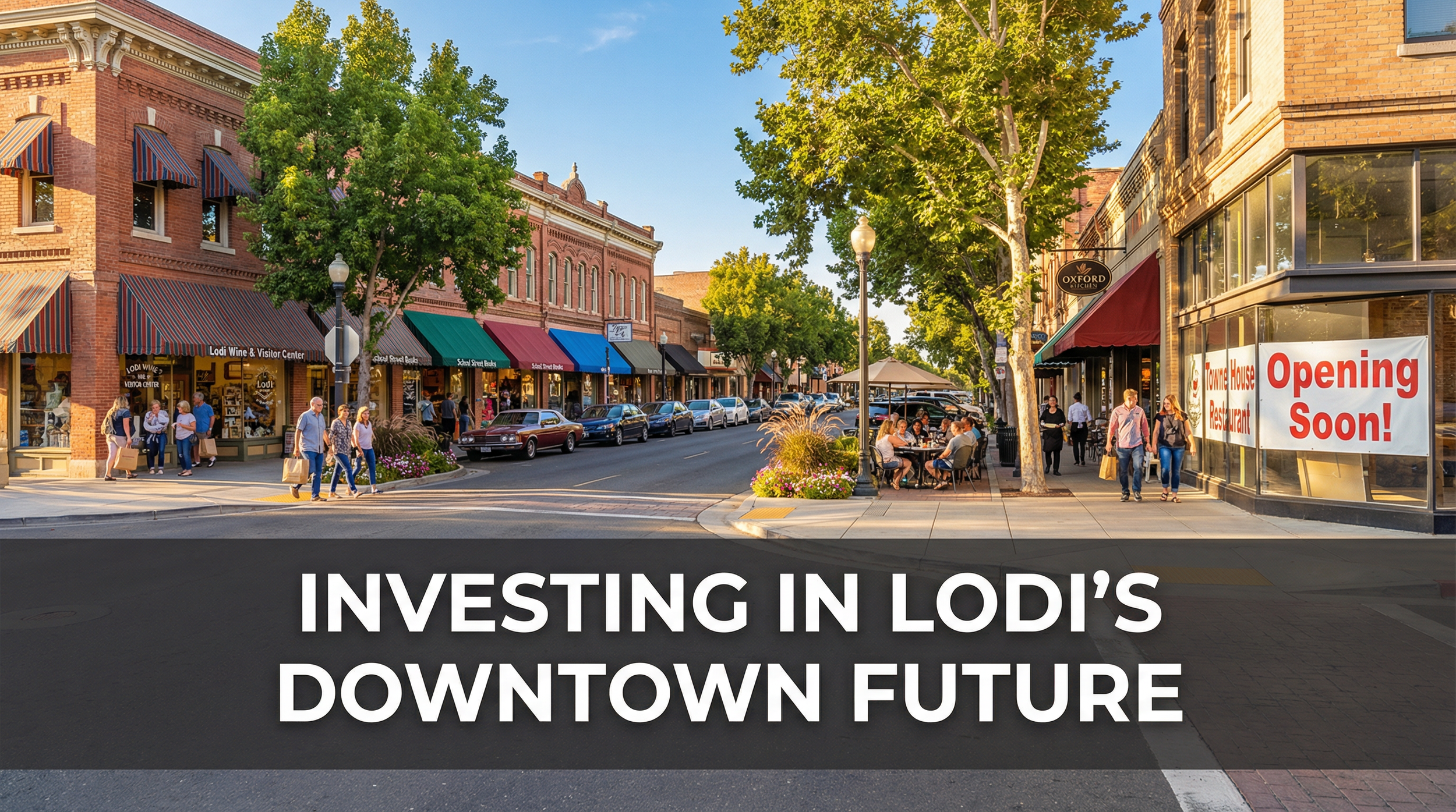
Investing in Lodi’s Downtown Future
The City of Lodi is exploring the formation of a Property-Based Business Improvement District (PBID) in the downtown area to fund enhanced services — including cleaning, safety, beautification, and marketing — above and beyond what the City's General Fund currently provides. A PBID would levy assessments on commercial property owners within a defined boundary, with funds controlled by a property-owner-governed nonprofit association. Nearly 100 PBIDs operate in California downtowns under the Property and Business Improvement District Law of 1994. This analysis explains how PBIDs work, examines comparable districts in small California cities, identifies the local conditions that make a Lodi downtown PBID timely, and outlines the key questions property owners should be asking.
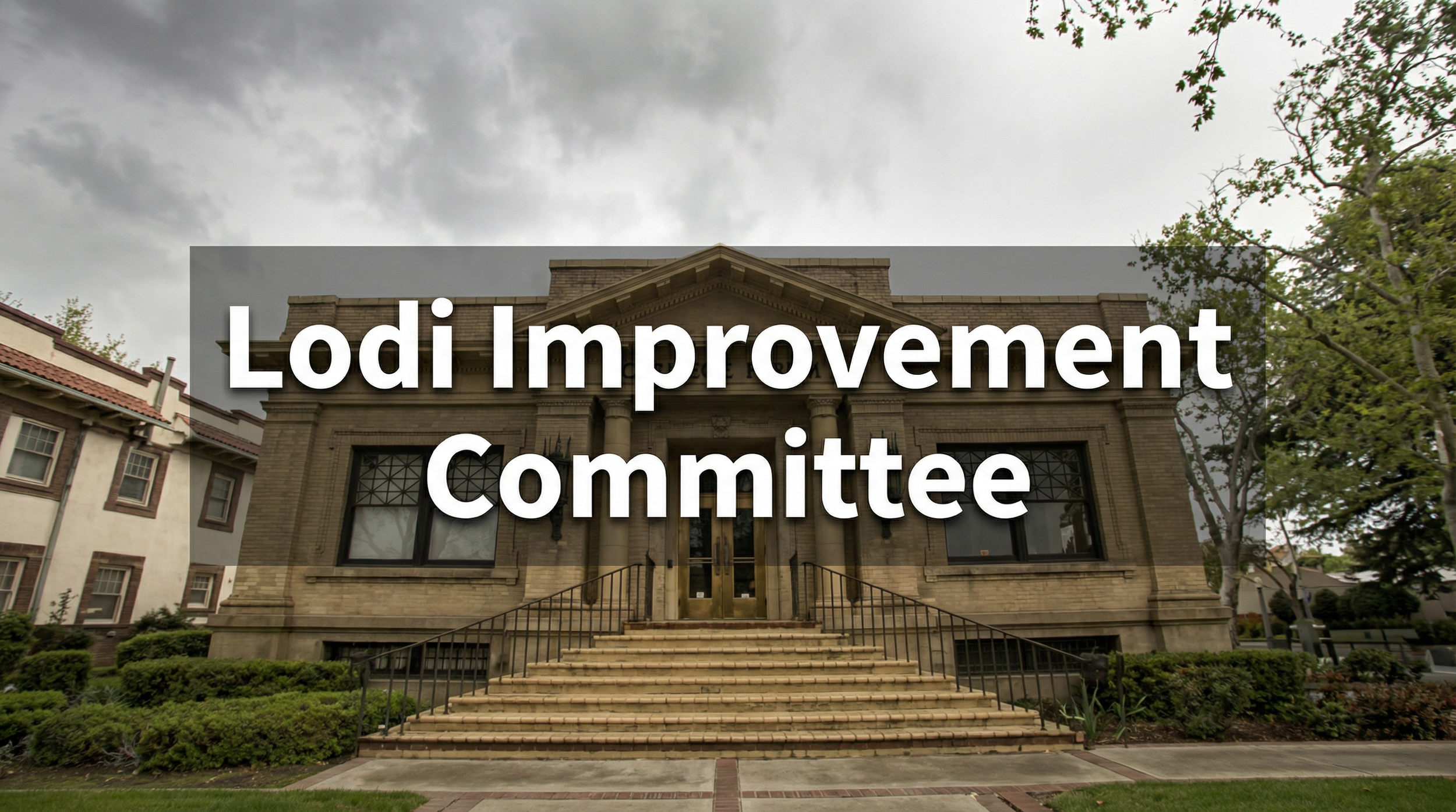
Lodi Improvement Committee - April 14, 2026
The Lodi Improvement Committee convenes for its regular monthly meeting with five substantive agenda items: a Love Lodi presentation previewing the April 25 citywide volunteer day, a downtown parking discussion referred by City Council, CDBG program updates spanning three fiscal years (including a new $665,236 allocation for 2026–27), a review of the committee's 2026 annual activities and task assignments, and scheduling of future meeting topics for May and June.
All five committee members — Chair Lyndsy Davis, Mono Geralis, Dawson Hayre, Janavi Sharma, and Christine Tran — are expected to attend, along with staff members Neighborhood Services Manager Jennifer Rhyne and CDD Program Specialist Kari Chadwick. The public may participate in person, via Zoom, or by submitting comments via email to LICcomments@lodi.gov no later than three hours before the meeting.
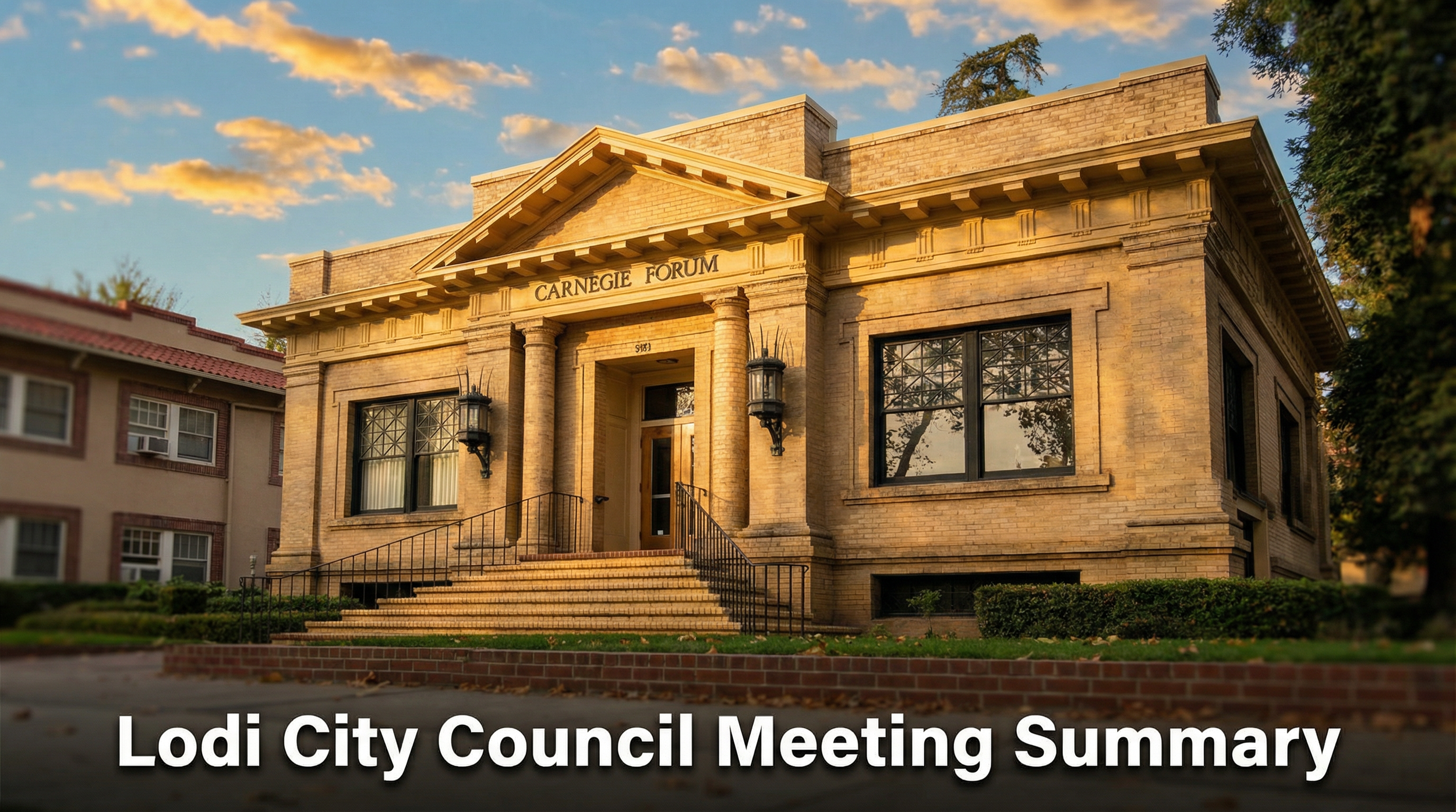
Lodi City Council - April 15, 2026
This packed agenda features three Regular Calendar items including a forensic accounting audit report, a $1.25 million credit card convenience fee policy decision, and a vendor permit cap discussion; four presentations including three mayoral proclamations and a non-profit check presentation; and twelve Consent Calendar items totaling over $22 million in contracts and appropriations. Two Closed Session items address the ongoing City Manager recruitment and anticipated litigation.

Urban Tree Canopy And Tree Equity: How Lodi Compares
Lodi’s urban tree canopy covers an estimated 13–16% of the city — roughly at the California urban average of 14.45% but well short of the ~30% coverage recommended by American Forests for equitable urban forestry. With a Tree Equity Score of 72.3 out of 100, Lodi clusters with neighboring Stockton (72.0) and Tracy (73.7) in the low-to-mid 70s, while Davis (92.8) dramatically outperforms all three. Nine of Lodi’s 51 Census block groups score below the priority threshold of 60, indicating neighborhoods with both low canopy and high social vulnerability.
Despite holding Tree City USA status for 23 consecutive years, Lodi’s tree ordinance (Chapter 307) lacks the canopy growth mechanisms — preservation thresholds, replacement ratios, development shading standards — that have driven measurable results in Davis, Sacramento, and Fresno. This report examines the data, the policy gaps, and what it would take to close them.
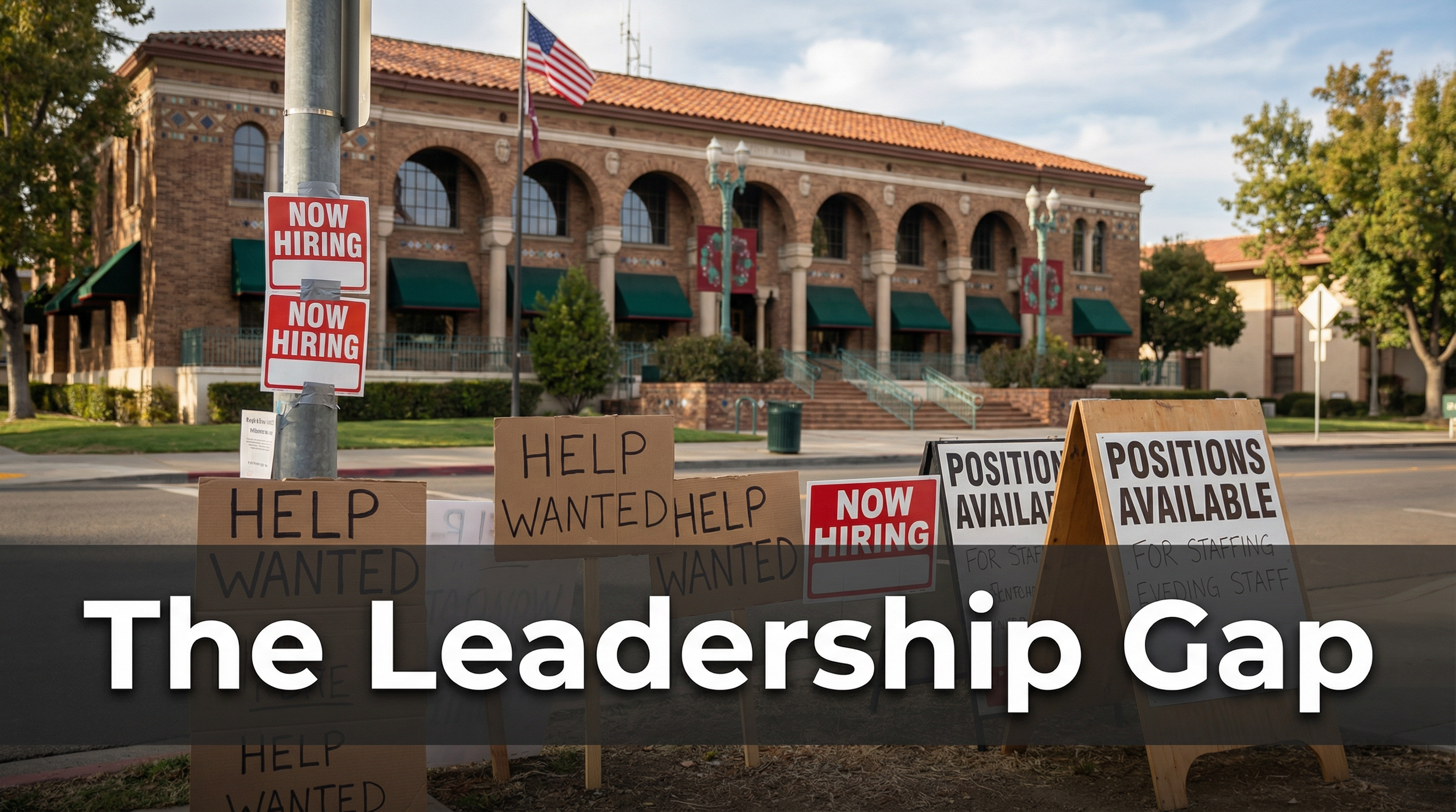
The Leadership Gap
In 30 months, the City of Lodi has cycled through five people in the city manager's chair, lost key personnel in finance, human resources, and community development, spent more than $1 million on consultants and interim staffing, and endured a public rupture between its city manager and city council that made regional and statewide news.
This is not a story about one bad hire. It is a story about institutional erosion — and Lodi is far from alone. Across the Central Valley and throughout California, the machinery of local government is losing the people who know how to run it. The question is whether Lodi's elected leadership, at both the city and county level, understands the depth of the problem.