
Lodi Eye
LodiEye provides additional information on trending stories / topics published by local media and shared on local social media accounts.
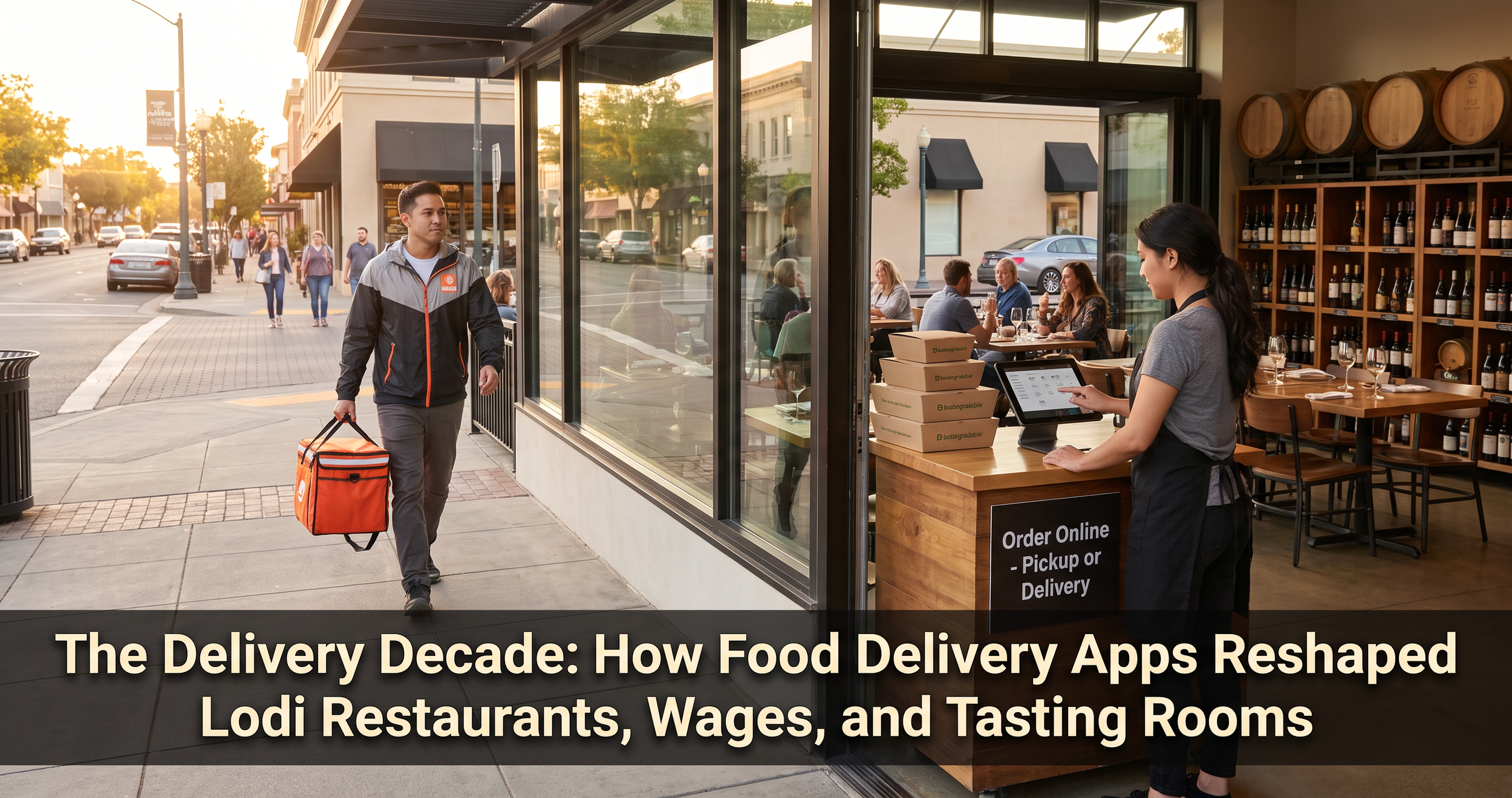
The Delivery Decade: How Food Delivery Apps Reshaped Lodi Restaurants, Wages, and Tasting Rooms
Between 2020 and 2025, third-party delivery apps went from a pandemic stopgap to permanent plumbing in the Lodi restaurant economy. Sales rose. Margins did not. Payroll hours moved off the books and onto gig platforms, and the tipped-wage model that supported front-of-house workers lost most of its base.
Five findings drive this report:
Off-premise is the default. Roughly 75 percent of US restaurant traffic now leaves the building — three of every four orders.
Only 30 to 50 cents of each delivery dollar is new demand. The rest converts higher-margin dine-in spending into lower-margin delivery.
San Joaquin County's 15 percent fee cap is the strongest local protection. It is worth about $4.50 per $30 order against uncapped 30 percent commissions.
Real wages barely moved. Stockton–Lodi food-service pay rose about 51 percent in nominal terms from 2020 to 2025. Inflation took nearly all of it.
Lodi tasting rooms split from the state in 2025 — up 12 percent while Napa fell 18 percent — on walk-in access and low tasting fees.
Projected to 2030: delivery reaches about 30 percent of Lodi restaurant volume, median pre-tax margin drifts from 2.8 percent toward roughly 1.35 percent, and the mean food-service wage hits $23.66 nominal but only $20.61 in constant 2025 dollars.
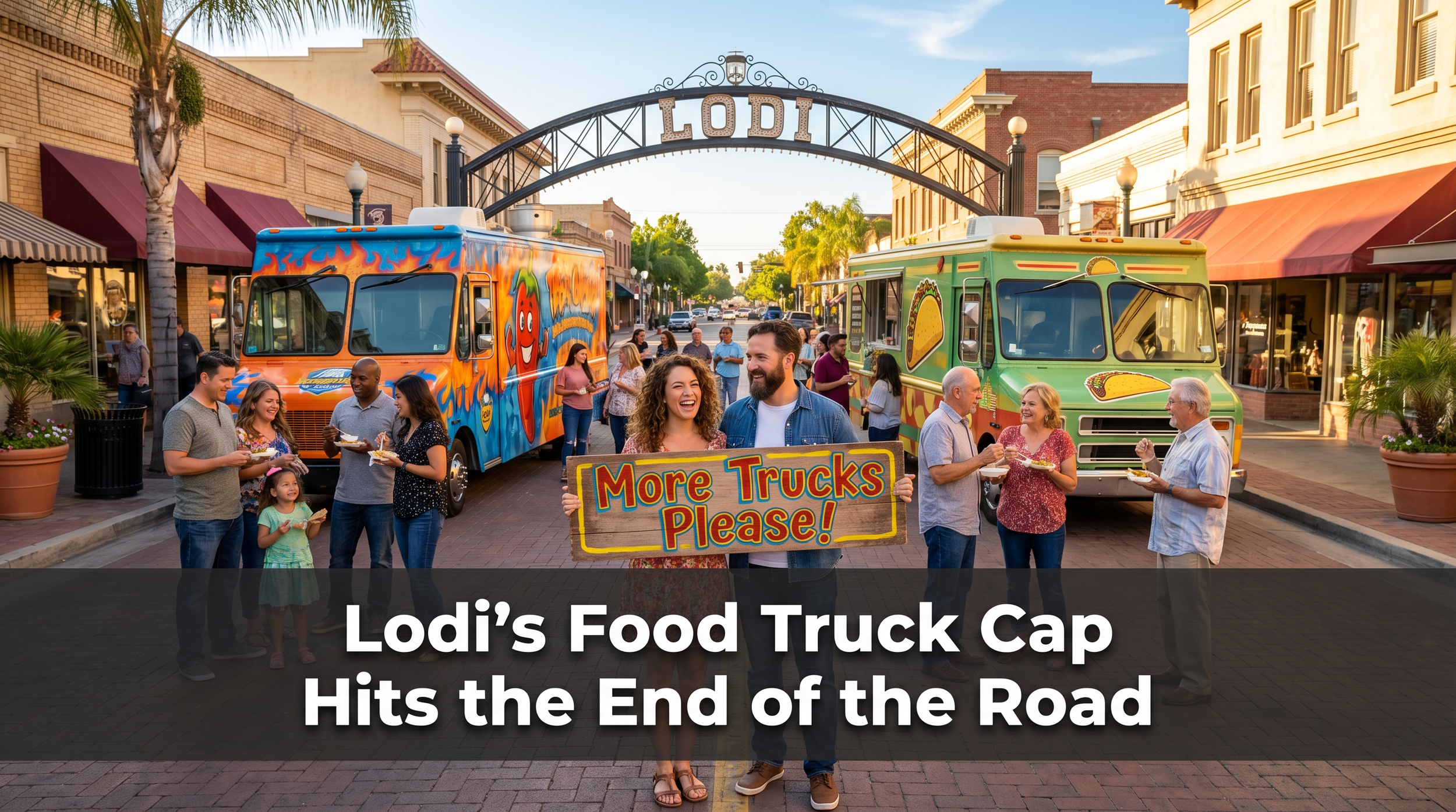
Lodi's Food Truck Cap Hits the End of the Road
With 10 vendors stuck on a years-long waitlist and neighboring San Joaquin County cities operating cap-free, Lodi's City Council is moving to scrap its 25-truck limit. The debate over where, when, and how trucks can roll is just beginning — and the lessons from Stockton, Manteca, Lathrop, Tracy, and Galt point to a clear blueprint.