
Lodi Eye
LodiEye provides additional information on trending stories / topics published by local media and shared on local social media accounts.
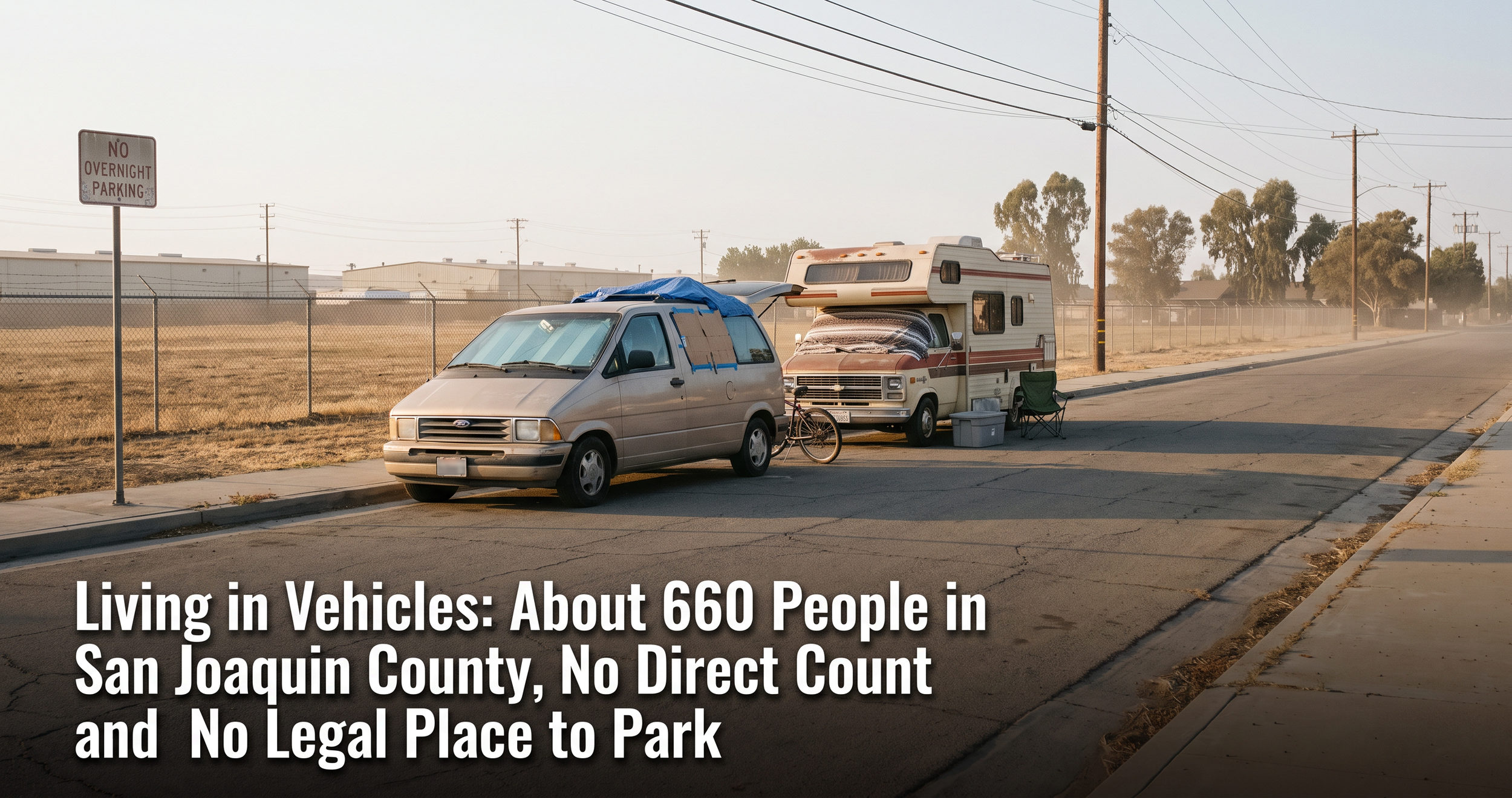
Living in Vehicles: About 660 People in San Joaquin County, No Direct Count and No Legal Place to Park
The 2026 Point-in-Time (PIT) count, the federally required homeless count taken one night each January, does not report how many vehicles were occupied or how many people were in each one. The 660 figure is an estimate built from a survey share. A realistic range is about 500 to 830. Police tow logs, school records of students living in cars and DMV registration data could each fill part of that gap. None of those records are combined or published today.
Several pressures push people into vehicles at once. Most people lose housing in the county where they already live. Vehicle residents are more likely than other homeless people to be working, older or raising children. Tent camping has been pushed out by enforcement. And a large supply of aging, cheap RVs is coming onto the used market.
Other California cities have opened managed parking lots with restrooms, water, waste disposal and caseworkers. Those sites cost about $2,200 to $4,400 per space per month to run. A vehicle resident earning the average income found in Los Angeles research could afford about $440. That gap is why the realistic opportunity here is a civic one, with private operators and landowners in contracted roles. A standalone commercial park does not cover its costs at the rents these residents can pay.
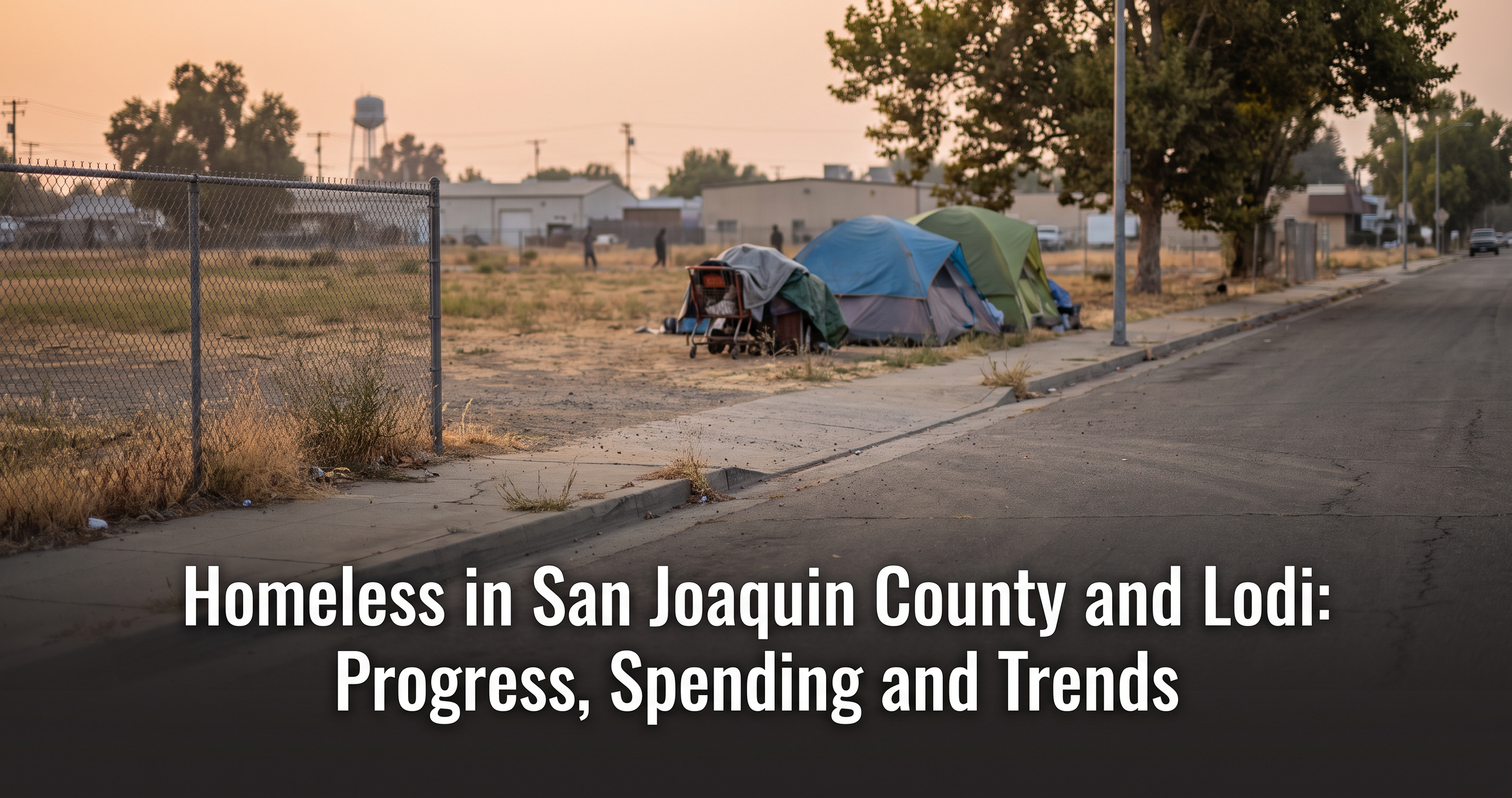
Homeless in San Joaquin County and Lodi: Progress, Spending and Trends
In January 2026, volunteers counted 3,306 people experiencing homelessness in San Joaquin County, down from 4,732 two years earlier. In Lodi the count fell from 416 to 248. The county's unsheltered population, meaning people sleeping outdoors, in tents and in vehicles, dropped 47 percent. The 30 percent decrease is the largest the county has recorded since it began counting every two years.
The figures behind that headline are less tidy. The drop came from roughly 1,300 permanent housing placements and about 100 new shelter beds, paid for mostly with state and federal grants, many of them one-time. The number of people entering homelessness for the first time each year went up, not down. Chronic homelessness rose. And the county's shelter system now carries an annual operating bill of about $15 million that does not go away when the count goes down. Lodi's Access Center, the city's main investment, has its operations funded by grants only through 2027.

Access Centers in Northern California
Lodi’s Access Center is under construction, seeking a new operator and planning to open in Spring 2026. Modesto’s Access Center faces an uncertain future. Which other California cities have Access Centers and do they face the same challengs as Modesto?

Lodi and San Joaquin County - Lodi Access Center
Lodi and San Joaquin County are moving forward with a comprehensive plan for the Lodi Access Center, a key initiative aimed at addressing homelessness through a partnership between the City of Lodi, San Joaquin County, and the County Health Care Services Agency. The project is designed to provide a comprehensive range of services, including healthcare, behavioral support, and housing assistance, with the goal of not only getting people off the streets but also addressing the underlying causes of homelessness.