Lodi Eye
LodiEye provides additional information on trending stories / topics published by local media and shared on local social media accounts.

The Fentanyl Crisis in San Joaquin County
Over five years, San Joaquin County lived through the deadliest chapter of the drug epidemic, driven by one change: illicit fentanyl saturated the local supply. The county's fentanyl death rate in 2021 was 20 times higher than in 2018, and deaths more than doubled again the next year, from 48 in 2021 to 113 in 2022. At the peak, the county was losing four to five residents a week, and people in their 20s and early 30s died faster than any other age group.
In 2024 the county's opioid overdose rate finally dropped about 31 percent — the first sustained decline since the crisis began — helped by naloxone saturation, fentanyl test strips, and a $137 million treatment expansion. But three things complicate any relief. Methamphetamine now kills more Californians than any other single drug, and meth deaths are still rising as fentanyl deaths fall. A veterinary tranquilizer called xylazine is spreading up the West Coast toward the Central Valley. And in December 2024, Proposition 36 reversed a decade of California drug policy, restoring felony charges for repeat offenses just as the public-health approach began to work.
This report traces how the crisis rose and eased, who it hits hardest, how the drug supply chain reaches Lodi, what treatment and enforcement are doing, and what the open questions — from settlement spending to the methamphetamine gap — can and cannot yet be answered.
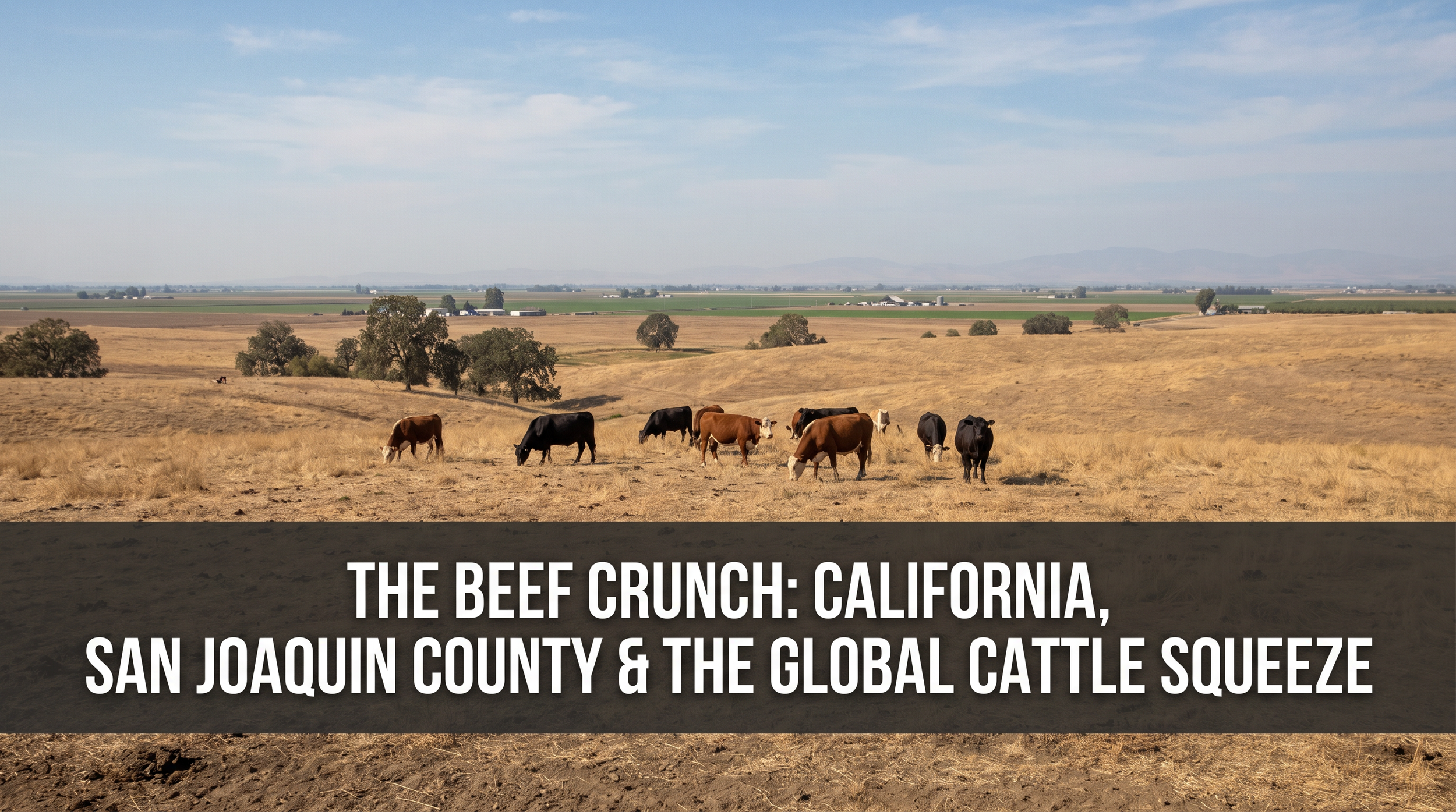
The Beef Crunch: California, San Joaquin County & the Global Cattle Squeeze
The U.S. cattle herd is at a 75-year low. Retail beef hit record prices in May 2026. New World Screwworm arrived on U.S. soil for the first time since the 1960s. Mexico has kept its border closed to U.S. live cattle imports for over a year. A historic drought is forcing Central Valley ranchers to liquidate breeding females at the worst moment in the price cycle. This report ties together what all of it means for San Joaquin County producers, California agriculture, the national supply chain, and the import market now filling the gap.

Roads Under Pressure: U.S. Trucking & Freight in 2026
Trucks carry most of what Americans buy, so the health of the trucking industry shapes the price of goods across the economy. In 2026 that industry is under strain — but not because business is booming. The amount of freight to be moved is recovering only slowly after several weak years; what is really tightening the system is a shrinking number of trucking companies and, above all, a shrinking number of drivers. Many companies closed during the downturn, and the cost to move a shipment has risen even though the volume of goods being shipped has not surged.
The biggest force behind that squeeze is a set of new federal rules that are pushing drivers out of the workforce faster than new ones can replace them. Beginning in March 2026, the government sharply limited the commercial licenses available to many immigrant drivers, stepped up enforcement of an English-language requirement that can pull a driver off the road, and shut down hundreds of driver-training schools. Together, these changes could remove an estimated 5 to 12 percent of all U.S. truck drivers over the next two to three years.
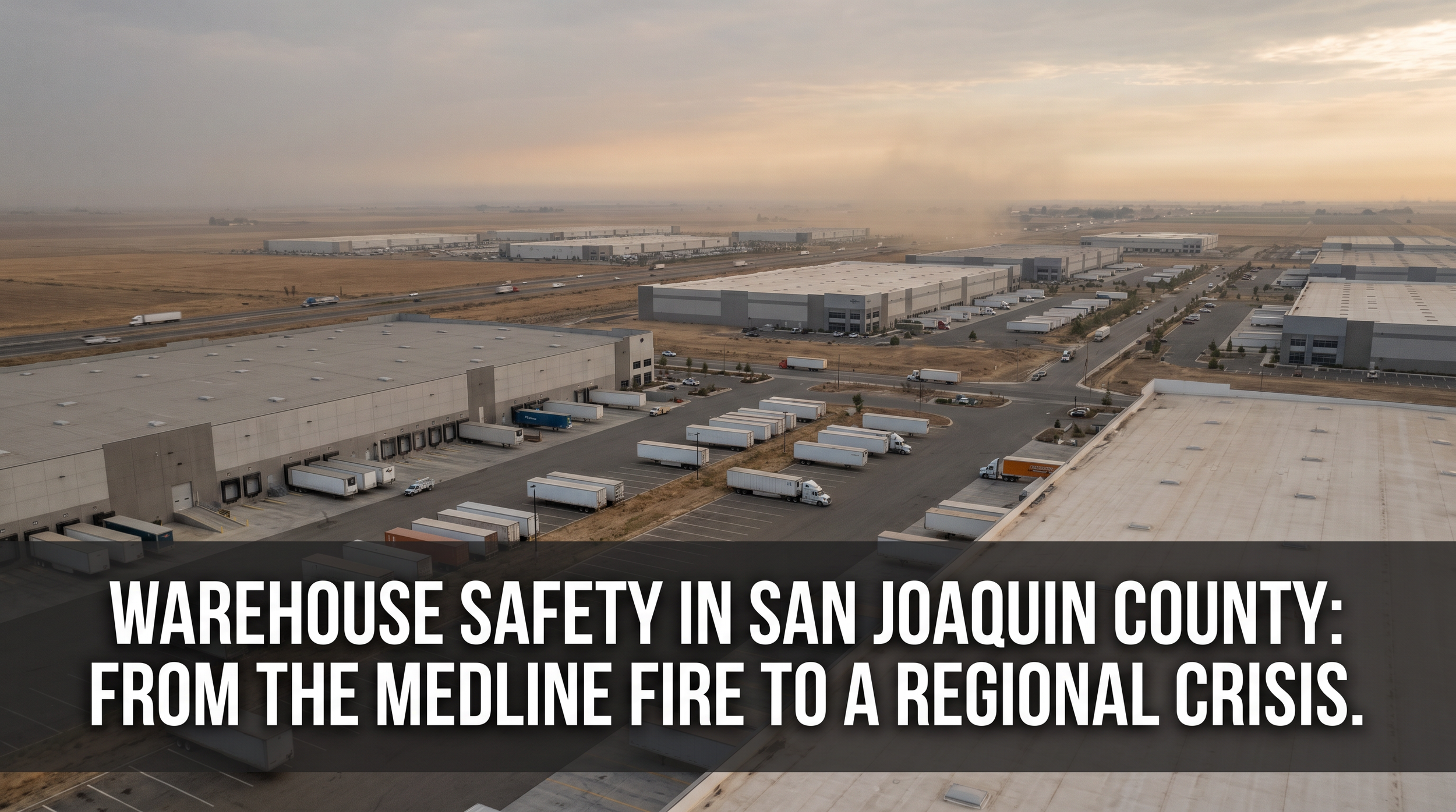
Warehouse Safety in San Joaquin County: From the Medline Fire to a Regional Crisis
On June 11, 2026, a five-alarm fire destroyed the 1-million-square-foot Medline Industries distribution center in Tracy, California — reducing one of the nation's largest medical supply warehouses to ash in a matter of hours. The fire was fueled by extreme heat, strong winds, hazardous materials, and, most critically, the complete failure of the facility's internal fire suppression system. No sprinkler activated. The fire pump room pressure gauge read zero. Firefighters ran hose lines 1,600 feet to reach municipal water. The building was a total loss.
The Medline fire was not an isolated event. It is the most visible and catastrophic expression of a systemic pattern of dangerous conditions across San Joaquin County's distribution warehouse sector — a sector that has grown faster than any safety enforcement infrastructure built to monitor it. This report documents that fire in detail, surveys dangerous conditions at other warehouses throughout the county, and examines the city, county, state, and federal regulatory tools that currently exist — and their limits — for addressing these hazards. It also examines the workforce who bear these risks daily, including residents of Lodi who commute to these facilities.
San Joaquin County FY 2026‑27 Budget: Revenue, Priorities & Lodi Impacts
San Joaquin County’s proposed Fiscal Year 2026‑27 budget totals approximately $3.3 billion, a $258.7 million increase (~8.5%) over the $3.02 billion FY 2025‑26 adopted budget. The Board of Supervisors was scheduled to adopt the final budget at its June 16, 2026 hearing — the same date as this report. This is the county’s 13th consecutive structurally balanced spending plan, maintained without drawing on prior-year reserves.
For Lodi: the permanent Lodi Access Center is set to open this summer (June/July 2026), Main Street Transitional Housing celebrated its grand opening in April 2026, and the $261 million SJ BeWell Campus broke ground in September 2025 — but the operational funding pipeline for all three faces significant risk from state and federal revenue erosion.
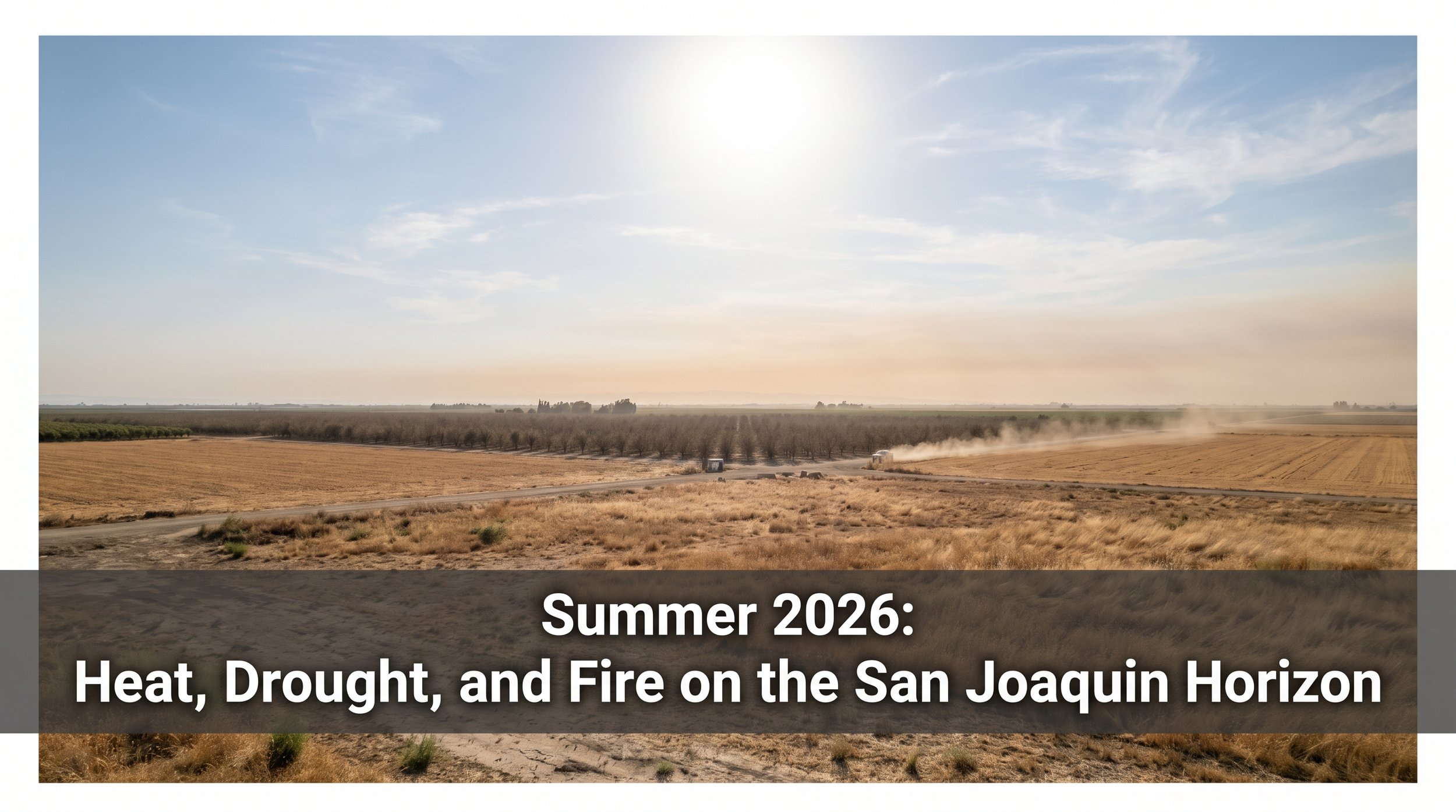
Summer 2026: Heat, Drought, and Fire on the San Joaquin Horizon
A dry winter, an early-melting Sierra snowpack, and an El Niño taking shape in the Pacific have set up a hot, fire-prone summer for the Central Valley. Forecasters expect hotter-than-normal temperatures across California through August and a higher-than-normal risk of large wildfires in northern California from July into September. Reservoir storage offers a cushion, but residents should expect more triple-digit days, warmer nights, and elevated air-quality and fire risk, while growers face tighter water and a fire window that overlaps the Lodi grape harvest.
The Squeezed Consumer: 12 Months of Household Financial Stress in San Joaquin County
Over the past year, American consumers saved less, borrowed near-record amounts, and held back on home purchases — a national pattern that lands with extra force in San Joaquin County, where median household income trails the state and unemployment has stayed above 6%. The US personal saving rate fell to just 2.6% in April 2026, credit card balances peaked near $1.27 trillion, and mortgage applications stayed weak and rate-sensitive. This briefing charts those four trends and translates them into ramifications for Lodi, with a closing deep dive on the farmworker households where the squeeze is most acute and least visible in official data.
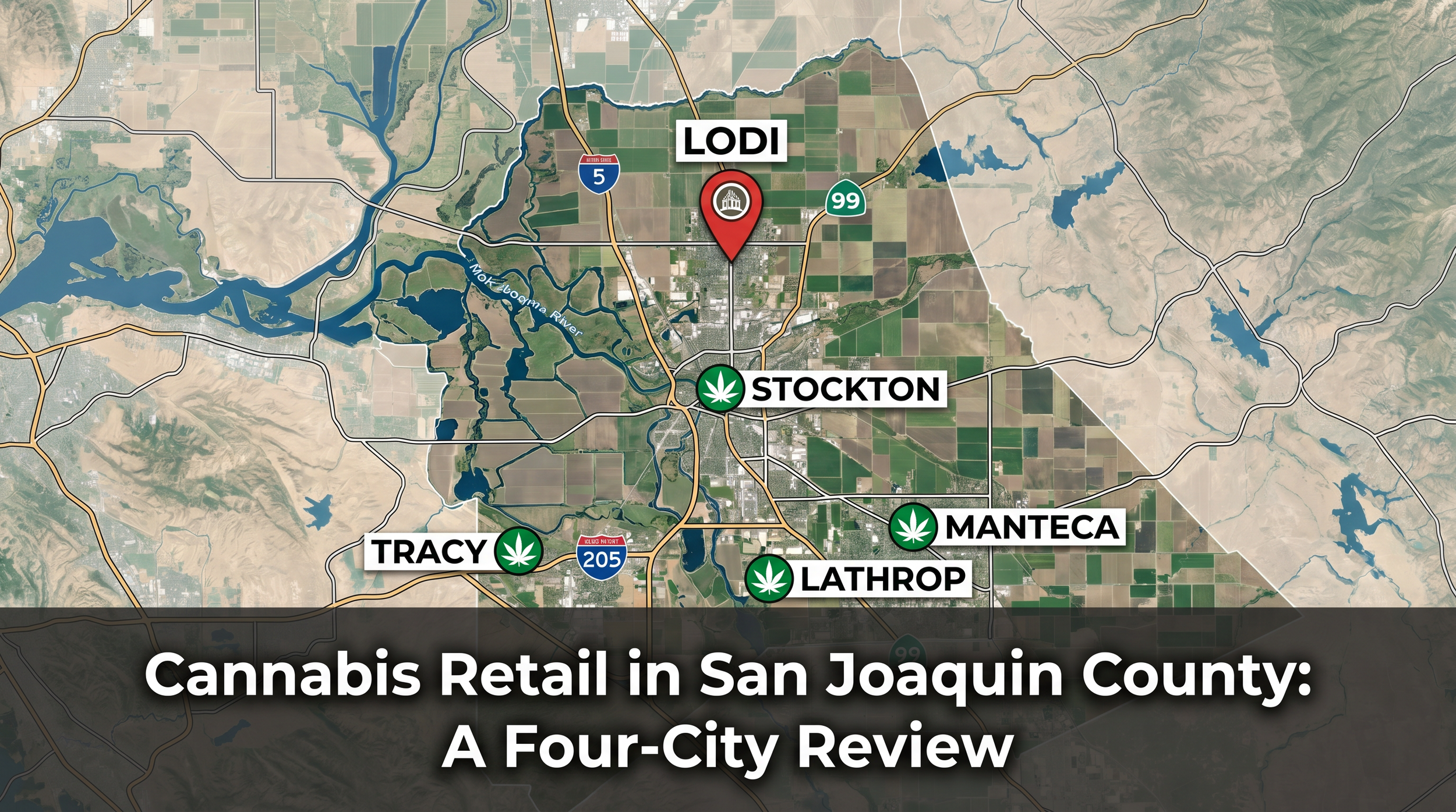
Cannabis Retail in San Joaquin County: A Four-City Review
Nine years after California voted to legalize cannabis, the map of who sells it in San Joaquin County has filled in unevenly. Stockton, Tracy, Manteca, and Lathrop now allow storefront cannabis sales — each doing it differently. Escalon and Ripon don't allow it at all. Lodi has neither permitted retail nor formally banned it. Between them, the four operating programs have nine years of real-world experience: tax dollars collected, illegal stores chased, zoning fights settled, and policies that have proven worth copying — and a few worth avoiding.
San Joaquin County Measure K: What It Is, How It Works, and What It Means for Lodi
Measure K is San Joaquin County's dedicated half-cent (0.5%) transportation sales tax, first approved by voters in November 1990 and renewed for a 30-year extension through March 2041 when nearly 78% of county voters approved the renewal in November 2006. Every taxable retail purchase made in Lodi contributes a half-penny per dollar to this fund, which is distributed to local street repair, highway improvements, public transit (including GrapeLine), bicycle and pedestrian infrastructure, and railroad crossing safety. Over the 30-year renewal period, Measure K is projected to generate approximately $2.64 billion in transportation investment for San Joaquin County.
For Lodi specifically, Measure K is the single most important non-federal source of transportation funding. It directly pays for GrapeLine bus service, annual street repaving, the SR 99/Turner Road interchange reconstruction, active transportation trails, and a pipeline of planned highway, arterial, and bike/pedestrian projects. This report explains the program's origins, funding mechanics, expenditure categories, administration, oversight, and Lodi-specific project history and pipeline.

A Sliding Scale of Ambition: How Four Cities Are Preparing for Valley Rail
Lodi’s new train station will probably be the last of four to open on Valley Rail’s Sacramento Extension. The rail commission chair has called the 2027 published opening date “optimistic” and described 2030 as “an ambitious target.” That gives Lodi an opportunity the other cities do not have: years to watch what works in Stockton, Lathrop, and Elk Grove, and bring those lessons home. Stockton has built electric carshare, e-bike fleets, and an integrated transit app. Lathrop and the Tesla factory are running employee vanpools. Elk Grove bought its station property outright and operates three commuter bus services. Lodi’s plan today is three bus trips a day to the new station. Whether the city uses the next several years to build something more is a choice that has to be made now.
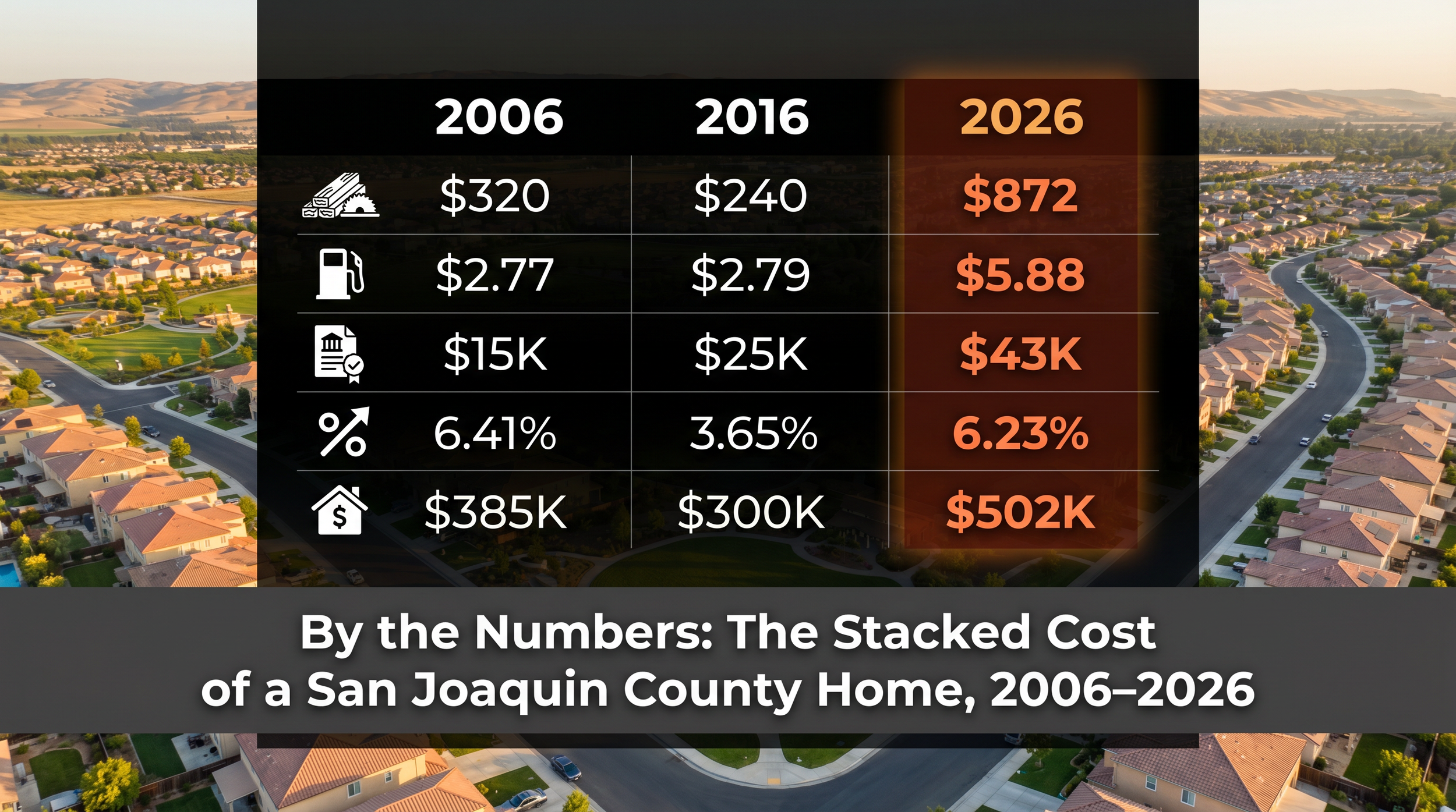
By the Numbers: The Stacked Cost of a San Joaquin County Home, 2006 to 2026
California's housing affordability crisis is usually told as a single story: not enough homes. The data across three reference years — 2006, 2016, and 2026 — shows it is actually six stories layered on top of each other. Mortgage rates have round-tripped to 2006 levels but now create a lock-in effect for the 77% of California homeowners holding sub-5% mortgages. Framing lumber has tripled. California gasoline has more than doubled. Tariffs on building materials, a non-issue in either earlier reference year, now add an estimated $17,500 to a typical new home. Construction labor has contracted under enforcement pressure. Lodi government fees on a typical home now exceed $43,000. And insurance premiums have roughly doubled since 2016, with FAIR Plan enrollment statewide up 445% since 2006.
The compounding is the story. Solving any single headwind helps. Solving none of them — letting the stack compound for another five years — risks a structural housing market that no longer functions for working Valley families.
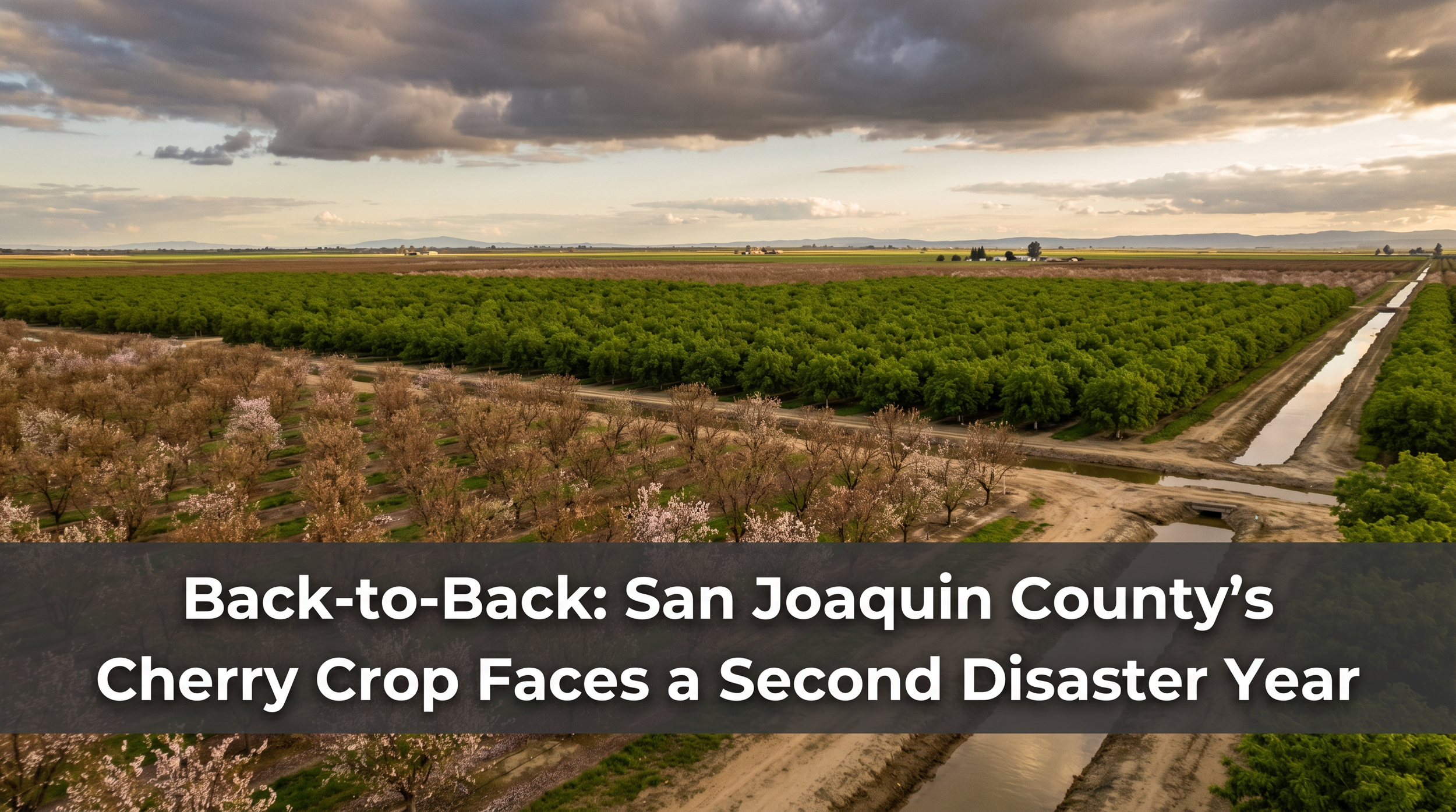
Back-to-Back: San Joaquin County's Cherry Crop Faces a Second Disaster Year
The rain that flooded Lodi strawberry stands in April 2026 is the local-color image of a larger economic story playing out in San Joaquin County's orchards and vineyards. Cherries — the county's fourth most valuable crop and roughly half of California's cherry production — face the possibility of a second consecutive disaster-declaration year after a damaging storm hit during the most vulnerable ripening window.
The structural headline is not the April rain itself. It is what two disaster years in a row would do to a crop economy that has already been trending downward in value since 2022. A quieter walnut subplot and a multi-year Lodi wine-industry pressure round out the real county-level picture.
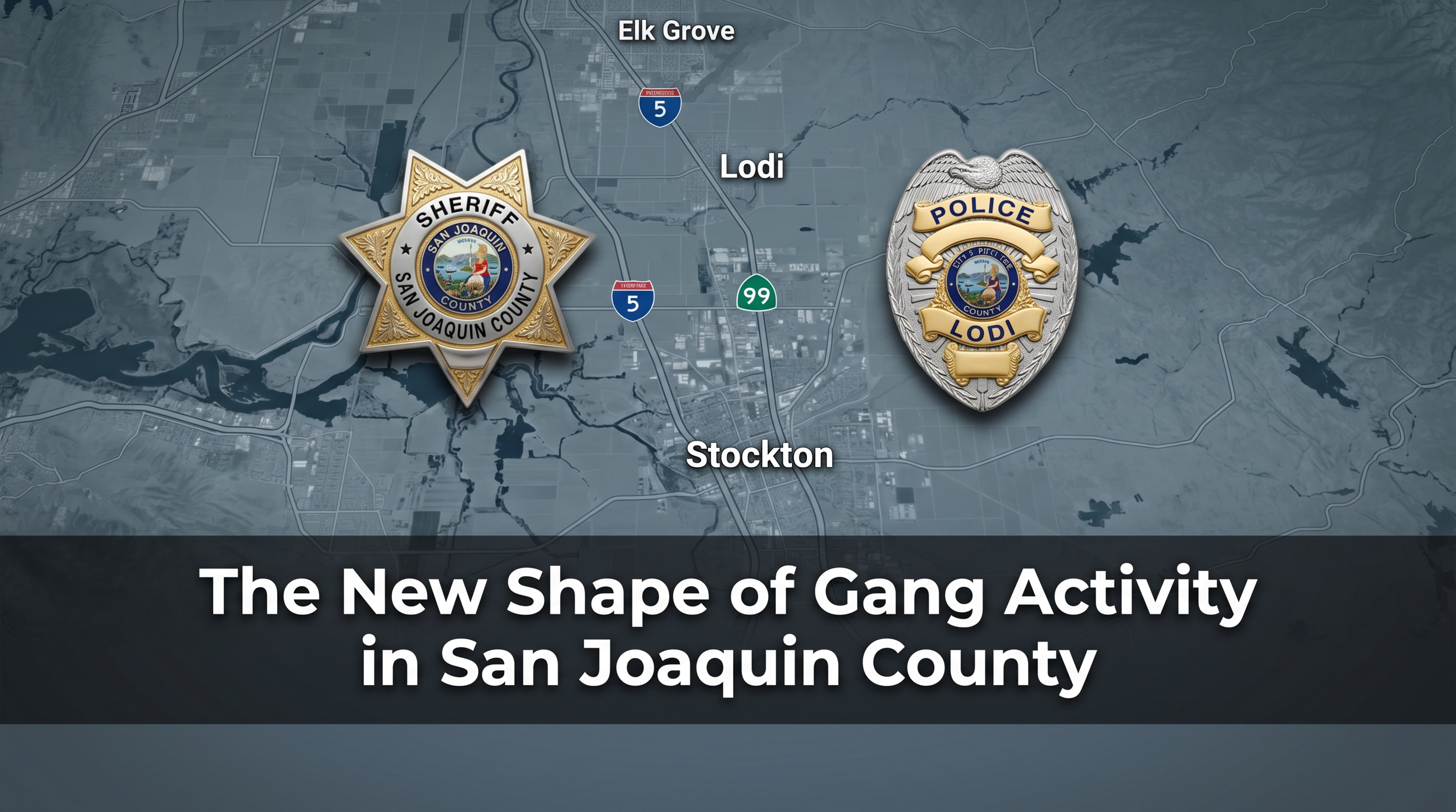
The New Shape of Gang Activity in San Joaquin County
For three decades, organized crime in San Joaquin County could be explained through one rivalry: Norteños versus Sureños. That framework is no longer sufficient. In 2026, at least five distinct gang ecosystems operate across the county — the legacy Hispanic street gangs, African American sets concentrated in west Stockton, Southeast Asian gangs forged during the refugee era, a newly visible transnational Punjabi-diaspora extortion network directed from Indian prisons, and outlaw motorcycle clubs using the Highway 99 corridor. Lodi, long treated as a safer northern neighbor to Stockton, sits at the intersection of all five. This LodiEye report maps who operates where, documents the recent federal and state cases, and highlights what it means for Lodi residents specifically.
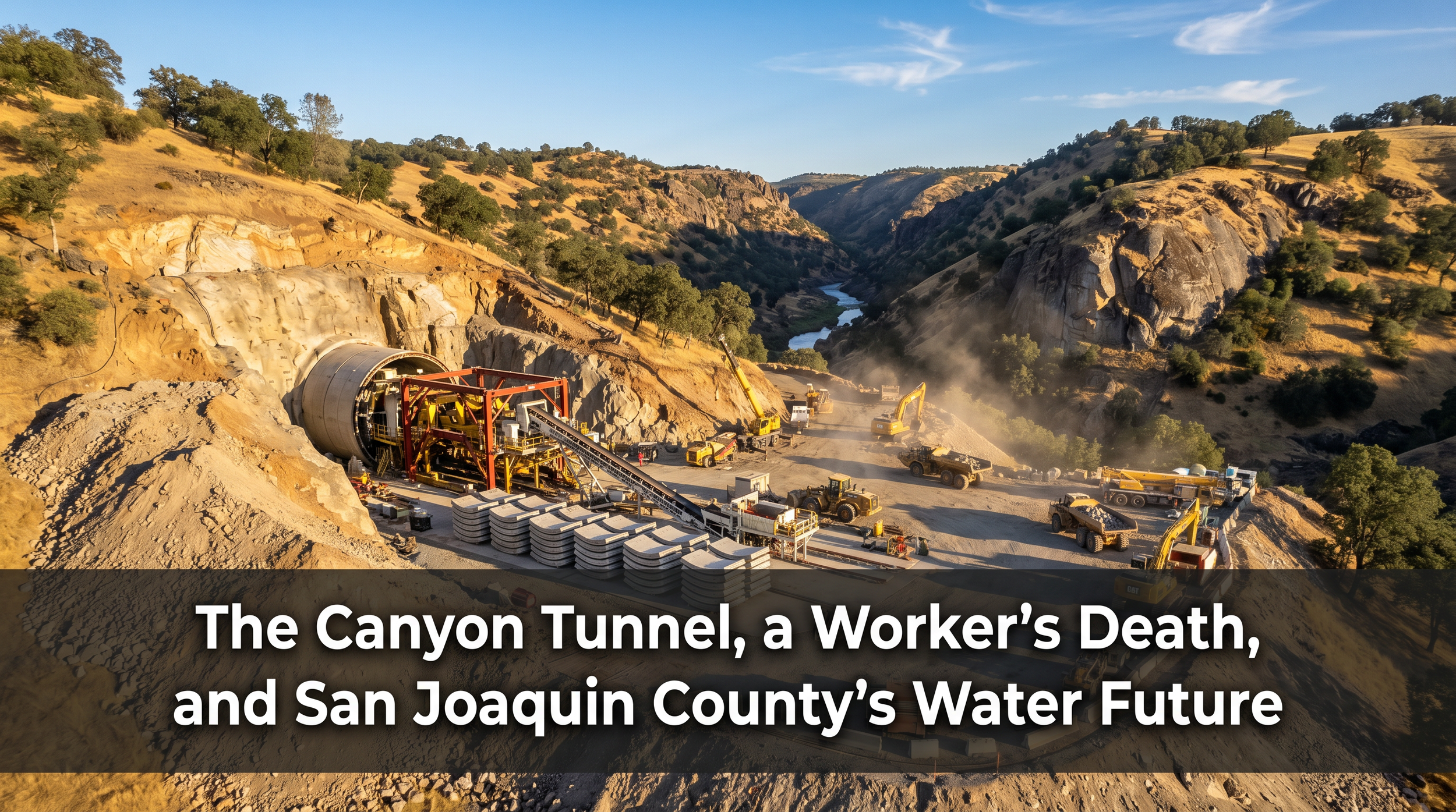
The Canyon Tunnel, a Worker's Death, and San Joaquin County's Water Future
A 35-year-old engineer was killed inside an $84 million bypass tunnel being dug beneath the Stanislaus River canyon this week. The project she was working on — a joint effort of the South San Joaquin Irrigation District and Oakdale Irrigation District — is meant to secure water reliability for three San Joaquin County cities and 50,000 acres of farmland into the next century. Cal/OSHA has opened an inspection. Work is suspended. LodiEye examines what the project is, why the county has tens of millions of dollars riding on it, and what the incident means for the schedule ahead.

Washington's Debt, Tehran's Oil: What the $10 Trillion Rollover Means for San Joaquin County
Three forces collided in the first quarter of 2026: a shooting war with Iran, a $9.8 trillion US Treasury rollover, and an accelerating shift of oil settlement out of dollars and into yuan and gold. Together they are pushing long-term interest rates higher even as the Federal Reserve cuts short-term rates, tightening the cost of credit for San Joaquin County farms, small businesses, home buyers, municipal borrowers, public pension funds, and household 401(k) accounts. This briefing connects Washington's bond math to the ledgers that matter locally — from Lodi Avenue storefronts to the wine grape trellises of the Mokelumne River appellation.
Emerging Trends: San Joaquin County & Lodi, CA — Spring 2026
San Joaquin County and the City of Lodi are at a pivotal inflection point in 2026. A homelessness crisis of historic scale is colliding with a paradoxical employment boom, a cooling housing market, and a shifting crime landscape. The region’s unhoused population more than doubled between 2022 and 2024, driven by a severe affordability gap and the fragmentation of the agricultural workforce. Meanwhile, the county leads the state in employment growth — fueled almost entirely by logistics and warehousing — creating a two-speed economy that leaves many workers in low-wage jobs with insufficient income to afford local housing. Crime is declining in most categories following new state enforcement tools, but structural vulnerability persists.
Drug Crisis in San Joaquin County & Lodi, California
San Joaquin County (SJC) continues to confront one of the most severe drug crises in California's Central Valley. Fentanyl — primarily linked to Sinaloa Cartel trafficking networks — remains the dominant threat, responsible for 92% of opioid-related deaths in the county as of the most recent complete data (2023). However, early indicators from 2024 and the national trend through 2025 suggest the region may finally be turning a corner, with preliminary death counts tapering and U.S. overdose fatalities declining roughly 17–21% year-over-year.

Uncle Sam Is $136 Trillion in the Hole — And San Joaquin County Is Already Feeling It
The U.S. Treasury's own FY 2025 financial statements reveal $6.06 trillion in assets against $47.78 trillion in liabilities — a negative net position of $41.72 trillion. Including off-balance-sheet obligations for Social Security and Medicare, total federal commitments exceed $136.2 trillion. Social Security faces trust fund depletion as early as 2032. Medicare's Hospital Insurance fund is projected to run dry in 2033. And San Joaquin County is already facing $50.9 to $76.9 million in annual revenue losses from H.R. 1 alone.
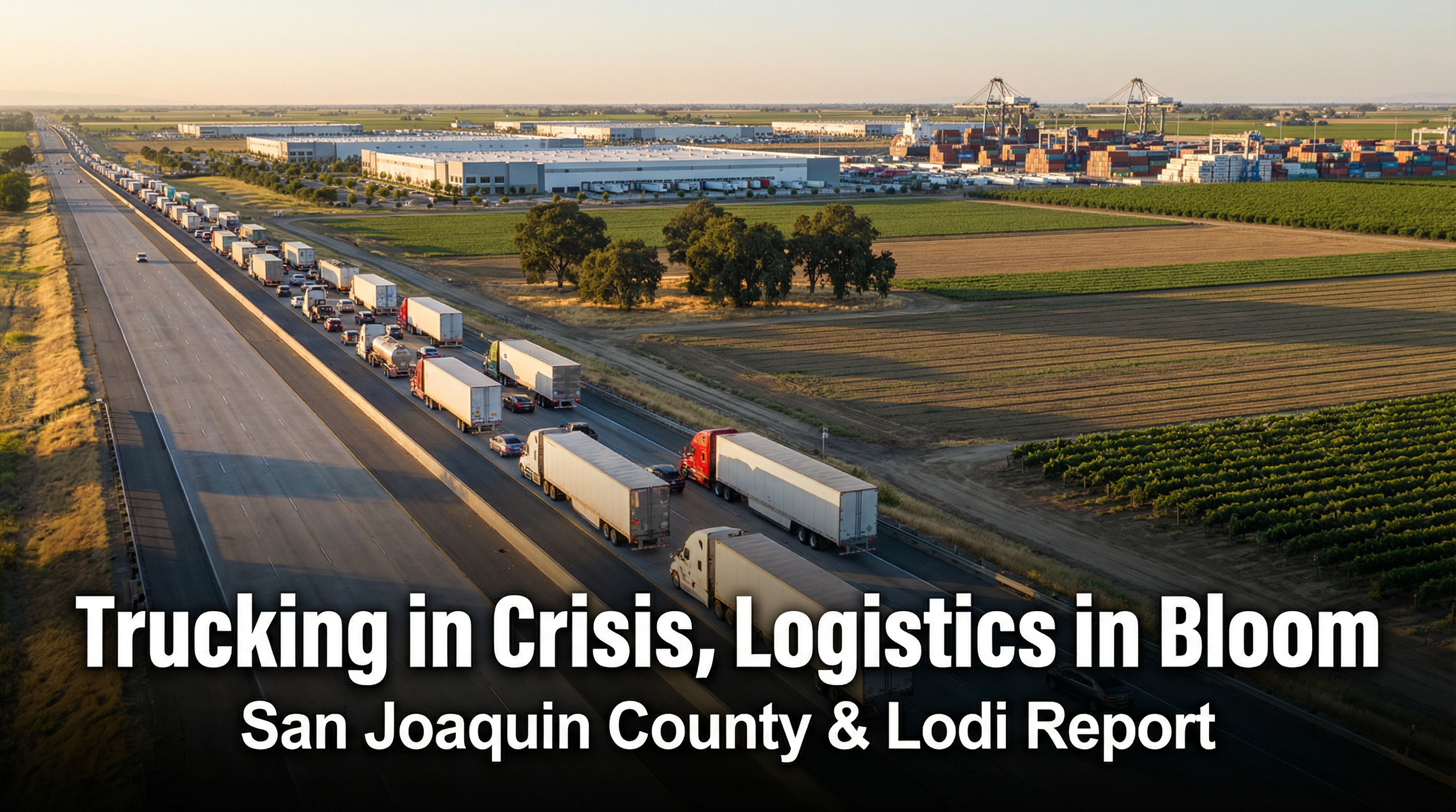
Trucking in Crisis, Logistics in Bloom
The U.S. trucking industry is enduring its longest freight recession this century — now stretching past three years. California faces additional headwinds from AB5 worker reclassification, Advanced Clean Trucks mandates, and the highest operating costs in the nation
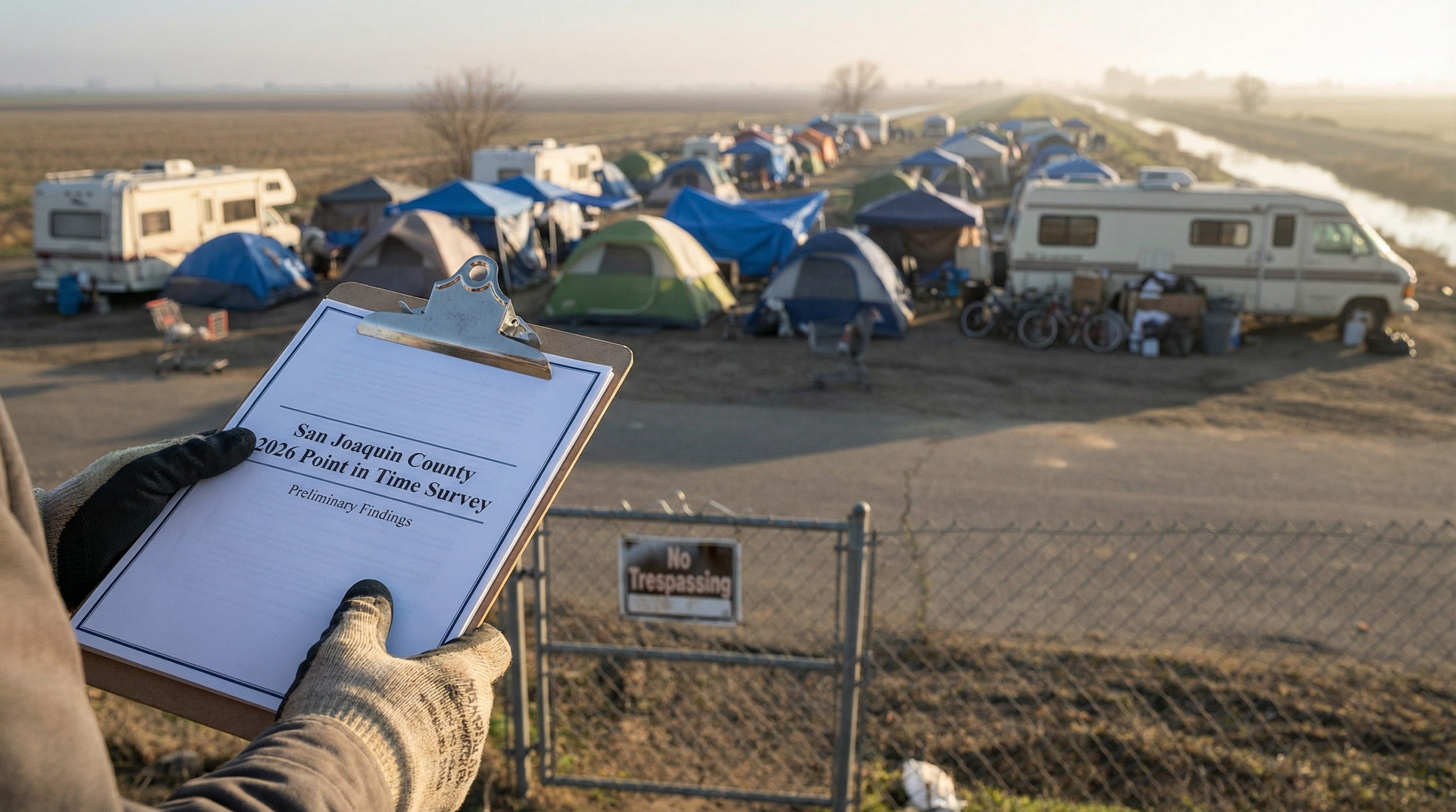
San Joaquin Point in Time Survey - January 2026
San Joaquin County will conduct its 2026 Point-in-Time (PIT) survey on January 27, 2026, marking another critical milestone in the federally mandated biennial effort to enumerate and characterize homelessness. This comprehensive report examines the history, methodology, accuracy, and policy applications of PIT surveys, with specific focus on San Joaquin County and Lodi.