
Invasive Species Watch: What Lodi Residents Need to Know
Lodi411 Resident Field Guide · June, 2026
Invasive Species Watch: What Lodi Residents Need to Know
Lodi sits in the heart of one of California's most important winegrape regions, surrounded by orchards, gardens, a maturing urban tree canopy, and the Sacramento–San Joaquin Delta. That same agricultural and ecological richness makes the area a target for invasive pests. This guide profiles the invasive species every Lodi household should be able to recognize — insects, a tree, a rodent, and a mollusk — and explains exactly how and where to report each one.
This guide covers the species Lodi residents are most likely to encounter or to be asked about: the insects threatening vineyards and orchards, the weed tree fueling future infestations, the invaders now established in the Delta and Mokelumne corridor, and a short watch list for the urban canopy. The connections matter. The glassy-winged sharpshooter spreads a disease that can kill grapevines and is already active in nearby counties. The spotted lanternfly is not yet established in California, but its favorite food is the tree of heaven — an aggressive weed tree already growing along Lodi's alleys and fence lines. The brown marmorated stink bug uses that same tree, and the Asian citrus psyllid threatens every backyard citrus in town. Out on the water, the golden mussel and nutria are reshaping the Delta. Knowing what you're looking at, and where to report it, is the resident's job.
Grape plants sold at local Costco stores may carry the glassy-winged sharpshooter
In late May 2026, the San Joaquin County Agricultural Commissioner's Office reported that inspectors found the glassy-winged sharpshooter on grape plants sold at Costco stores in Stockton, Lodi, Manteca, and Tracy. The plants were supplied by a wholesale nursery in Fresno County. Officials noted the food supply is not affected and that Costco was not at fault, because the problem originated with the nursery supplier.
If you bought a grape plant from one of those Costco locations between April 21 and May 19, 2026: do not plant, move, return, or throw the plant away. Isolate it and contact the County Agricultural Commissioner's Office at (209) 953-6000 or StocktonAg2@sjgov.org to arrange an inspection. An inspector will examine the plant and nearby vegetation and, if the pest is found, will remove and dispose of it safely. Monitoring traps may also be placed on the property.
The Insects
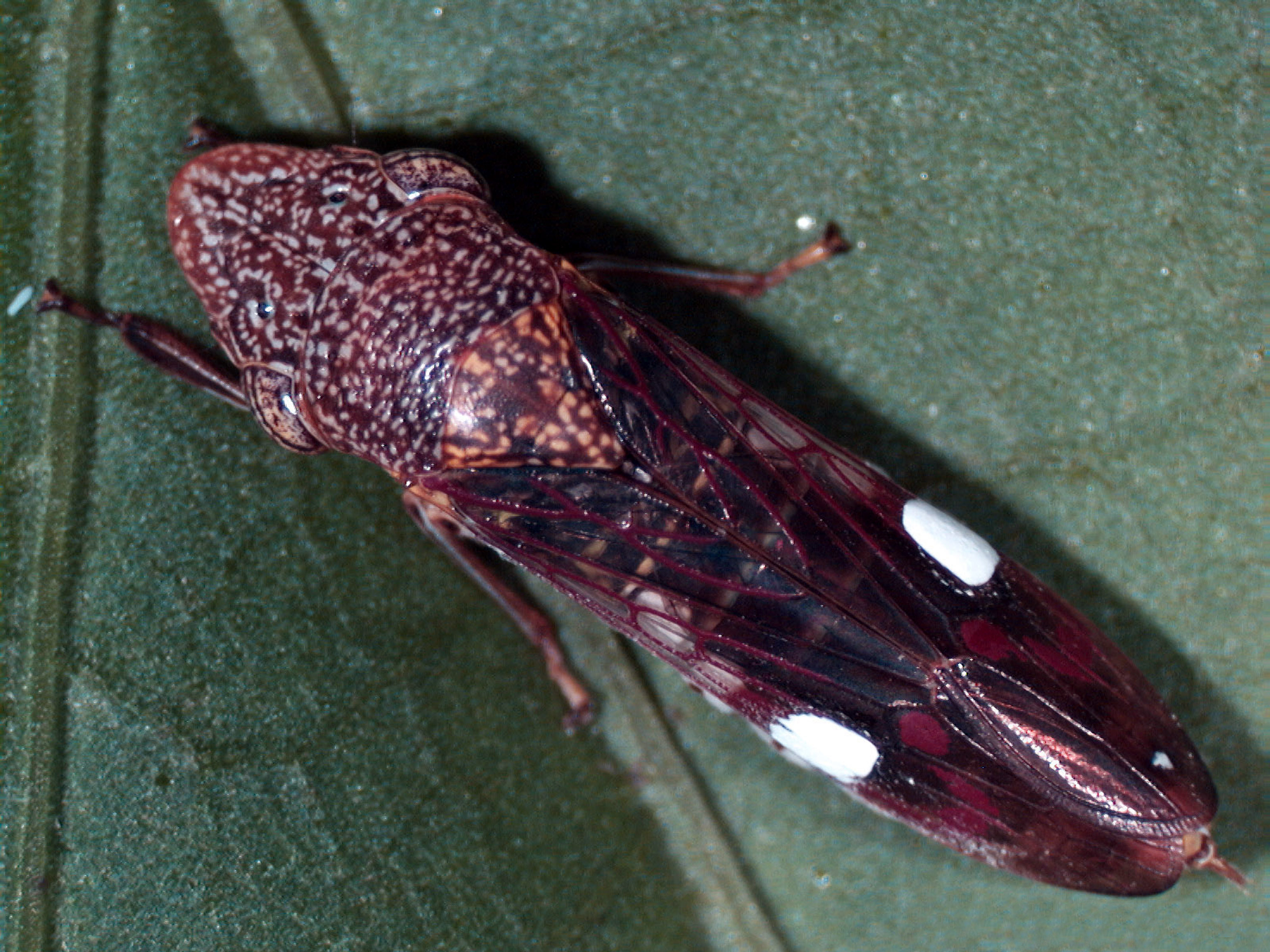
The glassy-winged sharpshooter is the one to worry about most right now. It is the primary carrier of the bacterium Xylella fastidiosa, which causes Pierce's disease — a death sentence for grapevines and a direct threat to Lodi's signature crop. It also damages almond, citrus, and ornamental plants and feeds on more than 250 plant species. The insect has been in California since about 1990, and breeding infestations have been confirmed as far north as El Dorado, Solano, and Stanislaus counties.
🔗 Learn more: UC IPM — Glassy-Winged Sharpshooter Pest Notes
How to identify it
If you see one
- Take a clear photo and note the exact location.
- Do not move any grape plants, nursery stock, or plant debris off the property.
- Report it to the San Joaquin County Agricultural Commissioner or the CDFA Pest Hotline (contacts below).
- Follow any inspection or treatment instructions the agency provides.
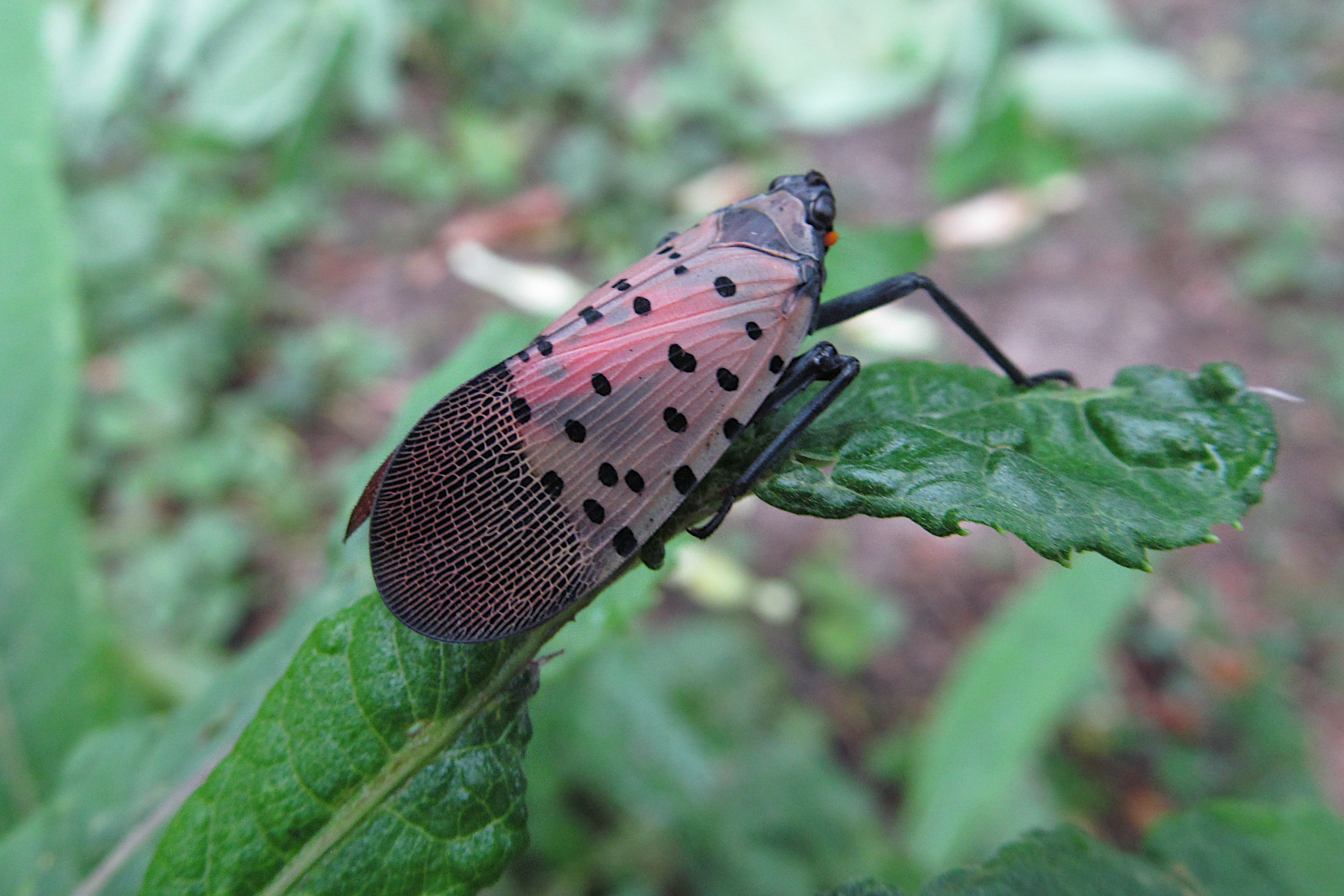
The spotted lanternfly is a striking planthopper native to Asia, first found in the United States in Pennsylvania in 2014 and now present in roughly twenty states. Live, breeding populations have not been found in the California environment, but dead specimens, a few live adults, and egg masses have been intercepted in shipments and at border stations — including lanternfly egg masses on firewood stopped at the Truckee inspection station. California has had an exterior quarantine in place since 2021 to keep it out. If it ever establishes here, it would threaten winegrapes, fruit, hops, and hardwood trees.
🔗 Learn more: CDFA — Spotted Lanternfly Pest Profile
How to identify it
If you see one
- Take a clear photo and note the location, then call the CDFA Pest Hotline at 1-800-491-1899.
- If safe to do so, kill the insect; adults and nymphs can be squished.
- Scrape any egg masses into a bag or container of rubbing alcohol or soapy water to destroy them.
- Do not move firewood, plants, or outdoor items that could be carrying eggs.
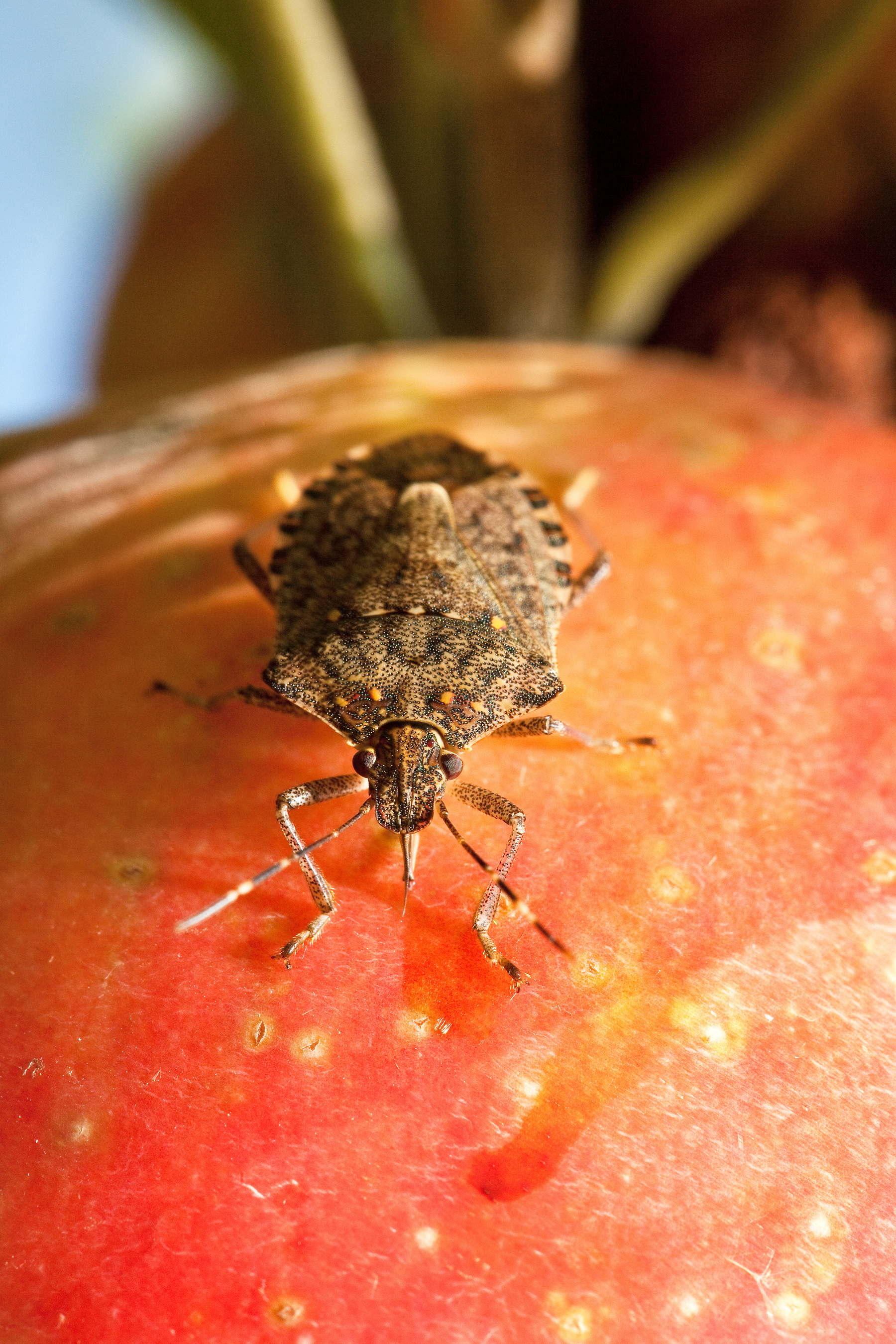
The brown marmorated stink bug is the other major pest that loves tree of heaven, and it is already widely established — present in roughly 16 California counties and detected in more than 20 additional ones. It feeds on more than 170 plants, including most of what Lodi grows in the field and the backyard: grape, pear, apple, stone fruit, citrus, almond, hazelnut, and a long list of vegetables and ornamentals. In late fall it also becomes the household nuisance pest people complain about, crowding into homes by the dozens to overwinter.
🔗 Learn more: UC IPM — Brown Marmorated Stink Bug Pest Notes
How to identify it
If you find them
- In the garden or orchard: photograph and report unusual concentrations to the San Joaquin County Agricultural Commissioner; this helps track the local population.
- Indoors: vacuum them up (a shop vac or a sock-lined hose attachment keeps the smell out of the machine) and empty the bag outside.
- Don't squish them indoors — the odor lingers.
- Before fall, seal gaps around windows, vents, and utility penetrations to keep them out.
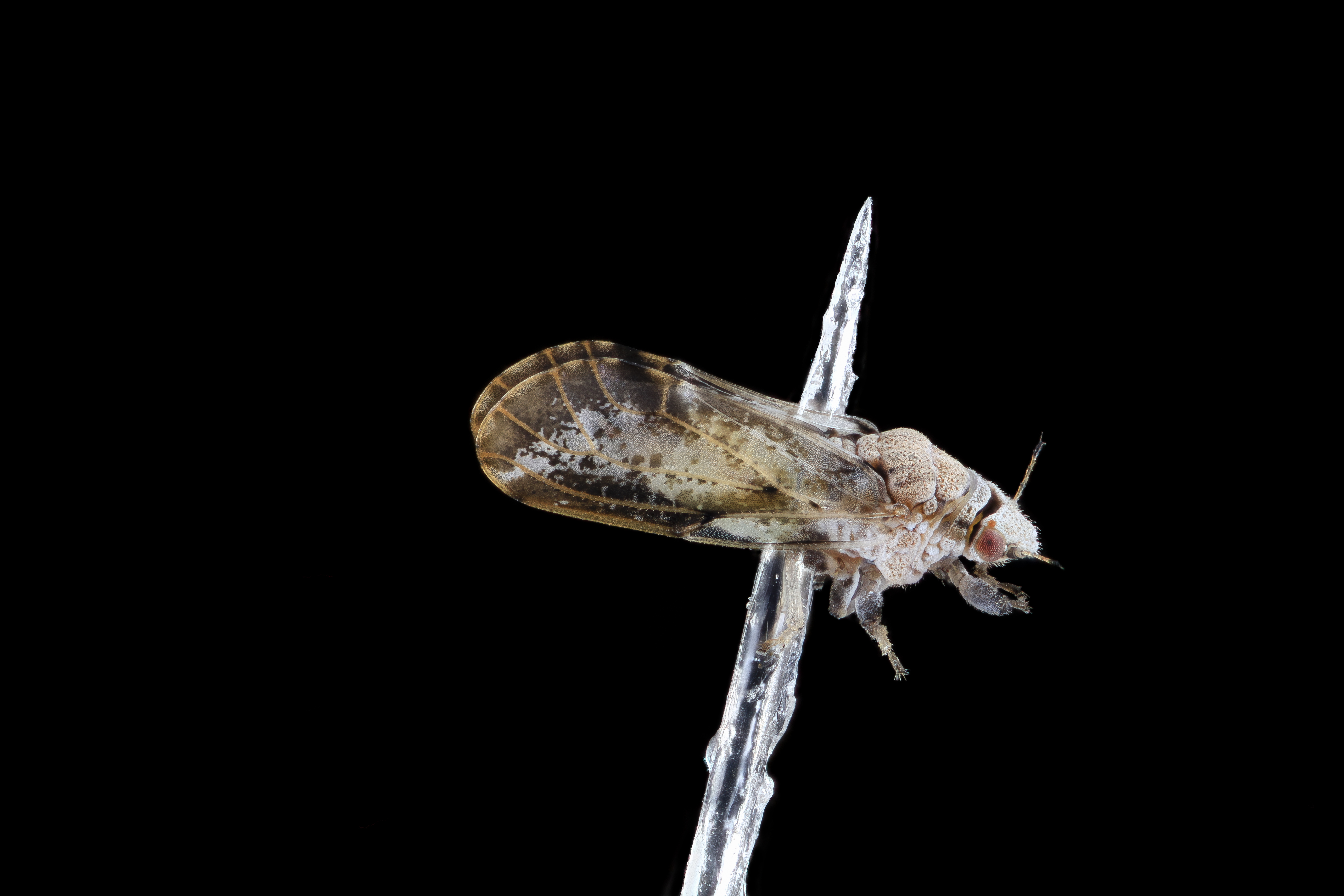
The Asian citrus psyllid is a tiny sap-feeding insect, but its consequence is enormous: it spreads huanglongbing (HLB, also called citrus greening), the most serious disease of citrus in the world. There is no cure. The psyllid itself is already partially established in San Joaquin County. HLB has so far been confirmed in Los Angeles, Orange, Riverside, San Bernardino, San Diego, and Ventura counties, and keeping it out of the Central Valley depends on residents catching infected trees early. If you have a lemon, orange, mandarin, lime, kumquat, or any citrus relative in your yard, this section is for you.
🔗 Learn more: UC IPM — Asian Citrus Psyllid & Huanglongbing
How to identify it
If you see psyllids or suspect HLB
- Photograph the insects on the new growth, ideally from the side to show the tilted feeding angle.
- Photograph any suspicious leaves and fruit; note the exact tree location.
- Call the CDFA Pest Hotline at 1-800-491-1899 or contact the San Joaquin County Agricultural Commissioner.
- Don't prune, move, or destroy the tree before an inspector responds — the agency needs the evidence in place.
The Plant
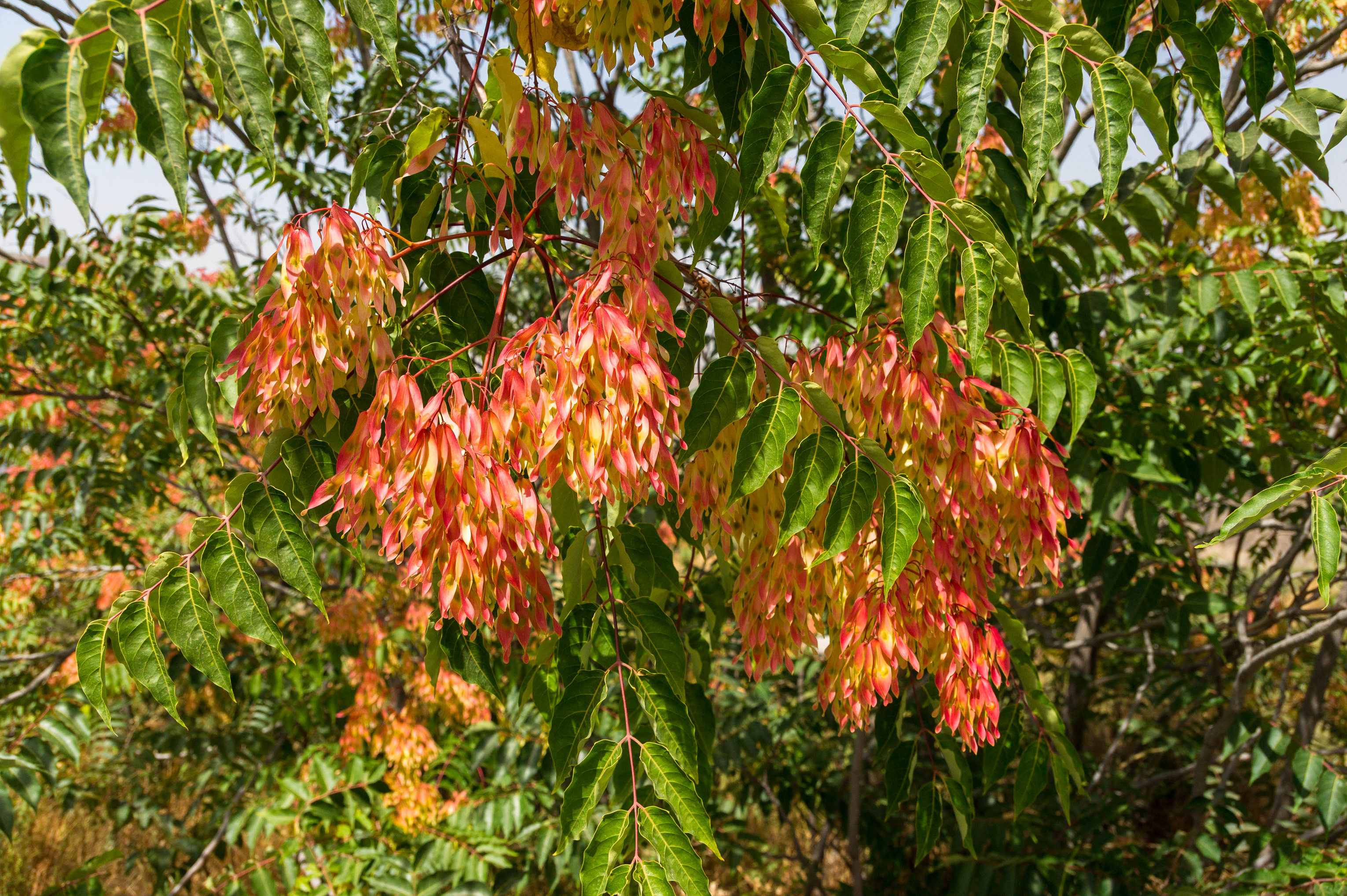
Despite the pleasant name, tree of heaven is an aggressive invasive tree on California's noxious weed list. Brought from China in the 1700s as an ornamental, it now grows along roadsides, alleys, vacant lots, fence lines, and riverbanks throughout the state. It spreads by both windblown seed and dense root suckers, a mature tree can produce hundreds of thousands of seeds a year, and its roots damage sewers, sidewalks, and foundations. Critically, it is the preferred host of the spotted lanternfly (and a favorite of the brown marmorated stink bug), so removing it is a frontline defense against future infestations.
🔗 Learn more: CDFA — Tree of Heaven (Ailanthus) Weed Profile
How to identify it
If you find it on your property
- Note the location and rough size; report large stands to the County Agricultural Commissioner.
- Do not simply cut it down — cutting alone triggers aggressive root sprouting that makes the problem worse.
- Effective removal usually requires a targeted herbicide treatment (cut-stump or basal-bark application). Consider consulting a licensed professional for established trees.
- Replace removed trees with native or non-invasive species.
In the Delta and Wetlands
Lodi's water story runs through the Mokelumne River, Lodi Lake, and the Sacramento–San Joaquin Delta. Two recent invaders are reshaping all three. One is a fingertip-size mollusk that arrived in 2024 and is already triggering local emergency declarations. The other is a forty-pound rodent that has been quietly chewing through Delta marshes since 2017.
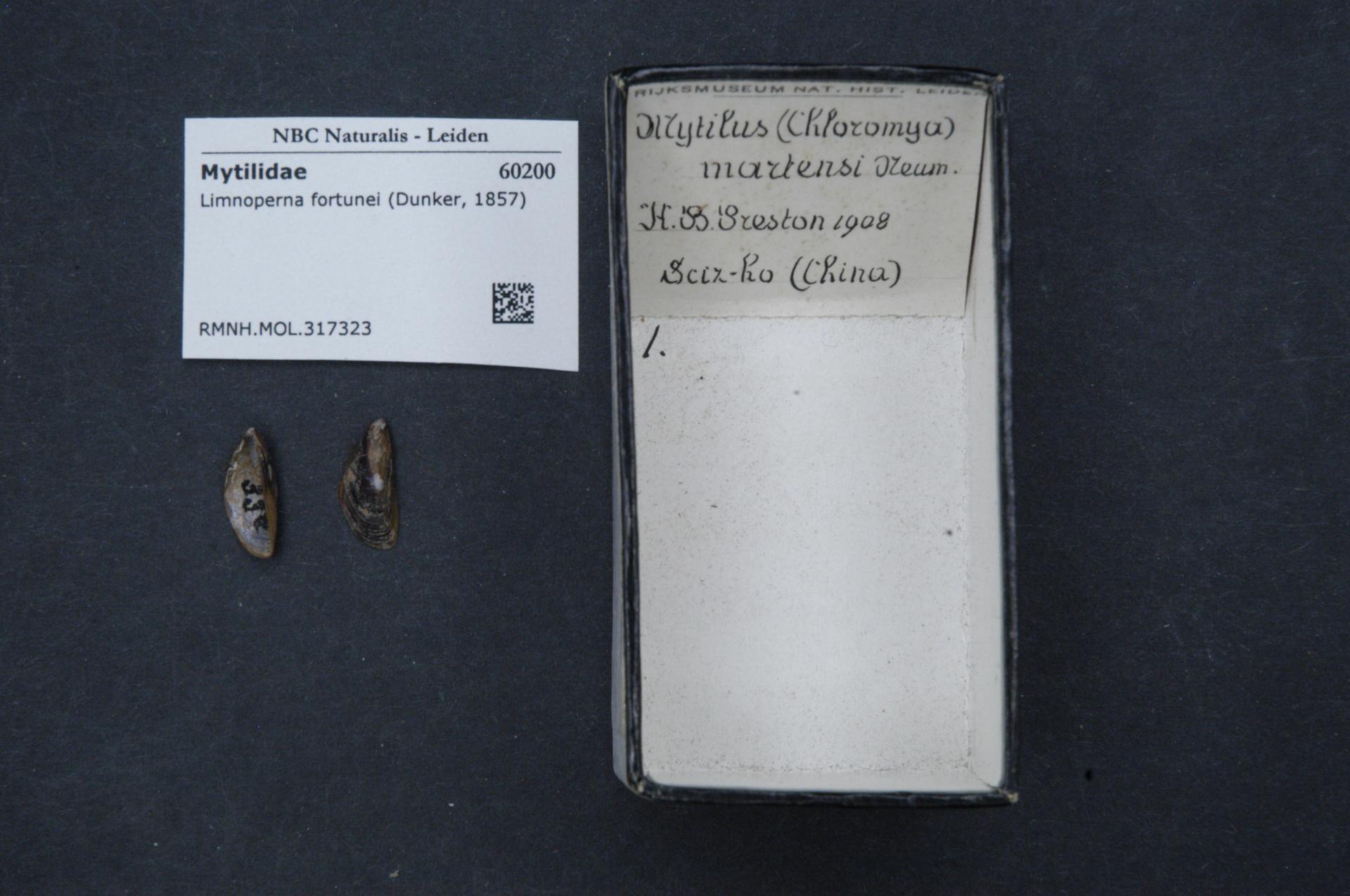
The golden mussel was first found in North America near the Port of Stockton in October 2024 — almost certainly arriving in a freighter's ballast water from Asia. State officials believe the population had probably been there for a couple of years already. In April 2026 the San Joaquin County Board of Supervisors proclaimed a local emergency over the threat. The mussel has since been detected in roughly thirty locations across the Delta and in reservoirs that receive Delta water, and East Bay Municipal Utility District has restricted boat access at Camanche and Pardee on the Mokelumne to slow the spread. Experts now consider full eradication unlikely; the goal is to keep it out of as many uninfested waters as possible.
🔗 Learn more: CDFW — California's Invaders: Golden Mussel
How to identify it
If you boat, fish, or paddle locally
- Clean, drain, and dry your boat, trailer, paddleboard, and gear between every waterbody — every time.
- Check launch requirements before you go; many local reservoirs now require inspection, quarantine periods, or tamper-proof bands.
- If you see mussels attached to a dock, boat, or other surface, photograph them with a hand or coin for scale and report immediately to CDFW.
- Report sightings to the CDFW Invasive Species Program at (866) 440-9530 or invasives@wildlife.ca.gov.
The nutria is a large, semi-aquatic South American rodent that California thought it had eradicated by 1978. In 2017 a pregnant female was killed in Merced County, and the species has since spread through the southern Delta and the San Joaquin Valley — San Joaquin County was among the first counties to record the new infestation, in the marshes near the river. The state's eradication program has trapped thousands of animals, but new detections continue, including expansion into the northwestern Delta and the San Joaquin River corridor. A single female can produce up to 200 offspring in a year, and a colony's burrows can compromise levees that protect cities, farms, and the state's water supply — which is the larger reason the program exists.

🔗 Learn more: CDFW — Nutria in California
How to identify it
If you see one
- Photograph the animal — the program asks specifically for views of the tail, the hind foot, and the whiskers, with a size reference if you can manage it.
- Do not approach, capture, or harm the animal yourself.
- Report immediately to the CDFW Invasive Species Program at (866) 440-9530 or invasives@wildlife.ca.gov.
- Landowners near the river or marshes can grant CDFW survey teams written permission to enter; this materially helps the eradication effort.
Urban Canopy Watch List
Three tree-boring beetles are spreading in California and threaten the species Lodi's urban canopy depends on. None has been confirmed established in San Joaquin County, but residents and arborists should know the names, the signs, and the firewood rule.
🔗 Learn more: UC IPM — Invasive Shothole Borers · Goldspotted Oak Borer (GSOB.org)
How and where to report
Residents are the front line for early detection. When you report, include a clear photo and the exact location, and do not move the insect or plant material before an inspector responds.
CDFA Pest Hotline (statewide)
1-800-491-1899
California Department of Food and Agriculture — for spotted lanternfly, glassy-winged sharpshooter, and other invasive pest sightings.
Online: the CDFA "Report a Pest" tool at cdfa.ca.gov
San Joaquin County Agricultural Commissioner
(209) 953-6000
Email: StocktonAg2@sjgov.org
Main office: 2101 E. Earhart Ave., Suite 100, Stockton, CA 95206
Lodi office: 10 W. Locust Ave., Lodi, CA 95240 — (209) 331-7287
CDFW Invasive Species Program (aquatic and wildlife)
(866) 440-9530
Email: invasives@wildlife.ca.gov
California Department of Fish and Wildlife — for nutria, golden mussel, and other aquatic and wildlife invasives. Online sighting reports also accepted via the CDFW Invasive Species Program website.
How residents can help
- Inspect what you bring home. Check vehicles, trailers, firewood, and outdoor furniture for egg masses and hitchhiking insects, especially after travel to states where the spotted lanternfly is established.
- Buy plants from reputable sources. Inspect new nursery stock — particularly grapevines and citrus — and ask whether shipments came from a quarantine area. Buy citrus only from licensed nurseries with a CDFA certification tag.
- Don't move firewood across county or state lines. Firewood is a primary spreader for the spotted lanternfly, the goldspotted oak borer, and other tree pests.
- Boaters and paddlers: clean, drain, and dry. Every waterbody, every time. Comply with launch inspections and quarantine requirements at Camanche, Pardee, and other regional reservoirs — they are the best tool to keep the golden mussel out of new waters.
- Inspect backyard citrus for the Asian citrus psyllid on tender new growth, especially in spring and summer; don't move citrus plants, cuttings, leaves, or homegrown fruit out of your yard.
- Learn to recognize tree of heaven and remove it properly from your property — it is the spotted lanternfly's preferred host and a magnet for the brown marmorated stink bug.
- Watch the canopy. Annual inspection of mature valley oaks, blue oaks, and sycamores for unexplained dieback or entry holes is a small investment that catches borer infestations early.
- Report early. A photo and a phone call cost nothing; a missed infestation can cost the region's vineyards, gardens, levees, and waterways dearly.
LodiEye is the investigative research and publishing arm of Lodi411.com. It is not a traditional newsroom, and its founder is not a journalist by training. Residents seeking original local reporting should turn to professional outlets including the Lodi News-Sentinel and Stocktonia, and to statewide coverage from the Sacramento Bee and CalMatters. This report synthesizes publicly available guidance from agricultural and regulatory agencies into a practical reference for Lodi households; it is offered as a civic resource, not as a substitute for the work of those newsrooms or for the official instructions of state and county agencies.
The report was assembled with the help of AI research tools across five capacities:
- Source Discovery — Claude and Perplexity located primary guidance from the California Department of Food and Agriculture, the California Department of Fish and Wildlife, USDA APHIS, University of California agricultural extension resources, and the San Joaquin County Agricultural Commissioner.
- Credibility Validation — claims were checked against official agency publications and current local reporting.
- Analysis and Synthesis — the material was organized into resident-facing identification and reporting guidance.
- Presentation — content was formatted for readability and accessibility.
- Final Review — the founder and editor reviewed and approved all content prior to publication and is responsible for it.
Corrections and additions are welcome at editor@lodi411.com.