Lodi Eye
LodiEye provides additional information on trending stories / topics published by local media and shared on local social media accounts.
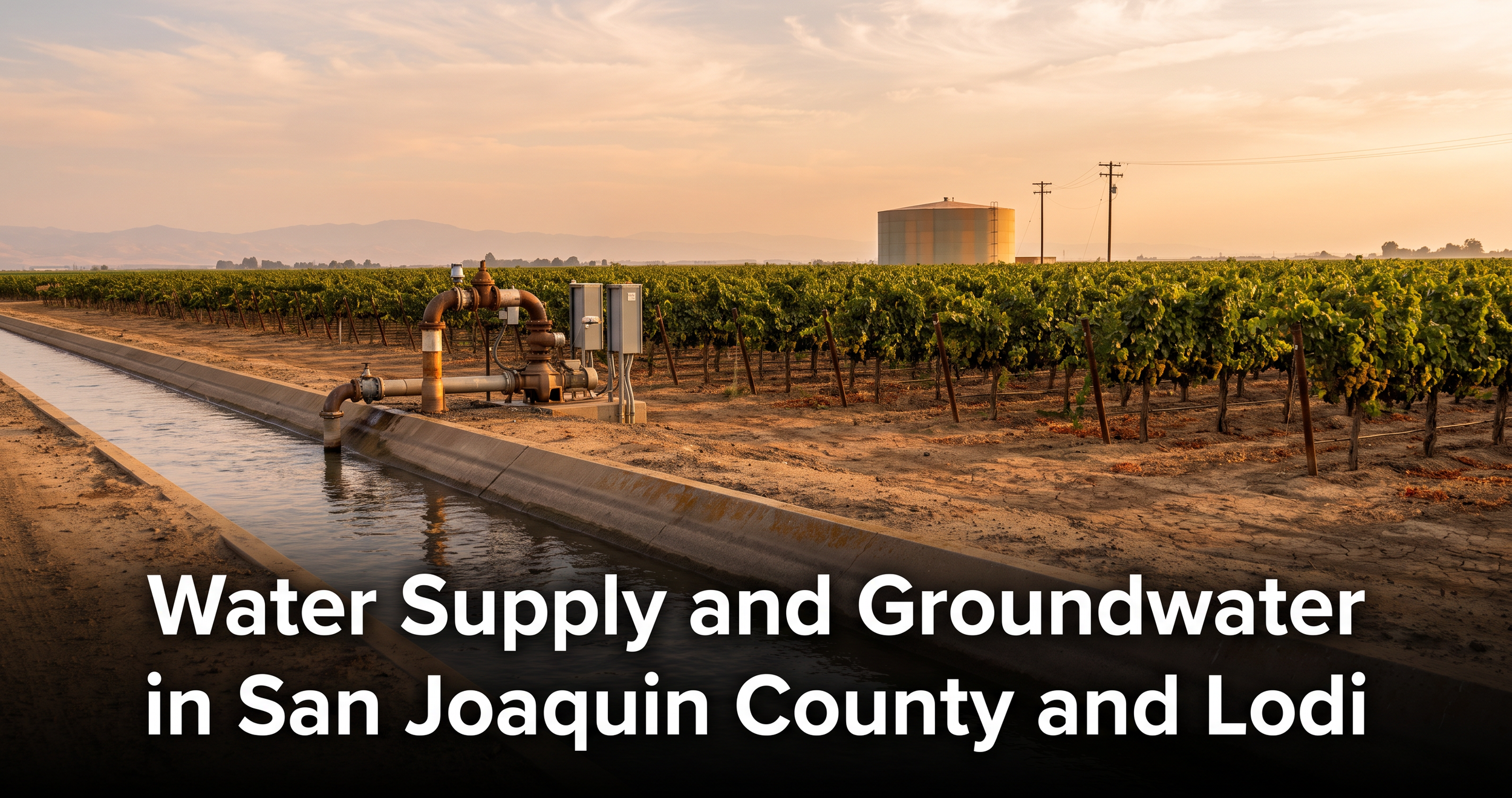
Water Supply and Groundwater in San Joaquin County and Lodi
Lodi and eastern San Joaquin County draw on two water systems that behave very differently. One is the Mokelumne River, delivered to Lodi through a 40-year contract with Woodbridge Irrigation District and backed by some of the oldest water rights on the river. The other is the groundwater under our feet, the Eastern San Joaquin Subbasin, a 707,000-acre aquifer the state has classified as critically overdrafted, meaning more is being pumped out than is going back in. Roughly half of Lodi's drinking water comes from each.
The near-term picture is stable. Groundwater levels in the subbasin are holding, there is no measurable land subsidence, water quality at the basin scale is within targets, and Lodi has banked more than 53,000 acre-feet of unused river water since 2003. (An acre-foot is about 326,000 gallons, roughly what two or three households use in a year.) The long-term picture is not resolved. The subbasin loses about 89,000 acre-feet of storage a year on average, and the Groundwater Authority's own model says pumping must fall by about 95,000 acre-feet a year to stop the decline. Projects now funded cover about a third of that. The rest depends on a large program to store extra Mokelumne River water underground in wet years, which is still waiting on a state water-rights decision, or on a program to limit pumping that the Authority acknowledges could limit growth.
Four statewide decisions now in motion will shape which of those paths the region takes: the Delta tunnel, the Sites reservoir, the Bay-Delta Plan's flow requirements, and the Colorado River settlement. Dan Walters laid these out in a September 11 CalMatters column, “California's future water supplies depend on the outcomes of four intertwined battles,” which argues that the next few months of decisions on those four fronts will determine how water is managed and allocated for decades, with a governor trying to settle two of them before leaving office. This report takes his statewide framing and follows it down to San Joaquin County and Lodi. Three of the four fronts touch the county directly, and the nearest is the State Water Board's October 28–29 hearing on adopting the Bay-Delta Plan update, which sets the flow rules for the Mokelumne.
The risk is not evenly shared. Groundwater-dependent farms outside the surface-water districts and rural residents on private wells carry the most exposure. City of Lodi water customers carry the least in the near term, with their exposure showing up later as rates and growth limits rather than shortages.

It's Here: El Niño Arrives Ahead of Schedule — and the Forecast Keeps Climbing
When LodiEye published its April climate brief, El Niño was a forecast — a near-universal model signal that NOAA still handicapped at 61%. Four months later, the question mark is gone. El Niño conditions are present in the equatorial Pacific, NOAA has upgraded from El Niño Watch to a full El Niño Advisory, and its July 9 diagnostic discussion gives the event a 97% chance of persisting through early spring 2027 — with an 81% chance of reaching "very strong" status during October–December, which would place it among the largest El Niño events in the record going back to 1950.
The local stakes have sharpened, too. California's reservoirs enter fall in good shape — welcome news that also means the flood-control buffer is thinner than it would be coming out of a deep drought. The record marine heatwave off the coast has persisted and intensified, tropical moisture is already reaching Southern California, and the state has begun stockpiling flood-fight supplies at a scale that signals how seriously Sacramento is taking the winter ahead. The April caveats still hold — a strong El Niño label describes the ocean, not California's rainfall — but the probability needle has moved decisively since spring.
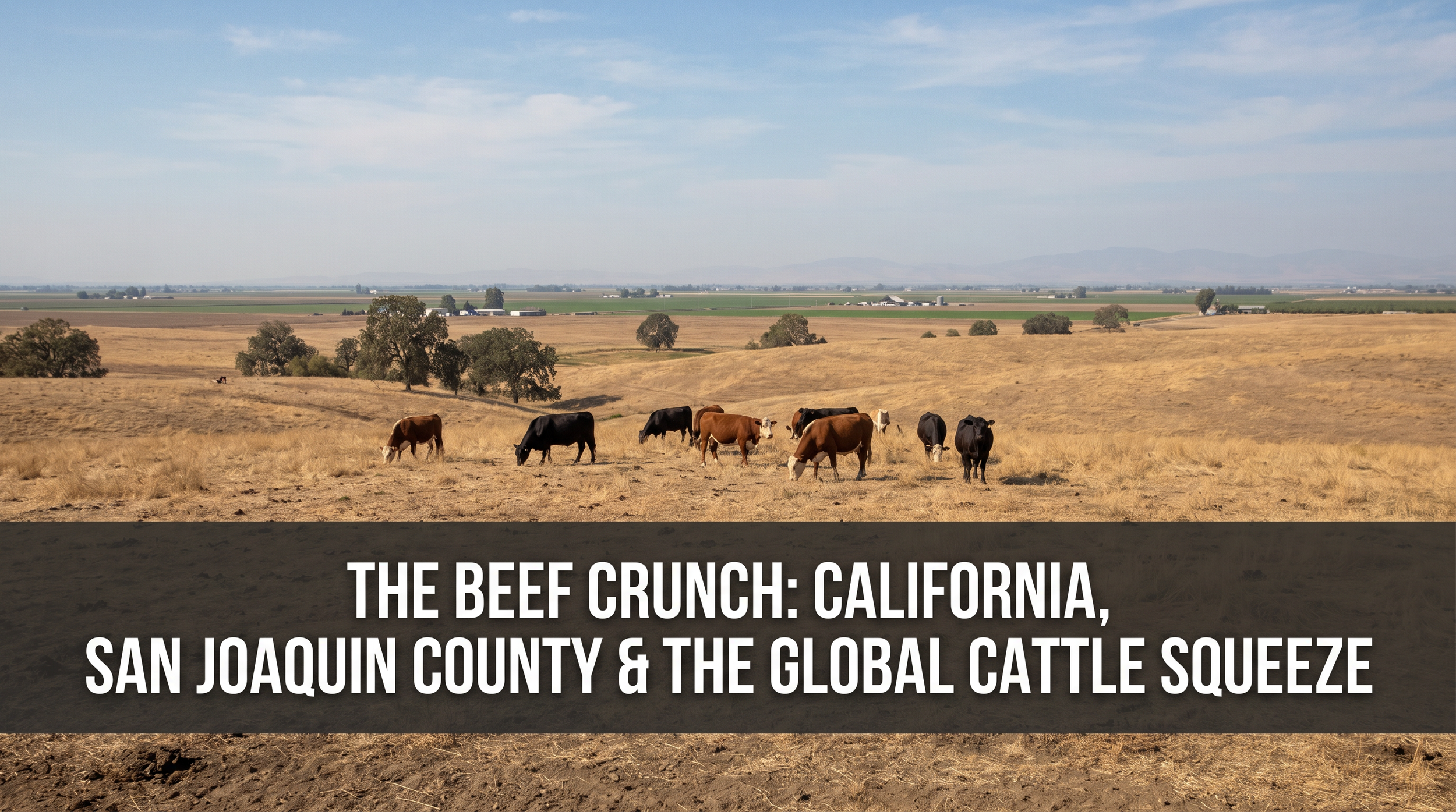
The Beef Crunch: California, San Joaquin County & the Global Cattle Squeeze
The U.S. cattle herd is at a 75-year low. Retail beef hit record prices in May 2026. New World Screwworm arrived on U.S. soil for the first time since the 1960s. Mexico has kept its border closed to U.S. live cattle imports for over a year. A historic drought is forcing Central Valley ranchers to liquidate breeding females at the worst moment in the price cycle. This report ties together what all of it means for San Joaquin County producers, California agriculture, the national supply chain, and the import market now filling the gap.
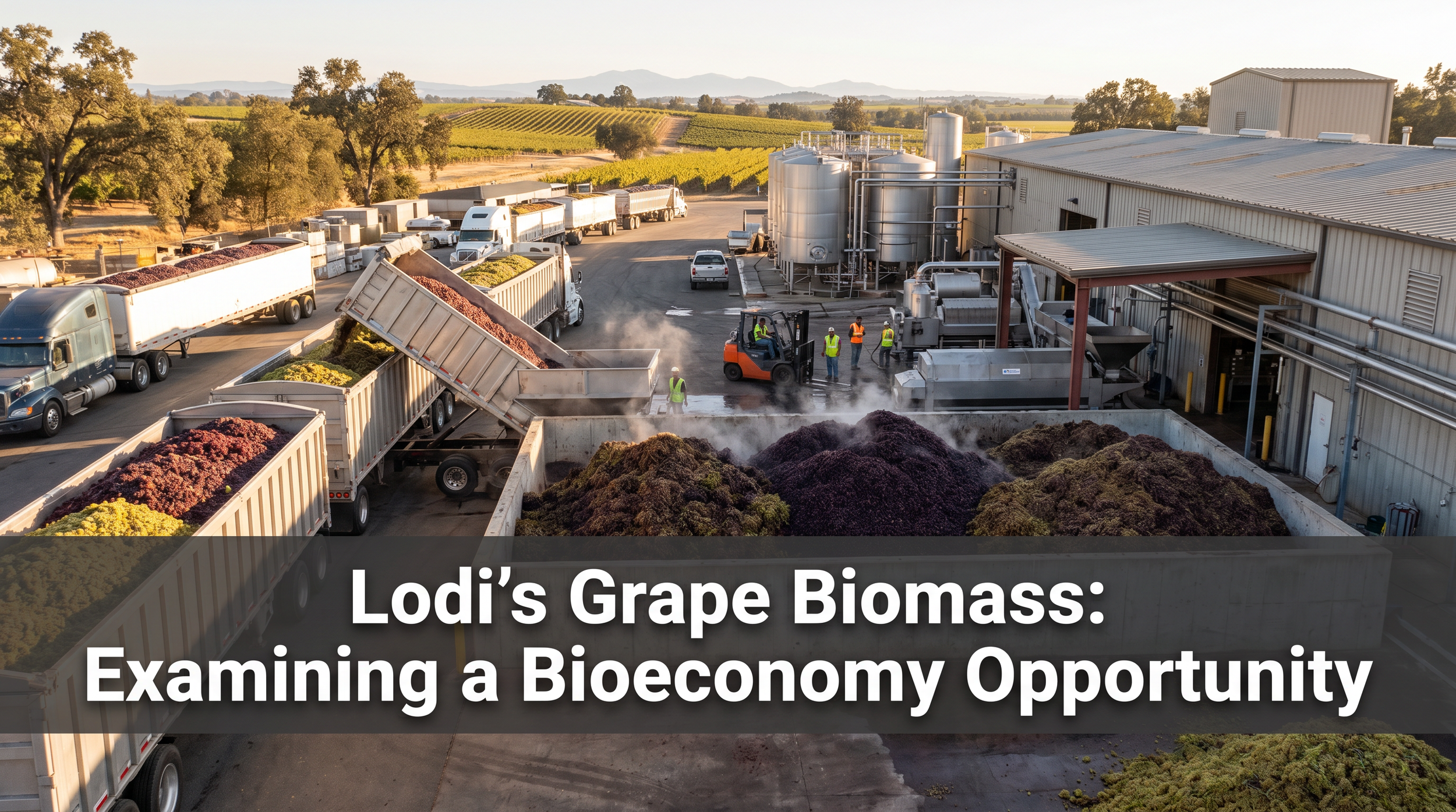
Lodi's Grape Biomass: Examining a Bioeconomy Opportunity
Lodi's wineries and vineyards produce a large, steady stream of organic leftovers every year: grape pomace (the skins, seeds, and stems left after grapes are pressed), wine lees (the settled solids from fermentation), and the wood from pruned and pulled vines. Most of it is composted, spread on fields, or hauled away. A Modesto-based nonprofit, BEAM Circular, is building a North San Joaquin Valley "bioeconomy" that turns farm and food waste into higher-value products and jobs — but its certified raw-material program is built around nuts and orchard wood, not grapes.
This report examines a question, not a plan: could Lodi's grape leftovers anchor a grape-and-wine version of that idea? It lays out what the raw numbers look like, how Lodi compares to facilities already running overseas, what other California wine regions are doing, the rough economics, and which local organizations would need to weigh in. It is a starting point for a local conversation.
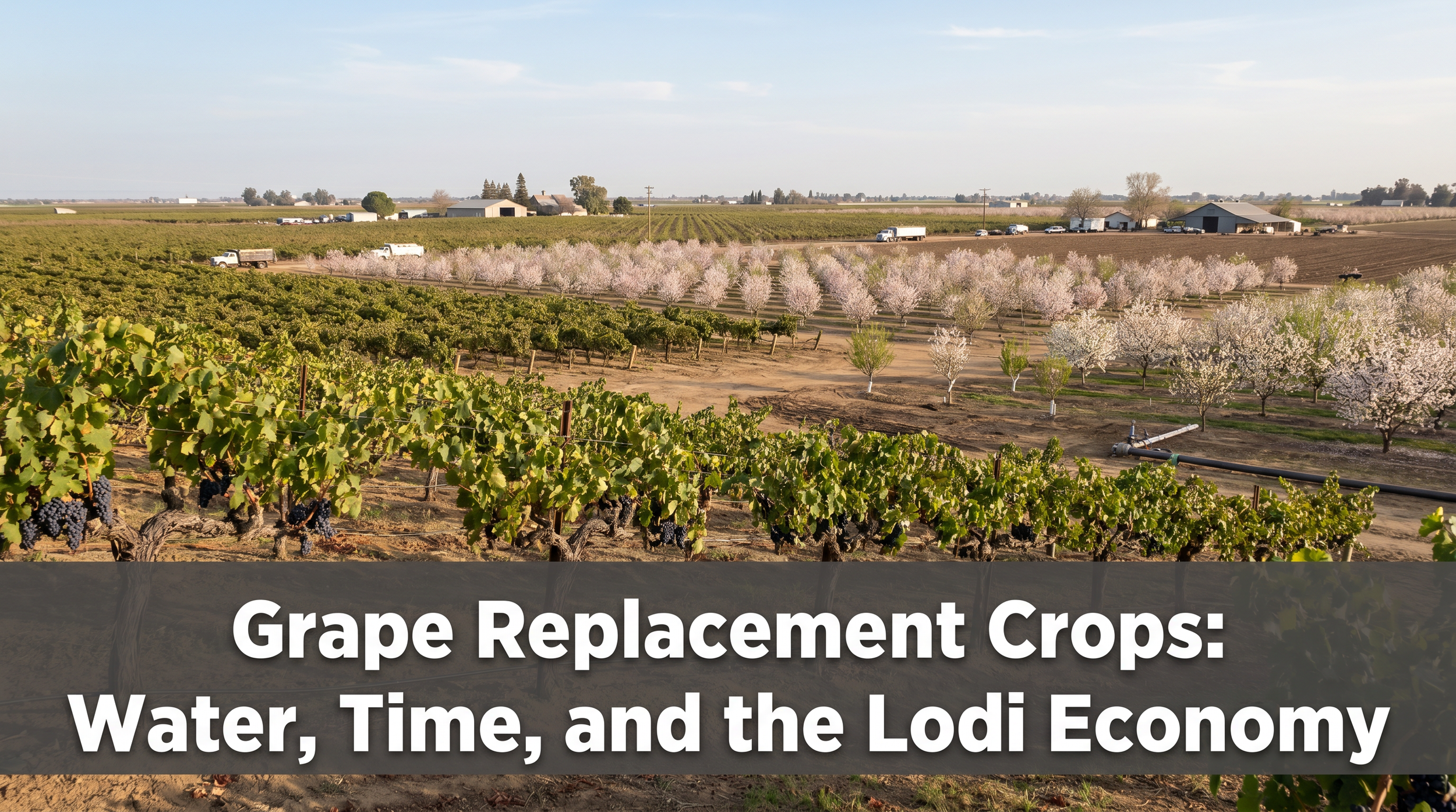
Grape Replacement Crops: Water, Time, and the Lodi Economy
As Lodi growers pull unprofitable vineyards, the land is moving into a mix of other crops — almonds, walnuts, pistachios, olives, and cherries among them. The shift carries three consequences the county should weigh together: how much water the land draws, how many years pass before the new planting earns anything, and what the change does to the visitor-and-hospitality economy that wine — not the grape alone — anchors in Lodi. This is a first look, drawn from the public record; where it runs out, the limits are noted plainly.
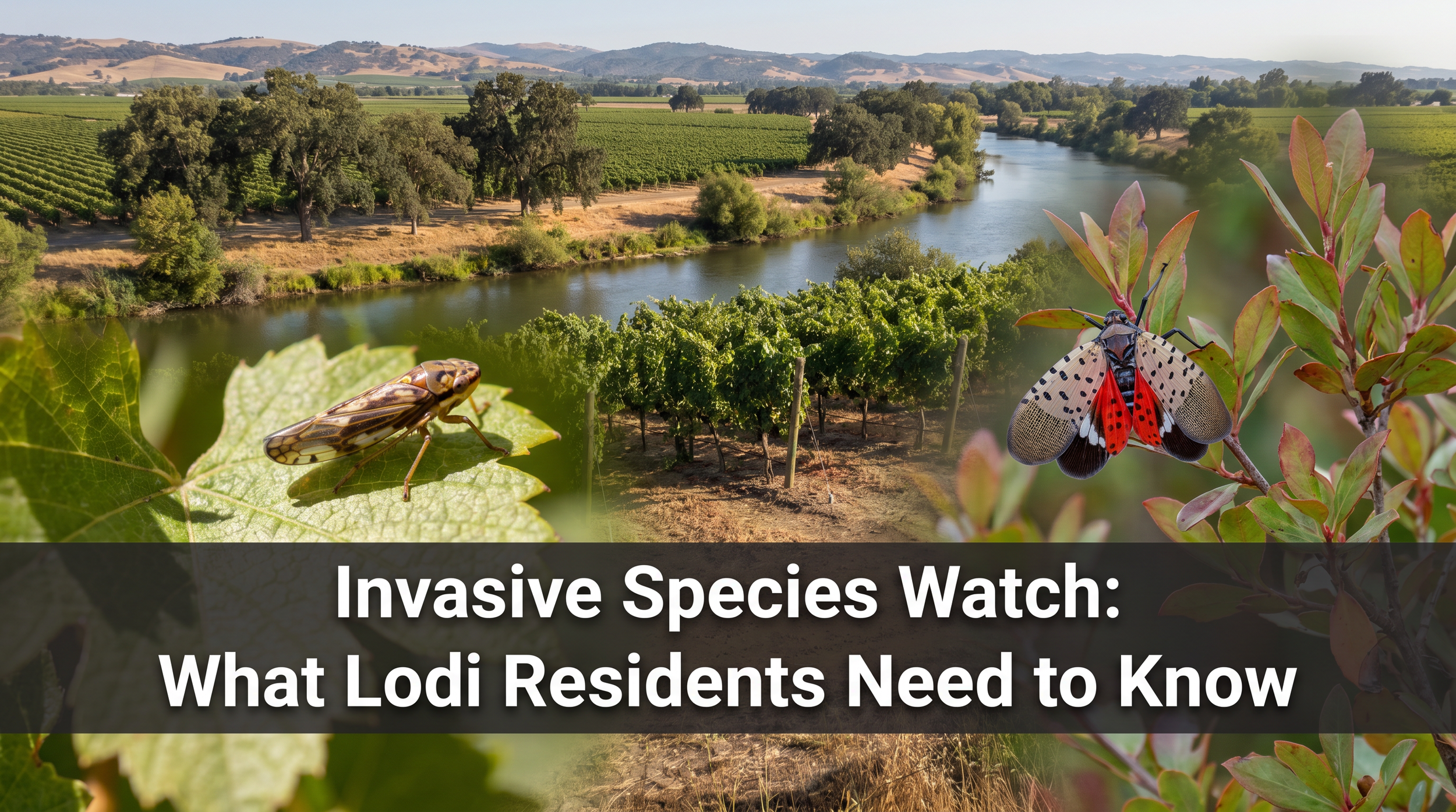
Invasive Species Watch: What Lodi Residents Need to Know
Lodi sits in the heart of one of California's most important winegrape regions, surrounded by orchards, gardens, a maturing urban tree canopy, and the Sacramento–San Joaquin Delta. That same agricultural and ecological richness makes the area a target for invasive pests. This guide profiles the invasive species every Lodi household should be able to recognize — insects, a tree, a rodent, and a mollusk — and explains exactly how and where to report each one.
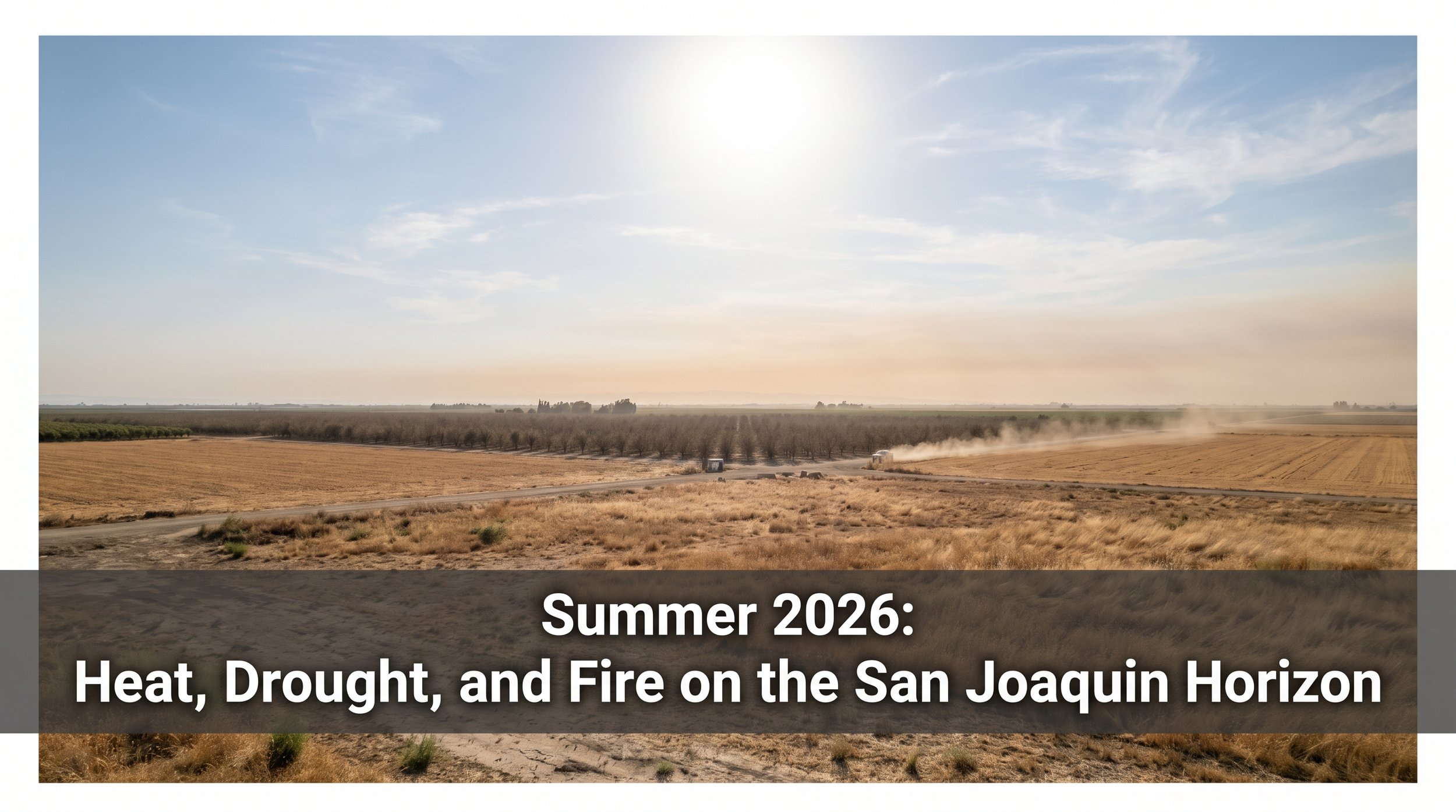
Summer 2026: Heat, Drought, and Fire on the San Joaquin Horizon
A dry winter, an early-melting Sierra snowpack, and an El Niño taking shape in the Pacific have set up a hot, fire-prone summer for the Central Valley. Forecasters expect hotter-than-normal temperatures across California through August and a higher-than-normal risk of large wildfires in northern California from July into September. Reservoir storage offers a cushion, but residents should expect more triple-digit days, warmer nights, and elevated air-quality and fire risk, while growers face tighter water and a fire window that overlaps the Lodi grape harvest.
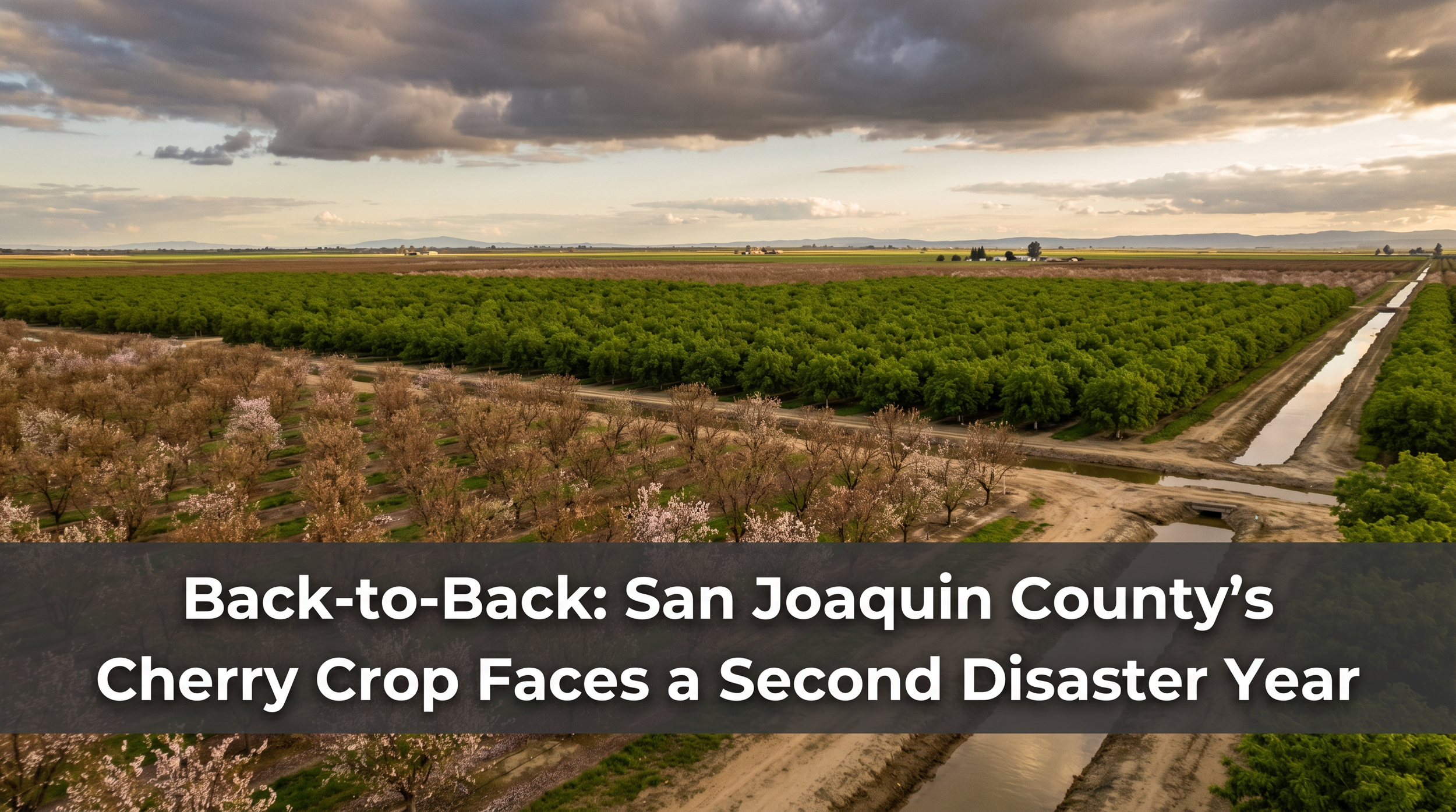
Back-to-Back: San Joaquin County's Cherry Crop Faces a Second Disaster Year
The rain that flooded Lodi strawberry stands in April 2026 is the local-color image of a larger economic story playing out in San Joaquin County's orchards and vineyards. Cherries — the county's fourth most valuable crop and roughly half of California's cherry production — face the possibility of a second consecutive disaster-declaration year after a damaging storm hit during the most vulnerable ripening window.
The structural headline is not the April rain itself. It is what two disaster years in a row would do to a crop economy that has already been trending downward in value since 2022. A quieter walnut subplot and a multi-year Lodi wine-industry pressure round out the real county-level picture.
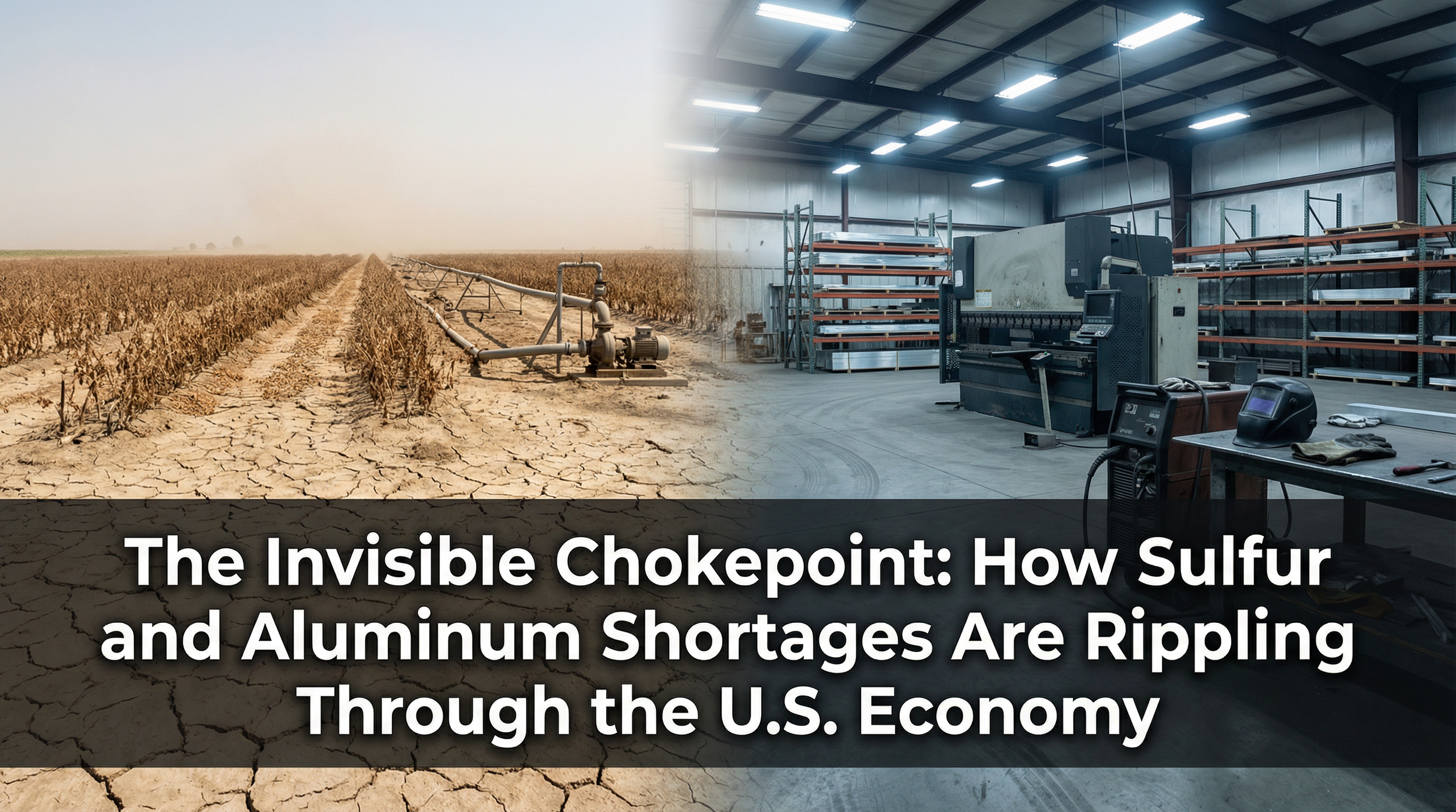
The Invisible Chokepoint: How Sulfur and Aluminum Shortages Are Rippling Through the U.S. Economy
The closure of the Strait of Hormuz has cut off nearly half of the world’s seaborne sulfur supply and 9% of global aluminum production — disruptions far less visible than oil but potentially more consequential. On April 13, the U.S. Navy began enforcing a blockade of Iranian ports, further tightening supply after peace talks collapsed. Sulfur, a byproduct of petroleum refining, is the feedstock for sulfuric acid — the most-used industrial chemical on earth. Without it, phosphate fertilizer production halts, copper and nickel refining slows, EV battery supply chains seize, and U.S. defense manufacturing faces critical shortages. This investigation traces the sulfur and aluminum cascades from Persian Gulf terminals to California farm fields and American factory floors.

Summer in March: The Heat Dome Rewriting the West's Future
An unprecedented ridge has shattered records across 23 states, decimated snowpack, and pushed the Colorado River system toward its most dangerous water year on record. Here’s what the science says, where the models are failing, and what it means for San Joaquin County and Lodi.
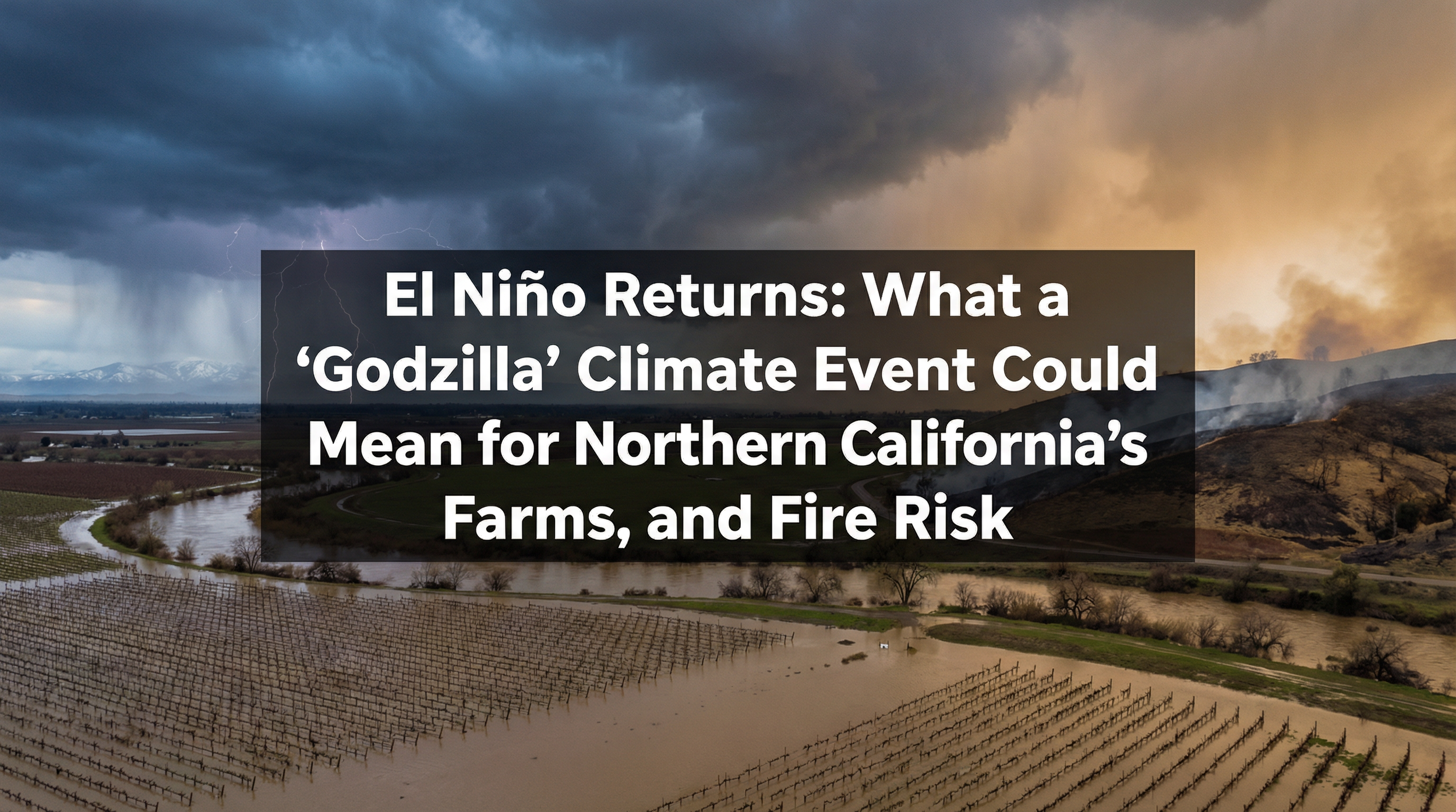
El Niño Returns: What a “Godzilla” Climate Event Could Mean for Northern California’s Water, Farms, and Fire Risk
Leading forecast models now put the odds of at least a moderate El Niño at roughly 98% by late summer, with an 80% chance it could reach “strong” status. Some models suggest this could rival the historic 1982–83, 1997–98, and 2015–16 events.
This special report examines what the emerging El Niño—combined with this winter’s record-warm conditions and troublingly low snowpack—could mean for our community across three critical areas: (1) flood risk and reservoir operations, (2) local agriculture and water supply, and (3) wildfire danger. Each section identifies specific risks, the areas most affected, and what Lodi residents should know.