
Lodi Eye
LodiEye provides additional information on trending stories / topics published by local media and shared on local social media accounts.
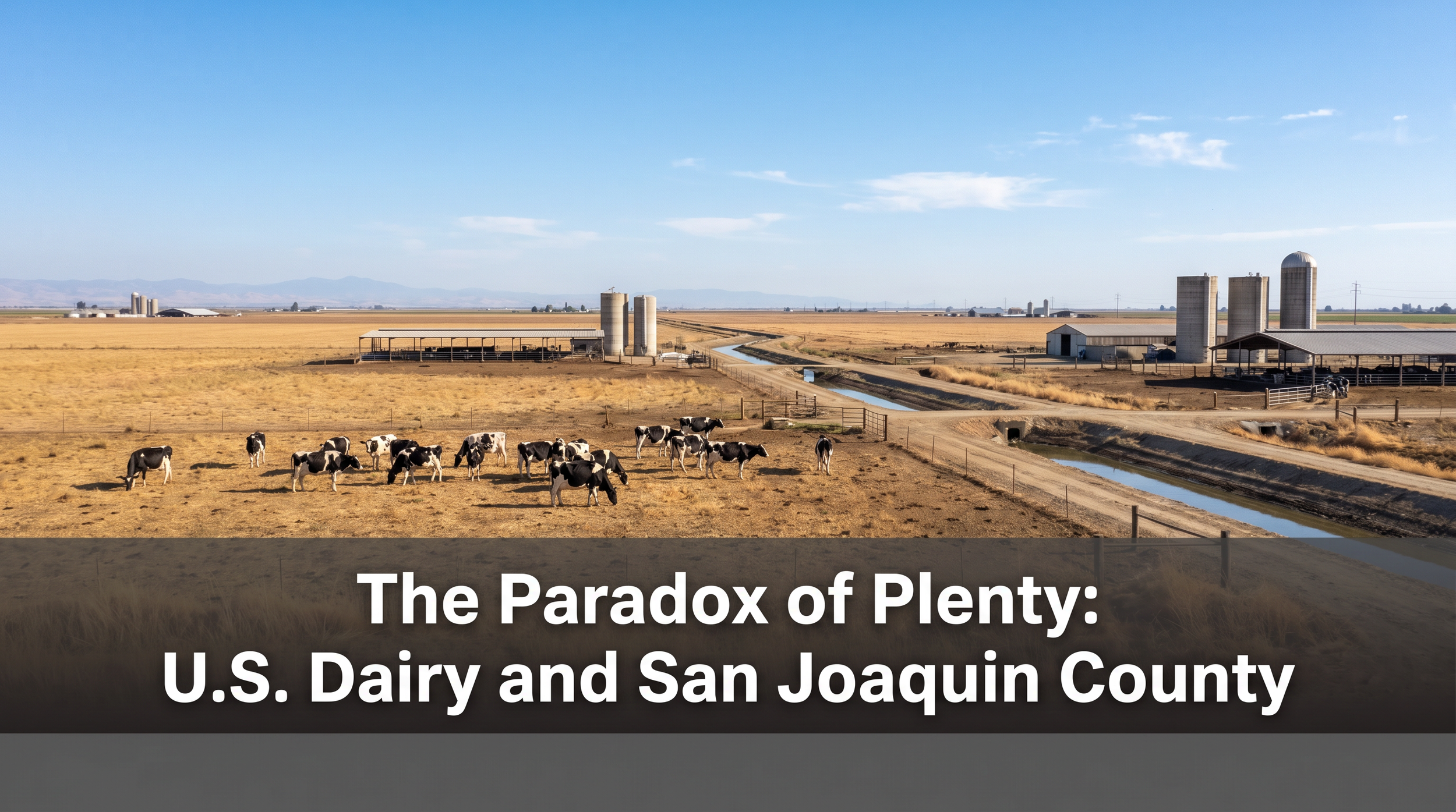
The Paradox of Plenty: U.S. Dairy and San Joaquin County
The country is making more milk than at any time since the 1990s, and Americans eat more dairy than ever. Yet many of the farms that produce it — especially in California's San Joaquin Valley, just south of Lodi — say this is one of the hardest stretches they can remember. Here is what is driving that gap and what it means for shoppers.
Booming output: U.S. milk production is climbing toward 234 billion pounds in 2026, on the largest cow herd since the 1990s.
Shrinking profits: Most dairies expect a tough year, naming labor and money as their two biggest worries.
California's heavy load: The No. 1 dairy state also carries the toughest rules on water, air, and animal welfare in the country.
New risks: Pricier fuel and feed, plus a flesh-eating parasite — now 25 confirmed U.S. cases, all in Texas livestock — add fresh strain.
For shoppers: Plenty of milk on the shelf today, but butter and cheese prices face upward pressure ahead.
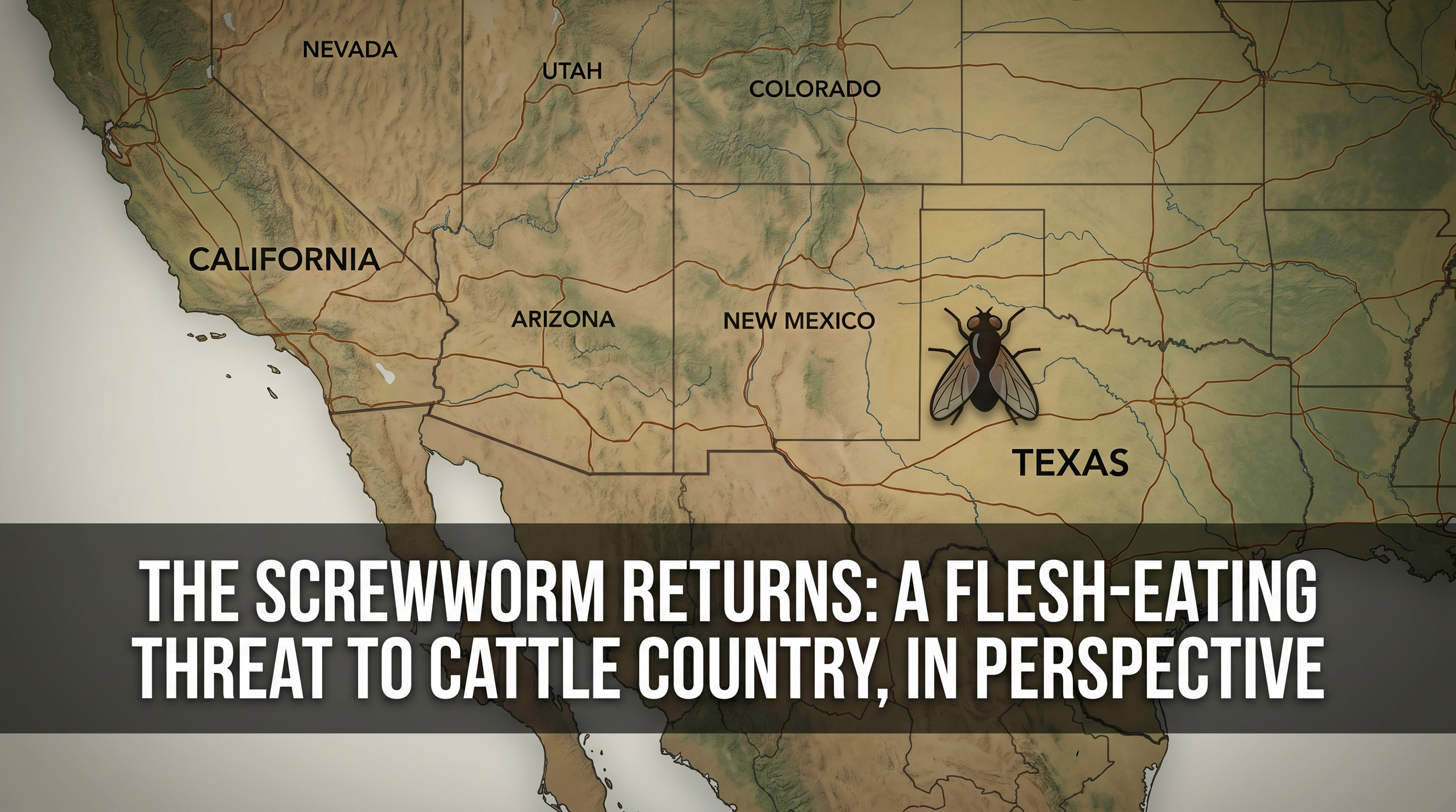
The Screwworm Returns: A Flesh-Eating Threat to Cattle Country, in Perspective
On June 3, 2026, the U.S. Department of Agriculture confirmed a parasite in a three-week-old calf in South Texas that the country had not seen in its livestock since 1966. The New World screwworm — a fly whose larvae eat the living flesh of warm-blooded animals — was back. Within a week, the count had grown to six animals across two states, and a problem that an earlier generation of scientists had declared solved was suddenly a national-security talking point in Washington.
For all the alarm, the situation rewards a clear head. This is a serious threat to a $113 billion cattle industry, but it is not a threat to the food on anyone's plate. It is a story with a remarkable history of American scientific success, a present-tense scramble to repeat that success, and a set of hard questions about whether the agencies tasked with the job are staffed and funded to do it. Here is the screwworm in perspective — and what it could mean for California cattle country, including San Joaquin County.