
Lodi Eye
LodiEye provides additional information on trending stories / topics published by local media and shared on local social media accounts.
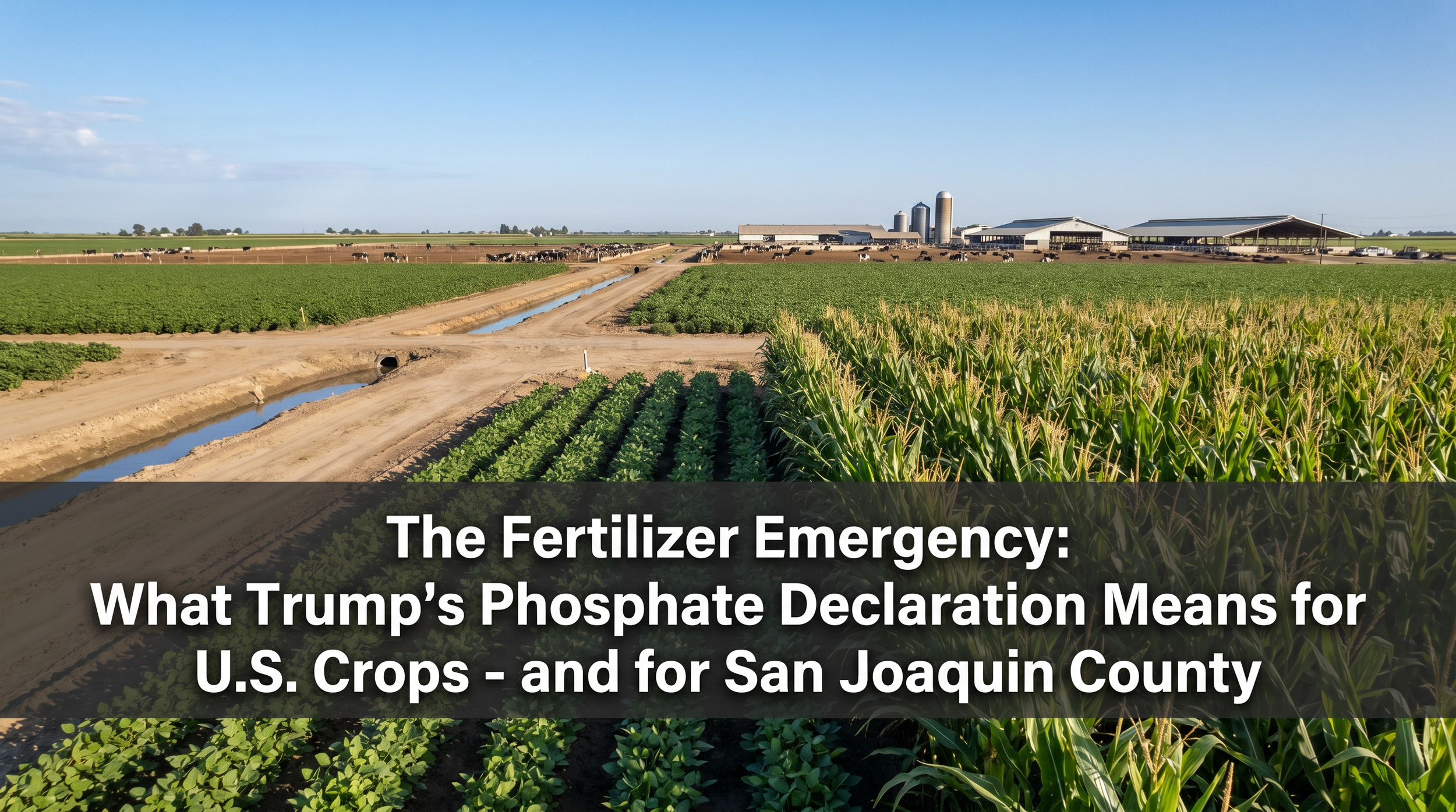
The Fertilizer Emergency: What Trump's Phosphate Declaration Means for U.S. Crops
On June 29, 2026, Trump declared a national emergency over U.S. fertilizer supplies and suspended countervailing duties on Moroccan phosphate fertilizer for up to eight months.
The move follows five months of disruption. The February 2026 Iran war closed the Strait of Hormuz, which normally carries about a third of the world's traded fertilizer and half its sulfur.
USDA projects the suspension will cut phosphate prices 22% and save farmers $1.82 billion a year. Independent analysts and the domestic producer, Mosaic, dispute how fast that relief actually shows up.
San Joaquin County is not a Midwest row-crop county. Milk, almonds, and grapes are its top commodities, not corn and soybeans, so the direct financial effect here is different, and mostly indirect.
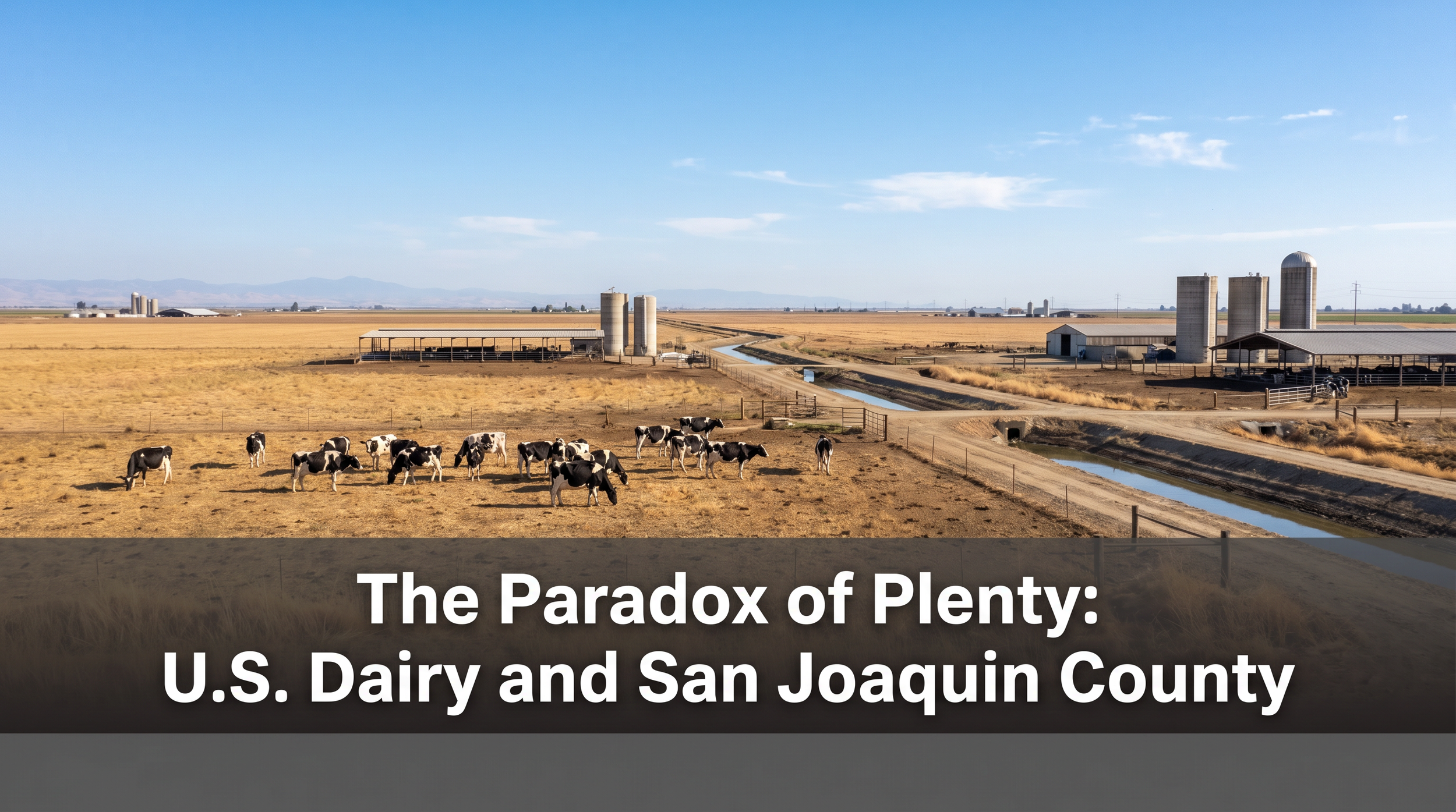
The Paradox of Plenty: U.S. Dairy and San Joaquin County
The country is making more milk than at any time since the 1990s, and Americans eat more dairy than ever. Yet many of the farms that produce it — especially in California's San Joaquin Valley, just south of Lodi — say this is one of the hardest stretches they can remember. Here is what is driving that gap and what it means for shoppers.
Booming output: U.S. milk production is climbing toward 234 billion pounds in 2026, on the largest cow herd since the 1990s.
Shrinking profits: Most dairies expect a tough year, naming labor and money as their two biggest worries.
California's heavy load: The No. 1 dairy state also carries the toughest rules on water, air, and animal welfare in the country.
New risks: Pricier fuel and feed, plus a flesh-eating parasite — now 25 confirmed U.S. cases, all in Texas livestock — add fresh strain.
For shoppers: Plenty of milk on the shelf today, but butter and cheese prices face upward pressure ahead.
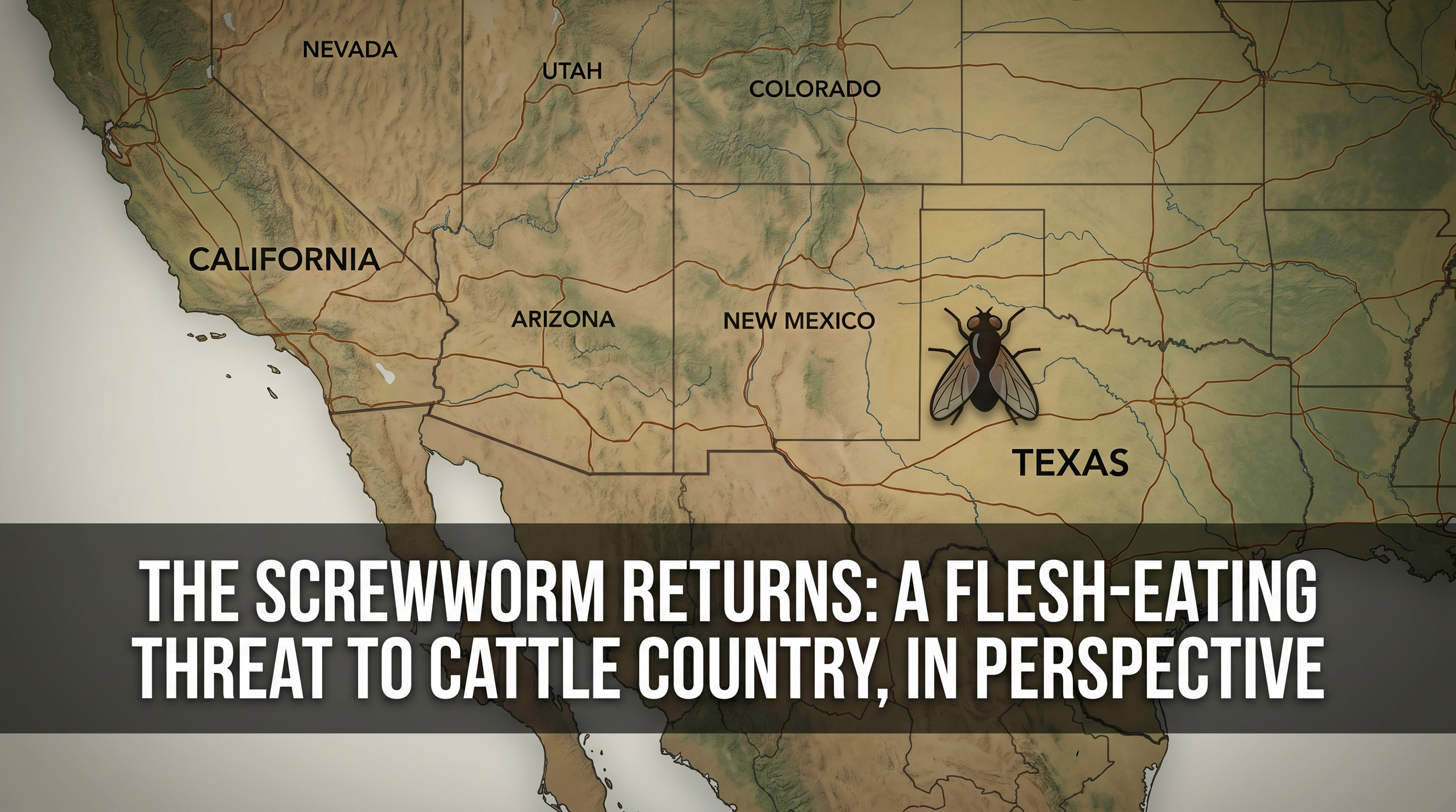
The Screwworm Returns: A Flesh-Eating Threat to Cattle Country, in Perspective
On June 3, 2026, the U.S. Department of Agriculture confirmed a parasite in a three-week-old calf in South Texas that the country had not seen in its livestock since 1966. The New World screwworm — a fly whose larvae eat the living flesh of warm-blooded animals — was back. Within a week, the count had grown to six animals across two states, and a problem that an earlier generation of scientists had declared solved was suddenly a national-security talking point in Washington.
For all the alarm, the situation rewards a clear head. This is a serious threat to a $113 billion cattle industry, but it is not a threat to the food on anyone's plate. It is a story with a remarkable history of American scientific success, a present-tense scramble to repeat that success, and a set of hard questions about whether the agencies tasked with the job are staffed and funded to do it. Here is the screwworm in perspective — and what it could mean for California cattle country, including San Joaquin County.

Rivers, Drought, and the 2026 Growing Season
The 2026 water year has produced the worst spring drought in the modern U.S. record. By mid-May, just over half the country — and more than 60 percent of the Lower 48 — sat in drought, according to the U.S. Drought Monitor. Behind the dryness is a single dominant driver across the West: a mountain snowpack that largely failed to arrive, then melted weeks early. This report follows that thread from the high country to the major rivers, into the drought maps of the states those rivers touch, and out to the farm gate, where the costs are now being counted.
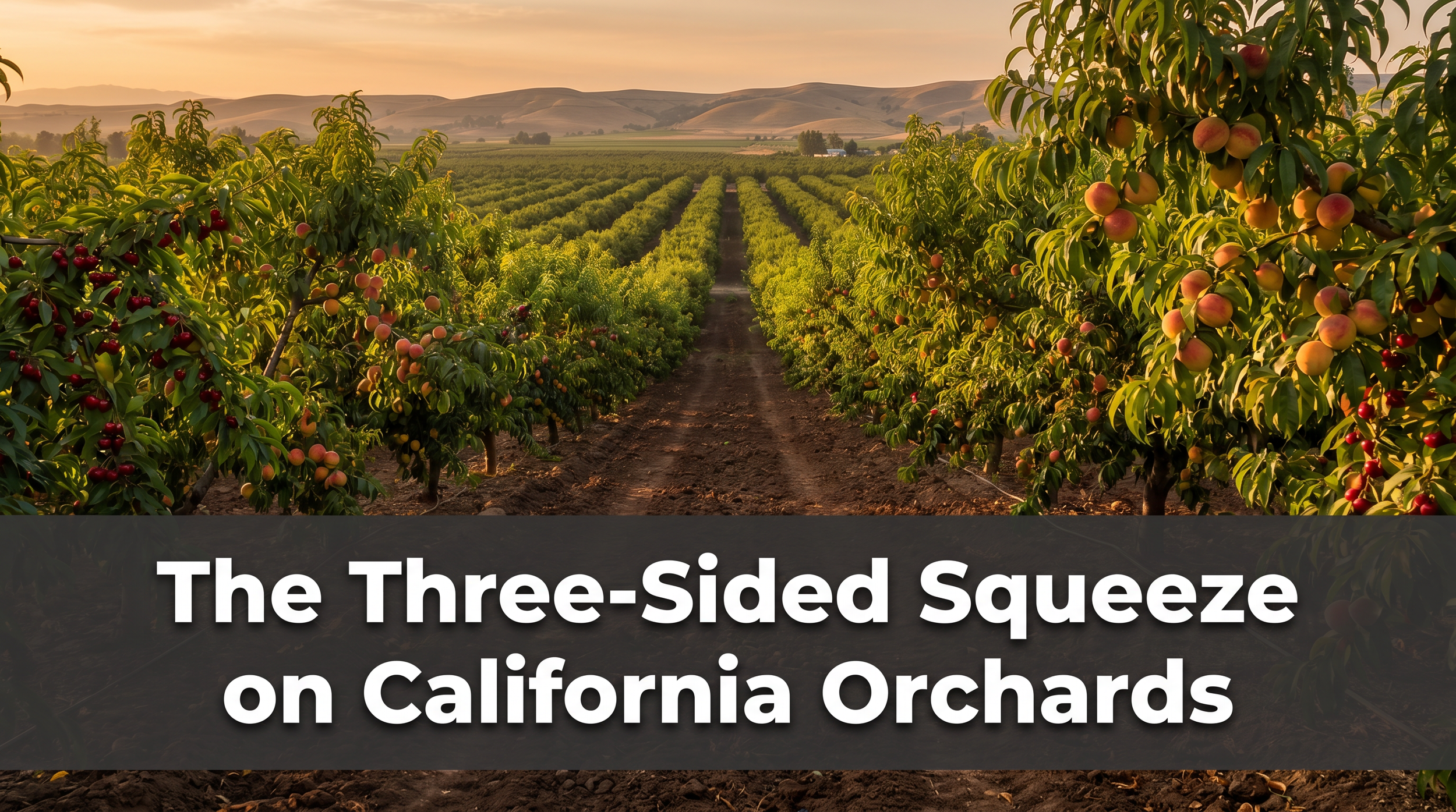
The Three-Sided Squeeze on California Orchards
California's tree-fruit orchard system is taking simultaneous hits from three different directions. The Del Monte bankruptcy has cancelled more than half a billion dollars in long-term cling peach contracts and is forcing growers to bulldoze roughly 420,000 trees. Back-to-back weather disasters have cut San Joaquin County's cherry crop by more than 40 percent in 2024 and roughly 30 percent again in 2026. And input and trade shocks — tariffs on can steel, the Strait of Hormuz fertilizer disruption, and continued cheap imports — are compressing margins across every orchard crop at once.
The federal response to date is $9 million in tree-removal aid targeted at one commodity in one bankruptcy. This piece looks at how the three pressures interact, what the San Joaquin County data shows about the local exposure, and why "just plant something else" is not a real answer.
2025 Lodi Crush Report: The Final Numbers
The USDA/CDFA Final 2025 California Grape Crush Report, released April 30, 2026, confirms District 11 crushed 532,409 tons — 14.1% below the August moderate forecast of 620,073 tons and 9.8% below the 2024 D11 total. Statewide, the Final crush settled at 2,761,914 tons, down 6.1% from 2024.
The Final report supersedes the Preliminary numbers analyzed in March. The most consequential revision: the table-grape-to-crush surge that appeared to be reaching District 11 in the Preliminary data turned out to be a District 13 phenomenon all along. D11 ended 2025 with just 2.4 tons of table grapes diverted to crush — essentially zero.
What remains unchanged: a Zinfandel collapse, a cooler-than-normal vintage that delivered exceptional fruit quality, and a widening price chasm between coastal and interior California. What changes: Lodi's exposure to the table-grape-diversion economy is far smaller than the Preliminary suggested.
The Dust Belt Rising
In the 1930s, Dust Bowl refugees fled the Southern Great Plains for California’s San Joaquin Valley. Nearly a century later, the Valley itself — along with agriculture and tourism-dependent communities across California, Arizona, and Nevada — is becoming a new dust bowl. Six converging forces are driving the decline: water depletion, tariff destruction of export markets, soaring input costs, climate extremes, collapsing consumer demand, and immigration enforcement that is dismantling the workforce these economies depend upon. Unlike the 1930s, when migration served as a brutal safety valve, today’s Americans are locked in place — household mobility hit its lowest rate ever recorded in 2024. This report maps the highest-risk cities and regions, examines what recovery looks like when the forces of decline are not merely economic but geological, and asks the Dust Bowl’s central question: which communities will adapt, and which will simply empty out?
2025 Lodi Crush Report: Preliminary Numbers Are In
The USDA’s Preliminary 2025 California Grape Crush Report, released March 13, 2026, confirms that District 11 crushed 537,752 tons—13.3% below our August moderate forecast of 620,073 tons. Statewide, the crush fell 6.2% to 2,759,202 tons. But the headline numbers only begin to tell the story: a Zinfandel collapse, an explosion of table grapes diverted to crush, a cooler-than-normal growing season that delivered a potentially outstanding vintage, and a widening price gulf between coastal and interior regions are reshaping Lodi’s grape economy in real time.
Lodi And District 11 2025 Crush Forecast
The 2025 Lodi grape harvest is projected to deliver excellent quality with slightly higher tonnage than 2024 but continued market and supply challenges remain. Favorable weather forecasts point to mostly ideal sugar (Brix) levels across major varietals, though overall production may be below long-term averages.
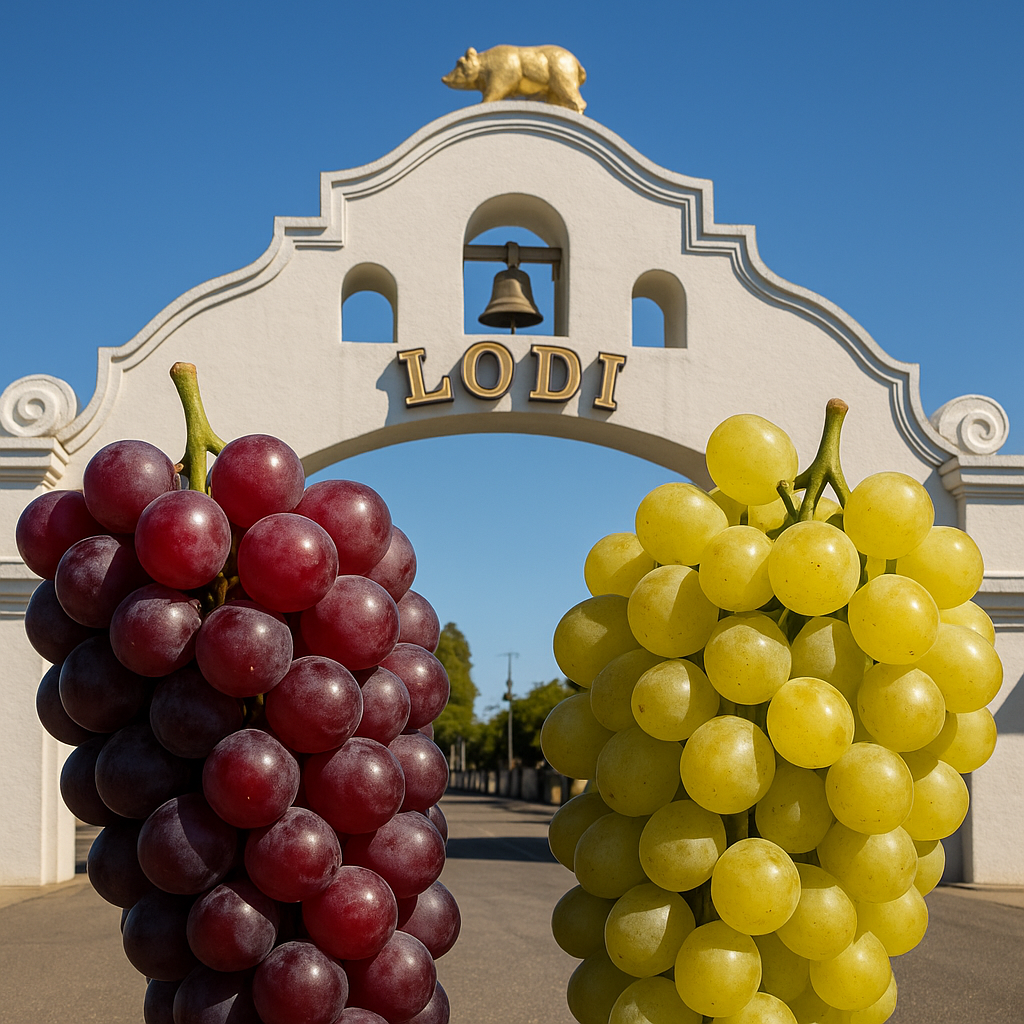
Lodi Winegrowing Trends (2020–2024)
The Lodi American Viticultural Area (AVA)—California Grape Crush District 11—remains a critical region for American and global wine markets. Over the past five years, the region experienced unprecedented volatility, including historic production declines, vineyard removals, and dramatic varietal redistribution.