
Lodi Eye
LodiEye provides additional information on trending stories / topics published by local media and shared on local social media accounts.
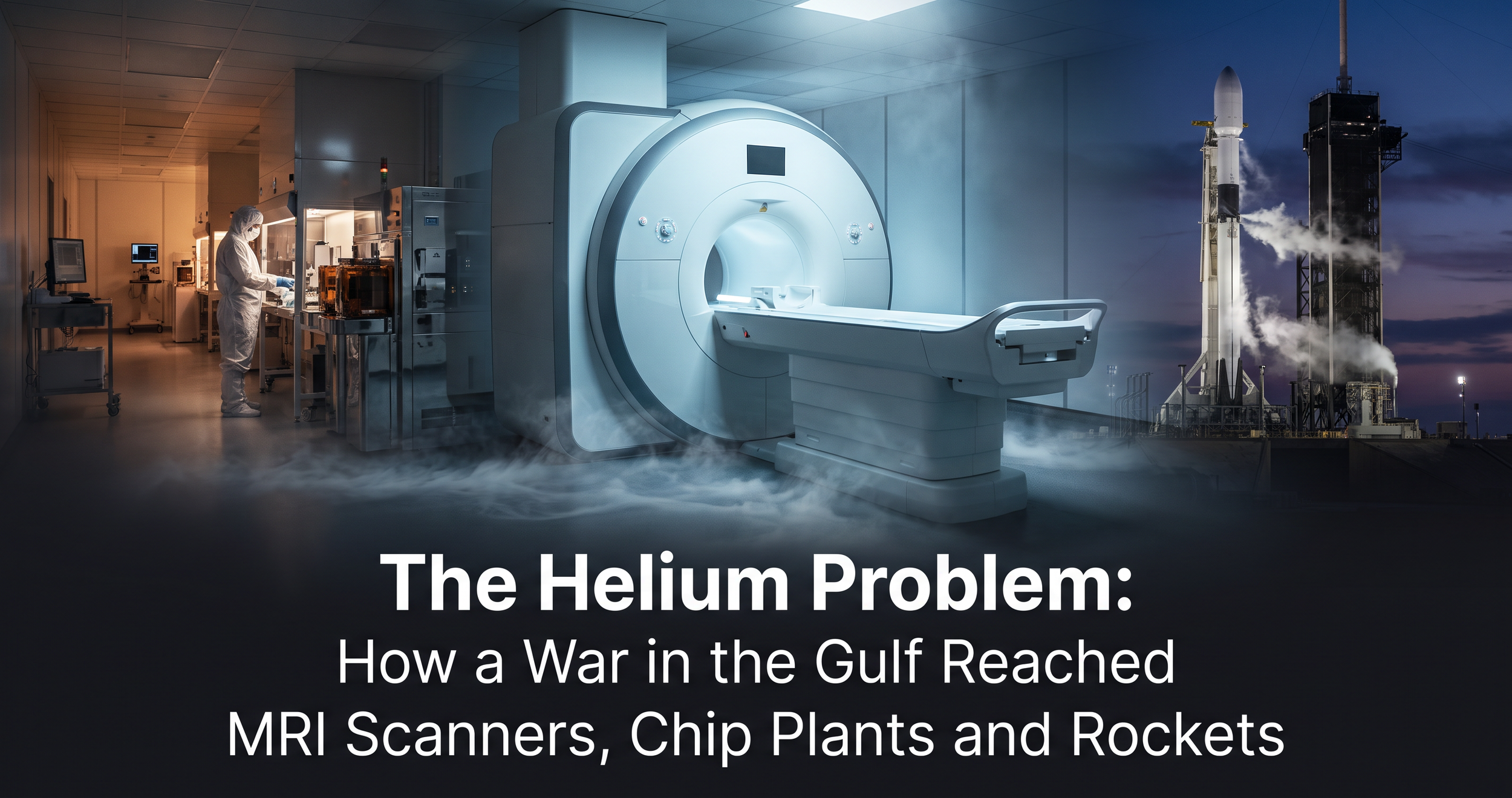
The Helium Problem: How a War in the Gulf Reached MRI Scanners, Chip Plants and Rockets
Most people know helium as the gas in party balloons. It is also the only substance that can cool an MRI magnet, a quantum computer or a research spectrometer to the temperature they need, the gas that keeps pressure in a rocket's fuel tanks, and a routine input in every modern computer chip factory. There is no substitute for most of those jobs.
Since March 2026, the world has been short of it. Iranian strikes on Qatar's Ras Laffan gas complex, which supplied about a third of the world's helium, shut it down; Russia and China then restricted their own exports. Seven months on, Qatar is shipping a fraction of what it did, prices have doubled to tripled, and some American customers are getting half their normal deliveries. The United States makes more helium than it uses, so the problem here is cost and rationing rather than running out. But American helium is being sent overseas at a record pace, the federal government sold its strategic reserve in 2024, and nothing of any size comes online before 2028. This report explains where helium comes from, who depends on it, what happened this year, and what it means for hospitals, research labs, the military and businesses, including those in San Joaquin County.

The Pentagon Is Testing a Havana Syndrome Device. Its Own Spy Agencies Say There Isn’t One.
In late 2016, intelligence officers at the newly reopened U.S. embassy in Havana began reporting a strange sequence: a sudden, localized sound or a feeling of pressure, usually at night in their homes, followed by headaches, dizziness, ringing in the ears and trouble concentrating. Over the next five years similar reports came from Guangzhou, Moscow, Vienna, Berlin, Tbilisi, Hanoi, Bogotá, New Delhi and Washington itself. The government calls them anomalous health incidents. The public calls them Havana Syndrome.
Ten years on, three records sit side by side and do not agree. The medical record says the symptoms are real and often disabling, but that brain scans show no injury. The scientific record says pulsed radio-frequency energy is the most plausible external cause, but no device has ever been tied to an incident. The intelligence record is formally split: five agencies say foreign involvement is very unlikely, two dissent, and a House subcommittee says the majority finding was engineered.
Two things changed in 2026. The Pentagon has spent more than a year testing a pulsed radio-frequency device that the government bought covertly for an eight-figure sum, and in July it renamed its task force the Directed Energy Bio-Effects team and issued its first compensation payments. Meanwhile Canadian diplomats whose children fell ill in Havana are pressing Ottawa for an inquiry.

TrumpRx: Comprehensive Overview
On February 5, 2026, the Trump administration launched TrumpRx.gov, offering discounted cash prices on 43 brand-name medications from five pharmaceutical companies, with 11 more companies expected soon. The platform operates under a Most-Favored-Nation (MFN)pricing model—ensuring U.S. consumers pay no more than the lowest prices charged in other wealthy nations. TrumpRx does not sell drugs directly; instead, it provides coupons or links to manufacturers' direct-to-consumer sites.