
Lodi Eye
LodiEye provides additional information on trending stories / topics published by local media and shared on local social media accounts.
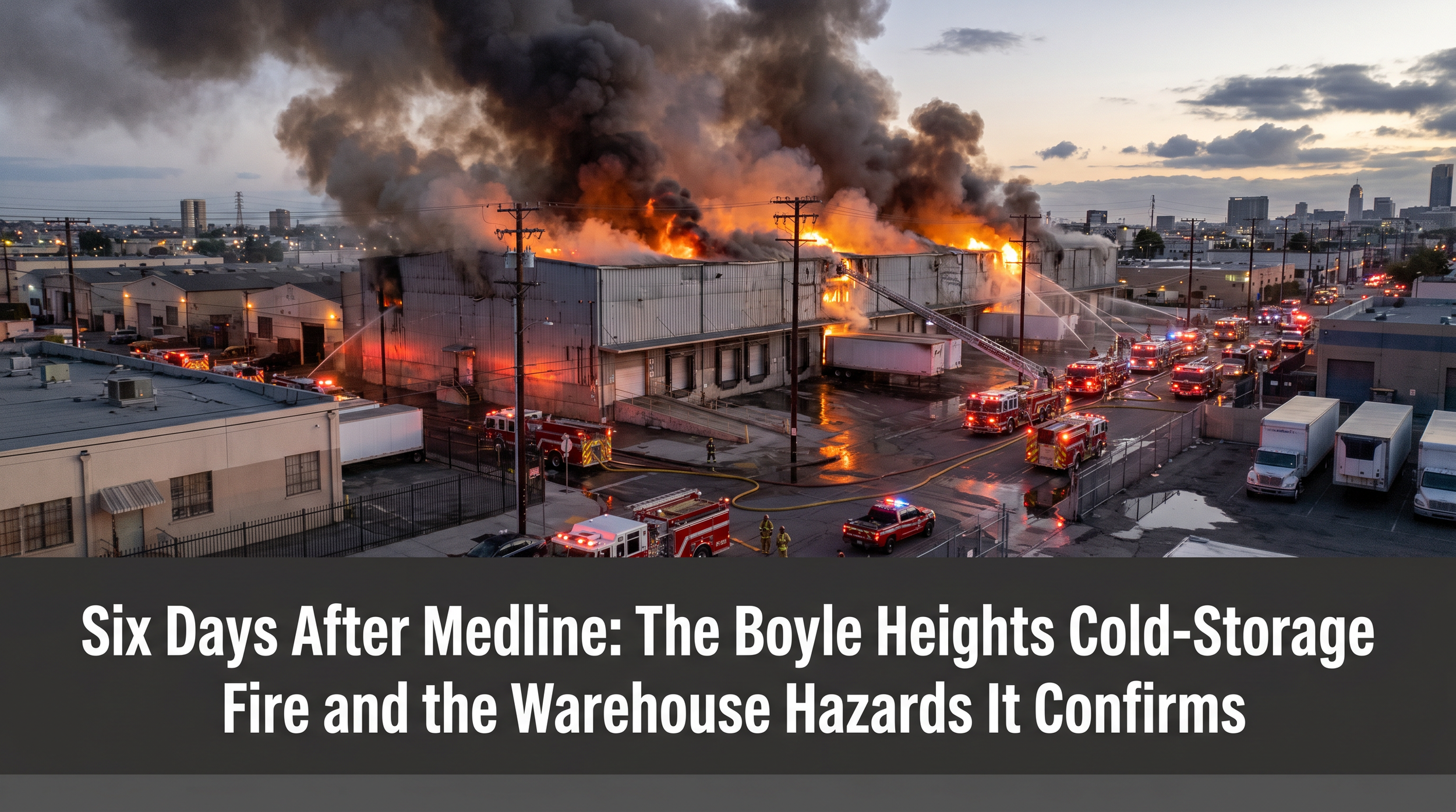
Six Days After Medline: The Boyle Heights Cold-Storage Fire and the Warehouse Hazards It Confirms
On June 17, 2026, a fire broke out at a roughly 491,000-square-foot cold-storage warehouse operated by Lineage Logistics in the Boyle Heights neighborhood of Los Angeles. Six days later it was still burning. The fire began on the building's roof, where a separate company maintains a large solar panel array, and authorities said it appears to have started while contractors were testing that equipment. The blaze proved unusually hard to fight because the building is a sealed, heavily insulated cold-storage box, because it was refrigerated with ammonia, and because roughly 85 million pounds of frozen food inside began to spoil and threatened to become a public-health problem. Smoke drifted across much of the Los Angeles basin, prompting air-quality warnings, a city emergency declaration, and a state emergency declaration from the governor.
Coming just six days after the catastrophic Medline warehouse fire in Tracy, the Boyle Heights fire is the third major California warehouse fire of 2026. This update places it alongside the earlier report on warehouse safety in San Joaquin County, and asks a specific question: which of the hazards that report identified in Tracy show up again in Los Angeles? The short answer is that most of them do. A roof-origin fire, lithium-ion batteries as fuel, industrial chemicals on site, densely packed storage, and split responsibility over fire-critical systems all reappear — while the one factor that destroyed Medline, a failed sprinkler system, is also the one factor that did not recur, which only sharpens the earlier report's central point.
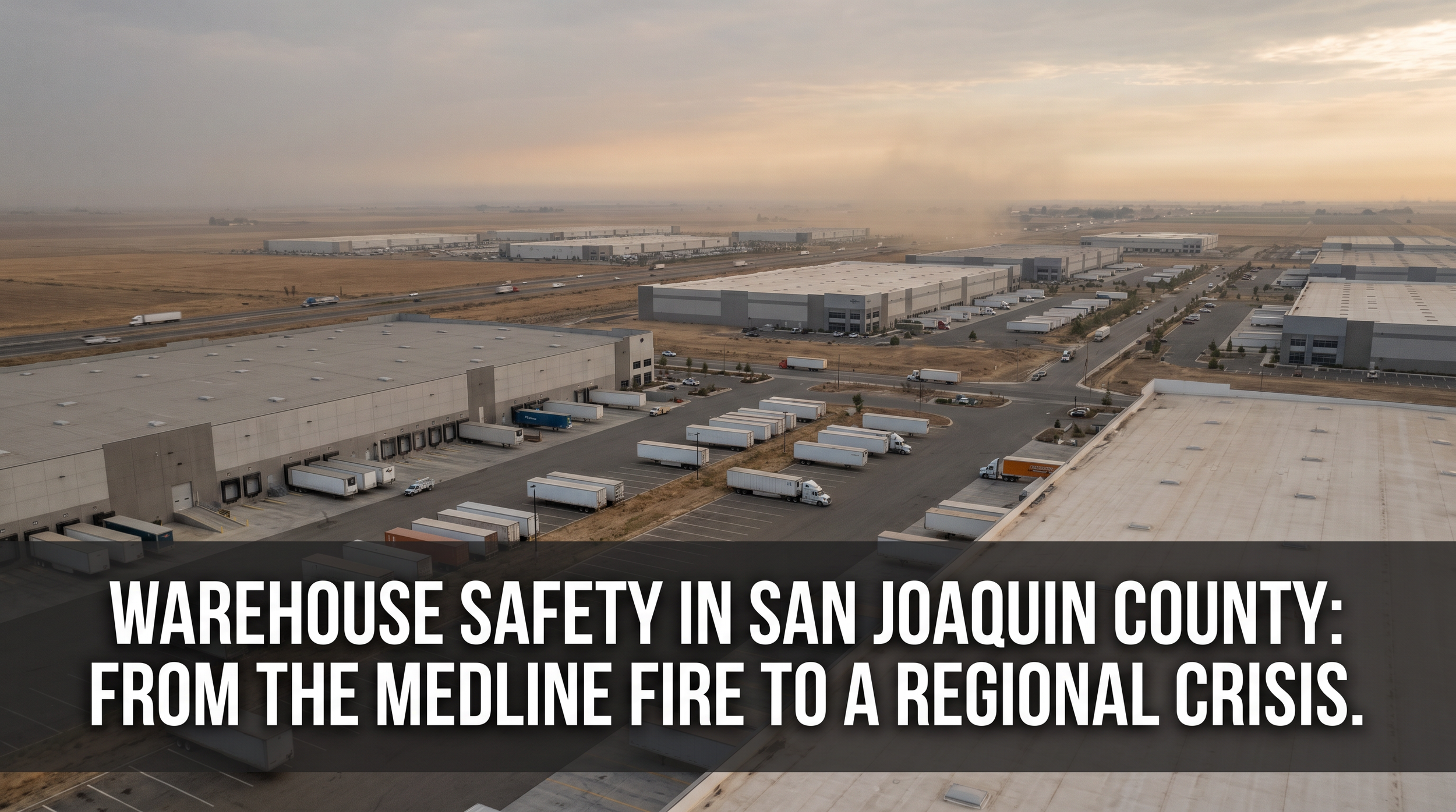
Warehouse Safety in San Joaquin County: From the Medline Fire to a Regional Crisis
On June 11, 2026, a five-alarm fire destroyed the 1-million-square-foot Medline Industries distribution center in Tracy, California — reducing one of the nation's largest medical supply warehouses to ash in a matter of hours. The fire was fueled by extreme heat, strong winds, hazardous materials, and, most critically, the complete failure of the facility's internal fire suppression system. No sprinkler activated. The fire pump room pressure gauge read zero. Firefighters ran hose lines 1,600 feet to reach municipal water. The building was a total loss.
The Medline fire was not an isolated event. It is the most visible and catastrophic expression of a systemic pattern of dangerous conditions across San Joaquin County's distribution warehouse sector — a sector that has grown faster than any safety enforcement infrastructure built to monitor it. This report documents that fire in detail, surveys dangerous conditions at other warehouses throughout the county, and examines the city, county, state, and federal regulatory tools that currently exist — and their limits — for addressing these hazards. It also examines the workforce who bear these risks daily, including residents of Lodi who commute to these facilities.