Lodi Eye
LodiEye provides additional information on trending stories / topics published by local media and shared on local social media accounts.
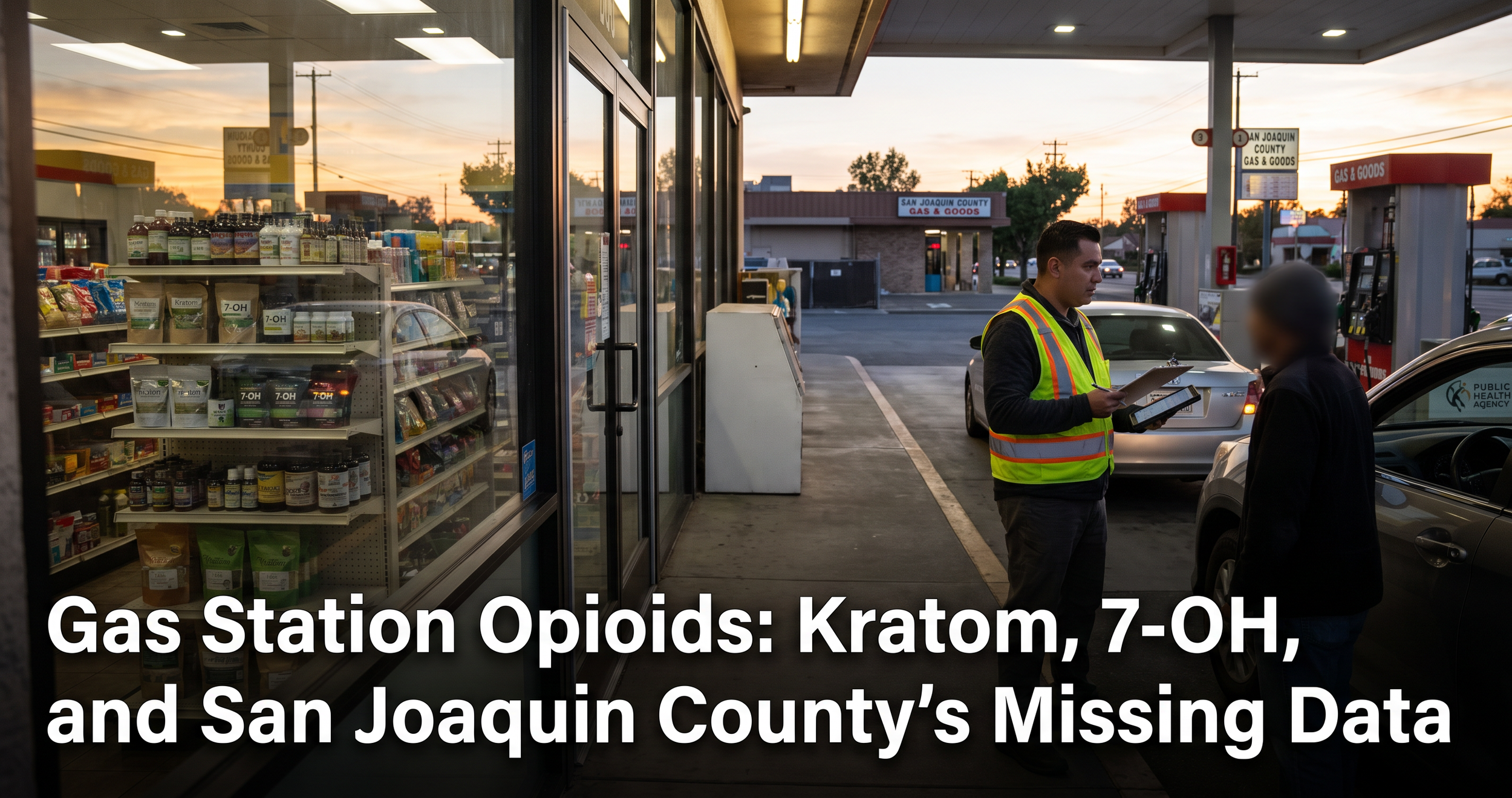
Gas Station Opioids: Kratom, 7-OH, and San Joaquin County's Missing Data
Products containing kratom and its lab-made derivative 7-OH have been illegal to sell for human consumption in California since October 24, 2025. On July 1, 2026, the U.S. Drug Enforcement Administration moved to place 7-OH and three related substances temporarily into Schedule I of the Controlled Substances Act — the same schedule as heroin.
These products have been sold openly in Lodi. San Joaquin County has passed no ordinance, issued no retailer notice, published no consumer advisory, and released no data on kratom-related deaths, emergency visits, or store seizures.
This report does not claim San Joaquin County has a kratom crisis. It shows the county has built no way to find out. Counties that tested for the compound found it in their morgues. Ventura County linked 46 overdose deaths to kratom's main alkaloid since 2018. Los Angeles County confirmed six 7-OH deaths in adults aged 18 to 40 between April 2025 and January 2026. Yolo County counted seven since 2017. Mitragynine does not appear on a standard toxicology screen. A medical examiner has to order the test.
The Fentanyl Crisis in San Joaquin County
Over five years, San Joaquin County lived through the deadliest chapter of the drug epidemic, driven by one change: illicit fentanyl saturated the local supply. The county's fentanyl death rate in 2021 was 20 times higher than in 2018, and deaths more than doubled again the next year, from 48 in 2021 to 113 in 2022. At the peak, the county was losing four to five residents a week, and people in their 20s and early 30s died faster than any other age group.
In 2024 the county's opioid overdose rate finally dropped about 31 percent — the first sustained decline since the crisis began — helped by naloxone saturation, fentanyl test strips, and a $137 million treatment expansion. But three things complicate any relief. Methamphetamine now kills more Californians than any other single drug, and meth deaths are still rising as fentanyl deaths fall. A veterinary tranquilizer called xylazine is spreading up the West Coast toward the Central Valley. And in December 2024, Proposition 36 reversed a decade of California drug policy, restoring felony charges for repeat offenses just as the public-health approach began to work.
This report traces how the crisis rose and eased, who it hits hardest, how the drug supply chain reaches Lodi, what treatment and enforcement are doing, and what the open questions — from settlement spending to the methamphetamine gap — can and cannot yet be answered.
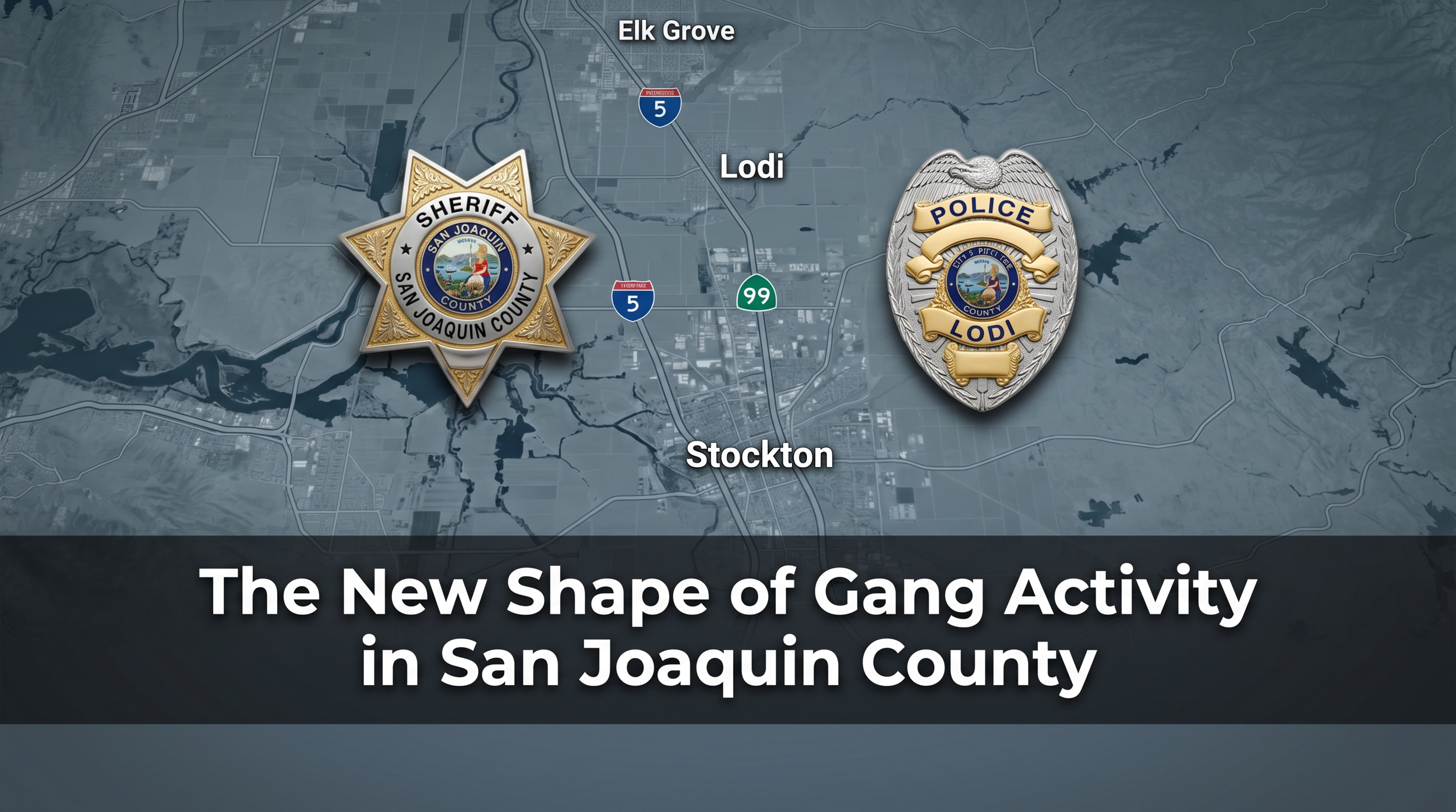
The New Shape of Gang Activity in San Joaquin County
For three decades, organized crime in San Joaquin County could be explained through one rivalry: Norteños versus Sureños. That framework is no longer sufficient. In 2026, at least five distinct gang ecosystems operate across the county — the legacy Hispanic street gangs, African American sets concentrated in west Stockton, Southeast Asian gangs forged during the refugee era, a newly visible transnational Punjabi-diaspora extortion network directed from Indian prisons, and outlaw motorcycle clubs using the Highway 99 corridor. Lodi, long treated as a safer northern neighbor to Stockton, sits at the intersection of all five. This LodiEye report maps who operates where, documents the recent federal and state cases, and highlights what it means for Lodi residents specifically.
Drug Crisis in San Joaquin County & Lodi, California
San Joaquin County (SJC) continues to confront one of the most severe drug crises in California's Central Valley. Fentanyl — primarily linked to Sinaloa Cartel trafficking networks — remains the dominant threat, responsible for 92% of opioid-related deaths in the county as of the most recent complete data (2023). However, early indicators from 2024 and the national trend through 2025 suggest the region may finally be turning a corner, with preliminary death counts tapering and U.S. overdose fatalities declining roughly 17–21% year-over-year.
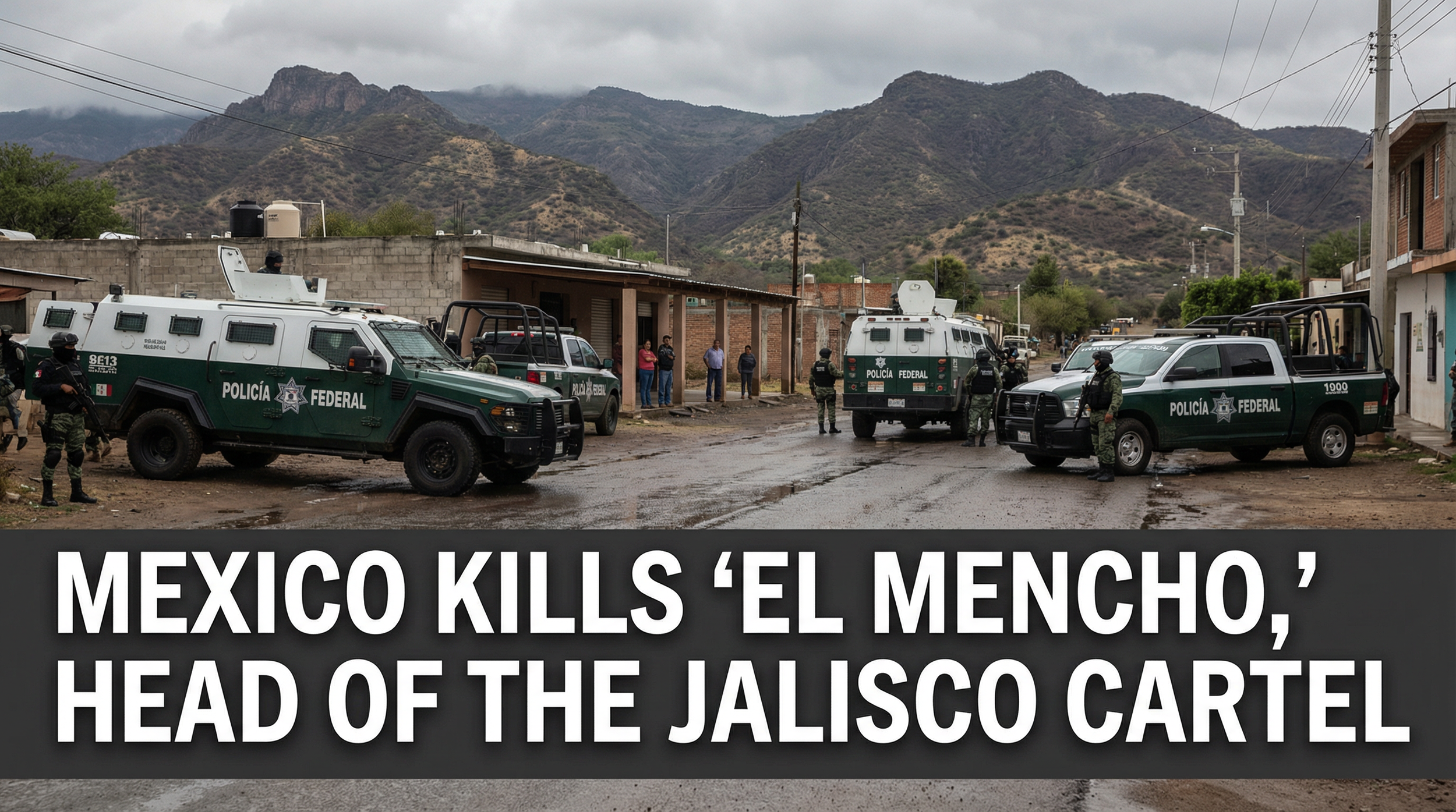
Mexico Kills ‘El Mencho,’ Head of the Jalisco Cartel
On February 22, 2026, the Mexican military killed Nemesio Rubén Oseguera Cervantes (“El Mencho”), the founder and leader of the Jalisco New Generation Cartel (CJNG). The operation, aided by U.S. intelligence, triggered more than 250 roadblocks across 20 Mexican states, the deaths of 25 National Guard members in retaliatory attacks, and the shutdown of Guadalajara, Mexico’s second-largest city. CJNG operates in almost all 50 U.S. states and is a primary source of fentanyl, methamphetamine, and cocaine.

US Involvement in Venezuela
The United States’ recent escalation against Venezuela blends drug-war justifications with geopolitical and energy interests. Data shows Venezuela’s direct role in US-bound drugs is minimal compared to Mexico, while sanctions and selective licensing underscore oil and great-power competition considerations.

SJC BeWell Center
The SJC Be Well Center and the Lodi Access Center are distinct but complementary facilities within San Joaquin County, each serving different-though sometimes overlapping-community needs.