
Lodi Eye
LodiEye provides additional information on trending stories / topics published by local media and shared on local social media accounts.
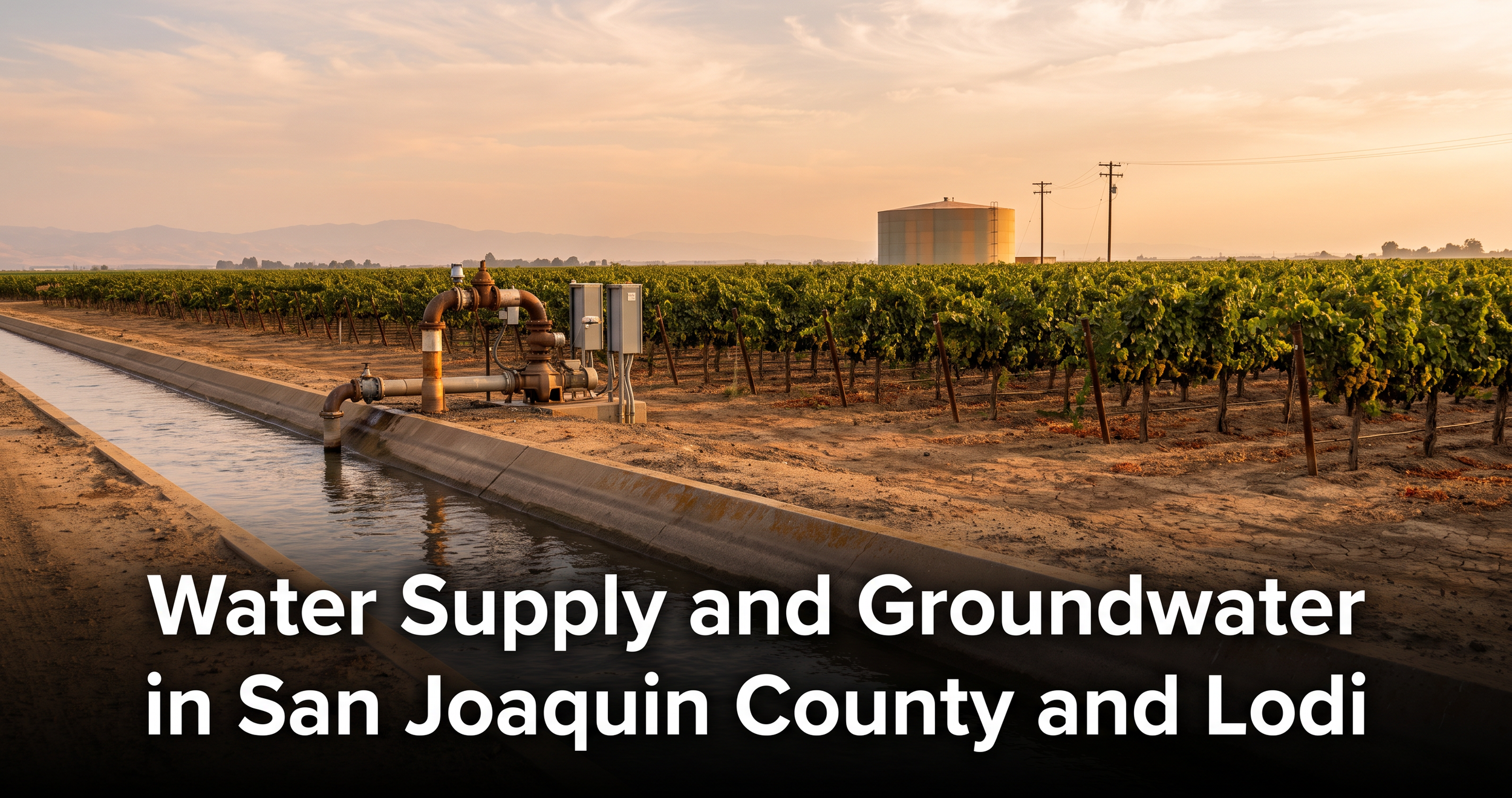
Water Supply and Groundwater in San Joaquin County and Lodi
Lodi and eastern San Joaquin County draw on two water systems that behave very differently. One is the Mokelumne River, delivered to Lodi through a 40-year contract with Woodbridge Irrigation District and backed by some of the oldest water rights on the river. The other is the groundwater under our feet, the Eastern San Joaquin Subbasin, a 707,000-acre aquifer the state has classified as critically overdrafted, meaning more is being pumped out than is going back in. Roughly half of Lodi's drinking water comes from each.
The near-term picture is stable. Groundwater levels in the subbasin are holding, there is no measurable land subsidence, water quality at the basin scale is within targets, and Lodi has banked more than 53,000 acre-feet of unused river water since 2003. (An acre-foot is about 326,000 gallons, roughly what two or three households use in a year.) The long-term picture is not resolved. The subbasin loses about 89,000 acre-feet of storage a year on average, and the Groundwater Authority's own model says pumping must fall by about 95,000 acre-feet a year to stop the decline. Projects now funded cover about a third of that. The rest depends on a large program to store extra Mokelumne River water underground in wet years, which is still waiting on a state water-rights decision, or on a program to limit pumping that the Authority acknowledges could limit growth.
Four statewide decisions now in motion will shape which of those paths the region takes: the Delta tunnel, the Sites reservoir, the Bay-Delta Plan's flow requirements, and the Colorado River settlement. Dan Walters laid these out in a September 11 CalMatters column, “California's future water supplies depend on the outcomes of four intertwined battles,” which argues that the next few months of decisions on those four fronts will determine how water is managed and allocated for decades, with a governor trying to settle two of them before leaving office. This report takes his statewide framing and follows it down to San Joaquin County and Lodi. Three of the four fronts touch the county directly, and the nearest is the State Water Board's October 28–29 hearing on adopting the Bay-Delta Plan update, which sets the flow rules for the Mokelumne.
The risk is not evenly shared. Groundwater-dependent farms outside the surface-water districts and rural residents on private wells carry the most exposure. City of Lodi water customers carry the least in the near term, with their exposure showing up later as rates and growth limits rather than shortages.

Under the Surface: The 2026 Water-System Cyberattacks and Where Lodi Stands
In the last week of July 2026, hackers reached into the control systems of water utilities in at least seven states, locked operators out of their own equipment, and forced treatment plants to run by hand. Minnesota took the brunt of it — more than thirty community water systems in a single 48-hour window. No ransom was demanded, no one's drinking water was contaminated, and in the towns hit hardest, the taps kept running.
Lodi runs the same kind of automated, widely dispersed water system these attackers target. It also has the redundancy and manual fallback that kept water flowing everywhere the attacks landed: two independent sources, dozens of wells, local storage, and deep upstream reserves. This report explains the attacks, how long they actually disrupted service, how Lodi's water and its upstream sources are built, where Lodi fits the target profile, and what residents can watch for and do now.

Legionnaires' Disease in Lodi: What You Need to Know
Legionella bacteria were confirmed in the tap water of a California state office building in Lodi in June 2026 — and this city is not alone. San Joaquin County has its own documented history with the bacteria, from Stockton's airport to a state prison medical facility. This report covers what happened at the Lodi building, where else Legionella has turned up in the county, what the disease does to the body, who faces the greatest danger, how doctors treat it, and what filters and systems actually stop the bacteria.
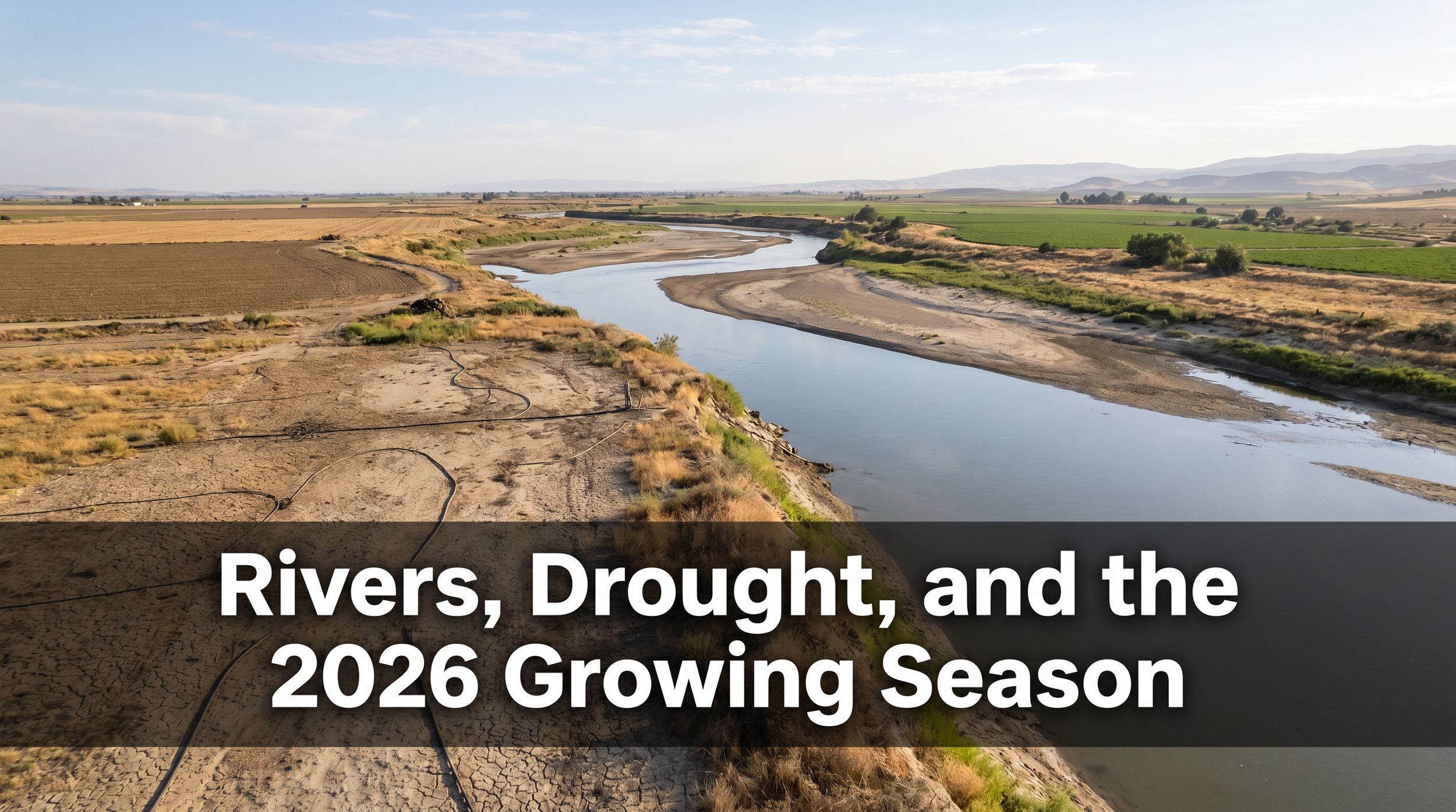
Rivers, Drought, and the 2026 Growing Season
The 2026 water year has produced the worst spring drought in the modern U.S. record. By mid-May, just over half the country — and more than 60 percent of the Lower 48 — sat in drought, according to the U.S. Drought Monitor. Behind the dryness is a single dominant driver across the West: a mountain snowpack that largely failed to arrive, then melted weeks early. This report follows that thread from the high country to the major rivers, into the drought maps of the states those rivers touch, and out to the farm gate, where the costs are now being counted.
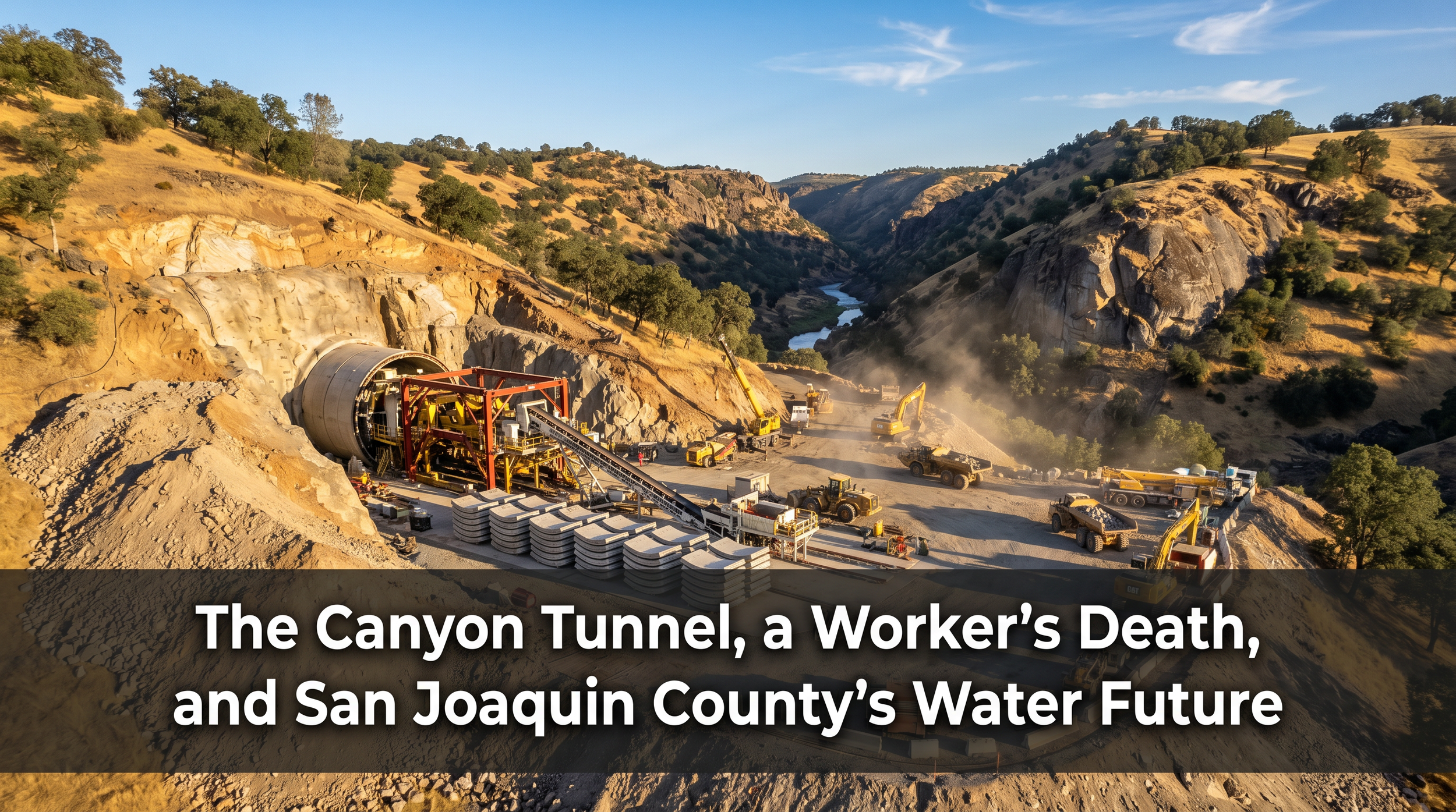
The Canyon Tunnel, a Worker's Death, and San Joaquin County's Water Future
A 35-year-old engineer was killed inside an $84 million bypass tunnel being dug beneath the Stanislaus River canyon this week. The project she was working on — a joint effort of the South San Joaquin Irrigation District and Oakdale Irrigation District — is meant to secure water reliability for three San Joaquin County cities and 50,000 acres of farmland into the next century. Cal/OSHA has opened an inspection. Work is suspended. LodiEye examines what the project is, why the county has tens of millions of dollars riding on it, and what the incident means for the schedule ahead.
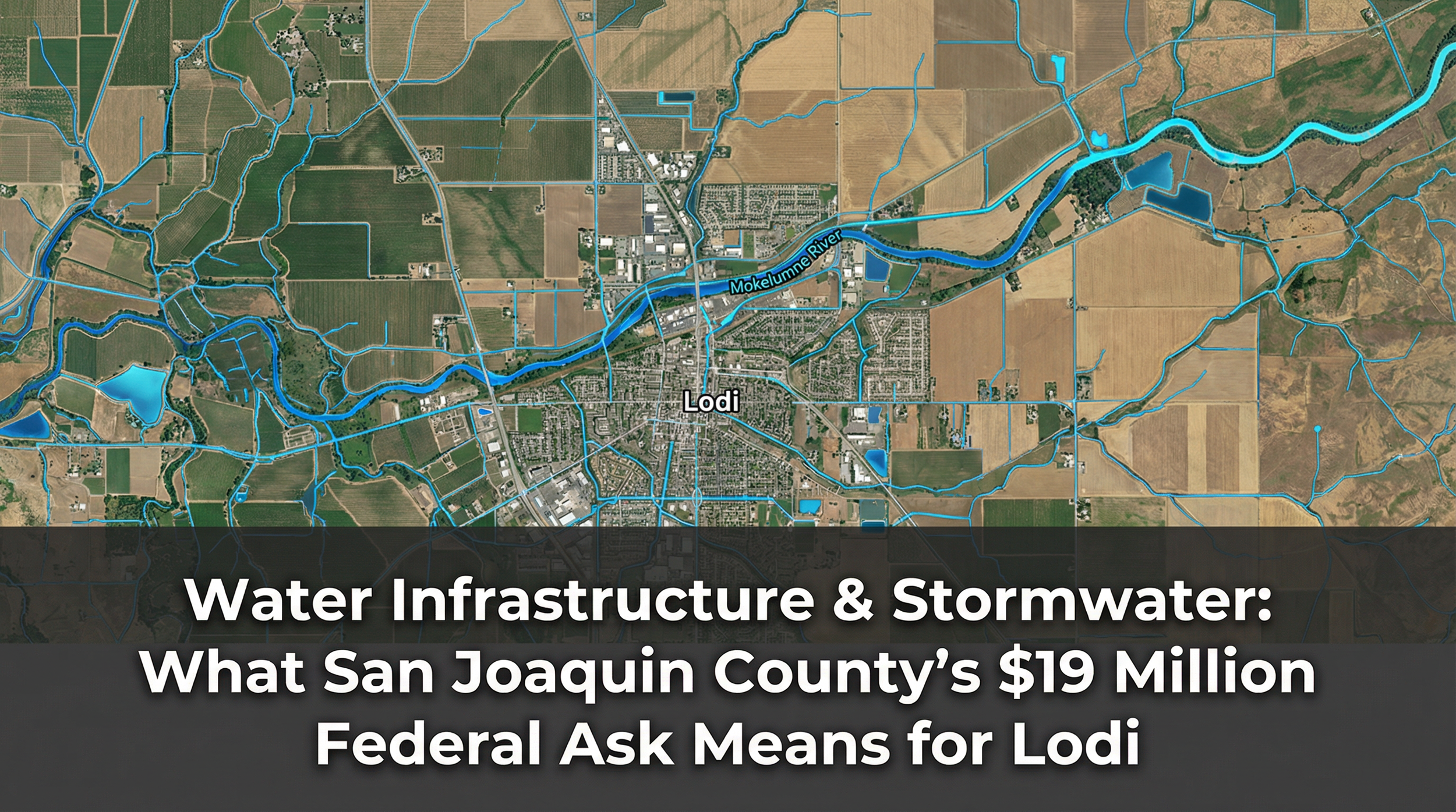
Water Infrastructure And Stormwater: What San Joaquin County’s $19 Million Federal Ask Means for Lodi
San Joaquin County submitted nearly $19 million in federal funding requests in March 2026 for the FY2027 budget, including $2.4 million for the Victor Storm Drain Retention Pond just east of Lodi and $2 million for the Acampo Innovation Drainage Project to the south. Both projects have been submitted in prior years without receiving funding. Meanwhile, aging water mains across the county — some nearly 80 years old — are causing leaks and service disruptions. This report examines the county’s federal requests, Lodi’s own water and stormwater infrastructure, and the broader landscape of state and federal funding programs that could shape the region’s water future.
The Dust Belt Rising
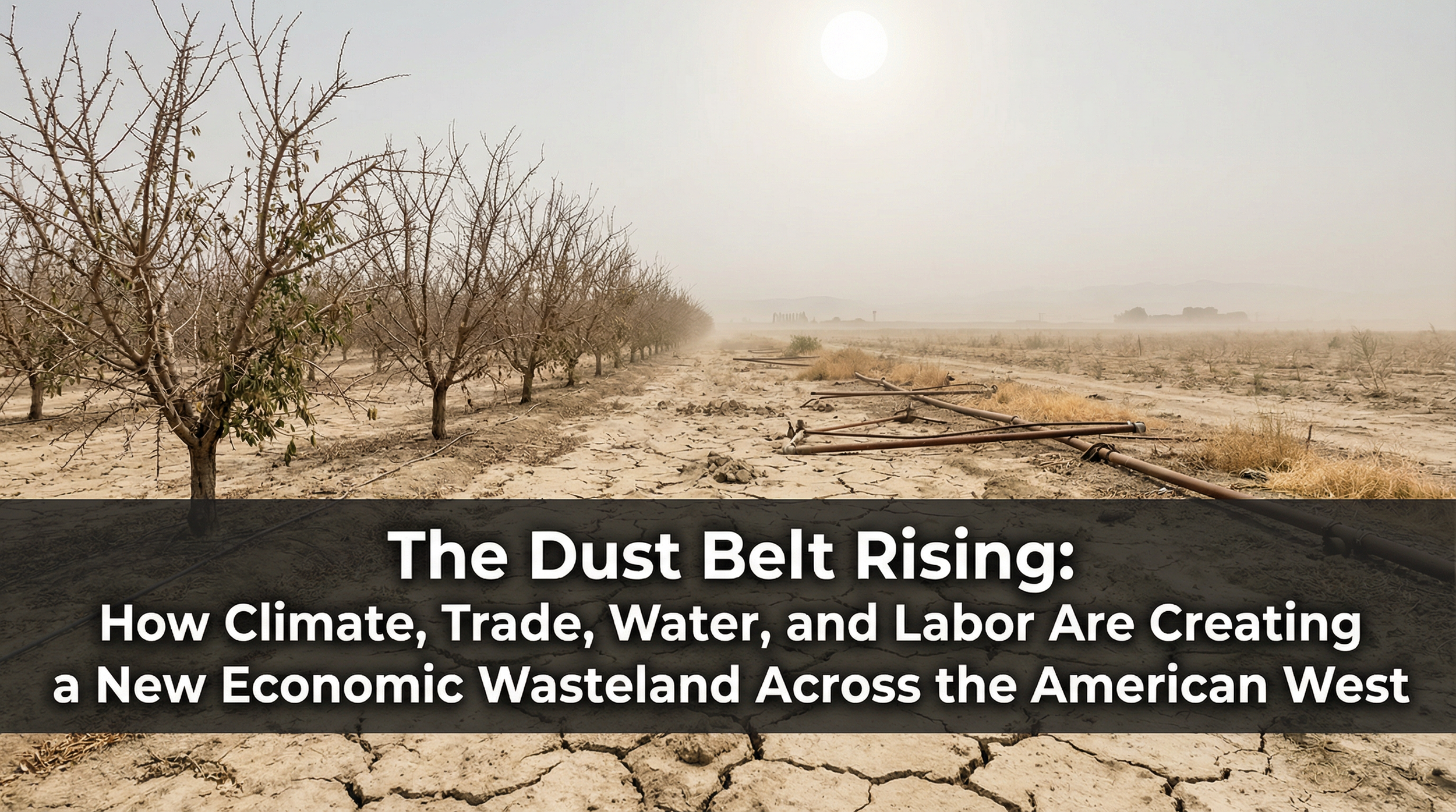
In the 1930s, Dust Bowl refugees fled the Southern Great Plains for California’s San Joaquin Valley. Nearly a century later, the Valley itself — along with agriculture and tourism-dependent communities across California, Arizona, and Nevada — is becoming a new dust bowl. Six converging forces are driving the decline: water depletion, tariff destruction of export markets, soaring input costs, climate extremes, collapsing consumer demand, and immigration enforcement that is dismantling the workforce these economies depend upon. Unlike the 1930s, when migration served as a brutal safety valve, today’s Americans are locked in place — household mobility hit its lowest rate ever recorded in 2024. This report maps the highest-risk cities and regions, examines what recovery looks like when the forces of decline are not merely economic but geological, and asks the Dust Bowl’s central question: which communities will adapt, and which will simply empty out?

Summer in March: The Heat Dome Rewriting the West's Future
An unprecedented ridge has shattered records across 23 states, decimated snowpack, and pushed the Colorado River system toward its most dangerous water year on record. Here’s what the science says, where the models are failing, and what it means for San Joaquin County and Lodi.

Lodi Water Quality: PFAS and Forever Chemicals
Lodi's drinking water meets all state and federal regulatory standards with no violations over nearly a decade, yet several contaminants — including PFAS “forever chemicals,” legacy pesticides, and industrial solvents — have been detected at levels that, while legal, exceed more stringent public health goals set by California health experts.
Three Towns, One Valley
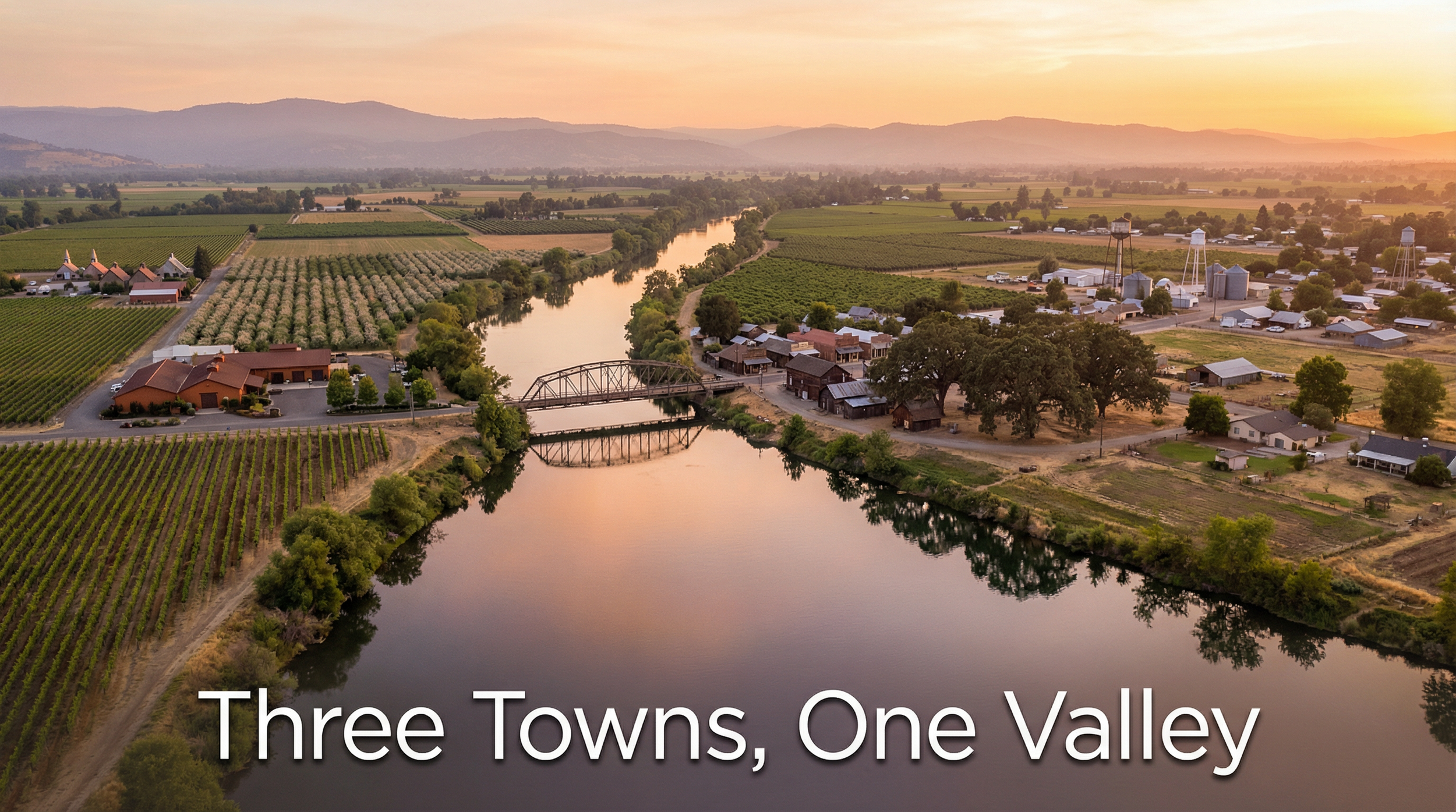
Lodi, Woodbridge, and Galt sit within eight miles of each other along California's Highway 99 corridor, sharing Gold Rush origins, railroad-era founding stories, and the same critically overdrafted aquifer systems. Today they cooperate through wine industry branding (the Lodi AVA), shared transportation, flood response, and overlapping education and healthcare.
Colorado River Governors Summit and the San Joaquin Delta
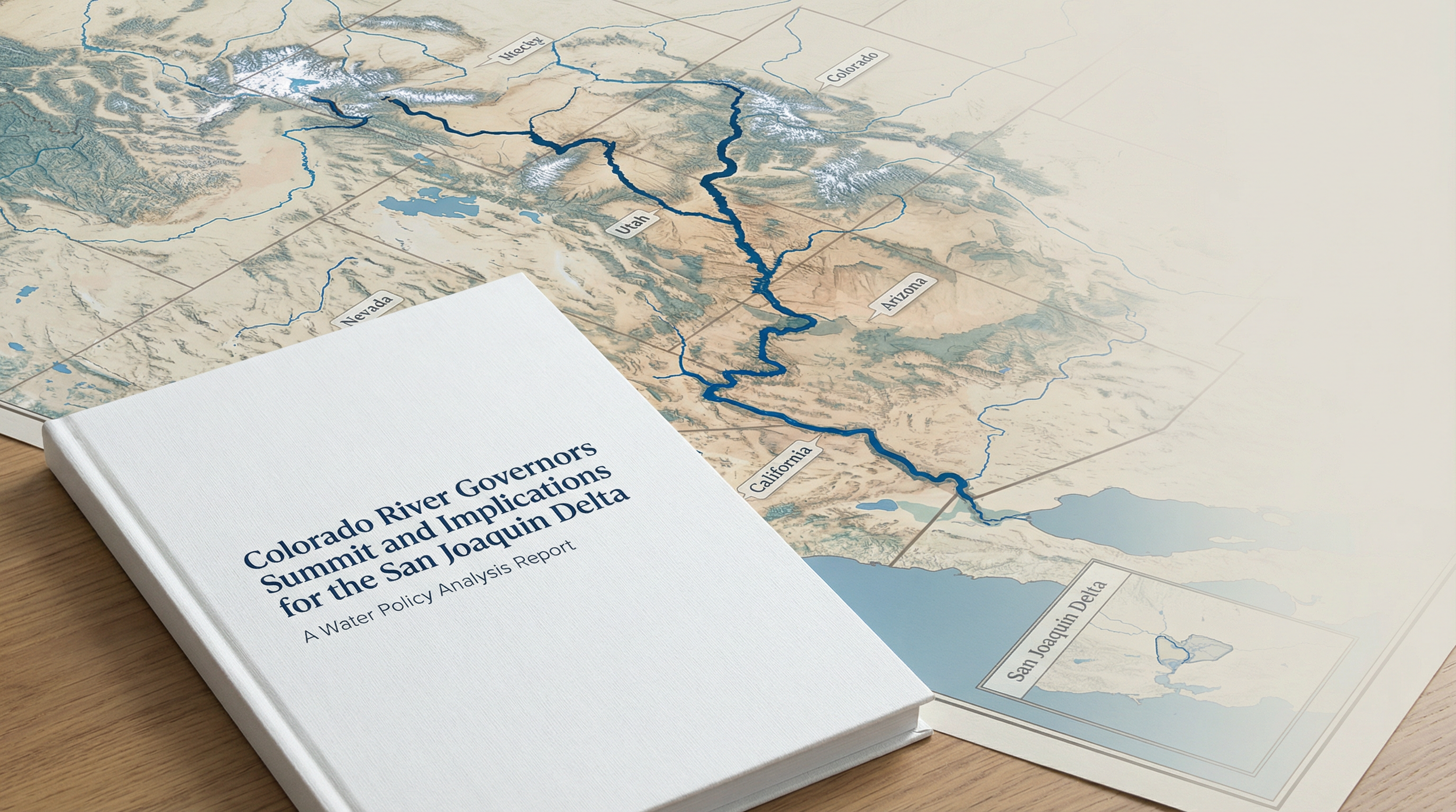
This report discusses an unprecedented high-level summit on January 30, 2026 convened by Interior Secretary Doug Burgum, bringing together governors from the seven Colorado River Basin states—California, Arizona, Nevada, Colorado, Wyoming, Utah, and New Mexico—to address the ongoing stalemate over post-2026 water allocation.

Sierra Nevada Snowpack
What is the history and current status of the Sierra Nevada Snowpack that supplies surface to Sacramento, San Joaquin County and Lodi, Ca? This report provides a map and chart to track changes and trends over the past 100 years.
Lodi's Water Supply Status and Growth Plan
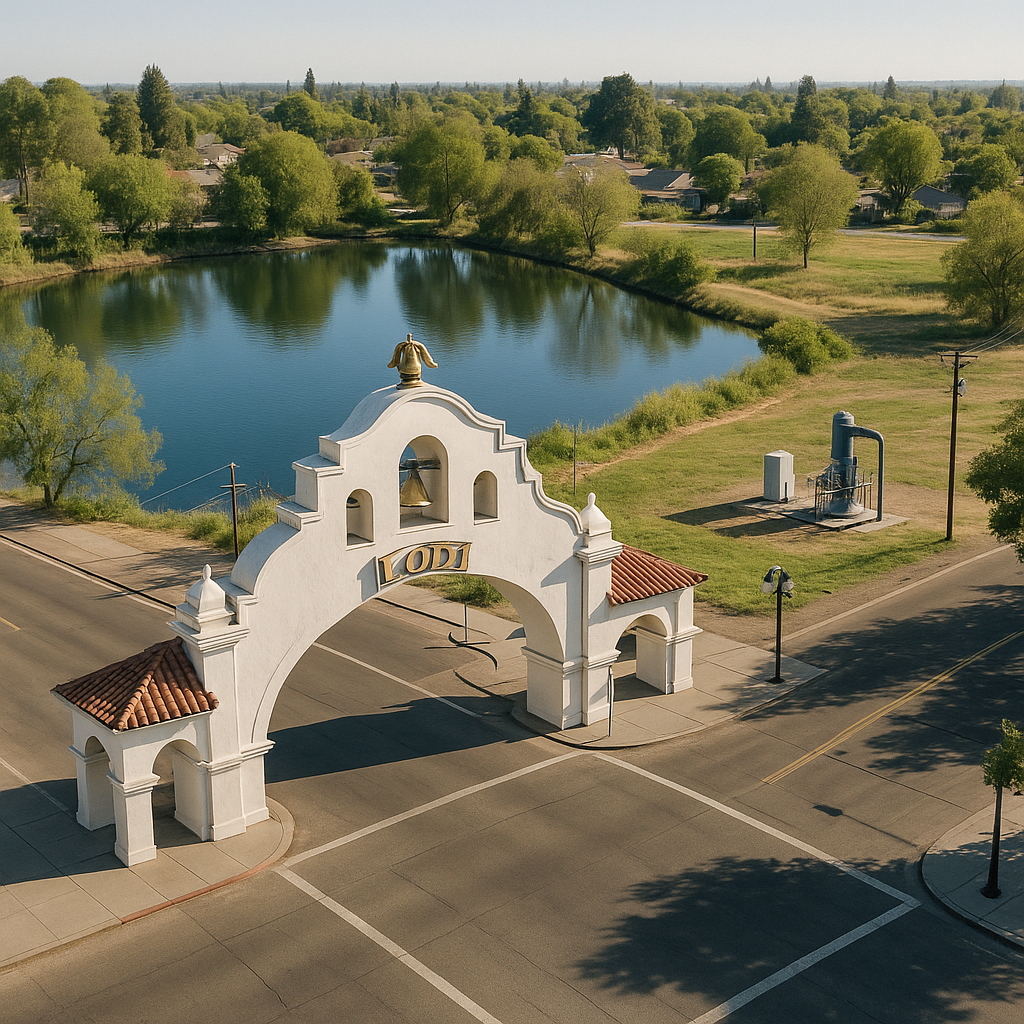
Lodi faces a complex water supply scenario as it pursues ambitious growth plans over the next five years while managing significant groundwater challenges in the critically overdrafted Eastern San Joaquin Subbasin. The city's diversified water portfolio provides near-term stability, but long-term sustainability requires careful management of both supply and demand.