Lodi Eye
LodiEye provides additional information on trending stories / topics published by local media and shared on local social media accounts.
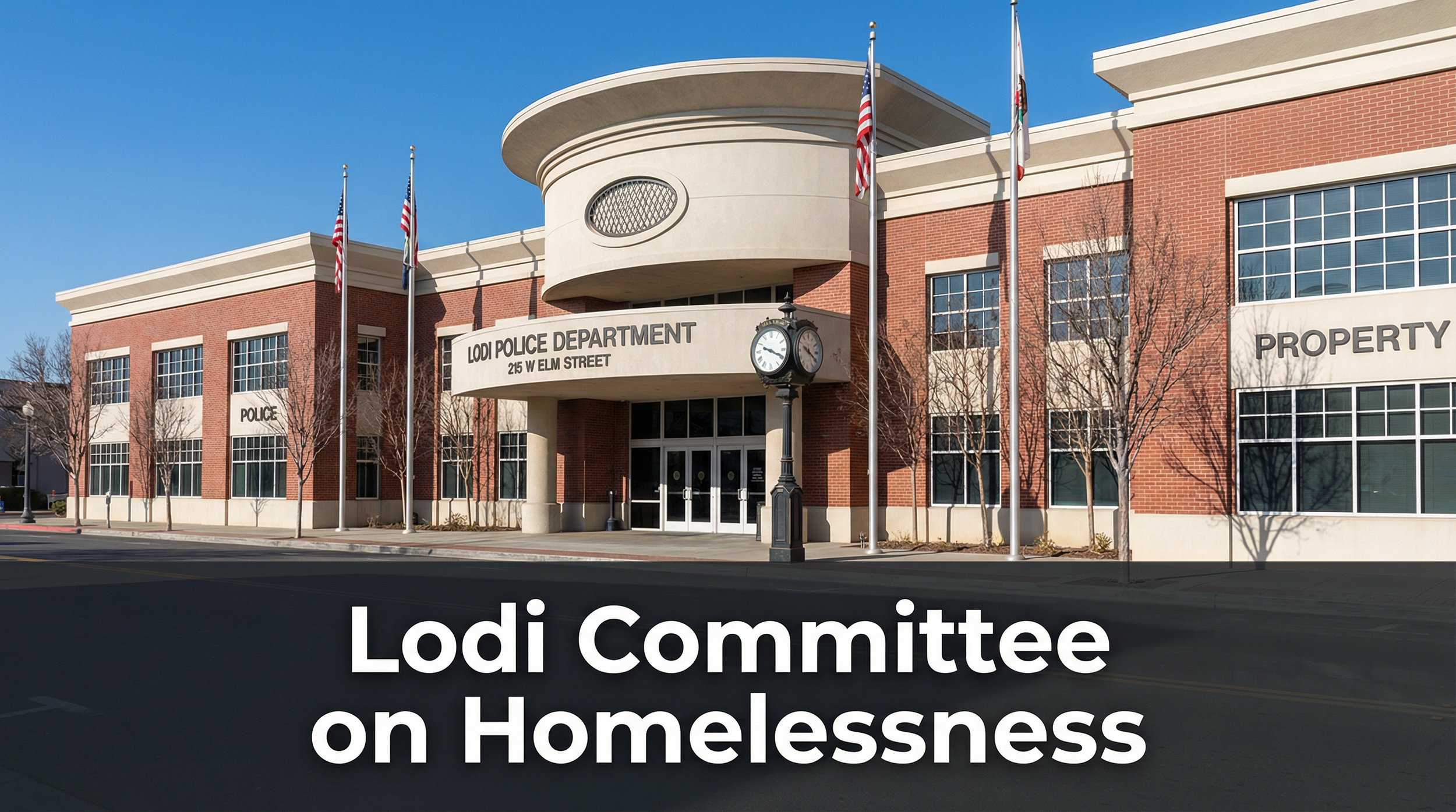
Lodi Committee on Homelessness — May 14, 2026
The Lodi Committee on Homelessness (LCOH) convenes Thursday, May 14, 2026 at 2:30 PM in the LPD Community Room to review April service-provider activity, subcommittee progress, and major capital projects, including the Lodi Access Center (targeted completion September 30, 2026) and the recently opened 40-unit Main Street transitional housing. Agenda highlights include a pet-fostering update from Major Pease, the next committee tour selection, and follow-up on four April action items. The next meeting is June 11, 2026.
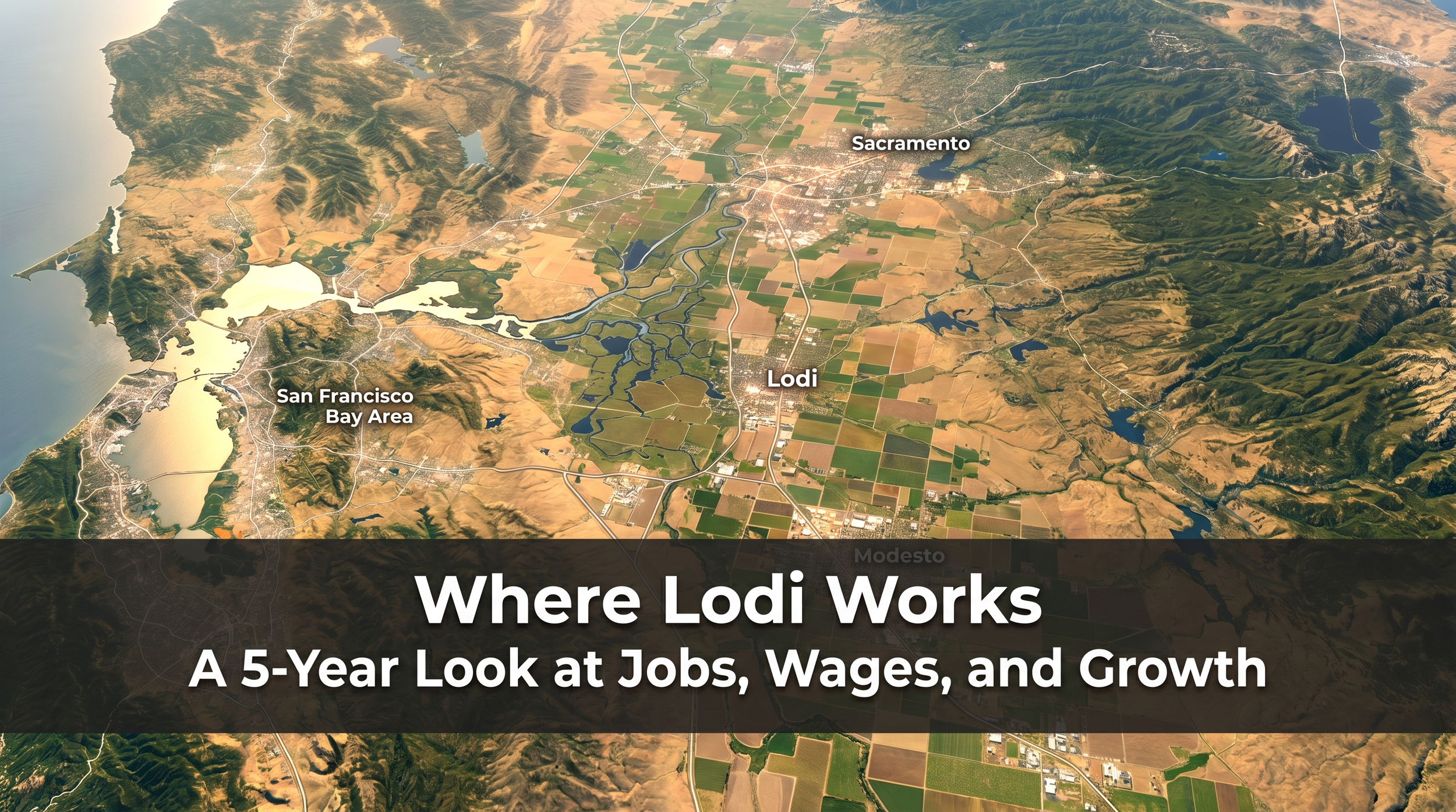
Where Lodi Works: A 5-Year Look at Jobs, Wages, and Growth Within Commute Distance
From the warehouses of Stockton to the data centers of Sacramento, this report maps what's hiring within 60 minutes of Lodi, what's projected to grow, and how local wages compare to what existing Lodi residents earn. Five-year projections from the San Joaquin Council of Governments and U.S. Bureau of Labor Statistics show transportation and warehousing plus healthcare driving roughly two-thirds of net new jobs through 2031, while a separate hyperscale data center buildout in the Sacramento commute corridor represents the highest-velocity wage opportunity in the region. The report identifies four highest-leverage career paths for Lodi residents and flags two structurally declining job categories.

2025 Lodi Crush Report: The Final Numbers
The USDA/CDFA Final 2025 California Grape Crush Report, released April 30, 2026, confirms District 11 crushed 532,409 tons — 14.1% below the August moderate forecast of 620,073 tons and 9.8% below the 2024 D11 total. Statewide, the Final crush settled at 2,761,914 tons, down 6.1% from 2024.
The Final report supersedes the Preliminary numbers analyzed in March. The most consequential revision: the table-grape-to-crush surge that appeared to be reaching District 11 in the Preliminary data turned out to be a District 13 phenomenon all along. D11 ended 2025 with just 2.4 tons of table grapes diverted to crush — essentially zero.
What remains unchanged: a Zinfandel collapse, a cooler-than-normal vintage that delivered exceptional fruit quality, and a widening price chasm between coastal and interior California. What changes: Lodi's exposure to the table-grape-diversion economy is far smaller than the Preliminary suggested.
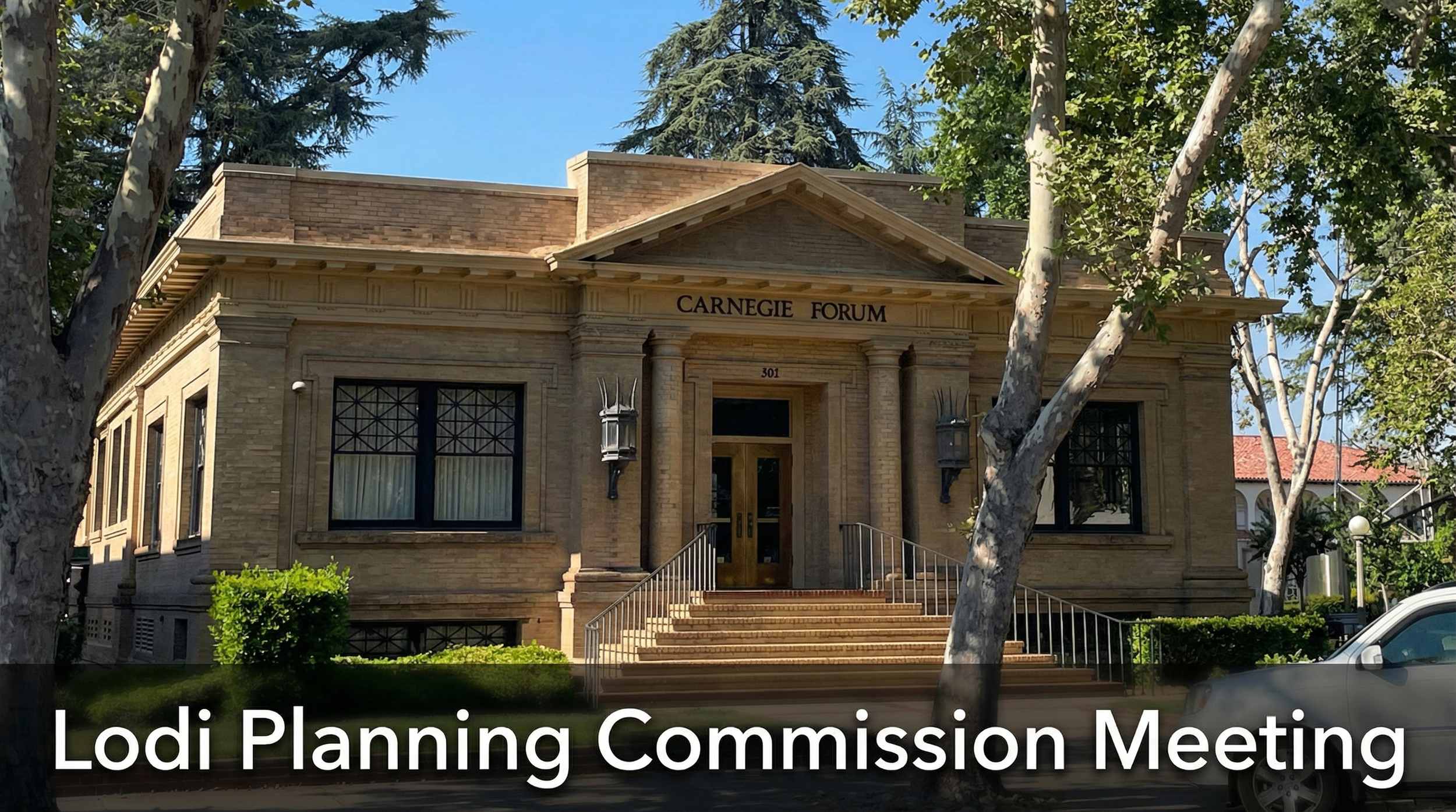
Lodi Planning Commission Agenda - May 13, 2026
The Lodi Planning Commission convenes on May 13, 2026 for a single-topic public hearing: a recommendation to the City Council to adopt the Downtown Specific Plan (DTSP) pursuant to California Government Code §65450 et seq. The DTSP is a long-range policy and implementation framework covering the area from Lodi Avenue to Lockeford Street, and from Pleasant Avenue to Washington Street — including the historic School Street core and the expanded Downtown Mixed Use zone along Main Street east of the Union Pacific Railroad. Environmental review relies on an Addendum to the 2025 Focused General Plan Update SEIR. Staff recommends approval of Resolution P.C. 26-__ forwarding the plan to the City Council.

Is a Data Center in Lodi's Future?
At the May 6, 2025 Lodi City Council Meeting, Councilman Cameron Bregman raised the question of whether Lodi should explore data center opportunities — an idea, in his framing, worth examining seriously. This report accepts that invitation and asks: given Lodi's specific situation, what would actually be involved? Where would such a facility plausibly go, what would it cost, what would it return, and what could go wrong?
San Joaquin County Measure K: What It Is, How It Works, and What It Means for Lodi
Measure K is San Joaquin County's dedicated half-cent (0.5%) transportation sales tax, first approved by voters in November 1990 and renewed for a 30-year extension through March 2041 when nearly 78% of county voters approved the renewal in November 2006. Every taxable retail purchase made in Lodi contributes a half-penny per dollar to this fund, which is distributed to local street repair, highway improvements, public transit (including GrapeLine), bicycle and pedestrian infrastructure, and railroad crossing safety. Over the 30-year renewal period, Measure K is projected to generate approximately $2.64 billion in transportation investment for San Joaquin County.
For Lodi specifically, Measure K is the single most important non-federal source of transportation funding. It directly pays for GrapeLine bus service, annual street repaving, the SR 99/Turner Road interchange reconstruction, active transportation trails, and a pipeline of planned highway, arterial, and bike/pedestrian projects. This report explains the program's origins, funding mechanics, expenditure categories, administration, oversight, and Lodi-specific project history and pipeline.

A Sliding Scale of Ambition: How Four Cities Are Preparing for Valley Rail
Lodi’s new train station will probably be the last of four to open on Valley Rail’s Sacramento Extension. The rail commission chair has called the 2027 published opening date “optimistic” and described 2030 as “an ambitious target.” That gives Lodi an opportunity the other cities do not have: years to watch what works in Stockton, Lathrop, and Elk Grove, and bring those lessons home. Stockton has built electric carshare, e-bike fleets, and an integrated transit app. Lathrop and the Tesla factory are running employee vanpools. Elk Grove bought its station property outright and operates three commuter bus services. Lodi’s plan today is three bus trips a day to the new station. Whether the city uses the next several years to build something more is a choice that has to be made now.
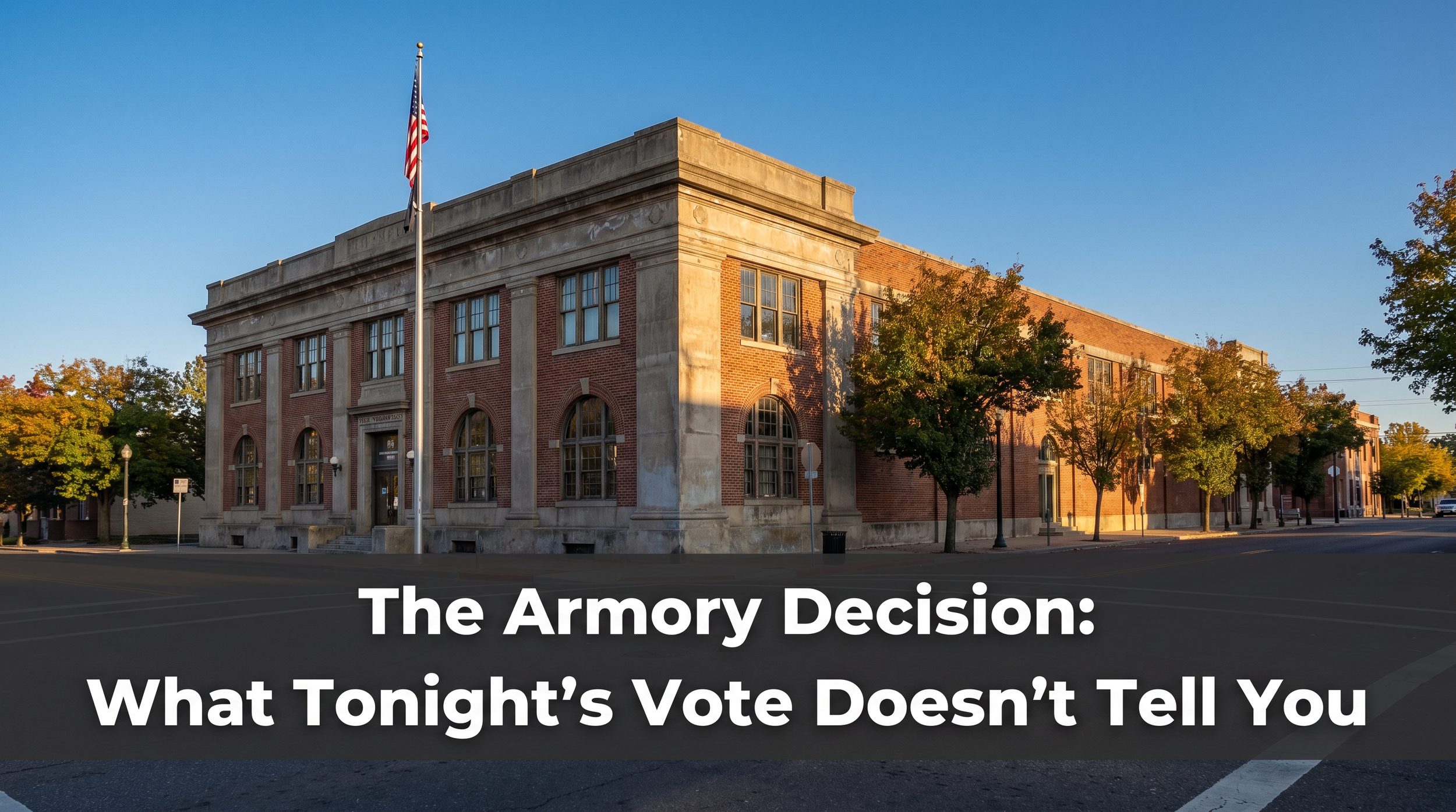
The Armory Decision: What Tonight's Vote Doesn't Tell You
The Lodi City Council votes tonight on whether to file a letter of interest in purchasing the Armory at 333 N. Washington Street under California Senate Bill 855, which authorizes the state to dispose of seven specified armory properties. The procedural deadline is Monday, May 11.
The decision tonight is narrower than the staff report frames it. Filing a letter of interest is not a commitment to buy — it is the procedural foothold that keeps the option alive. The substantive decision is months away, and four pieces of information not in the staff report should drive it: where the other six SB 855 armories are headed and what local agencies have paid for similar properties; what realistic rehabilitation actually costs given that the Lodi Armory is reinforced concrete and already operates as a city-leased gymnasium; whether the federal and state historic tax credits — potentially worth 40 percent of qualified rehabilitation expenditures — can be captured under a public-private structure; and how the active Diede Construction renovation of the American Legion Memorial Building directly across the street reshapes the corridor argument.
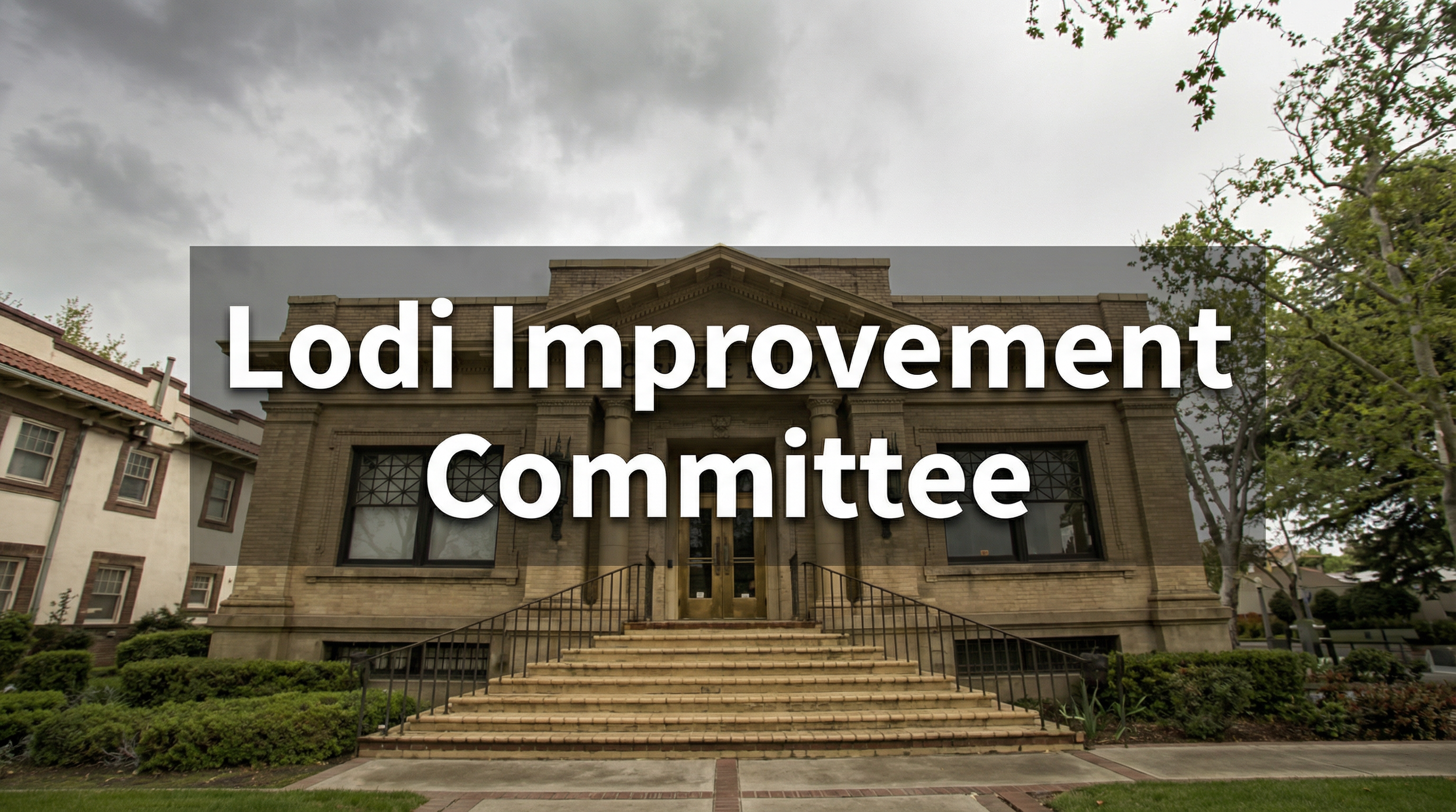
Lodi Improvement Committee - May 12, 2026
The Lodi Improvement Committee (LIC) meets May 12, 2026 at the Carnegie Forum for a focused working session centered on three priorities: shaping the LIC's upcoming semi-annual update to the City Council, reviewing Community Development Block Grant (CDBG) activity including the new 2026–27 Annual Action Plan public review window, and advancing the 2026 annual activities task roster. Public participation is available in person, via Zoom (Meeting ID 880 2451 7154, passcode 191272), by email to LICcomments@lodi.gov, or by mail/hand delivery to the Community Development Department.
This meeting follows an eventful April session where the Committee voted unanimously to recommend the City Council halt ticketing of on-duty downtown employees and build an employee permit system — a recommendation now in the staff pipeline to Council. Staff's memo confirms HUD's 2026–27 CDBG allocation has increased to $665,236 (up from $655,037 in 2025–26), with the draft Action Plan posted for public review May 2 through June 3, 2026.
What Mayor Yepez's Utility Fee Changes Mean for Lodi Households
Mayor Ramon Yepez has proposed two reforms to Lodi's utility billing: a credit card "convenience fee" to recoup the roughly $1.2 million the city pays annually in processing fees, and the elimination of late fees for customers facing financial hardship. LodiEye verified the City's actual 46-day electric shut-off timeline against the August 2022 Council agenda report, confirmed the pandemic-era $19.2 million past-due balance, and benchmarked Lodi's electric disconnection policy against California's SB 998 water standard. The Yepez package is roughly revenue-neutral but rebalances who pays. Aligning electric shut-offs with SB 998's 60-day floor and tying hardship relief to Lodi's existing SHARE/FIDP/Medical/CARE assistance programs would give the city a cleaner, more defensible disconnection policy.
Lodi City Council Agenda — May 6, 2026
The May 6 meeting is a heavyweight transition night for Lodi. After more than a year of acting and interim leadership, the Council is being asked to install three permanent executives in one sitting: Kara Reddig as City Manager ($285,000 base, 3-year term, effective June 22), Jamie Bandy as Director of Administrative Services ($315,000 fully-burdened, effective May 12), and Bandy as City Treasurer. A fourth personnel item brings retired Vacaville economic development director Donald Burrus back to public service as a part-time annuitant under PEPRA's 180-day exception.
Beyond people, the agenda also delivers a first-of-its-kind revenue-share billboard partnership with Rogers Media (greater of $25,000 a year or 25% of net ad revenue), a same-week deadline question about acquiring the State-owned Lodi Armory, a placeholder asking whether the City should formally prevent data centers in Lodi, and the first of three FY 26/27 budget study sessions revealing a structural gap that has forced 37 deferred General Fund positions, a $1.5M cut to fire vehicle replacement, and $2.8M in department-wide reductions. The 22-item Consent Calendar is unusually heavy with end-of-fiscal-year contract resets totaling roughly $15 million.
Jamie Bandy Returns to City Hall as Director of Administrative Services and City Treasurer
The Lodi City Council’s May 6, 2026 agenda includes the appointment of Jamie Bandy as the city’s next Director of Administrative Services, with an effective start date of May 12, 2026 and a fully-burdened compensation package valued at approximately $315,000 per year. The same agenda action designates Bandy as the city’s City Treasurer, the statutory officer responsible for the custody and investment of public funds. The appointment closes a high-profile vacancy that has shadowed the city since the 2025 forensic-audit fallout, returns a Lodi-rooted public-finance professional to City Hall after roughly seventeen years away, and pulls together Finance, Human Resources, and Information Technology under a single executive who has run each of those functions in different forms during her career.
Six Candidates, Three Hometown Names: A Lodi Guide to the 9th Assembly District Primary
The 9th Assembly District spans five counties — from the Elk Grove suburbs through Stockton, Lodi, Manteca, Ripon, and Modesto, into the Amador and Calaveras foothills — but its political center of gravity sits in Lodi. Three of the six candidates on the June 2 primary ballot live in our immediate area: Tami Nobriga in Lodi, Jim Shoemaker in Clements, and Matthew Adams in Woodbridge. Incumbent Heath Flora's official residence is in Ripon, with Brandon Owen of Galt and Michael Perez of Waterford rounding out the largest AD-9 field since Flora first won the seat in 2016.
Lodi Taps Elk Grove's Kara Reddig as New City Manager
After more than a year of acting appointments, interim placeholders, and legal bills approaching seven figures, the City of Lodi has hired Kara Reddig, Deputy City Manager of Elk Grove, as its next City Manager. A seasoned municipal executive with more than two decades of local-government leadership, Reddig arrives to stabilize an office that has cycled through four different managers since April 2025 — and to reset a City Hall still working through the fallout of the Scott Carney removal, an estimated $600,000 in legal costs, and two independent reviews of the city's internal controls.
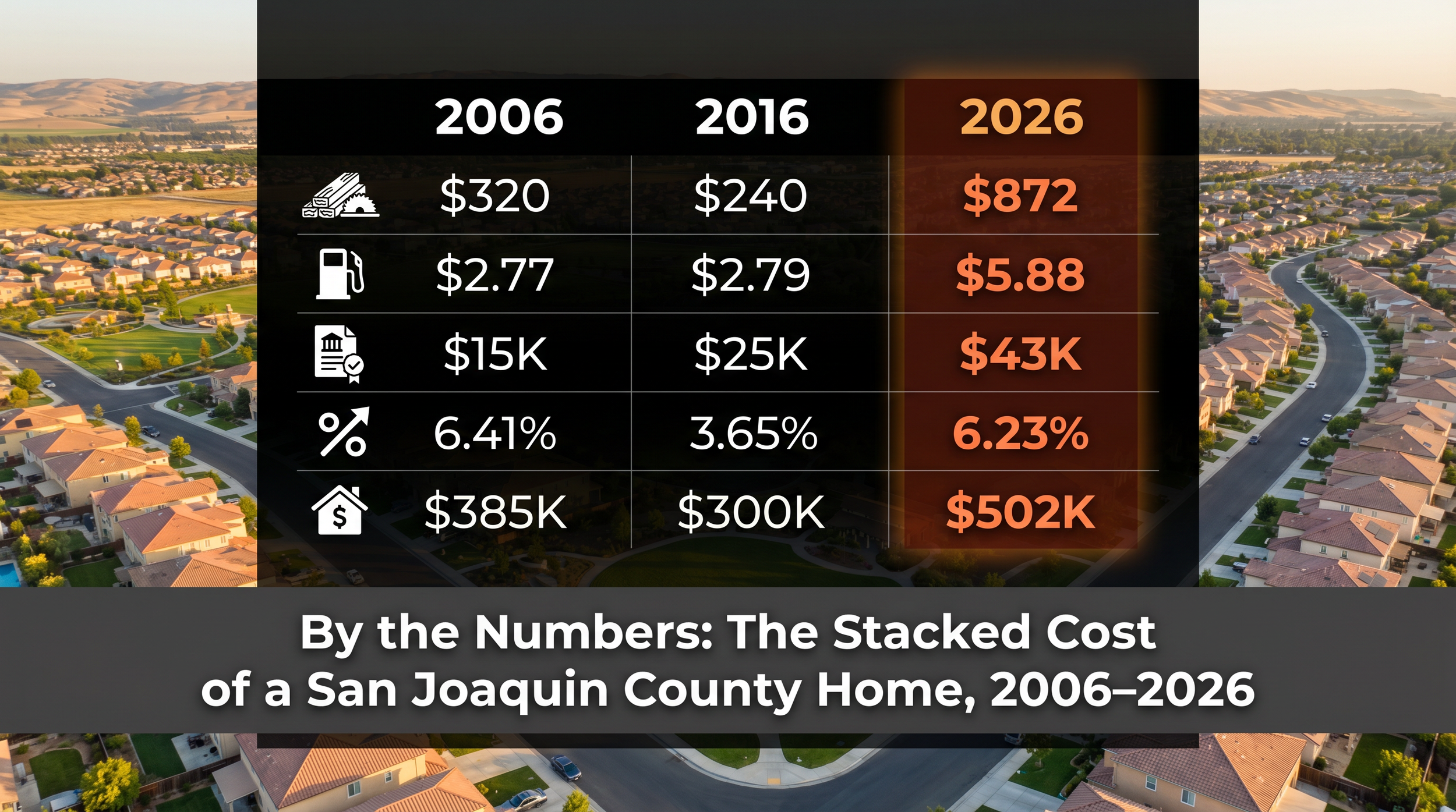
By the Numbers: The Stacked Cost of a San Joaquin County Home, 2006 to 2026
California's housing affordability crisis is usually told as a single story: not enough homes. The data across three reference years — 2006, 2016, and 2026 — shows it is actually six stories layered on top of each other. Mortgage rates have round-tripped to 2006 levels but now create a lock-in effect for the 77% of California homeowners holding sub-5% mortgages. Framing lumber has tripled. California gasoline has more than doubled. Tariffs on building materials, a non-issue in either earlier reference year, now add an estimated $17,500 to a typical new home. Construction labor has contracted under enforcement pressure. Lodi government fees on a typical home now exceed $43,000. And insurance premiums have roughly doubled since 2016, with FAIR Plan enrollment statewide up 445% since 2006.
The compounding is the story. Solving any single headwind helps. Solving none of them — letting the stack compound for another five years — risks a structural housing market that no longer functions for working Valley families.

A Lodi Vintner's Last Hunt: Ernie Dosio, the Elephants of Gabon, and the Quiet Economics of Conservation
On April 17, 2026, 75-year-old Lodi vineyard owner Ernie Dosio was trampled to death by a herd of five forest elephants in Gabon's Lopé-Okanda rainforest while on a $40,000 guided safari. His death — covered by wire services from London to New York — offers Lodi readers a rare window into how sportsmen like Dosio quietly underwrite wetland, refuge, and big-game habitat work in California and around the world. This LodiEye report merges the accident, the man, his business and conservation contributions, and a broader comparison of hunter versus non-hunter dollars that sustain modern wildlife conservation.

Spirit Airlines Bailout: What It Means for California Travelers, Taxpayers, and the Future of US Aviation
President Donald Trump is weighing a taxpayer-funded rescue of bankrupt Spirit Airlines worth up to $500 million, structured as warrants potentially giving the federal government up to 90% ownership. The proposal has drawn bipartisan criticism, pushback from Transportation Secretary Sean Duffy, and comparisons to Trump's own failed Trump Shuttle venture of 1989–1992. For Northern California travelers, Spirit already exited Sacramento, Oakland, San Jose, and San Diego in October 2025. This report examines the bailout plan, historical airline-rescue precedents, alternative uses for $500 million, worker absorption by rival carriers, and the fare impact on US travelers.
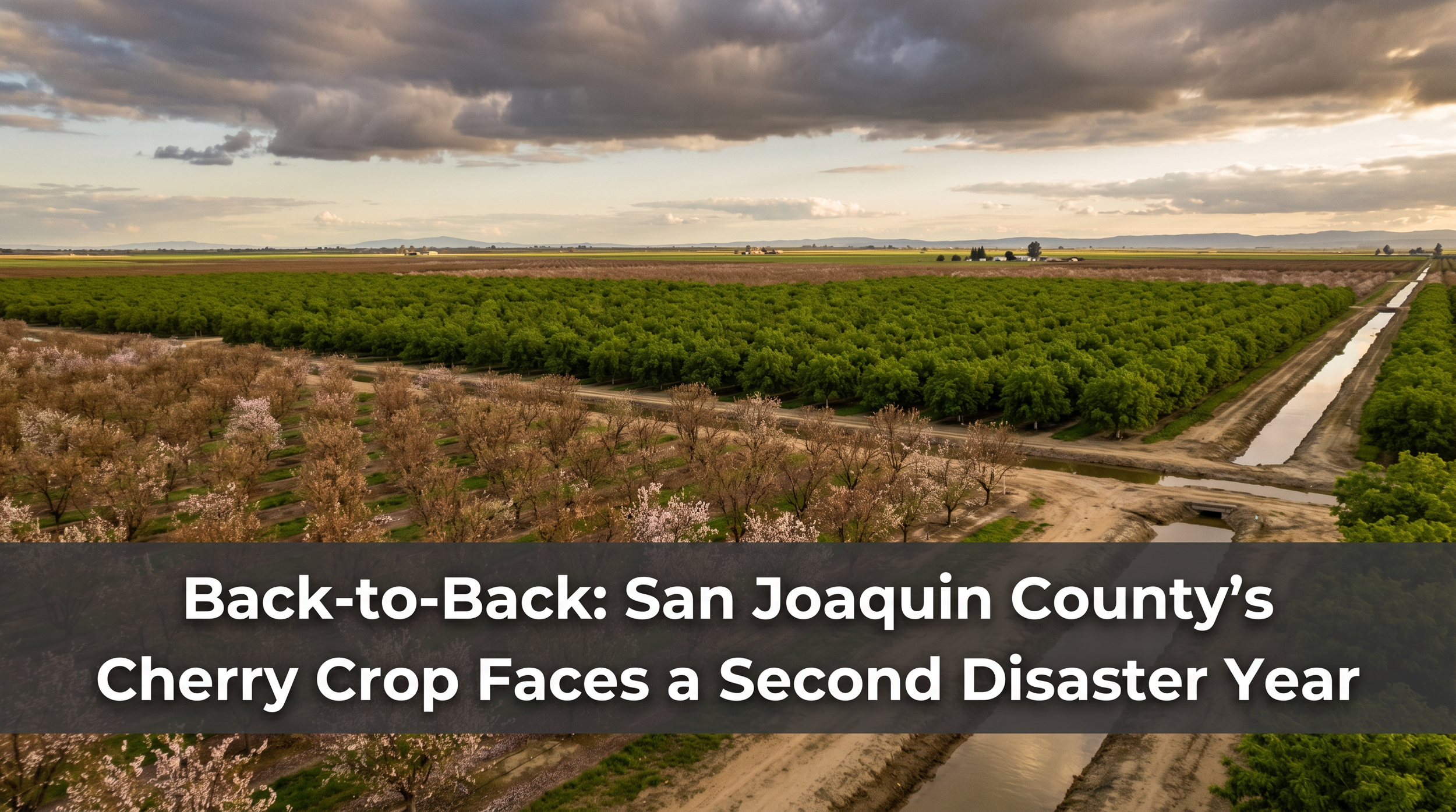
Back-to-Back: San Joaquin County's Cherry Crop Faces a Second Disaster Year
The rain that flooded Lodi strawberry stands in April 2026 is the local-color image of a larger economic story playing out in San Joaquin County's orchards and vineyards. Cherries — the county's fourth most valuable crop and roughly half of California's cherry production — face the possibility of a second consecutive disaster-declaration year after a damaging storm hit during the most vulnerable ripening window.
The structural headline is not the April rain itself. It is what two disaster years in a row would do to a crop economy that has already been trending downward in value since 2022. A quieter walnut subplot and a multi-year Lodi wine-industry pressure round out the real county-level picture.

Lodi's Fuel Tax Is Shrinking. Can EVs Replace It?
Three new fuel retail projects are moving through approvals in the Lodi region. One — the Maverik station being annexed at Kettleman Lane and Beckman Road — will pay into Lodi's General Fund. Two — the Dhanda project at Highway 99 and Liberty Road in unincorporated Collierville, and the Lockeford ExtraMile at Highway 12 and Highway 88 — will not. Near-term, the Maverik adds roughly $280,000 annually to Lodi's books; the two unincorporated projects migrate approximately $340,000 annually from Lodi's tax base to San Joaquin County's as Lodi residents and pass-through traffic fuel up outside the city limits.
But the larger story is structural. California's Advanced Clean Cars II rule phases out new gasoline vehicle sales by 2035; Lodi's own EV Master Plan projects the city's zero-emission fleet will grow from 1,221 vehicles at the end of 2023 to more than 24,000 by 2035. Sustained California retail gasoline prices at $5.88 per gallon and rising accelerate the transition further. Meanwhile, Lodi Electric Utility's existing 10 percent payment-in-lieu-of-taxes transfer — approximately $7 million annually to the General Fund — provides a partial offsetting mechanism that is not widely understood, and whose optimization has not been publicly discussed. This analysis examines the near-term fiscal picture, the structural decline, and the replacement revenue and EV-monetization strategies Lodi can learn from peer California municipal utilities.
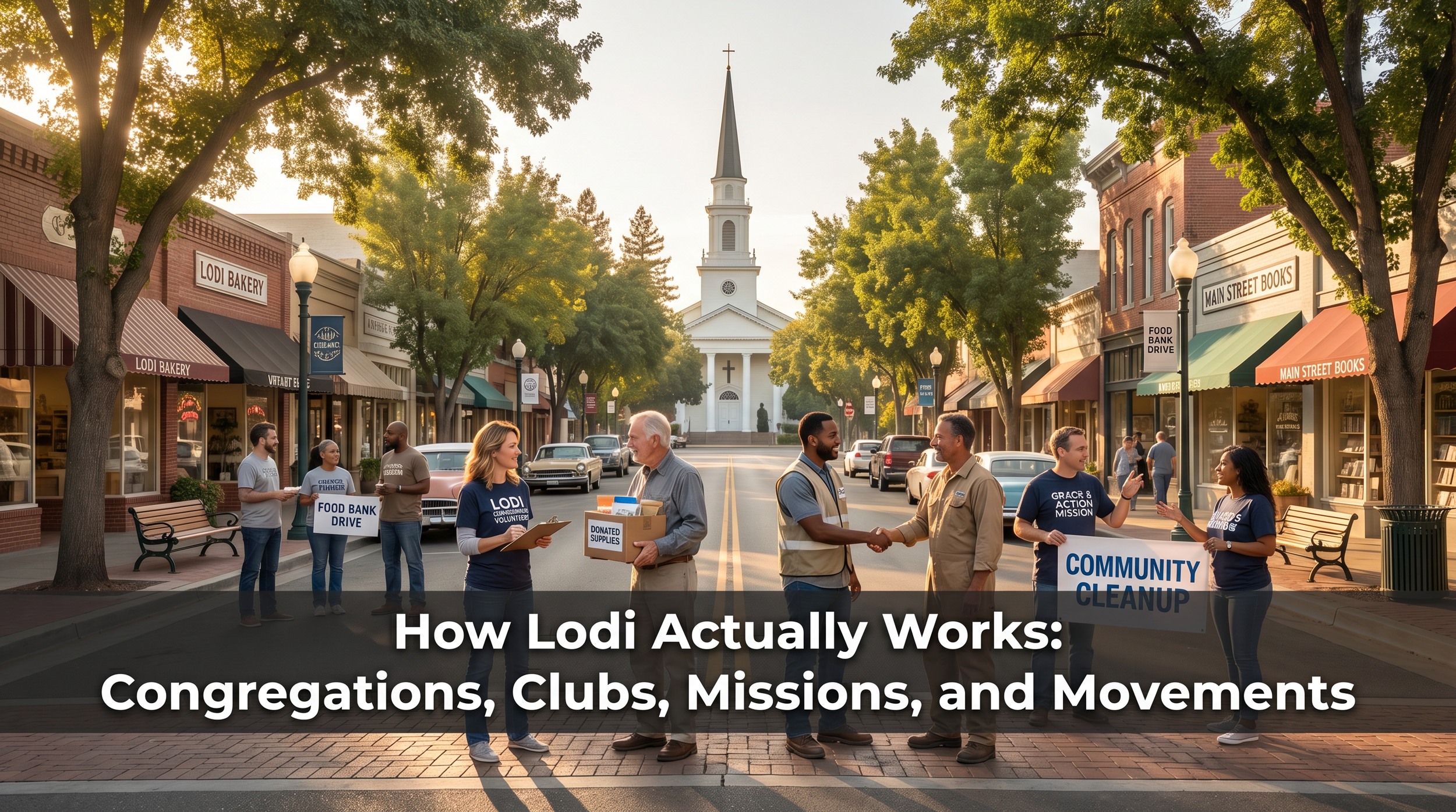
How Lodi Actually Works: Congregations, Clubs, Missions, and Movements
Lodi has roughly 334 registered nonprofits operating across every cause area that shapes daily life in the city. Faith & Religious Organizations form the single largest sector by count at 76 organizations (23%), followed by Youth, Sports & Recreation at 59 (18%) and Housing & Social Services at 41 (12%).
Applying the Lodi411 taxonomy of three civic-life types — Fraternal, Mission, and Civic Movement — and splitting each by religious vs. secular status reveals the structural reason Lodi punches above its civic weight: two organizations, Love Lodi and The Salvation Army Lodi Corps, function as super-connectors between faith, secular, and municipal actors. Several other issue areas — arts, environment, recovery, heritage — remain promising areas for stronger coordination and future partnership.