Lodi Eye
LodiEye provides additional information on trending stories / topics published by local media and shared on local social media accounts.

After 16 Years, Hungary Changes Course: What Orbán's Defeat Means — and What It Doesn't
On April 12, 2026, Hungarian voters ended Viktor Orbán's 16-year hold on power, handing a decisive victory to Péter Magyar's center-right Tisza party. The election carries significance well beyond Central Europe: the Trump administration invested extraordinary political capital in Orbán's reelection, including dispatching Vice President JD Vance to campaign on his behalf days before the vote. This analysis examines the Orbán record honestly from multiple perspectives, explores what the Hungarian experience may and may not tell us about American politics, and considers what lies ahead for both countries as the U.S. approaches its own consequential midterm elections in November.
Investing in Lodi’s Downtown Future
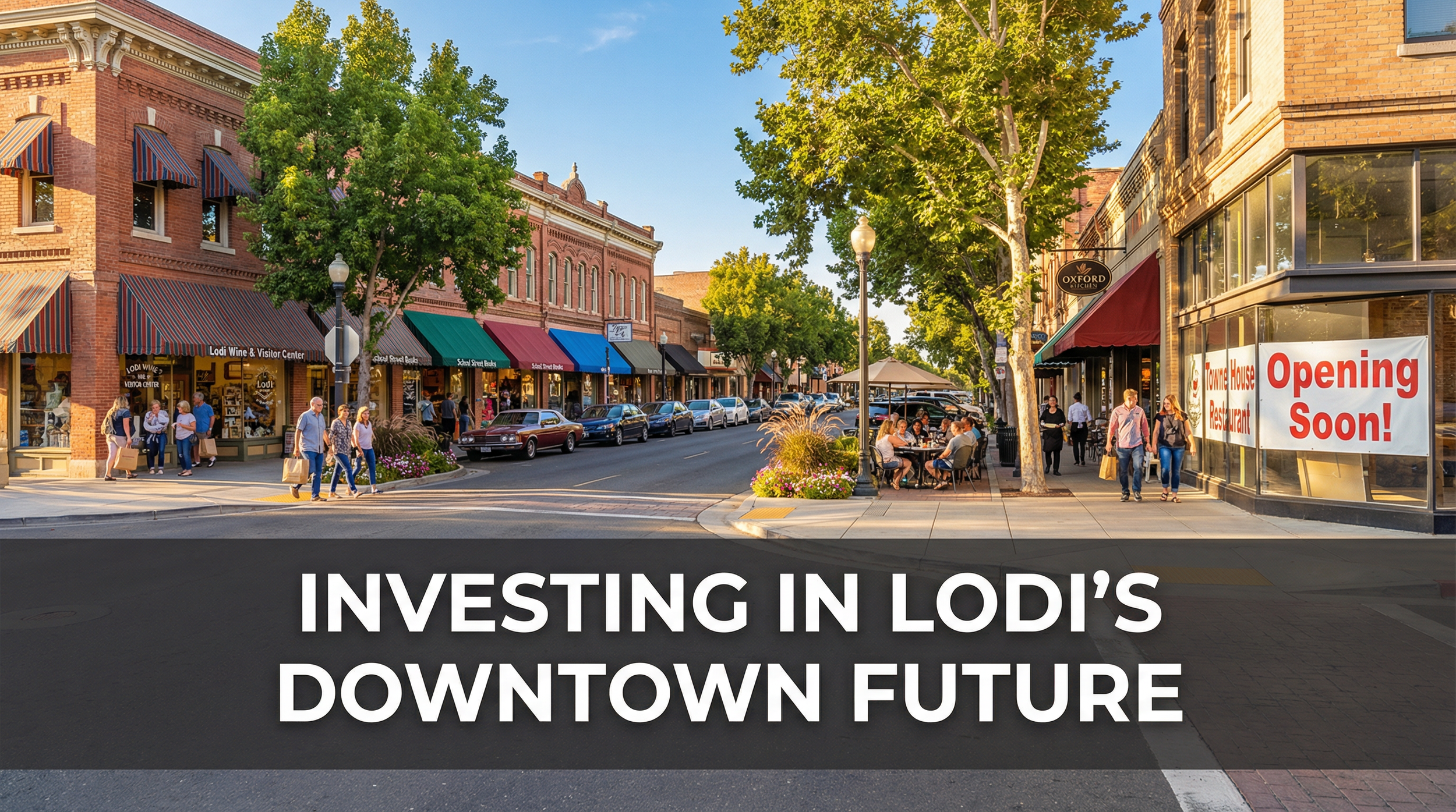
The City of Lodi is exploring the formation of a Property-Based Business Improvement District (PBID) in the downtown area to fund enhanced services — including cleaning, safety, beautification, and marketing — above and beyond what the City's General Fund currently provides. A PBID would levy assessments on commercial property owners within a defined boundary, with funds controlled by a property-owner-governed nonprofit association. Nearly 100 PBIDs operate in California downtowns under the Property and Business Improvement District Law of 1994. This analysis explains how PBIDs work, examines comparable districts in small California cities, identifies the local conditions that make a Lodi downtown PBID timely, and outlines the key questions property owners should be asking.
Lodi Improvement Committee - April 14, 2026
The Lodi Improvement Committee convenes for its regular monthly meeting with five substantive agenda items: a Love Lodi presentation previewing the April 25 citywide volunteer day, a downtown parking discussion referred by City Council, CDBG program updates spanning three fiscal years (including a new $665,236 allocation for 2026–27), a review of the committee's 2026 annual activities and task assignments, and scheduling of future meeting topics for May and June.
All five committee members — Chair Lyndsy Davis, Mono Geralis, Dawson Hayre, Janavi Sharma, and Christine Tran — are expected to attend, along with staff members Neighborhood Services Manager Jennifer Rhyne and CDD Program Specialist Kari Chadwick. The public may participate in person, via Zoom, or by submitting comments via email to LICcomments@lodi.gov no later than three hours before the meeting.
Lodi City Council - April 15, 2026
This packed agenda features three Regular Calendar items including a forensic accounting audit report, a $1.25 million credit card convenience fee policy decision, and a vendor permit cap discussion; four presentations including three mayoral proclamations and a non-profit check presentation; and twelve Consent Calendar items totaling over $22 million in contracts and appropriations. Two Closed Session items address the ongoing City Manager recruitment and anticipated litigation.

Urban Tree Canopy And Tree Equity: How Lodi Compares
Lodi’s urban tree canopy covers an estimated 13–16% of the city — roughly at the California urban average of 14.45% but well short of the ~30% coverage recommended by American Forests for equitable urban forestry. With a Tree Equity Score of 72.3 out of 100, Lodi clusters with neighboring Stockton (72.0) and Tracy (73.7) in the low-to-mid 70s, while Davis (92.8) dramatically outperforms all three. Nine of Lodi’s 51 Census block groups score below the priority threshold of 60, indicating neighborhoods with both low canopy and high social vulnerability.
Despite holding Tree City USA status for 23 consecutive years, Lodi’s tree ordinance (Chapter 307) lacks the canopy growth mechanisms — preservation thresholds, replacement ratios, development shading standards — that have driven measurable results in Davis, Sacramento, and Fresno. This report examines the data, the policy gaps, and what it would take to close them.
The Leadership Gap
In 30 months, the City of Lodi has cycled through five people in the city manager's chair, lost key personnel in finance, human resources, and community development, spent more than $1 million on consultants and interim staffing, and endured a public rupture between its city manager and city council that made regional and statewide news.
This is not a story about one bad hire. It is a story about institutional erosion — and Lodi is far from alone. Across the Central Valley and throughout California, the machinery of local government is losing the people who know how to run it. The question is whether Lodi's elected leadership, at both the city and county level, understands the depth of the problem.
Lodi Committee on Homelessness — April 9, 2026
The Lodi Committee on Homelessness (LCOH) meets on April 9, 2026 at 2:30 PM in the Lodi Police Department Community Room for a data-rich session including approval of March minutes, March 2026 service provider and subcommittee reports, a City Staff update, a briefing on the Temporary Pet Fostering Initiative, and a tour of the Salvation Army Stockton Adult Rehabilitation Center.
Key themes include continued growth in Lodi Access Center (LAC) throughput and cost savings, rising senior homelessness, expanded hospital-based housing supports at Adventist Health Lodi Memorial, and emerging structural concerns at Hotel Lodi, which could affect approximately 80 elderly renters if conditions worsen.
Iran War Scorecard: 10 Rationales, 0 Achieved
On February 28, 2026, President Trump launched Operation Epic Fury against Iran. After 40 days of sustained military operations — the most intensive U.S. air campaign since the 2003 invasion of Iraq — a two-week ceasefire was announced on April 7. This report evaluates each of the administration's stated rationales against actual outcomes, drawing on reporting from major news organizations, intelligence assessments, and independent analysts.
The picture that emerges is stark. The Atlantic documented at least 10 different rationales offered during the first week alone — a pattern of shifting justifications that made it difficult for the public, Congress, or allies to evaluate the war on any consistent basis. What follows is a rationale-by-rationale accounting.
Within 24 hours, Israel launched Operation Eternal Darkness — striking 100+ Hezbollah targets across Lebanon unraveling the ceasefire with Iran closing the Straight of Hormuz.

The March and the Meeting
Democracy is not a spectator sport. It requires informed, engaged citizens at every level — from the local planning commission to the statehouse to Congress. Over the past decade, two fundamentally different models of political engagement have competed for dominance in American life. One side marched, protested, donated online, and went home. The other side filed to run, joined committees, built institutions, and stayed. This analysis traces a decade of political spending, civic participation, and institutional investment to document how performative engagement — protests, social media campaigns, and billion-dollar ad buys — lost to the patient, relational, participatory work of capturing democratic institutions from the inside out.

$1.7 Trillion for War, Pennies for Home
The largest military spending increase since World War II funnels billions to politically connected contractors while slashing science, housing, energy aid, and environmental protection. We break down the national security claims, rate their credibility, and trace the impacts to San Joaquin County.

Rolling Thunder: E-Bikes, Scooters & Boards Raise Safety Alarms Across Lodi
As electric micromobility booms, injuries soar nationwide, Lodi PD moves to get ahead of a crisis already hitting California communities hard.
On April 4, 2026, the Lodi Police Department announced it is reviewing the city's municipal code regarding motorized bicycles and e-bikes to address safety concerns that have been building across the community for months. Captain Kevin Kent acknowledged that groups of bicyclists riding in roadways and a growing number of electric bikes and motorized bicycles operating throughout Lodi have created genuine safety hazards for riders and motorists alike.
The department has already launched a multi-pronged response: updated officer training on bicycle laws, a partnership with AAA to distribute safety brochures to riders and schools, and visits by the motor unit to every Lodi Unified School District campus. School resource officers are now monitoring bicycle-related violations during arrival and dismissal, with a stated emphasis on education over citations.
Lodi City Government: Communication Channel Effectiveness Analysis
Lodi's city government and its agencies operate a fragmented, uncoordinated communication ecosystem in which the most followed platform — the Lodi Police Department's Facebook page — is also the most demographically distorted, while the channel with the most critical utility content — Lodi Electric's Facebook page — has the fewest followers. The city's Notify Me® system on lodi.gov offers genuinely capable infrastructure for direct, algorithm-free civic notification, but it is almost certainly severely undersubscribed, buried in the website, available only in English, and unadvertised to the 40% of Lodi's population that is Hispanic and the 24.7% that speaks Spanish at home.

Lodi Parks and Recreation Committee Meeting - April 7, 2026
The Lodi Parks & Recreation Commission meets April 7, 2026 at 6:00 p.m. to discuss three substantive items: the BOBS annual report on youth sports programming, proposed cricket lighting improvements at Beckman Park funded by a $900K Council allocation, and FY 2026–27 budget priorities. The agenda also includes approval of February 3, 2026 minutes and a monthly staff briefing covering capital projects, recreation programming, and operations.

Drones, Defenses, and Diplomacy
The Russia-Ukraine war, now entering its fifth year, has become the defining laboratory for 21st-century warfare. Cheap, mass-produced drones have supplanted traditional firepower as the dominant battlefield instrument, reshaping military doctrine worldwide. Simultaneously, Ukraine’s hard-won expertise in countering Iranian-designed Shahed drones has opened an unexpected diplomatic corridor to the Gulf states — Saudi Arabia, the UAE, and Qatar — all of which are now under direct Iranian aerial attack following U.S.-Israeli strikes on Iran in late February 2026.
These converging threads — drone warfare innovation, Gulf defense partnerships, Russia’s oil windfall from the Iran war, and the Trump administration’s oscillating posture toward Moscow — form an interconnected web with profound implications for global security and the international economic order.

United States and Iran - Strategic Update
Operation Epic Fury — the joint US-Israeli military campaign against Iran — began February 28, 2026, achieving significant tactical objectives. However, the campaign triggered Iran's closure of the Strait of Hormuz — producing what the IEA calls "the greatest global energy security challenge in history."
As the conflict enters its second month, a new variable has emerged: Yemen's Houthi movement formally entered the war on March 29, threatening to close the Bab al-Mandeb Strait — the only remaining viable bypass route for Gulf oil. The coexistence of a closed Hormuz and a threatened Bab al-Mandeb is a scenario for which the global economy has no adequate contingency.

Venezuela at a Crossroads: Oil, Geopolitics, and the Strait of Hormuz Crisis
The simultaneous upheaval in Venezuela and the military confrontation with Iran over the Strait of Hormuz have converged into the most consequential reshaping of global energy markets since the 1973 Arab oil embargo. Venezuela, the holder of the world’s largest proven oil reserves at 303 billion barrels, finds itself thrust into the center of a scramble for alternative crude supplies just as the Middle East’s most critical shipping corridor has effectively shut down. This report examines where Venezuela stands across government, economy, humanitarian conditions, and oil infrastructure — and assesses whether the country can meaningfully contribute to relieving a global energy crisis.

The History of Beer and Craft Beer in California
California isn't just America's wine country — it's the birthplace of the nation's first truly indigenous beer style, the cradle of the modern craft beer revolution, and increasingly, a frontier for terroir-driven brewing that mirrors its world-class viticulture. From the Gold Rush–era invention of steam beer to Sierra Nevada's estate hop yards, from Russian River's legendary double IPAs to Lodi's four distinctive downtown breweries, this is the full story of how California made American beer what it is today.

Lodi Wines on a Winning Streak
If you need any more proof that Lodi has arrived as one of California's premier wine regions, the past year's competition results should settle the argument. From the biggest North American wine competition to the nation's oldest state fair judging, Lodi-area wineries have been stacking up Double Golds, Best of Class trophies, and Sweepstakes honors at a remarkable rate. Here's a roundup of the recognition our local vintners have earned.
Emerging Trends: San Joaquin County & Lodi, CA — Spring 2026
San Joaquin County and the City of Lodi are at a pivotal inflection point in 2026. A homelessness crisis of historic scale is colliding with a paradoxical employment boom, a cooling housing market, and a shifting crime landscape. The region’s unhoused population more than doubled between 2022 and 2024, driven by a severe affordability gap and the fragmentation of the agricultural workforce. Meanwhile, the county leads the state in employment growth — fueled almost entirely by logistics and warehousing — creating a two-speed economy that leaves many workers in low-wage jobs with insufficient income to afford local housing. Crime is declining in most categories following new state enforcement tools, but structural vulnerability persists.
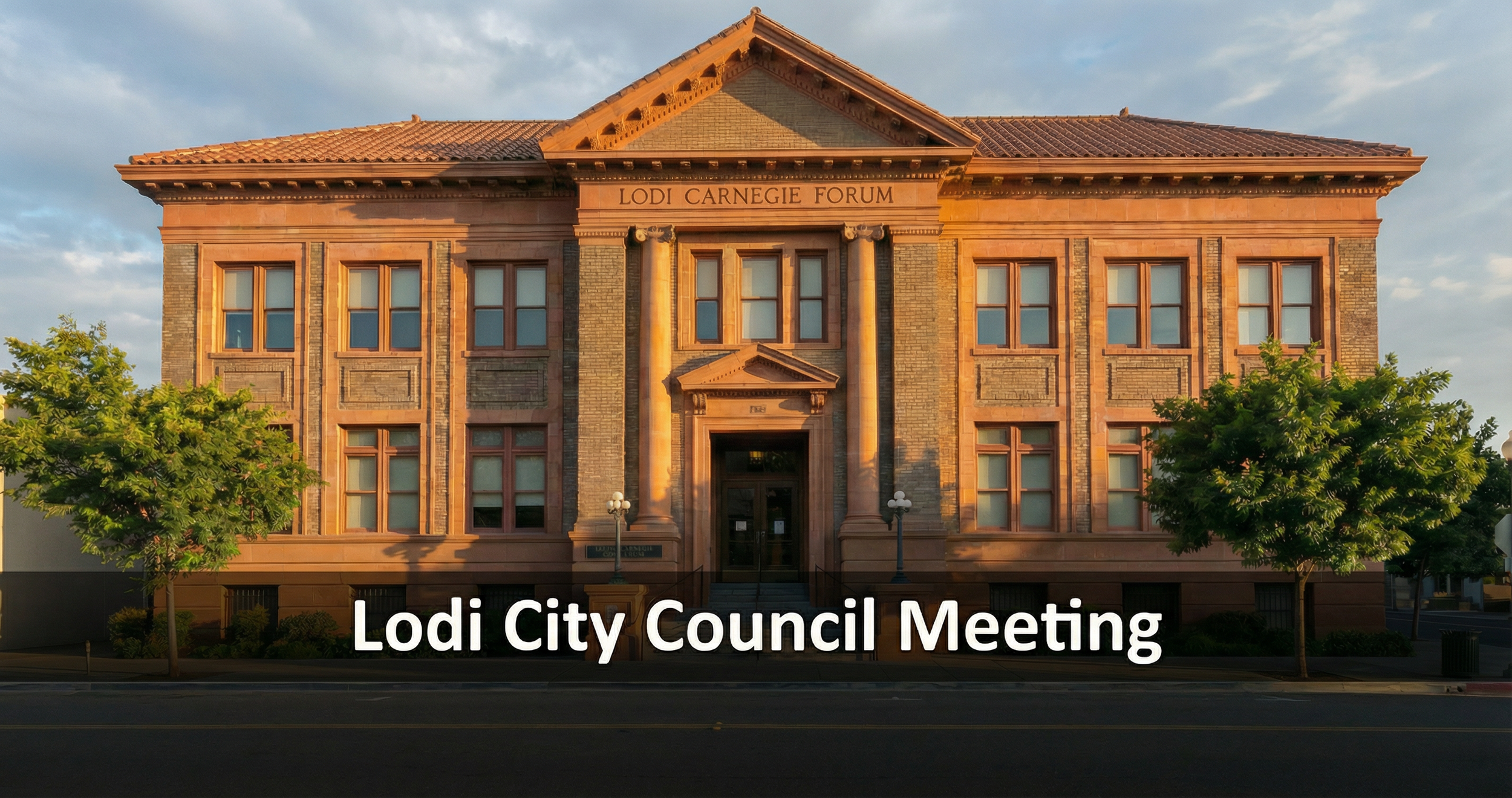
Lodi City Council - April 1, 2026
This agenda addresses two high-profile leadership transitions — the appointment of an Interim City Attorney and formal initiation of the November 2026 General Municipal Election — alongside nine consent calendar items totaling over $880,000 in contracts and allocations. The meeting also features three presentations including the Arbor Day proclamation and two non-profit check presentations totaling $11,630.