Lodi Eye
LodiEye provides additional information on trending stories / topics published by local media and shared on local social media accounts.
Civic Information in the Algorithm Age
For nearly two centuries, the local newspaper of general circulation functioned as a civic utility: the legally designated, commercially viable, geographically bounded channel through which government communicated with residents, fulfilled its due process obligations, and submitted to public scrutiny. That system is collapsing. What is replacing it — chiefly Facebook — is not a modernization. It is a structural regression that systematically fails the residents who most depend on civic information access.
Drug Crisis in San Joaquin County & Lodi, California
San Joaquin County (SJC) continues to confront one of the most severe drug crises in California's Central Valley. Fentanyl — primarily linked to Sinaloa Cartel trafficking networks — remains the dominant threat, responsible for 92% of opioid-related deaths in the county as of the most recent complete data (2023). However, early indicators from 2024 and the national trend through 2025 suggest the region may finally be turning a corner, with preliminary death counts tapering and U.S. overdose fatalities declining roughly 17–21% year-over-year.

American Unilateralism and the Fracturing World Order
The United States is engaged in the most unilateral and simultaneous multi-theater power projection since at least the Vietnam era. Unlike prior periods of multi-theater American involvement, the current posture is distinguished by a deliberate rejection of multilateral coalition-building, disregard for UN sanction, active undermining of NATO cohesion, and the assertion of a revived Monroe Doctrine applied not merely to the Western Hemisphere but globally.
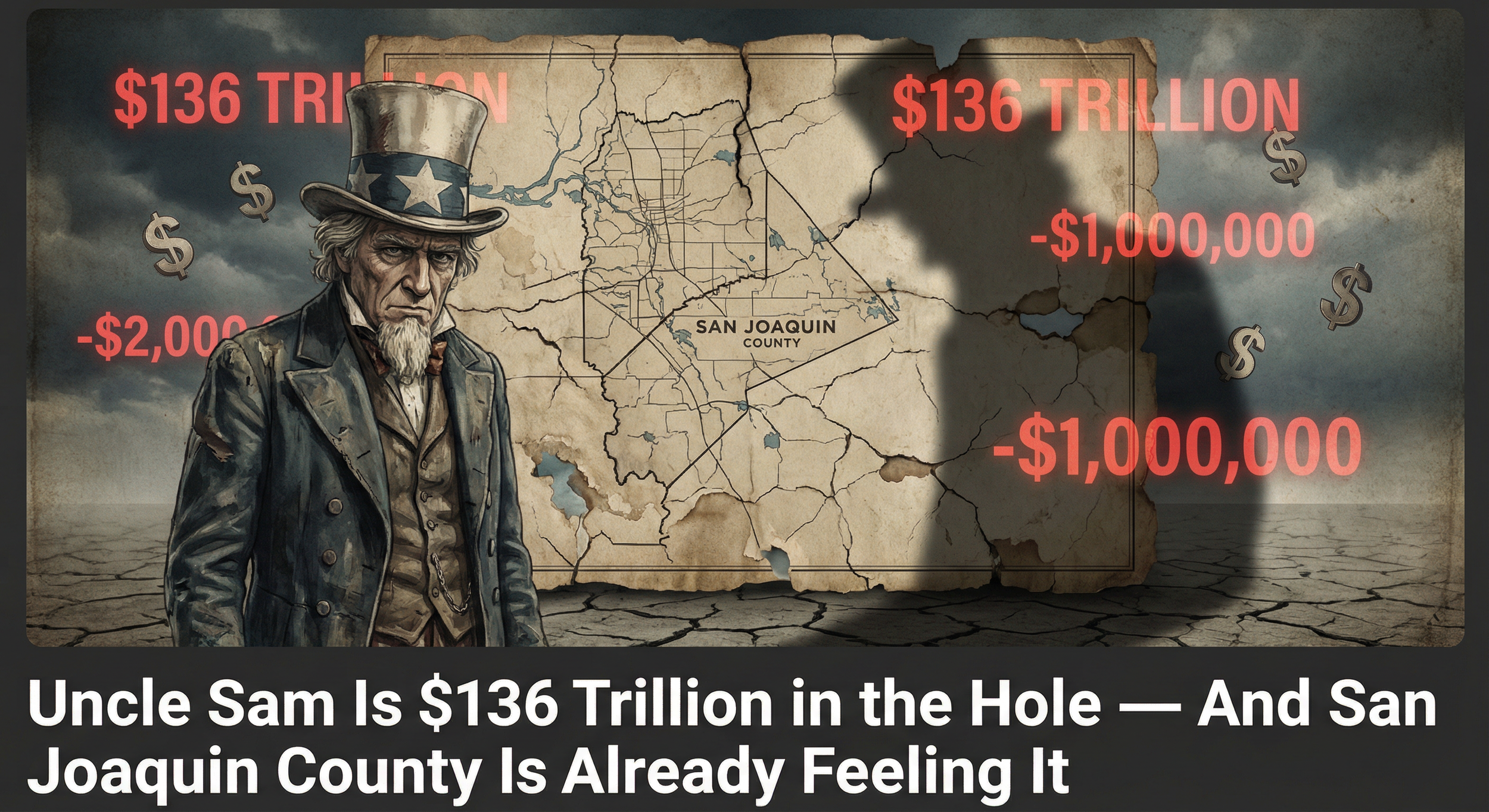
Uncle Sam Is $136 Trillion in the Hole — And San Joaquin County Is Already Feeling It
The U.S. Treasury's own FY 2025 financial statements reveal $6.06 trillion in assets against $47.78 trillion in liabilities — a negative net position of $41.72 trillion. Including off-balance-sheet obligations for Social Security and Medicare, total federal commitments exceed $136.2 trillion. Social Security faces trust fund depletion as early as 2032. Medicare's Hospital Insurance fund is projected to run dry in 2033. And San Joaquin County is already facing $50.9 to $76.9 million in annual revenue losses from H.R. 1 alone.

Make America Great Again & America First: Rhetoric, History & Reality
The twin slogans "Make America Great Again" and "America First" are the defining political rhetoric of the current era. This analysis maps those slogans against historical fact, economic data, and the lived experience of average American citizens. The core findings: the grievances that animate these movements are substantially real — rooted in genuine deindustrialization and political neglect of working-class communities over four decades. However, the proposed remedies — broad tariff regimes, immigration contraction, and withdrawal from multilateral institutions — have measurably increased costs for most American households in 2025 while failing to restore conditions that produced mid-20th-century working-class prosperity. Historical evidence across 200 years of US trade policy, spanning both Republican and Democratic administrations, consistently finds that broad protectionism raises consumer costs, invites retaliation against America's most competitive export sectors, and fails to revive targeted industries. A research-justified path forward distinguishes sharply between strategic sectoral protection — which has historical support — and broad universal tariffs, which do not.

The 2026 Energy Crisis: Infrastructure, Supply & Global Impact
A comprehensive assessment of oil and natural gas infrastructure damage, supply disruptions, economic consequences, and long-term energy implications of the U.S.–Israel–Iran conflict.
Compiled March 22, 2026 · Day 22 of Hostilities · Sources: IEA, EIA, Columbia CGEP, Kpler, Dallas Fed, CSIS, CRS

Summer in March: The Heat Dome Rewriting the West's Future
An unprecedented ridge has shattered records across 23 states, decimated snowpack, and pushed the Colorado River system toward its most dangerous water year on record. Here’s what the science says, where the models are failing, and what it means for San Joaquin County and Lodi.

Lodi Planning Commission — March 25, 2026
The Lodi Planning Commission meets with two public hearings on the agenda: a Use Permit for Five Window Beer Co. to add a Type 47 ABC license allowing distilled spirits service at their downtown brewery, and a Development Agreement with Rogers Media Company to install three electronic message signs on City-owned properties at South Hutchins Street and West Kettleman Lane. Both items carry staff recommendations for approval. The meeting also includes approval of February 25, 2026 minutes and standard reporting items.

Infectious Disease Crisis in America: The Vaccination Policy Fallout
The United States is experiencing its worst measles outbreak in 35 years and a sustained pertussis surge, driven by declining vaccination rates and unprecedented federal actions to weaken childhood vaccine recommendations. Since January 20, 2025, more than 3,600 confirmed measles cases have been reported across 46 states, with 4 deaths and an 11% hospitalization rate. The Trump administration, under HHS Secretary Robert F. Kennedy Jr., gutted the childhood vaccine schedule from 18 to 11 recommended diseases, fired all expert ACIP members, terminated $500 million in vaccine research, and altered CDC messaging to suggest a link between vaccines and autism. A federal judge blocked these changes on March 16, 2026, ruling they likely violated federal law. Meanwhile, California has emerged as the strongest state-level counterweight, but San Joaquin County faces a “very high risk” rating for measles due to only 60% of children under 5 being vaccinated.
The State of Newspapers in California's Smaller Markets
California's small-market newspapers—those serving communities under 75,000 people—are in an accelerating crisis. The convergence of declining advertising revenue, rising operational costs, hedge fund consolidation, and shifting consumer behavior has left most of these publications financially fragile. Of the estimated 200+ newspapers and community publications still operating in California's smaller markets, the research paints a stark picture…

Lodi's Unsolved Cold Cases and How You Can Help
The Lodi Police Department announced this week that its Investigations Unit is intensifying its focus on cold cases, spotlighting two to three unsolved investigations per day over the next two weeks in hopes of generating new leads from the public. The campaign, launched March 9, comes as San Joaquin County continues to grapple with more than 600 unsolved cold cases countywide — including homicides, missing persons cases, and sexual assaults.
The SAVE America Act: Facts, Impacts & What It Means for California and San Joaquin County
The Safeguard American Voter Eligibility (SAVE) America Act, passed by the U.S. House in February 2026, would require documentary proof of U.S. citizenship to register to vote and mandate photo ID for all voters, including mail ballot voters. Proponents claim it addresses noncitizen voting. However, federal and state data consistently show noncitizen voting occurs at rates between 0.00028% and 0.02% of all ballots cast. Meanwhile, 21.3 million eligible American citizens lack ready access to the required documents. For California—an all-mail voting state—and for San Joaquin County, with its diverse population and approximately 376,000 registered voters, the bill would fundamentally disrupt voter registration, mail ballot processes, and election administration.
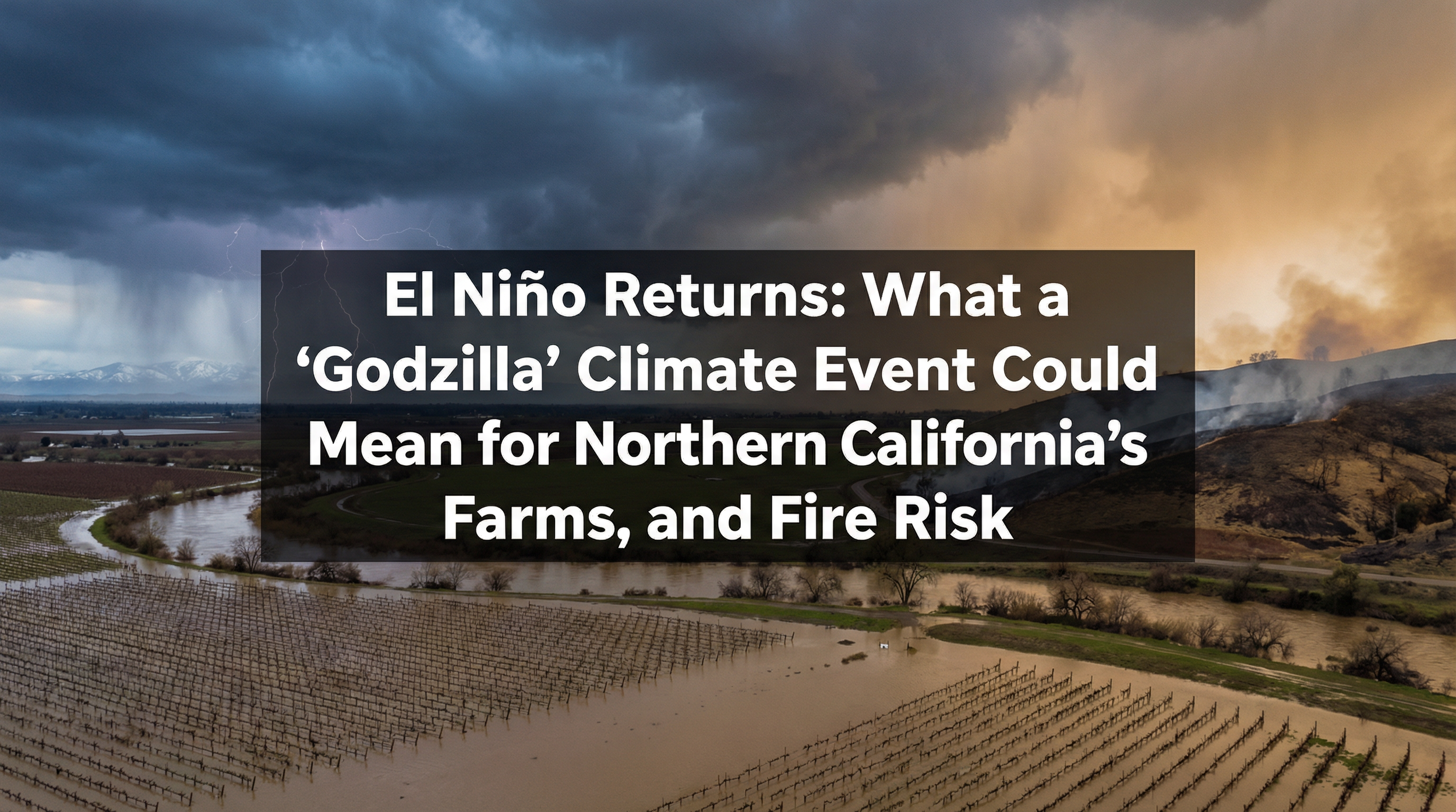
El Niño Returns: What a “Godzilla” Climate Event Could Mean for Northern California’s Water, Farms, and Fire Risk
Leading forecast models now put the odds of at least a moderate El Niño at roughly 98% by late summer, with an 80% chance it could reach “strong” status. Some models suggest this could rival the historic 1982–83, 1997–98, and 2015–16 events.
This special report examines what the emerging El Niño—combined with this winter’s record-warm conditions and troublingly low snowpack—could mean for our community across three critical areas: (1) flood risk and reservoir operations, (2) local agriculture and water supply, and (3) wildfire danger. Each section identifies specific risks, the areas most affected, and what Lodi residents should know.
California 2025-26 Legislative Session: Impact Report for San Joaquin County and Lodi
This report analyzes California state legislation from the 2025-26 Regular Session and its specific impacts on San Joaquin County and the City of Lodi. As of mid-March 2026, the Legislature has passed and the Governor has signed dozens of bills into law during 2025, with additional measures moving through the 2026 legislative process. A small number of bills have been vetoed or had their vetoes sustained in early 2026.

Running on Empty: How America's Defense Reallocations Are Reshaping Global Security
The United States is simultaneously fighting a war against Iran, asserting military dominance over the Western Hemisphere under a revived Monroe Doctrine, and telling its most important allies in Europe and Asia to shoulder their own defense. Each of these missions is consuming irreplaceable weapons at rates that dwarf American production capacity. The cascading consequences — for US defense costs, allied procurement decisions, and the global architecture preventing nuclear proliferation — may prove to be the most significant strategic shift since the end of the Cold War.

California Fuel Blends: Time for a Change?
California's boutique gasoline blend—CARBOB—was designed decades ago to fight the state's severe smog crisis, and it worked. But the system built around that fuel is now breaking down. Two major refinery closures have eliminated 20% of the state's refining capacity in under a year. Prices at the pump have surged past $5.34 per gallon while neighboring states pay $1.00 to $1.80 less for gasoline refined from the same crude oil. Analysts warn of $7–8 gas by summer. This report examines how California got here, why the current system is failing, and evaluates four alternatives—from modest tweaks to a fundamental rethinking of the state's fuel policy.
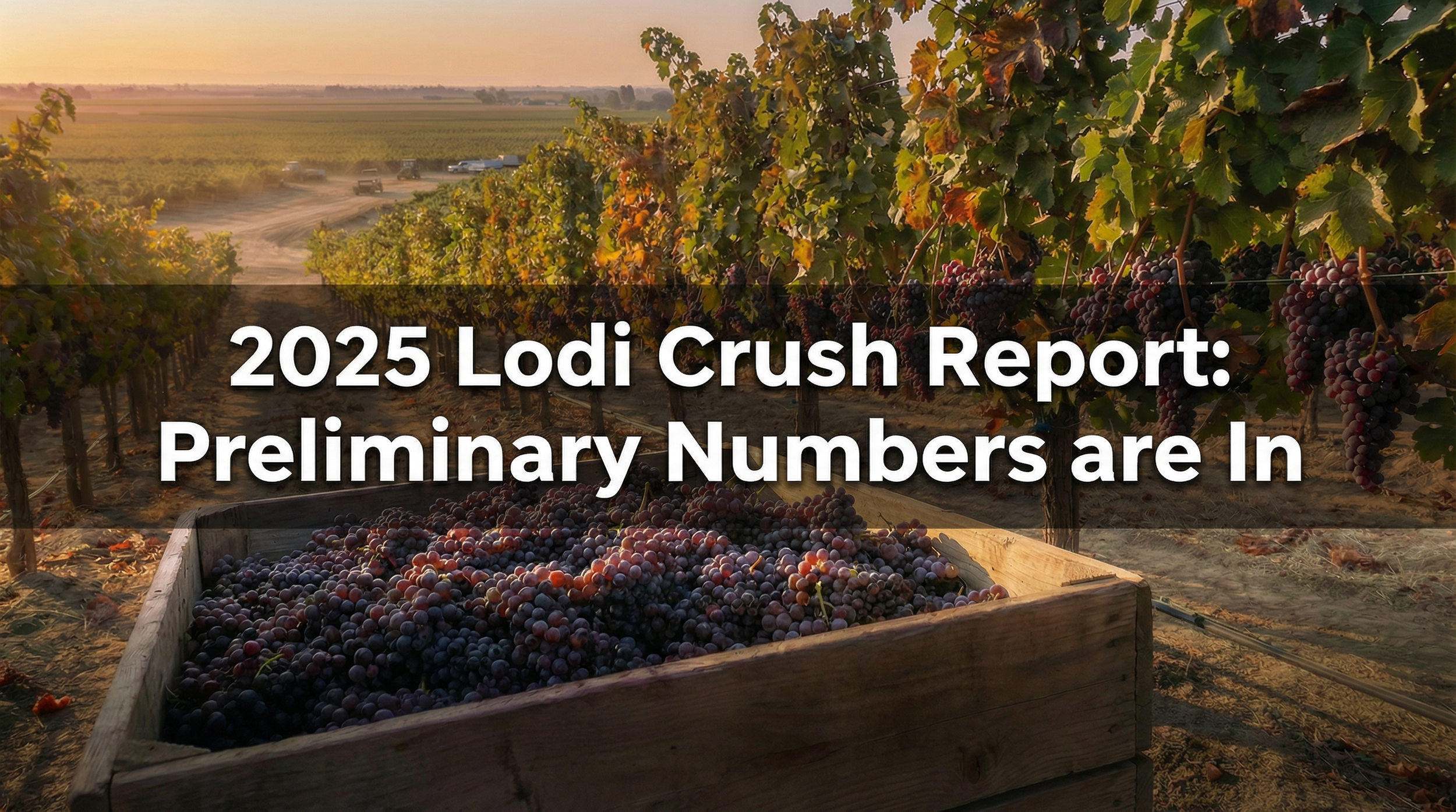
2025 Lodi Crush Report: Preliminary Numbers Are In
The USDA’s Preliminary 2025 California Grape Crush Report, released March 13, 2026, confirms that District 11 crushed 537,752 tons—13.3% below our August moderate forecast of 620,073 tons. Statewide, the crush fell 6.2% to 2,759,202 tons. But the headline numbers only begin to tell the story: a Zinfandel collapse, an explosion of table grapes diverted to crush, a cooler-than-normal growing season that delivered a potentially outstanding vintage, and a widening price gulf between coastal and interior regions are reshaping Lodi’s grape economy in real time.

Strait of Hormuz: Petroleum Dependency, Strategic Reserves & Geopolitical Pressure Analysis
The Strait of Hormuz, a 33-kilometer-wide waterway between Iran and Oman, carries roughly 20 million barrels of oil per day—about 20% of global petroleum liquids consumption—and 20% of global LNG trade. Following U.S.-Israeli strikes on Iran on February 28, 2026, Iran’s IRGC declared the strait closed. Tanker traffic has dropped to near zero, triggering the largest energy supply disruption since the 1970s oil crises. Brent crude has surpassed $100/barrel. This report examines the petroleum reserves, import dependencies, and strategic reserve depth of five major importers—China, India, Japan, South Korea, and Europe—assessing how the duration of closure forces each toward alternative sources or active measures to reopen the strait, potentially bringing them into conflict with U.S. policy.
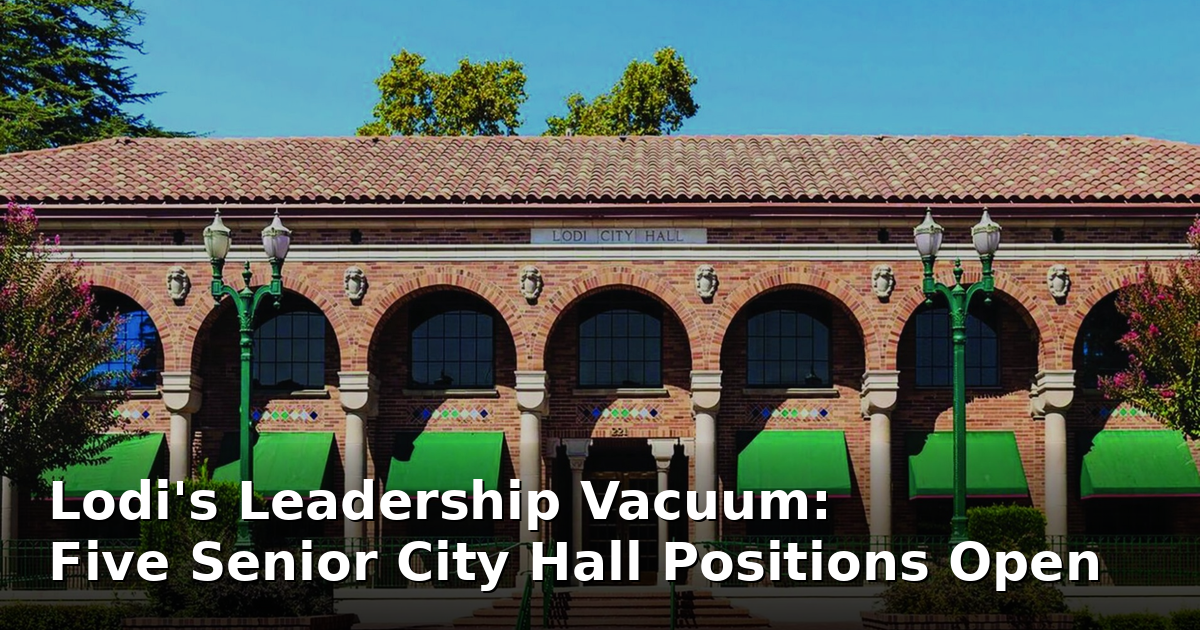
Lodi’s Leadership Vacuum: Five Senior City Hall Positions Open
City Attorney Katie Lucchesi’s resignation—effective at the end of March 2026—adds a fifth senior vacancy to what has become a prolonged administrative crisis at Lodi City Hall. The city now lacks a permanent City Manager, Assistant City Manager, City Attorney, Administrative Services Director, and Public Works Director. This analysis provides background, context, and a timeline for the departures, along with a look at how long similar California cities typically take to fill comparable roles.
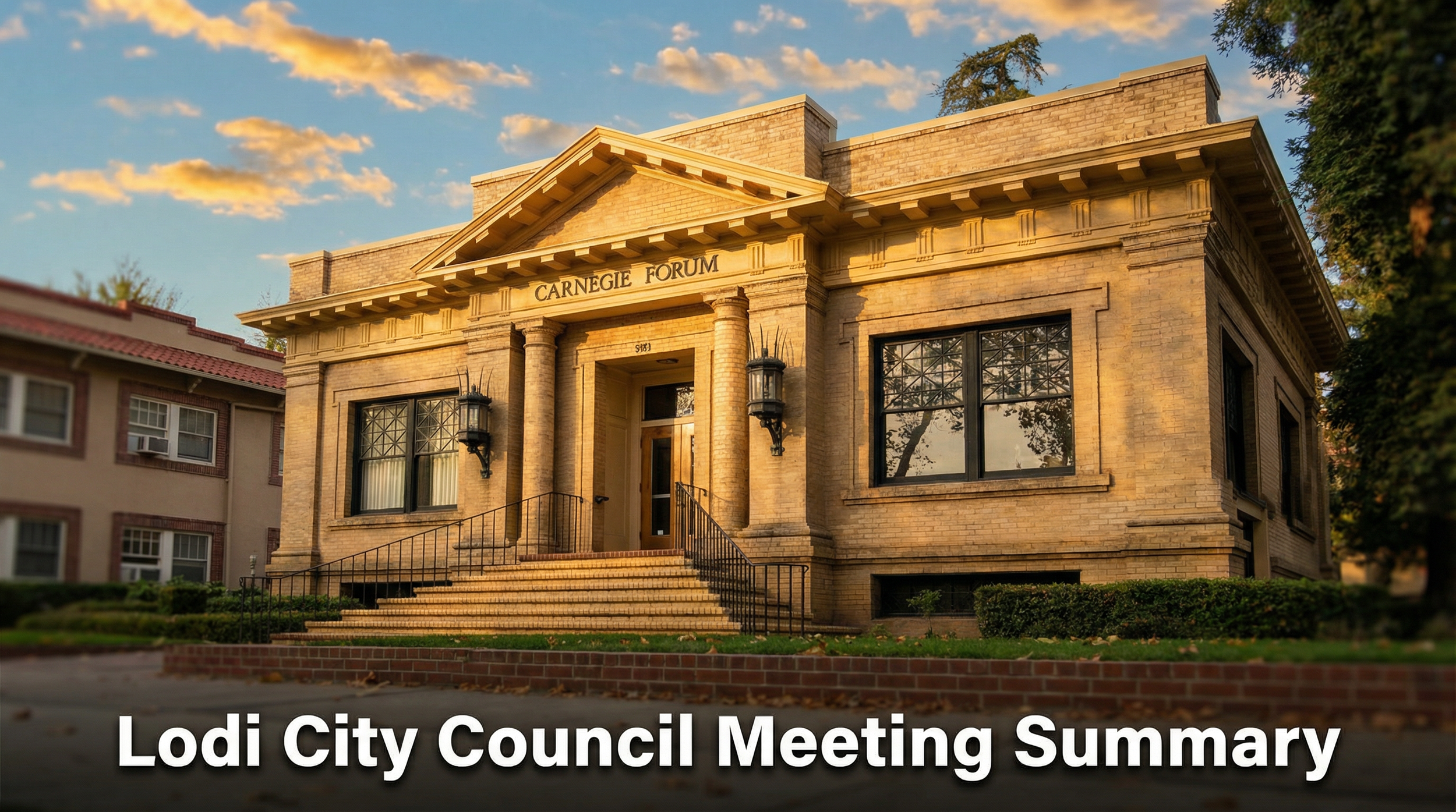
Lodi City Council - March 18, 2026
The March 18, 2026 agenda features three labor union Memoranda of Understanding (MOUs) totaling approximately $7.84 million over three years, the 2025 Housing Element Annual Progress Report, an Electric Utility quarterly financial update, solid waste rate adjustments, and several infrastructure and procurement items. The Council will also address the Lodi Academy improvement deferral agreement and receive a status report on the Non-Profit Fund Program.