Lodi Eye
LodiEye provides additional information on trending stories / topics published by local media and shared on local social media accounts.
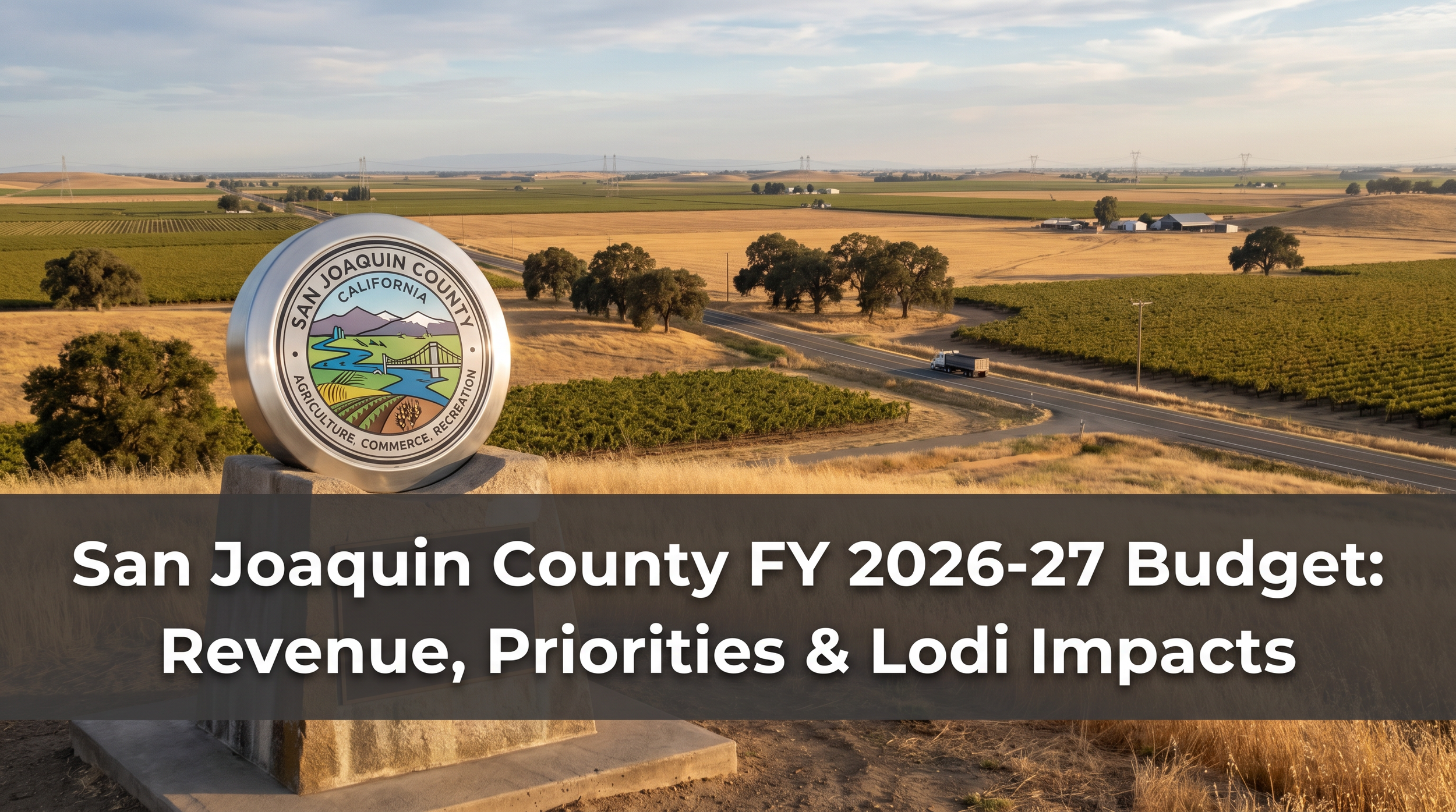
San Joaquin County FY 2026‑27 Budget: Revenue, Priorities & Lodi Impacts
San Joaquin County’s proposed Fiscal Year 2026‑27 budget totals approximately $3.3 billion, a $258.7 million increase (~8.5%) over the $3.02 billion FY 2025‑26 adopted budget. The Board of Supervisors was scheduled to adopt the final budget at its June 16, 2026 hearing — the same date as this report. This is the county’s 13th consecutive structurally balanced spending plan, maintained without drawing on prior-year reserves.
For Lodi: the permanent Lodi Access Center is set to open this summer (June/July 2026), Main Street Transitional Housing celebrated its grand opening in April 2026, and the $261 million SJ BeWell Campus broke ground in September 2025 — but the operational funding pipeline for all three faces significant risk from state and federal revenue erosion.
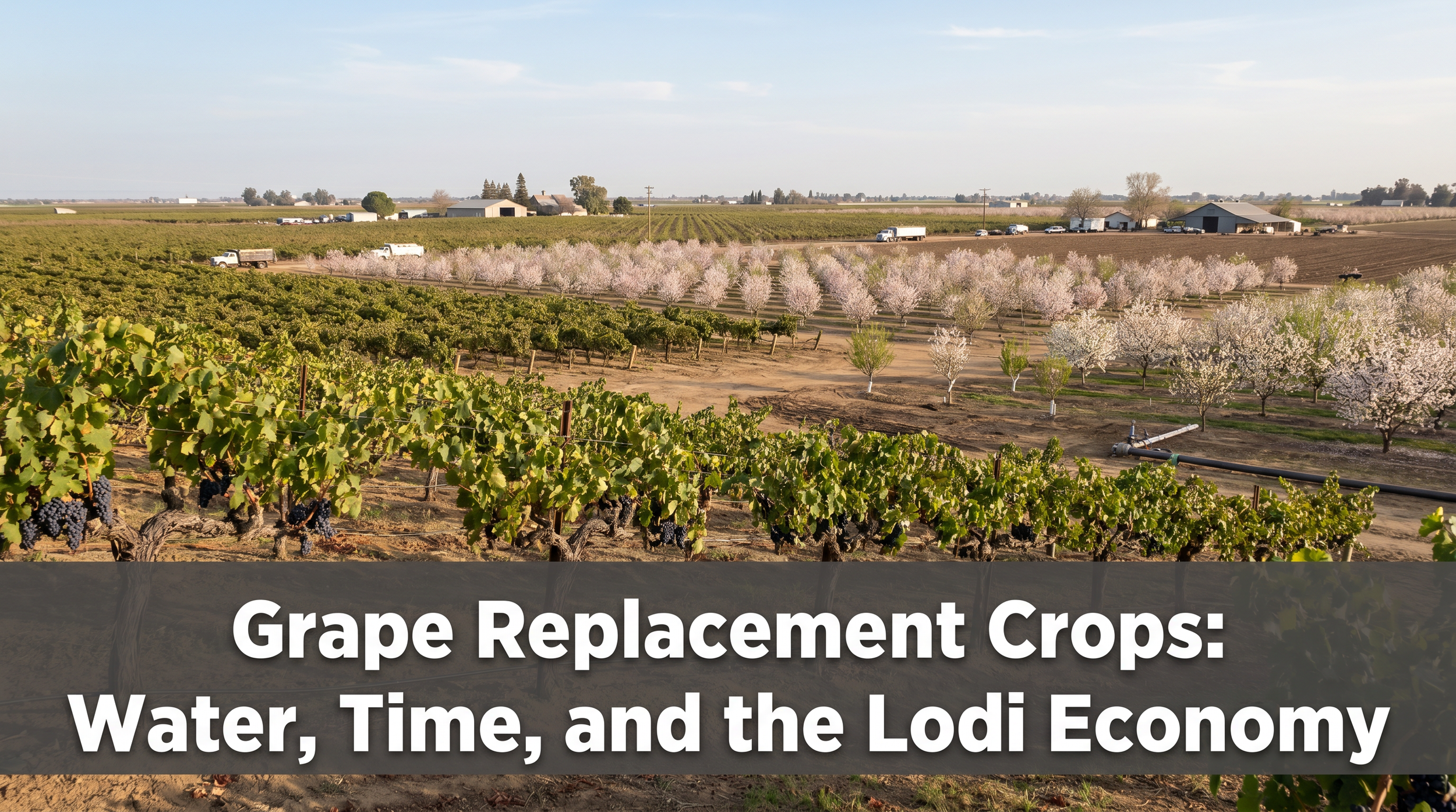
Grape Replacement Crops: Water, Time, and the Lodi Economy
As Lodi growers pull unprofitable vineyards, the land is moving into a mix of other crops — almonds, walnuts, pistachios, olives, and cherries among them. The shift carries three consequences the county should weigh together: how much water the land draws, how many years pass before the new planting earns anything, and what the change does to the visitor-and-hospitality economy that wine — not the grape alone — anchors in Lodi. This is a first look, drawn from the public record; where it runs out, the limits are noted plainly.

Extreme Heat in Lodi and San Joaquin County: Who's at Risk and How to Stay Safe
San Joaquin County reached its first triple-digit temperatures of 2026 during the week of June 10, and forecasters expect a warmer-than-average summer with a strengthening El Niño shaping the fall. Extreme heat is the deadliest weather hazard in the United States, yet nearly all heat illness is preventable. This report explains why the Central Valley runs so hot, what the 2026 season is likely to bring, which residents face the greatest danger and how to protect them, how to keep pets and animals safe, and where to find cooling centers in Lodi.
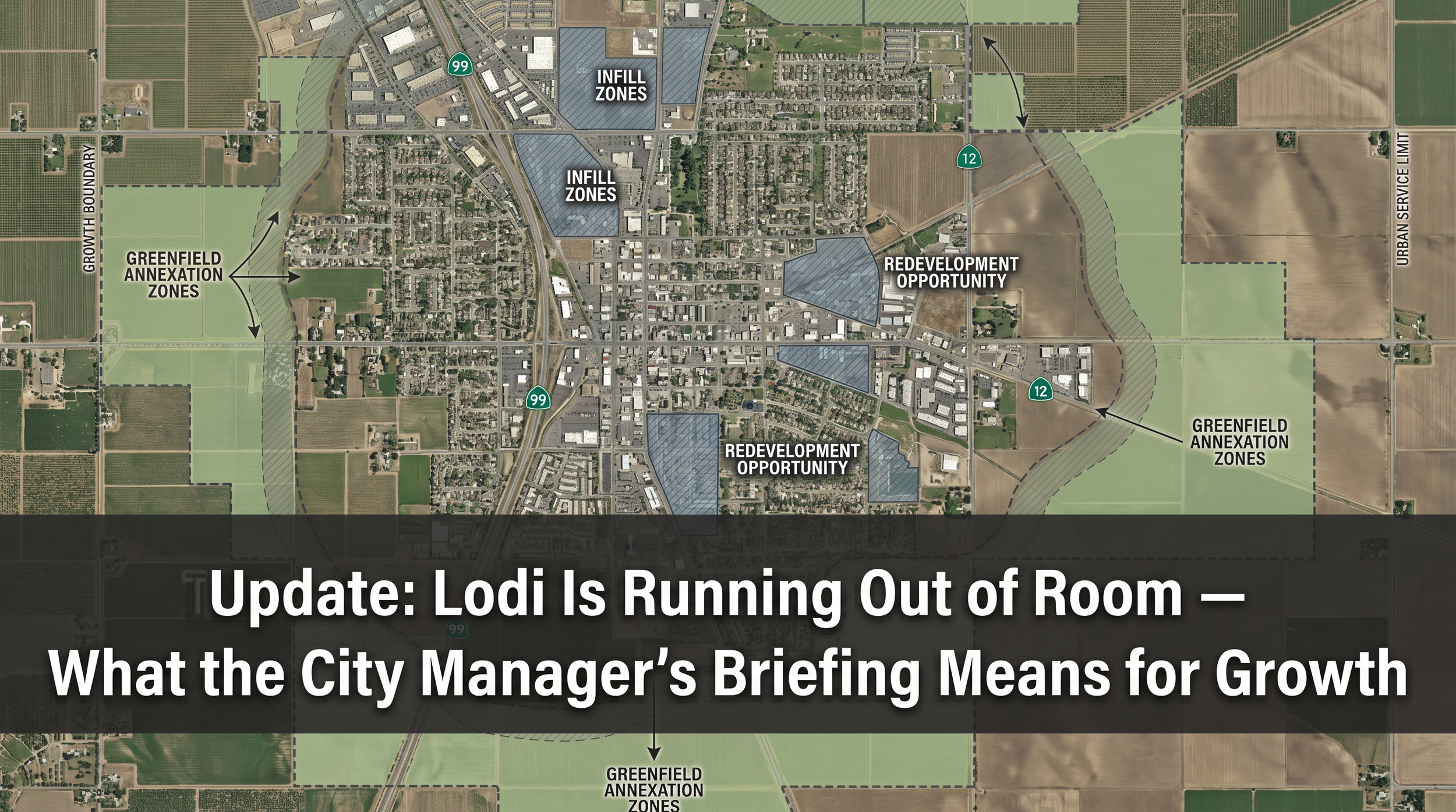
Update: Lodi Is Running Out of Room — What the City Manager’s Briefing Means for Growth
Our earlier analysis, Filling In or Spreading Out: How Should Lodi Grow?, compared downtown infill to Westside farmland annexation across residents, the budget, and infrastructure. New reporting by Wes Bowers of the Lodi News-Sentinel on Interim City Manager Aaron Busch’s June 2026 City Council briefing supplies official city figures that sharpen our urgency, correct two of our numbers, and strongly confirm our core conclusion. We credit that reporting throughout and link to it in full below.
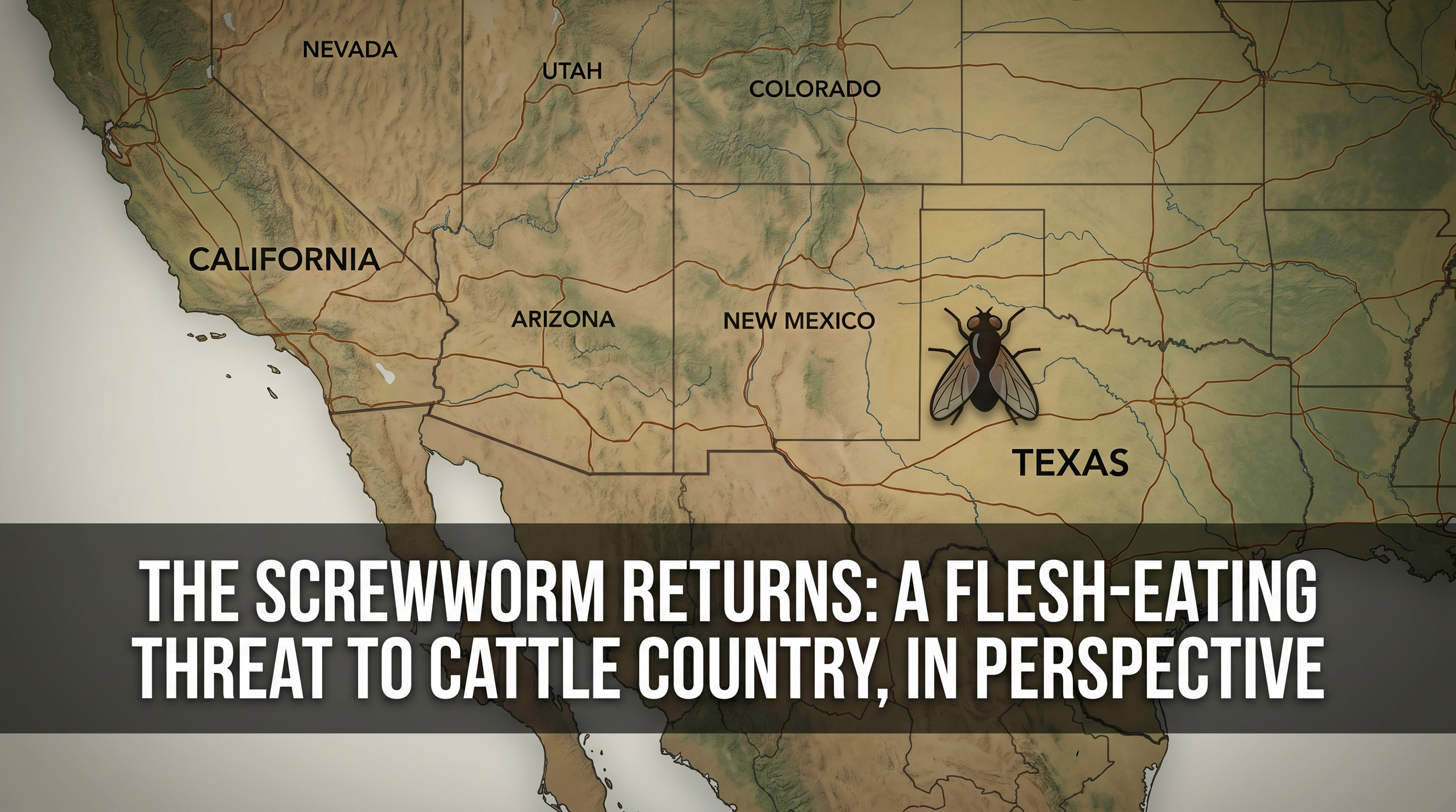
The Screwworm Returns: A Flesh-Eating Threat to Cattle Country, in Perspective
On June 3, 2026, the U.S. Department of Agriculture confirmed a parasite in a three-week-old calf in South Texas that the country had not seen in its livestock since 1966. The New World screwworm — a fly whose larvae eat the living flesh of warm-blooded animals — was back. Within a week, the count had grown to six animals across two states, and a problem that an earlier generation of scientists had declared solved was suddenly a national-security talking point in Washington.
For all the alarm, the situation rewards a clear head. This is a serious threat to a $113 billion cattle industry, but it is not a threat to the food on anyone's plate. It is a story with a remarkable history of American scientific success, a present-tense scramble to repeat that success, and a set of hard questions about whether the agencies tasked with the job are staffed and funded to do it. Here is the screwworm in perspective — and what it could mean for California cattle country, including San Joaquin County.

Medline Tracy Warehouse Fire: In-Depth Report
On the afternoon of June 11, 2026, a fire ignited on the roof of the Medline Industries distribution center at 5701 Promontory Parkway in Tracy, California — and within 30 to 40 minutes, the entire 1-million-square-foot facility was fully engulfed. The building was declared a total loss, ranking among only three or four warehouse fires of this scale in U.S. history. All 120 employees evacuated safely and no injuries were reported among workers or firefighters. The disaster triggered a local state of emergency, a multi-county mutual aid response, public health advisories, and immediate concern about medical supply disruptions to hospitals across Northern California — including those serving Lodi and San Joaquin County.
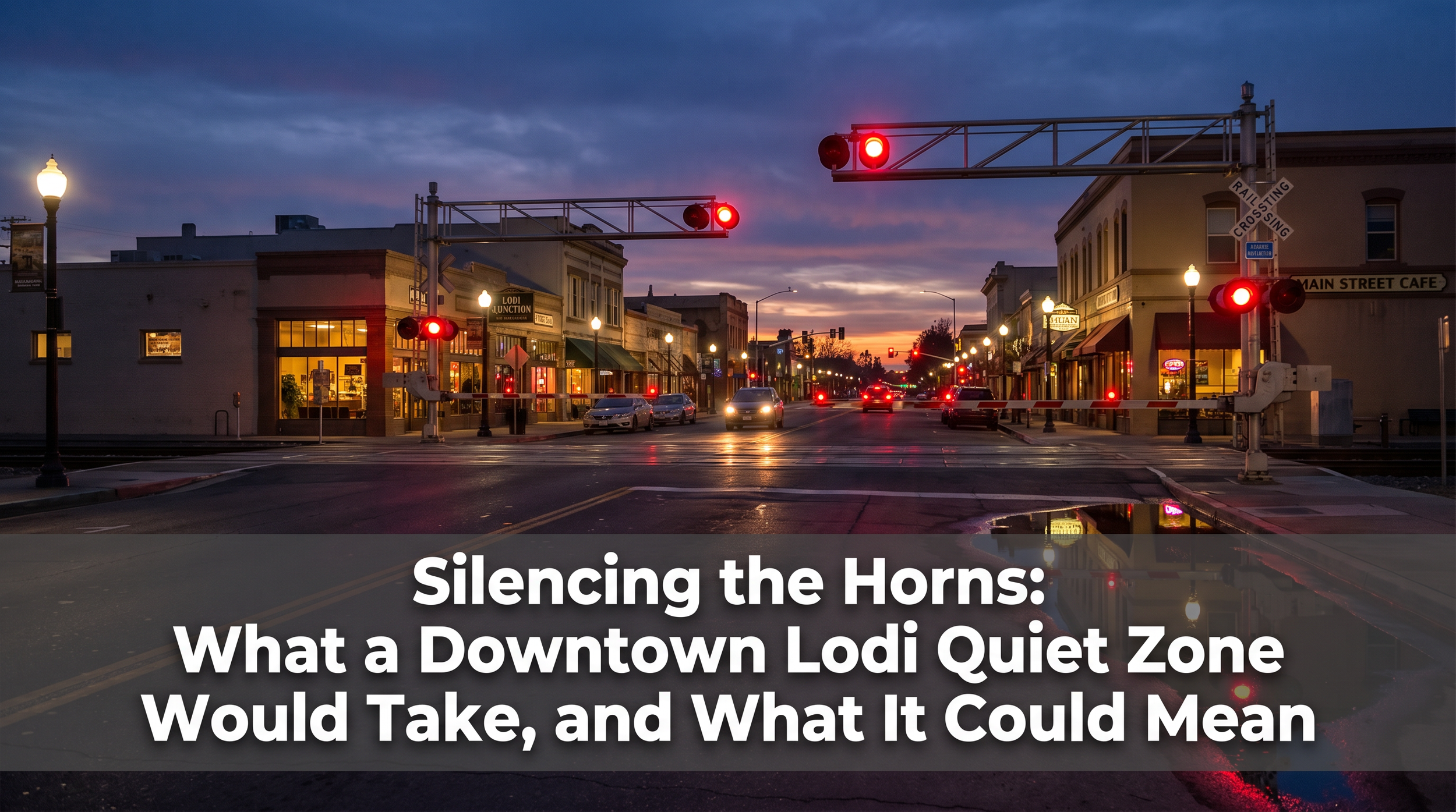
Silencing the Horns: What a Downtown Lodi Quiet Zone Would Take, and What It Could Mean
Lodi has put a downtown quiet zone on the books. The Downtown Specific Plan the City Council adopted in 2026 names a railroad quiet zone as one of its official projects — committing the city to study the downtown crossings, work with Union Pacific, and rebuild them so trains can pass through the heart of the city without routinely sounding their horns. This is a look at what that would actually involve: what a quiet zone is, how other California cities have built and benefited from theirs, what Lodi's version would look like, the steps and the range of costs to get there, and what the city stands to gain.
The short version is that a quiet zone is achievable for a city Lodi's size, that the same rail line running through downtown has quiet zones established up and down it already, and that the project's real price is paid not once but every year the city keeps the horns at bay.

It’s Not Just Anduril and Palantir Anymore: The 2026 Defense-Tech Landscape
This is a follow-up to the original LodiEye analysis published February 25, 2026, Anduril and Palantir: AI-Enabled Transformation of US Defense. Between late February and early June 2026, several open questions from that piece resolved — mostly in the direction it anticipated, and faster. Anduril raised a record round and started building combat drones months ahead of schedule; Palantir posted its fastest growth since going public; the Army’s Next Generation Command and Control prototype cleared its division-scale rehearsal; and a new, much larger joint program — the Golden Dome missile shield — has pulled both companies toward the center of the most expensive weapons effort in U.S. history. Around them, defense-technology venture funding has set an all-time record, surfacing a second tier of well-capitalized startups worth tracking.
This update is organized as (1) updates to the two principal companies, (2) the status of NGC2 going into its summer test, (3) the new Golden Dome program, (4) the broader defense-tech surge and the new names within it, (5) the new hardware — drones, autonomous vessels, and weapons — these companies are now producing, and (6) a quick-reference table reconciling specific claims in the original article against current facts.
Lodi City Council Agenda - June 17, 2026
The June 17 meeting is dominated by one marquee action — adoption of the FY 2026/27 Financial Plan and Budget — set against a backdrop of tightening General Fund reserves. The all-funds budget totals $302,351,060, with a General Fund of $96,208,300 that plans a second consecutive deficit year, drawing unreserved reserves down from 39% to 27% of revenue over three years.
The closed session continues the high-profile City Manager matters that have been before the Council since 2025. The consent calendar runs 18 items, the only genuinely contested one being the tree-maintenance award (a bid protest). Public hearings cover a routine landscape-district levy, a capped 2.6% wastewater rate increase, and the annual vacancy report (7.6% citywide). The regular calendar adds a five-year homeless-shelter operator agreement with OMI and a Council-requested discussion on preventing data centers in Lodi.
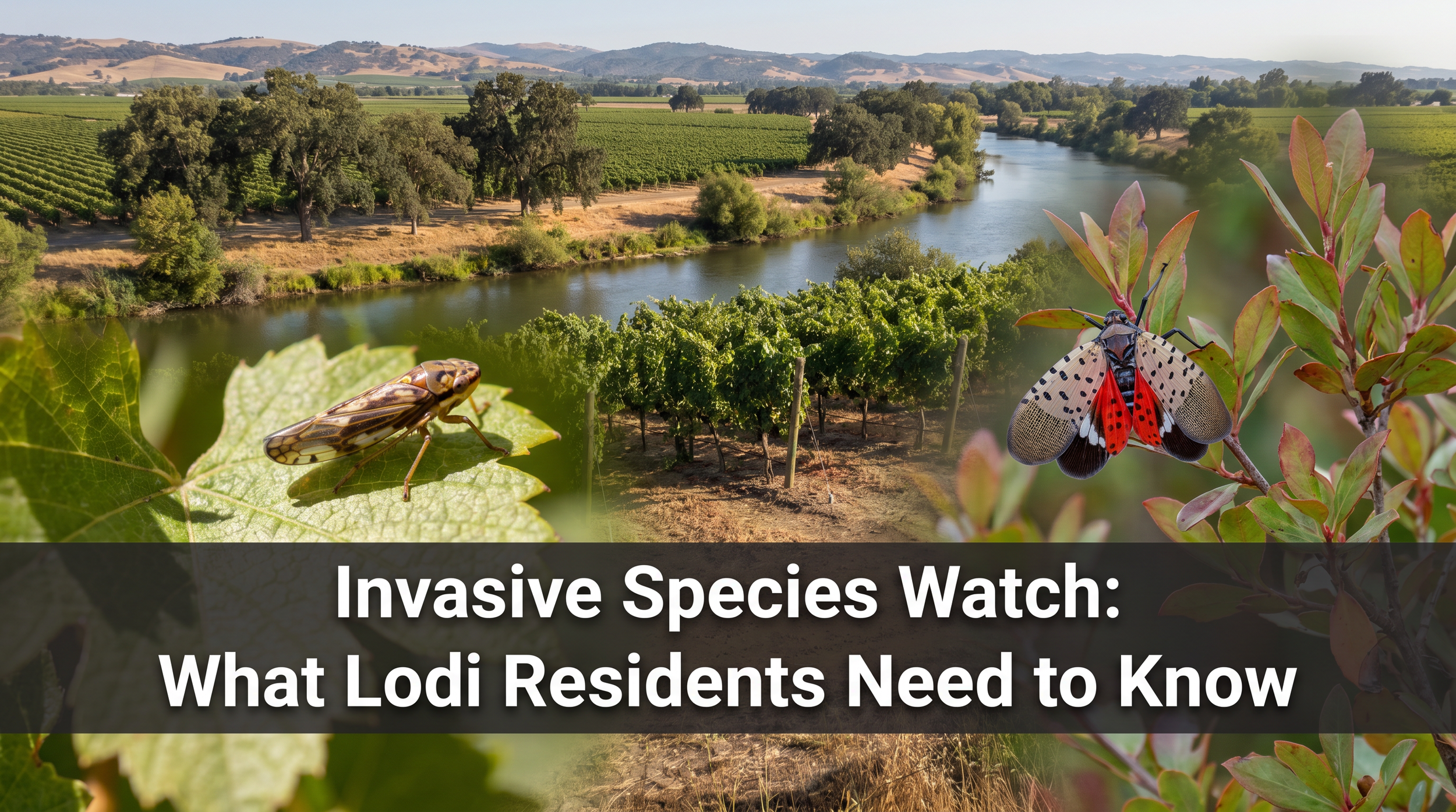
Invasive Species Watch: What Lodi Residents Need to Know
Lodi sits in the heart of one of California's most important winegrape regions, surrounded by orchards, gardens, a maturing urban tree canopy, and the Sacramento–San Joaquin Delta. That same agricultural and ecological richness makes the area a target for invasive pests. This guide profiles the invasive species every Lodi household should be able to recognize — insects, a tree, a rodent, and a mollusk — and explains exactly how and where to report each one.
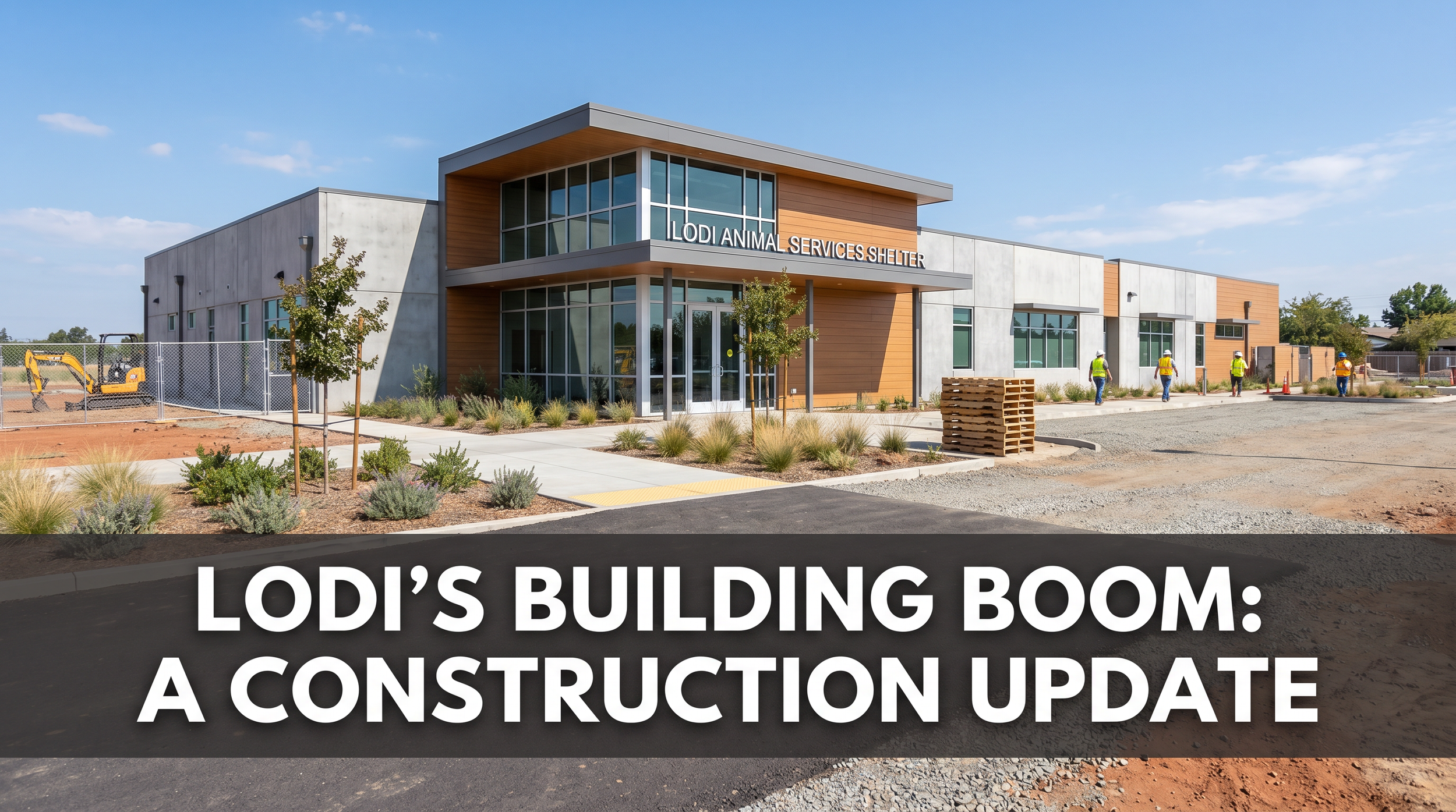
Lodi's Building Boom: A Construction Update
Lodi has more construction projects underway or in the pipeline than at any point in recent memory. A new animal shelter is weeks from opening. A 210-unit apartment complex is breaking ground on Kettleman Lane. A permanent homeless services center is nearing completion on Sacramento Street. A transitional housing project on Main Street just celebrated its grand opening. The city's Downtown Specific Plan was adopted by the City Council in early June, setting a new framework for everything built in the historic core going forward. This report surveys the full landscape of active and emerging development projects reshaping Lodi in 2026.

Filling In or Spreading Out: How Should Lodi Grow?
As Lodi weighs annexation applications like the ~95-acre Westside “F” against downtown housing under its Downtown Specific Plan, this analysis compares infill and greenfield growth across four lenses: the impact on current residents, the city budget, city infrastructure, and how each maps onto Lodi’s published development plans. Across all four, infill carries lower long-term risk — it shares benefits with existing residents, repays its infrastructure faster, returns far more revenue per serviced acre, and reuses systems already in the ground — while greenfield extends a permanent area of pipes and roads the city must keep up — serving only the new subdivision.
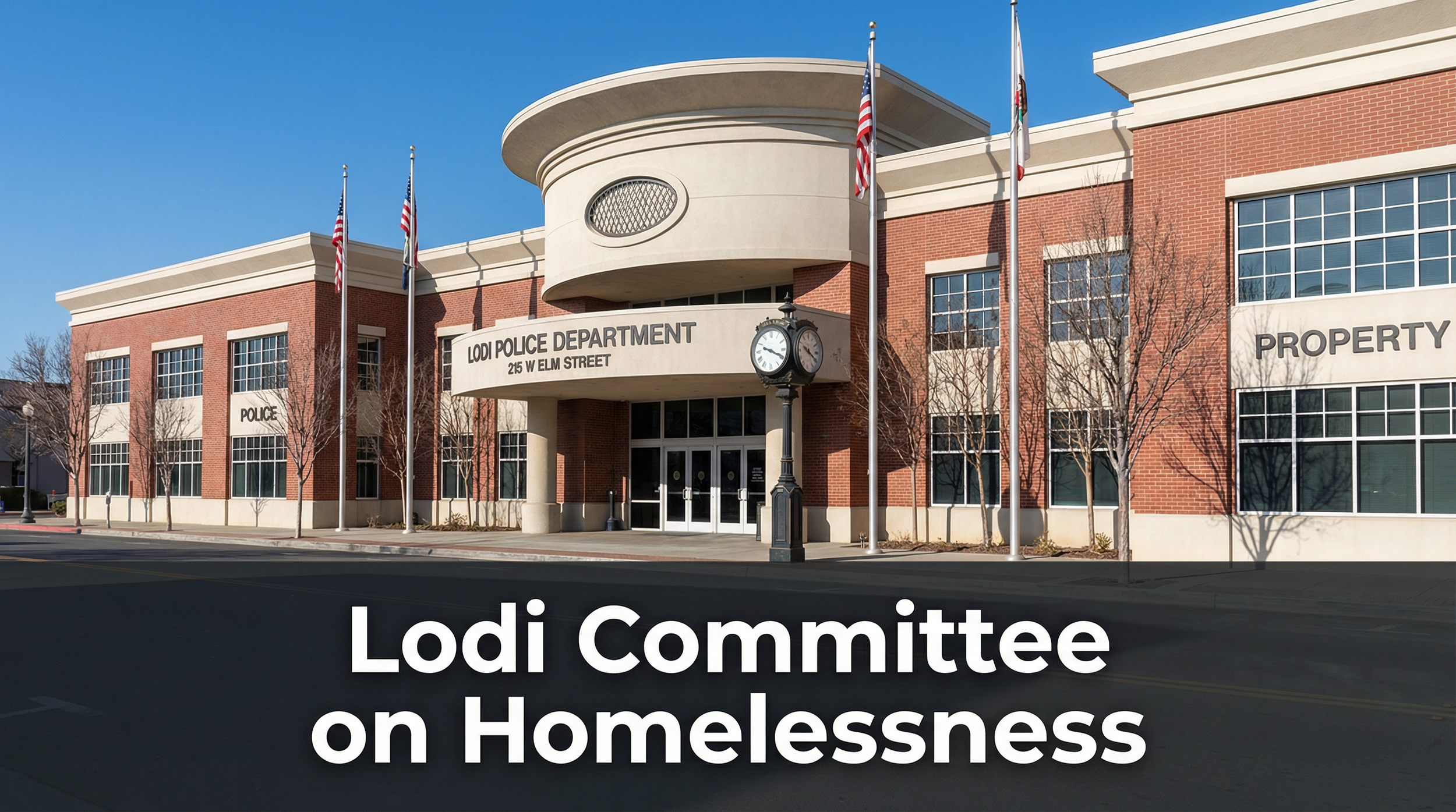
Lodi Committee on Homelessness - June 11, 2026
The Lodi Committee on Homelessness (LCOH) meets June 11, 2026 to review May 2026 reports from eight service providers and six subcommittees. The headline figure is the 2026 Point-In-Time Count, which found unsheltered individuals in San Joaquin County fell 47% (down 1,631) while sheltered individuals rose 16% since 2024. The Lodi Access Center remains the operational hub, delivering roughly 3,400 services per month and facilitating employment for 75 clients since January 2025. Key transitions include the Salvation Army leadership change (Major Pease transferring to Alameda) and Lodi House extending its transitional-housing stay limit from two to three years effective July 1.

Lodi’s Housing Market: Today and Tomorrow
Lodi’s housing market has cooled into balanced territory in 2026, with prices flat-to-down, homes taking longer to sell, and a development pipeline that leans heavily on new construction in the city’s northwest. The typical home is valued around $500,000–$520,000, down roughly 3% year-over-year, and the market has shifted decisively away from the seller’s advantage of recent years. Looking ahead, more than 500 multifamily and senior units are in the pipeline, while the city’s longer-term growth runs through two active annexations and a Sphere of Influence with residential capacity through roughly 2036–2037.

Lodi Wine & Grape Market Update: Gallo's Crush Suspension Lands on a 26-Year Low
E. & J. Gallo Winery's suspension of crush operations at its Turner Road West facility in Lodi — roughly 20 jobs — is a modest event that lands on a stark backdrop. California's 2025 wine grape harvest was the smallest in a generation, and Lodi's District 11 absorbed a steeper decline than the state as a whole. The closure is less a turning point than a marker of where the industry's structural correction now stands.
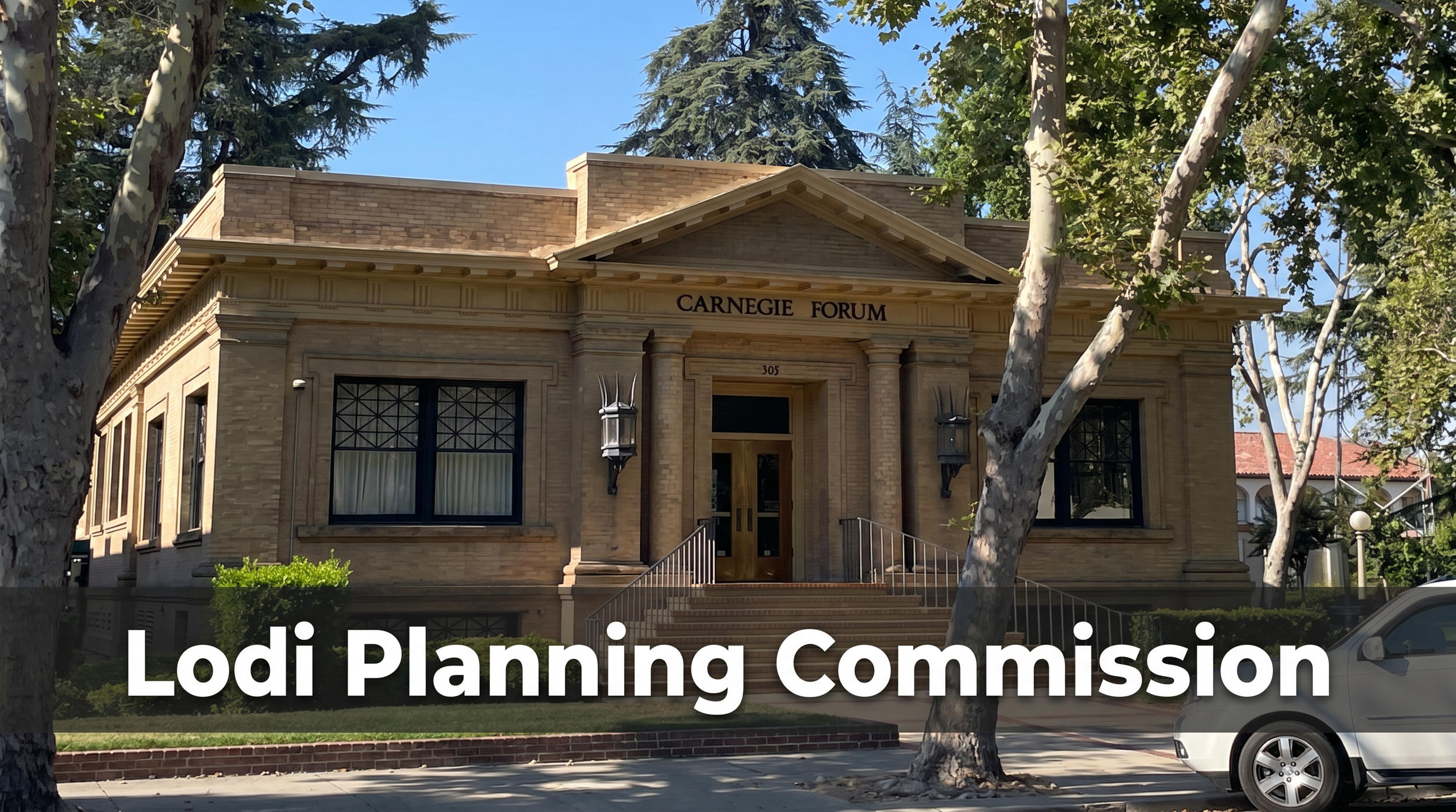
Lodi Planning Commission - June 10, 2026
The June 10, 2026 Regular Planning Commission meeting carries a light agenda anchored by a single public hearing — a Tentative Parcel Map (PL2026-005) to split one Downtown Mixed Use parcel at 116 West Lockeford Street into two lots. The packet also bundles two sets of prior minutes for approval (May 13 and May 27, 2026), the latter of which advanced a significant rewrite of the City's mobile food vending rules under Municipal Code Chapter 9.18, including removal of the long-standing 25-vendor cap.
Heads-up on scheduling: the June 24 and July 8, 2026 Planning Commission meetings are cancelled, and a special City Council meeting on annexations was set for June 9, 2026 at 6 p.m.
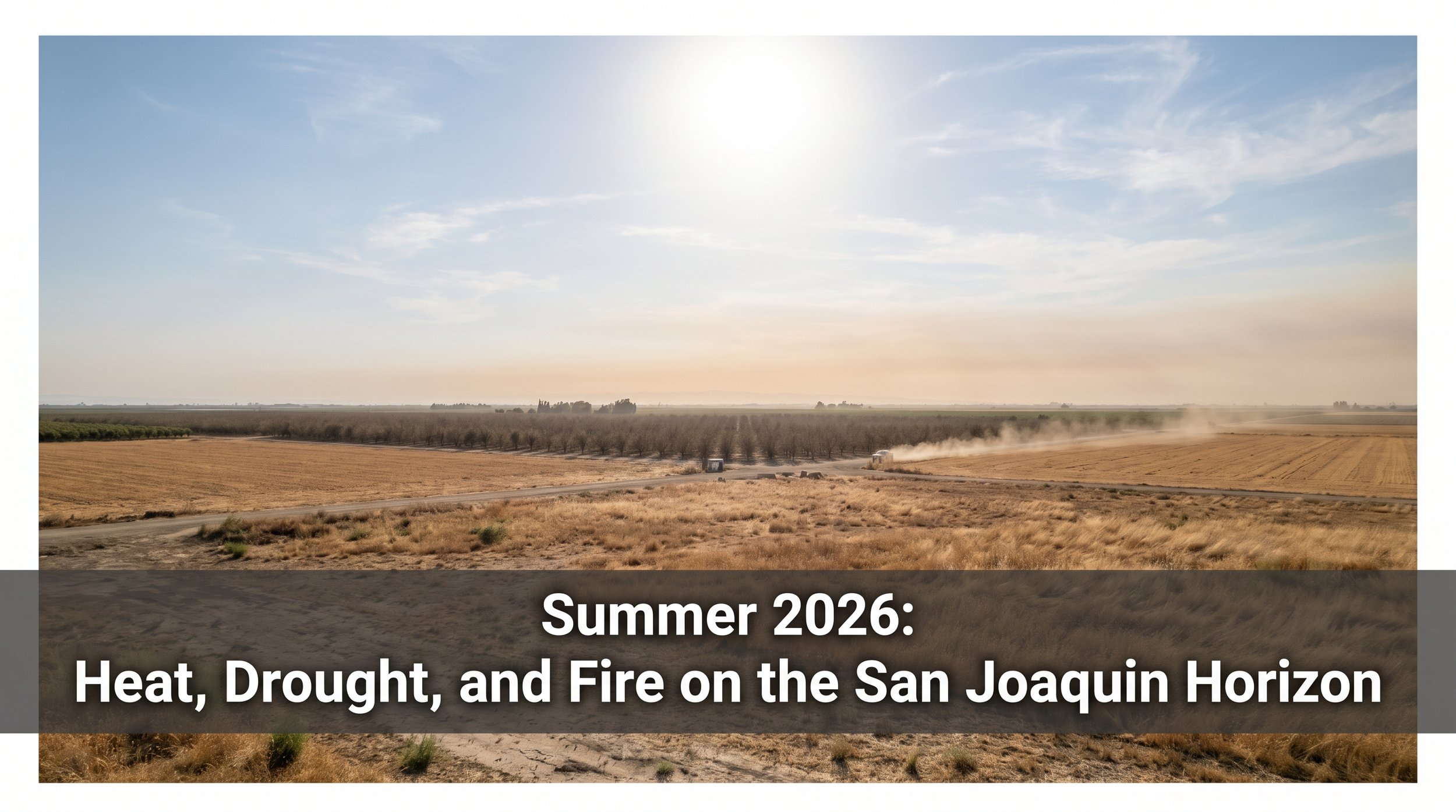
Summer 2026: Heat, Drought, and Fire on the San Joaquin Horizon
A dry winter, an early-melting Sierra snowpack, and an El Niño taking shape in the Pacific have set up a hot, fire-prone summer for the Central Valley. Forecasters expect hotter-than-normal temperatures across California through August and a higher-than-normal risk of large wildfires in northern California from July into September. Reservoir storage offers a cushion, but residents should expect more triple-digit days, warmer nights, and elevated air-quality and fire risk, while growers face tighter water and a fire window that overlaps the Lodi grape harvest.

Lodi Finance Committee - June 10, 2026
The Lodi Finance Committee meets in special session on June 10, 2026 to take up a single substantive item: a comprehensive redline overhaul of the City's Purchasing Policy, last revised May 20, 2022. The new June 4, 2026 draft raises the City Manager's signature authority to $80,000 plus an annual CPI escalator, creates a new 5% local vendor preference (capped at $50,000), lifts public-works and vehicle thresholds, strengthens documentation rules, and adds a new federal-grant procurement section to comply with 2 CFR Part 200 (Uniform Guidance). The Committee will also approve the April 15, 2026 minutes.
The Squeezed Consumer: 12 Months of Household Financial Stress in San Joaquin County
Over the past year, American consumers saved less, borrowed near-record amounts, and held back on home purchases — a national pattern that lands with extra force in San Joaquin County, where median household income trails the state and unemployment has stayed above 6%. The US personal saving rate fell to just 2.6% in April 2026, credit card balances peaked near $1.27 trillion, and mortgage applications stayed weak and rate-sensitive. This briefing charts those four trends and translates them into ramifications for Lodi, with a closing deep dive on the farmworker households where the squeeze is most acute and least visible in official data.
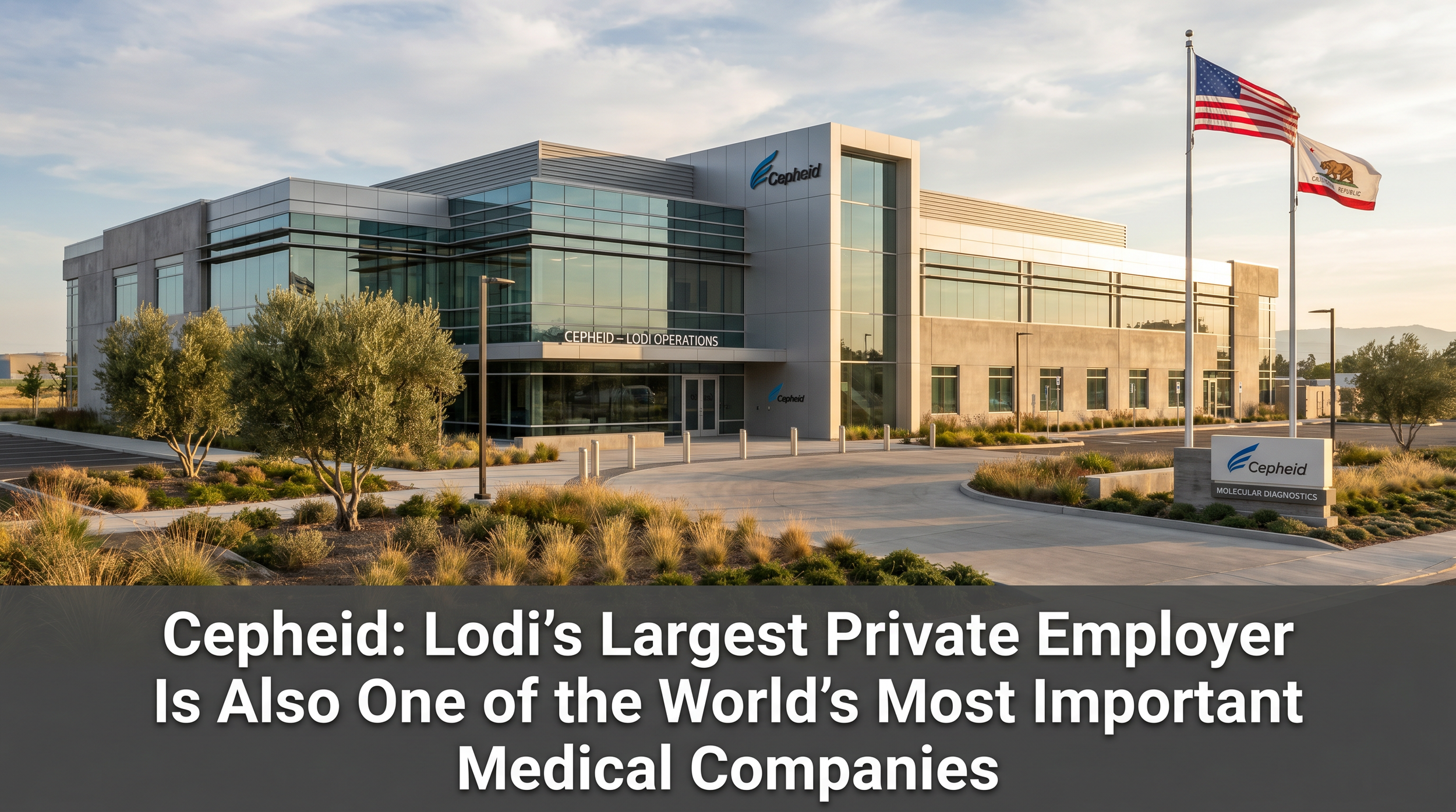
Cepheid: Lodi’s Largest Private Employer Is Also One of the World’s Most Important Medical Companies
On May 28, 2026, Cepheid held the grand opening of Building 5 on its North Guild Avenue campus — the final phase of a multi-year, $200+ million expansion that has made Lodi the company’s primary U.S. manufacturing hub. Cepheid makes the diagnostic test cartridges used in more than 180 countries to detect tuberculosis, COVID-19, MRSA, HIV, and dozens of other infectious diseases. It is a wholly owned subsidiary of Danaher Corporation and is Lodi’s largest private employer. Roughly 40% of Cepheid Lodi jobs pay at or above the Lodi median household income as a single earner’s salary — an unusually high proportion for a Central Valley manufacturing campus. The company is navigating a leadership transition following President Vitor Rocha’s April 2026 departure.