Lodi Eye
LodiEye provides additional information on trending stories / topics published by local media and shared on local social media accounts.

Under the Surface: The 2026 Water-System Cyberattacks and Where Lodi Stands
In the last week of July 2026, hackers reached into the control systems of water utilities in at least seven states, locked operators out of their own equipment, and forced treatment plants to run by hand. Minnesota took the brunt of it — more than thirty community water systems in a single 48-hour window. No ransom was demanded, no one's drinking water was contaminated, and in the towns hit hardest, the taps kept running.
Lodi runs the same kind of automated, widely dispersed water system these attackers target. It also has the redundancy and manual fallback that kept water flowing everywhere the attacks landed: two independent sources, dozens of wells, local storage, and deep upstream reserves. This report explains the attacks, how long they actually disrupted service, how Lodi's water and its upstream sources are built, where Lodi fits the target profile, and what residents can watch for and do now.

It's Here: El Niño Arrives Ahead of Schedule — and the Forecast Keeps Climbing
When LodiEye published its April climate brief, El Niño was a forecast — a near-universal model signal that NOAA still handicapped at 61%. Four months later, the question mark is gone. El Niño conditions are present in the equatorial Pacific, NOAA has upgraded from El Niño Watch to a full El Niño Advisory, and its July 9 diagnostic discussion gives the event a 97% chance of persisting through early spring 2027 — with an 81% chance of reaching "very strong" status during October–December, which would place it among the largest El Niño events in the record going back to 1950.
The local stakes have sharpened, too. California's reservoirs enter fall in good shape — welcome news that also means the flood-control buffer is thinner than it would be coming out of a deep drought. The record marine heatwave off the coast has persisted and intensified, tropical moisture is already reaching Southern California, and the state has begun stockpiling flood-fight supplies at a scale that signals how seriously Sacramento is taking the winter ahead. The April caveats still hold — a strong El Niño label describes the ocean, not California's rainfall — but the probability needle has moved decisively since spring.
Lodi City Council Agenda - August 5, 2026
This is a governance-heavy agenda dressed up as a routine August meeting. There are no public hearings. Five threads run through the 291-page packet: a twice-deferred, formally protested $616,700 citywide tree maintenance award (G.3) that will determine who operates Lodi's street-tree inventory for the next two to four years; a no-bid $115,000 consulting contract (G.2) to CityWise Strategies, LLC — the firm of Aaron Busch, Lodi's Interim City Manager through June 22, 2026; a first-reading ordinance moving City Clerk appointment and removal authority from the Council to the City Manager (G.6), introduced two days after the incumbent Clerk's last day; a single consent vote clearing a two-year backlog of 18 sets of minutes (C.1), ten of which record canceled meetings; and continued fiscal strain visible in a boiler award 57% over the Engineer's Estimate funded by draining two other capital accounts (C.6) alongside the elimination of executive CalPERS employee cost-sharing (G.5).
Also on the agenda: ratification of David Hanham as Community Development Director at $201,619.47, filling a vacancy open since February 24, 2026 (G.4); an informational report restoring Friday library service and ending Sunday hours for a net gain of four weekly public service hours at no added cost (G.1); a countywide free bus transfer pilot including Lodi GrapeLine (C.7); and recognition of Lodi as America's Favorite Small Town 2026.

Gold Runner: Lodi's Rail Service, Station by Station
Lodi's intercity rail service runs under a new name, on a restored daily schedule, and toward a future in which the city is planned to have two stations six miles apart, on two different rail lines, reaching two different parts of Sacramento — now delayed well past its original target. This report walks through the current Gold Runner schedule connecting Bakersfield, Stockton, Lodi, and Sacramento, what the ridership numbers actually show, and the newly disclosed 2031 timeline for Lodi's second station.

The 21st Century ROAD to Housing Act: What It Means for Lodi and San Joaquin County
On July 11, 2026, the most significant federal housing law in roughly 50 years took effect. Rep. Josh Harder (CA-09) authored two of its provisions and calls it "the most important housing legislation since 1974." For Lodi and San Joaquin County, the law unlocks new financing tools, rewires federal grant formulas, and creates direct financial incentives — and penalties — tied to local housing production. This report breaks down every provision that touches our region, the specific projects it affects, and when each program activates.
Gas Station Opioids: Kratom, 7-OH, and San Joaquin County's Missing Data
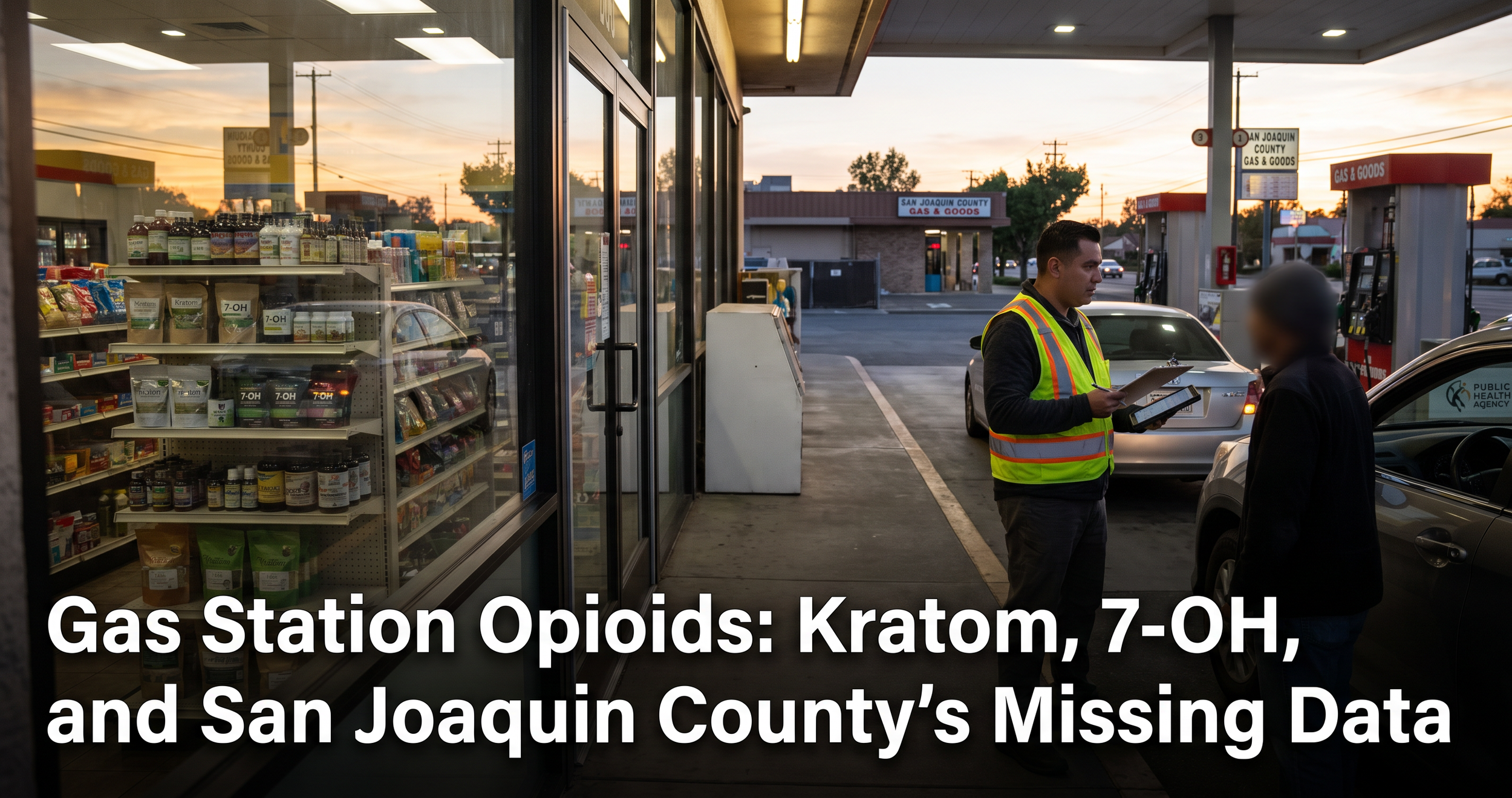
Products containing kratom and its lab-made derivative 7-OH have been illegal to sell for human consumption in California since October 24, 2025. On July 1, 2026, the U.S. Drug Enforcement Administration moved to place 7-OH and three related substances temporarily into Schedule I of the Controlled Substances Act — the same schedule as heroin.
These products have been sold openly in Lodi. San Joaquin County has passed no ordinance, issued no retailer notice, published no consumer advisory, and released no data on kratom-related deaths, emergency visits, or store seizures.
This report does not claim San Joaquin County has a kratom crisis. It shows the county has built no way to find out. Counties that tested for the compound found it in their morgues. Ventura County linked 46 overdose deaths to kratom's main alkaloid since 2018. Los Angeles County confirmed six 7-OH deaths in adults aged 18 to 40 between April 2025 and January 2026. Yolo County counted seven since 2017. Mitragynine does not appear on a standard toxicology screen. A medical examiner has to order the test.

The Future of Navigation and Positioning: GNSS, Alternative PNT, and the Contest for Space-Based Timekeeping
Positioning, Navigation, and Timing (PNT) is the invisible substrate of the global economy. It synchronizes cellular networks, financial trades, power grids, container ports, aircraft approaches, and precision munitions. Four global constellations now compete for that substrate: the U.S. GPS, China's BeiDou, Russia's GLONASS, and the European Union's Galileo. Two decades of quiet Chinese investment, one American humiliation of a Chinese commercial ship in 1993, and two wars in the mid-2020s have reshaped the field in ways the founders of GPS could not have anticipated.
Three simultaneous trends now define the future of navigation:
The commercial world is drifting toward multi-constellation, multi-frequency, LEO-augmented PNT. No single system will be trusted alone for aviation, maritime, or autonomous ground applications by 2030.
The military world is decoupling from GNSS entirely. The next generation of missiles, drones, and bunker-busters is designed to fight through denial, spoofing, and constellation loss using inertial, visual, magnetic, and terrain-matching aids.
The geopolitical world is fragmenting into GNSS blocs. Iran's stated 2025 move toward BeiDou, alongside continued reliance on multi-constellation civilian receivers, illustrates how states under GNSS-denial pressure are hedging away from GPS. It will not be the last such case.

The Coupled War: Two Straits, One Enclosed Sea, and the Vulnerability Nobody Is Pricing
The Strait of Hormuz and Bab el-Mandeb are contested at the same time for the first time. Two chokepoints, two different actors, two different stated reasons. Most coverage treats this as the whole story, with Gulf water supply filed separately as a humanitarian worry held in reserve.
That separation is wrong. Gulf desalination plants share buildings with power plants, share a shallow enclosed sea with the tankers now being struck, and depend on the same sea lanes for the parts and chemicals that would repair them. The tanker war and the water war run on the same infrastructure.
This report covers what has happened at both straits, what each Gulf state faces, how the water and shipping vulnerabilities connect, what production has been lost, and which parties would have to sign what for any of it to stop. It closes with the transmission line to San Joaquin County: diesel and fertilizer.

Legionnaires' Disease in Lodi: What You Need to Know
Legionella bacteria were confirmed in the tap water of a California state office building in Lodi in June 2026 — and this city is not alone. San Joaquin County has its own documented history with the bacteria, from Stockton's airport to a state prison medical facility. This report covers what happened at the Lodi building, where else Legionella has turned up in the county, what the disease does to the body, who faces the greatest danger, how doctors treat it, and what filters and systems actually stop the bacteria.

The Bill That Could Price Lodi Out of Its Own Public Records
UPDATE — JULY 11, 2026
The provisions this report warned about are out of the bill — for the second time.
At the June 30 Senate Judiciary Committee hearing, Assemblymember Blanca Pacheco again stripped AB 1821 of its fees, its purpose test, and its "malicious intent" lawsuit provision. The committee passed the reduced bill and sent it to the Senate floor. What remains is the narrow, original-intent version the Assembly approved in May: the initial response window would shift from 10 calendar days to 10 business days, and the "unusual circumstances" extension from 14 calendar to 14 business days. The three structural changes this analysis examines below — charging by the hour for "commercial" requests, letting agencies ask why you want records, and suing requesters for "malicious intent" — are no longer in the text.
Assembly Bill 1821, moving quickly through the Legislature, would rewrite California's 58-year-old Public Records Act — letting government agencies ask why you want records, charge by the hour for requests they label "commercial," and sue requesters they judge to be acting with "malicious intent." This analysis explains what the bill does, which Lodi and San Joaquin County records it would put at risk, and how its "representative of the news media" exemption would land on the small, shrinking set of outlets that still cover this region.
AB 1821 cleared the Assembly 55–12 on May 27 in a narrow form, then was rewritten in the Senate. The far-reaching provisions face their first vote today, June 30, in the Senate Judiciary Committee (9:30 a.m., 1021 O Street, Room 2100). No Senate floor vote is scheduled; a floor vote — and a return to the Assembly to concur in the Senate's changes — would follow only if the bill clears committee. The provisions described below are the current amended text and may still change.

The Fentanyl Crisis in San Joaquin County
Over five years, San Joaquin County lived through the deadliest chapter of the drug epidemic, driven by one change: illicit fentanyl saturated the local supply. The county's fentanyl death rate in 2021 was 20 times higher than in 2018, and deaths more than doubled again the next year, from 48 in 2021 to 113 in 2022. At the peak, the county was losing four to five residents a week, and people in their 20s and early 30s died faster than any other age group.
In 2024 the county's opioid overdose rate finally dropped about 31 percent — the first sustained decline since the crisis began — helped by naloxone saturation, fentanyl test strips, and a $137 million treatment expansion. But three things complicate any relief. Methamphetamine now kills more Californians than any other single drug, and meth deaths are still rising as fentanyl deaths fall. A veterinary tranquilizer called xylazine is spreading up the West Coast toward the Central Valley. And in December 2024, Proposition 36 reversed a decade of California drug policy, restoring felony charges for repeat offenses just as the public-health approach began to work.
This report traces how the crisis rose and eased, who it hits hardest, how the drug supply chain reaches Lodi, what treatment and enforcement are doing, and what the open questions — from settlement spending to the methamphetamine gap — can and cannot yet be answered.

Golden Mussels and the Mokelumne: What the Invasion Means for Lodi
The golden mussel invasion that Ag Alert reports is plaguing California farms and water districts is not a distant Delta problem for Lodi. It arrived through the county's front door and is moving toward the county's most important local waterway. San Joaquin County recorded the first golden mussel detection in North America, at the Port of Stockton in October 2024, and in April 2026 became the first California county to declare a state of emergency over the mussel. The threat now runs along the lower Mokelumne River — the river that flows through Lodi, forms Lodi Lake, and irrigates roughly 13,000 acres of Woodbridge Irrigation District farmland. This report traces the risk down three connected pathways: the river and Lodi Lake, the irrigation district that waters local vineyards and orchards, and the EBMUD reservoirs upstream that control everything downstream.

America's Oil Reserve Hit a 43-Year Low. The Barrels Are Coming Back
The Strategic Petroleum Reserve fell to about 319.5 million barrels in early July 2026, its lowest level since April 1983. Most coverage framed that as depletion. It is not. The 172-million-barrel release behind the drop is structured as a loan — companies borrow the crude now and return it later with interest — and the Department of Energy projects the reserve ends up with more oil than it lent out. The real story is what Washington is now doing with the reserve, and the demand, budget, and energy-security consequences that run through 2028.
Opportunity Zones in Lodi: What Happened Under OZ 1.0 and What to Watch For Under OZ 2.0
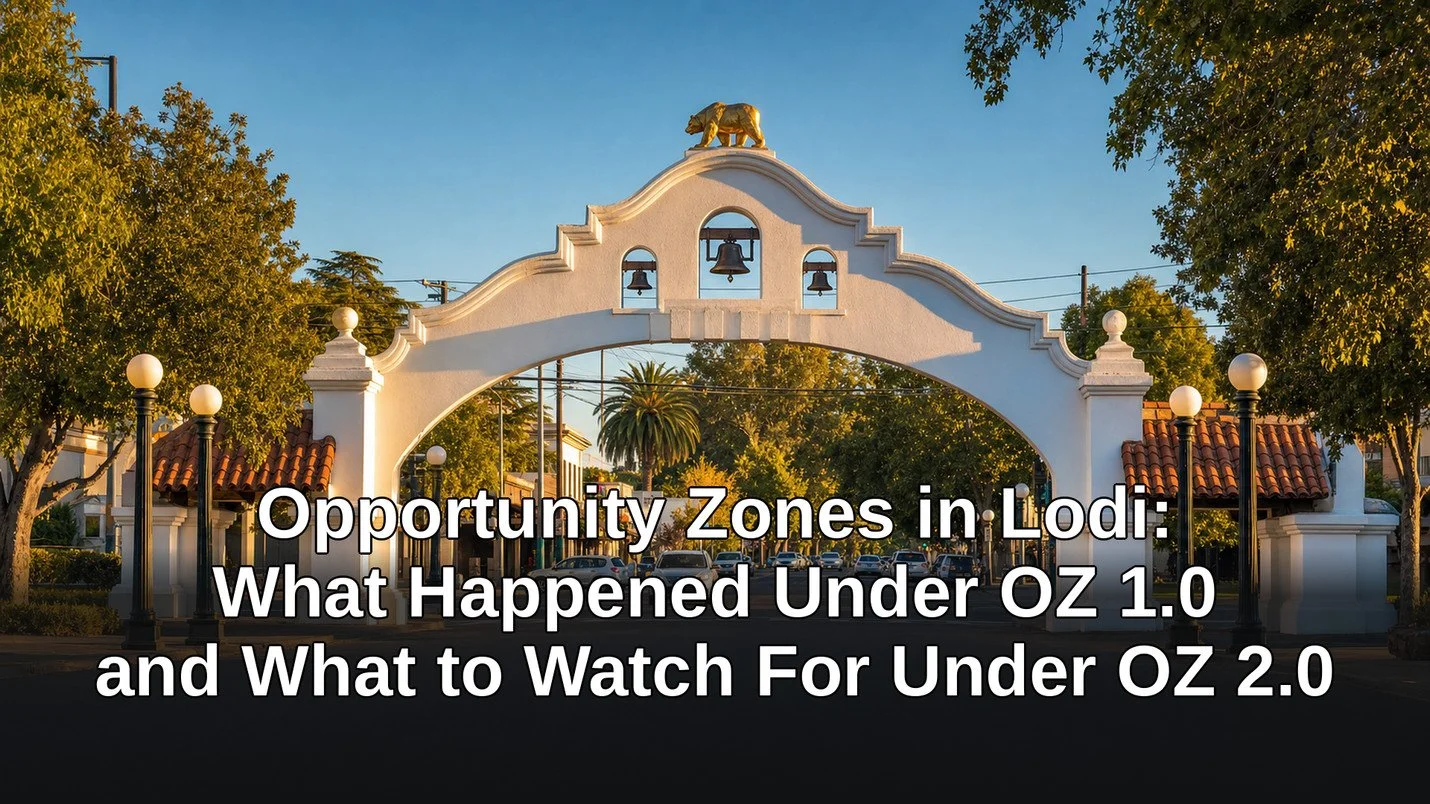
Back in 2018, the federal government designated downtown Lodi (Census Tract 44.03) as an Opportunity Zone — a federal tax break meant to pull private investment into low-income neighborhoods. Eight years later, no documented investment ever arrived. No fund, no project, no dollar. That outcome, detailed in the body of this report, is the direct reason the City shifted its OZ 2.0 nomination to South Lodi (Census Tract 45.02).
Now there is a new round — Opportunity Zones 2.0 — with a redesigned program and a July 25, 2026 application deadline. Whether it brings actual investment to South Lodi depends on a set of concrete steps that residents should know about and watch for.
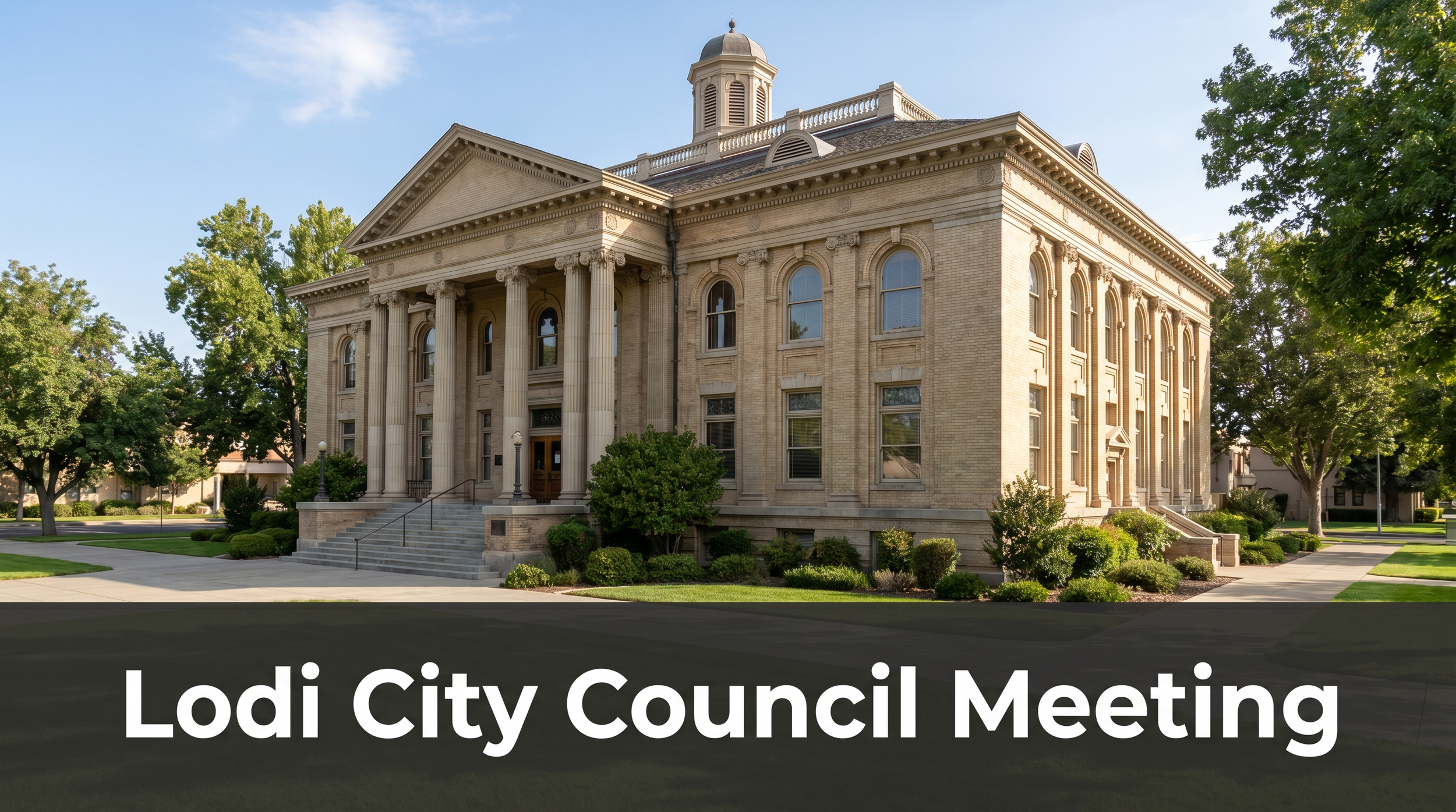
Lodi City Council Agenda - July 15, 2026
The July 15, 2026 Lodi City Council meeting opens with a lengthy closed session covering the City Attorney and City Clerk recruitments plus two active lawsuits filed by former City Manager Scott R. Carney — a whistleblower/wrongful termination action and a companion Public Records Act suit. The open session moves through a Junior Giants proclamation, a certificate of appreciation for outgoing City Clerk Olivia Nashed, and a consent calendar dominated by two substantial items: TANC Project Agreement No. 3 Amendment No. 1, which zeroes out Lodi's scheduling rights on the California-Oregon Transmission Project, and a three-year $694,600 professional services agreement with West Yost & Associates for wastewater regulatory compliance at White Slough. No public hearings are scheduled.
The regular calendar features an informational presentation on Opportunity Zones 2.0 and a staff recommendation to nominate Census Tract 45.02 in place of the underperforming Tract 44.03, an ad hoc committee to advise on a Government Relations RFP, and appointment of Walfred Solorzano as Interim City Clerk at $70.41/hour. The meeting closes with the second reading and adoption of Ordinance No. 2048, which replaces Lodi's 2022 mobile food-vending framework with an operator-permit model but keeps the controversial food-truck caps.
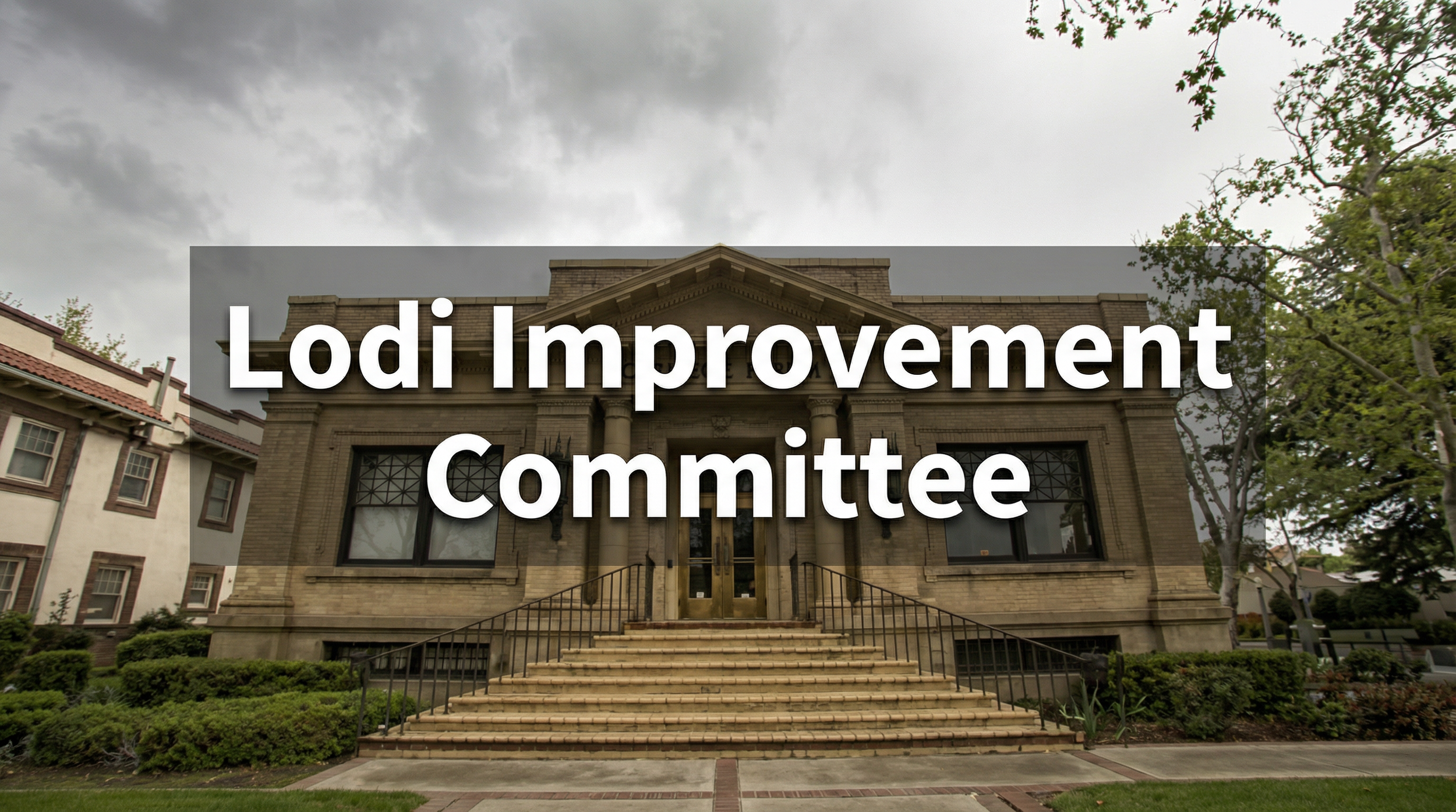
Lodi Improvement Committee - July 14, 2026
The July 14, 2026 Lodi Improvement Committee (LIC) agenda centers on approving May's minutes, planning a City Council presentation, reviewing Community Development Block Grant (CDBG) funding activity, and updating 2026 annual goals. The Committee's mandate is to support CDBG implementation and improve Lodi's community quality of life through coordinated resident-facing efforts. Public participation is welcome in person at Carnegie Forum, via Zoom, or by written comment submitted at least three hours before the meeting.
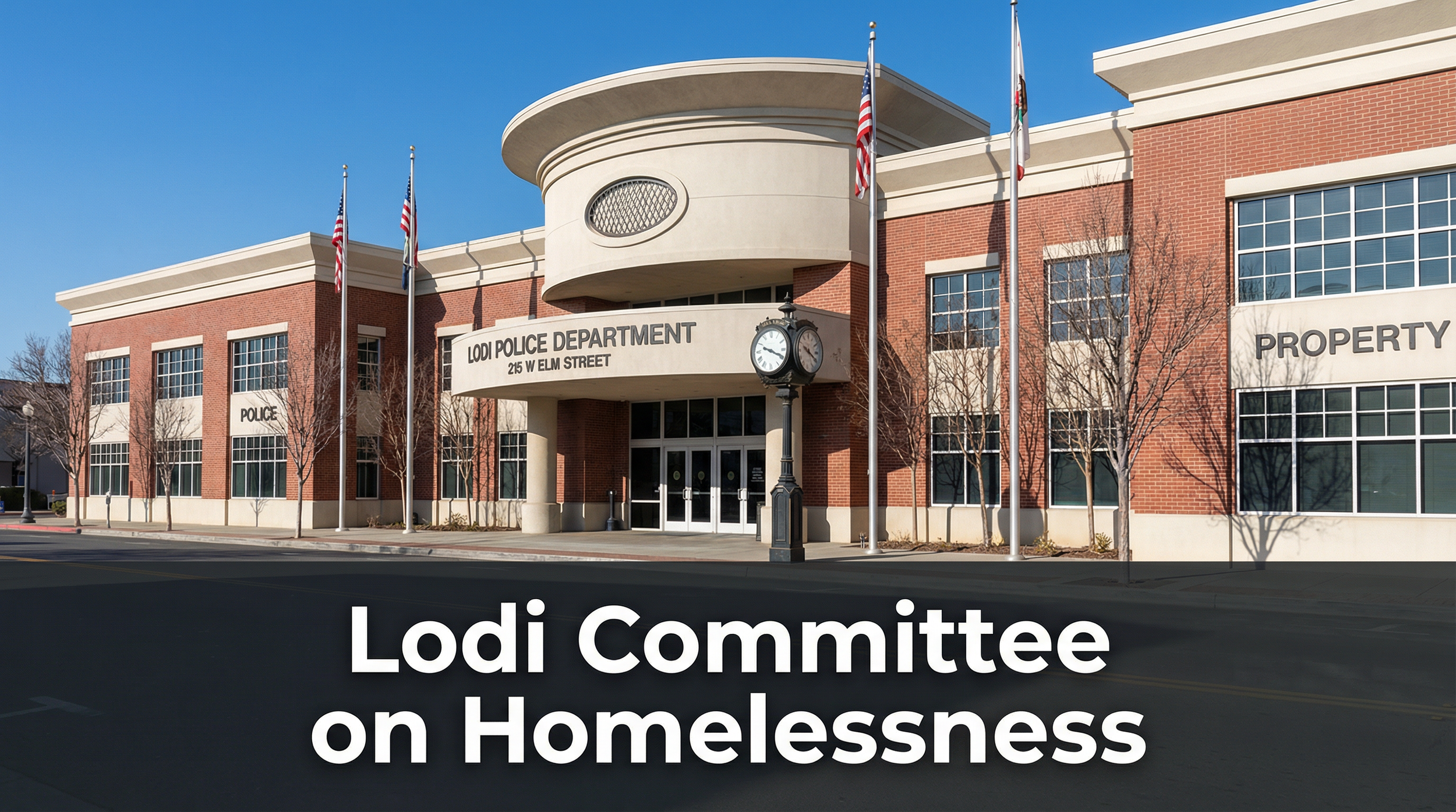
Lodi Committee on Homelessness - July 9, 2026
The July 9, 2026 LCOH meeting reviews June 2026 activity from six service providers and six subcommittees, features a special election for a vacant Vice Chair and COC Subcommittee Chair position, and includes a tour of the Reimagined Housing project on Main Street. Combined, reporting service providers logged well over 8,000 meals, showers, and shelter nights, along with dozens of employment placements and housing transitions across the community's homeless service network.

The Fragile Truce: US-Iran Ceasefire, the Strait of Hormuz, and What It Means for Fuel Prices
On July 8, 2026, President Trump told reporters at a NATO summit that the ceasefire with Iran is “over,” hours after the two countries traded strikes across the Persian Gulf. He also said American negotiators could keep talking. That contradiction — a truce declared dead while its talks stay alive — captures where this conflict stands three weeks after both sides signed a memorandum of understanding to end it.
This report lays out the current state of the agreement, the offensive actions each side has taken over the past 30 days, the escalations each is most likely to reach for next, and what all of it means for oil prices and fuel supply — including a data section tracking how many ships are actually moving through the Strait of Hormuz, measured against the January 2025 baseline. The local stakes for San Joaquin County run through diesel: the fuel that moves the county’s farm equipment, its warehouses, and the trucks on Highway 99.

The Fertilizer Emergency: What Trump's Phosphate Declaration Means for U.S. Crops
On June 29, 2026, Trump declared a national emergency over U.S. fertilizer supplies and suspended countervailing duties on Moroccan phosphate fertilizer for up to eight months.
The move follows five months of disruption. The February 2026 Iran war closed the Strait of Hormuz, which normally carries about a third of the world's traded fertilizer and half its sulfur.
USDA projects the suspension will cut phosphate prices 22% and save farmers $1.82 billion a year. Independent analysts and the domestic producer, Mosaic, dispute how fast that relief actually shows up.
San Joaquin County is not a Midwest row-crop county. Milk, almonds, and grapes are its top commodities, not corn and soybeans, so the direct financial effect here is different, and mostly indirect.

AI in Policing: What's Already Here, What's Coming Next
Artificial intelligence already reads license plates, drafts police reports, extracts and analyzes seized phones, mines social media, and flags people as future suspects in California departments, including in San Joaquin County. This report organizes the technology into four categories: surveillance and identification, predictive and risk analysis, records and evidence processing, and the real-time crime centers now fusing all three into a single dashboard.
Surveillance tools like license-plate readers and social-media mining platforms are the most mature and the most widely deployed today.
Predictive and risk-scoring tools are moving from pilots into active use, despite a documented history of flawed data driving them.
AI report-writing tools now draft first-version reports from body-camera audio in minutes, with officers reviewing before signing.
Real-time crime centers are quietly combining all of the above into single dashboards, a convergence point civil liberties groups now consider the biggest emerging risk.
Lodi Police already operate license-plate cameras, a multi-drone program dating to 2018, and a Flock Safety gunshot-detection system; a dedicated section covers what is in use locally and where the department has signaled it is headed.