Lodi Eye
LodiEye provides additional information on trending stories / topics published by local media and shared on local social media accounts.

The State of Global Oil Reserves
When Iran closed the Strait of Hormuz in late February 2026 and the broader Middle East conflict followed, the world's oil-buffer infrastructure — the salt caverns, the harbor tanks, the bonded floating storage off Asian ports — stopped being a back-of-the-textbook curiosity and became the thing standing between functioning economies and rationing. This report inventories that buffer as of mid-May 2026 across four jurisdictions: the United States, California (which sits inside the United States but is functionally an island for fuel), Europe, and Asia.
Cannabis Retail in San Joaquin County: A Four-City Review
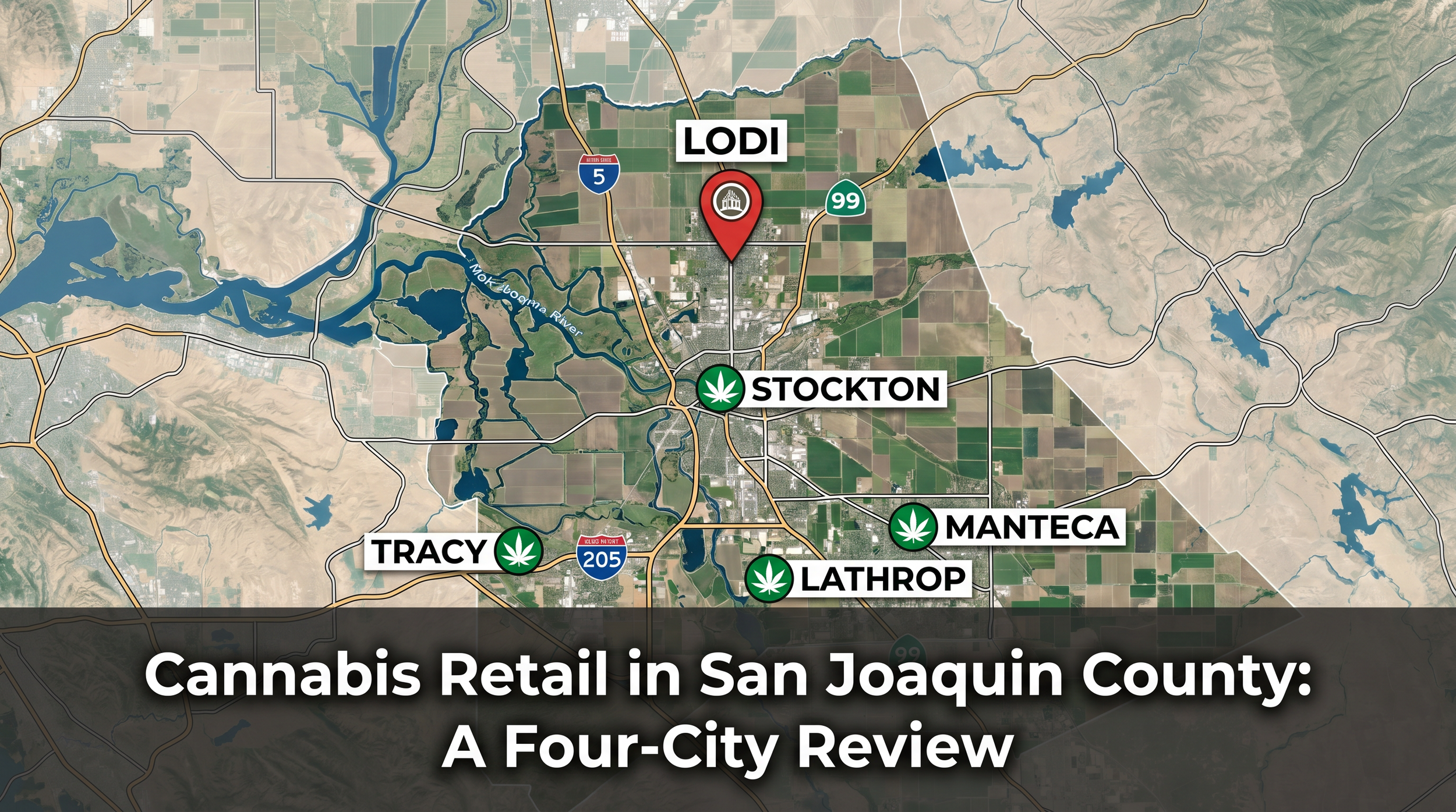
Nine years after California voted to legalize cannabis, the map of who sells it in San Joaquin County has filled in unevenly. Stockton, Tracy, Manteca, and Lathrop now allow storefront cannabis sales — each doing it differently. Escalon and Ripon don't allow it at all. Lodi has neither permitted retail nor formally banned it. Between them, the four operating programs have nine years of real-world experience: tax dollars collected, illegal stores chased, zoning fights settled, and policies that have proven worth copying — and a few worth avoiding.

Data Centers, Demystified: A Field Guide for Lodi
When you check Instagram with your morning coffee, ask Siri for tomorrow’s forecast, stream a movie on Netflix tonight, or tap your card at the gas station on Cherokee Lane, something invisible happens. Your phone or the payment terminal sends a message to a building you have never seen, often hundreds or thousands of miles away. A few milliseconds later, that building sends an answer back. The building is a data center, and there are now several thousand of them scattered across the United States.
For most of the internet’s history, those buildings were not something the average user thought about. They worked. They stayed in the background. Recently they have started showing up in local news more often, partly because they consume enormous amounts of electricity and water, and partly because a new category of facility, specifically engineered to train artificial intelligence models, did not really exist five years ago and now does. That category is growing faster than any other type of industrial construction in the country.
This is a field guide to what those buildings actually do, who builds them, and how the major operators differ from one another. It is written for people who use the products coming out of them every day but have not had a reason to think about the buildings themselves.

The 60 kV Tax on Lodi
Six miles from downtown Lodi, the Northern California Power Agency operates the Lodi Energy Center — a 311 MW combined-cycle gas plant in which the City of Lodi holds a 30 MW (~10%) stake. For fourteen years that plant has been geographically adjacent to Lodi Electric Utility's customers but electrically distant from them, separated by a constrained PG&E 60 kV system that fails NERC contingency standards.
The Northern San Joaquin 230 kV Transmission Project, scheduled for energization in December 2029, will close that gap. The visible consequence is more than $8 million per year in eliminated transmission wheeling charges. The structural consequences — resource deliverability, congestion exposure, fast-ramp value capture, and incremental capacity for growth — are larger in aggregate and far less visible. After 2029, NCPA's biggest investment in Lodi and NCPA's biggest load served in Lodi will finally share one electrical system.
Newsom's 2026-27 May Revision: What It Means for San Joaquin County and Lodi
Governor Gavin Newsom released his May Revision to the 2026-27 California state budget on May 14, 2026, proposing $246.6 billion in General Fund spending and claiming a $0 structural deficit through July 2028. For San Joaquin County and the City of Lodi, the picture splits cleanly: meaningful gains for local schools through an upgraded Local Control Funding Formula (LCFF) "super COLA" of 4.31% and a record $2.4 billion special education investment, but a deepening healthcare funding crisis as state Medi-Cal policy changes compound federal H.R. 1 cuts already projected to drain $50.9 million to $76.9 million annually from county coffers. The Homeless Housing, Assistance, and Prevention (HHAP) program is held at $500 million — half its prior level — threatening the funding pipeline for Lodi's Access Center. Property tax growth in San Joaquin County is forecast to slow from 7% to 2%, and labor costs are rising by more than $22 million, leaving the County entering FY 2026-27 in a "compression" scenario heading into its June 2 budget presentation.
Lodi City Council Agenda - May 20, 2026
Three public hearings are being set on this consent agenda for June 3, 2026: the CDBG Annual Action Plan, the Downtown Specific Plan, and the Police Department's annual Military Equipment Use Policy review. The Regular Calendar features the FY 2024/25 Annual Comprehensive Financial Report (with a modified audit opinion tied to CalPERS reporting) and Part 2 of the FY 2026/27 budget series covering Enterprise, Special Revenue, and Capital Outlay budgets.

Lodi Brings In Veteran Economic Developer to Jump-Start Strategic Plan
The City of Lodi is hiring retired economic development executive Donald Burrus to help implement its new Economic Development Strategic Plan, a five-to-ten-year framework aimed at expanding jobs, increasing city revenues, broadening local goods and services, and investing in infrastructure and community amenities. The move signals that City Hall is trying to translate a long list of strategic goals into near-term execution at a time when officials say economic development has been underemphasized and higher-paying job growth has become a central civic priority.

Lodi Parks & Recreation Commission - May 14, 2026
The Lodi Parks & Recreation Commission convenes a Special Meeting on May 14, 2026 with a focused agenda built around one action item and two discussion items. The Commission will be asked to adopt a new Sponsorship & Advertisement Opportunities Packet that formalizes how PRCS partners with businesses, nonprofits, and donors — including potential naming-rights and capital-campaign opportunities for Tony Zupo Field and the Lodi Grape Bowl. Discussion items cover a Youth, Family Services, and Camps update from Recreation Manager Rachel Sandoval (ASP, LUSD Bridge, and Safari Camps) and proposed new Lodi Lake Nature Area signage co-developed by Commissioner Bret Erickson and the Friends of Lodi Lake, at an estimated $350 per sign
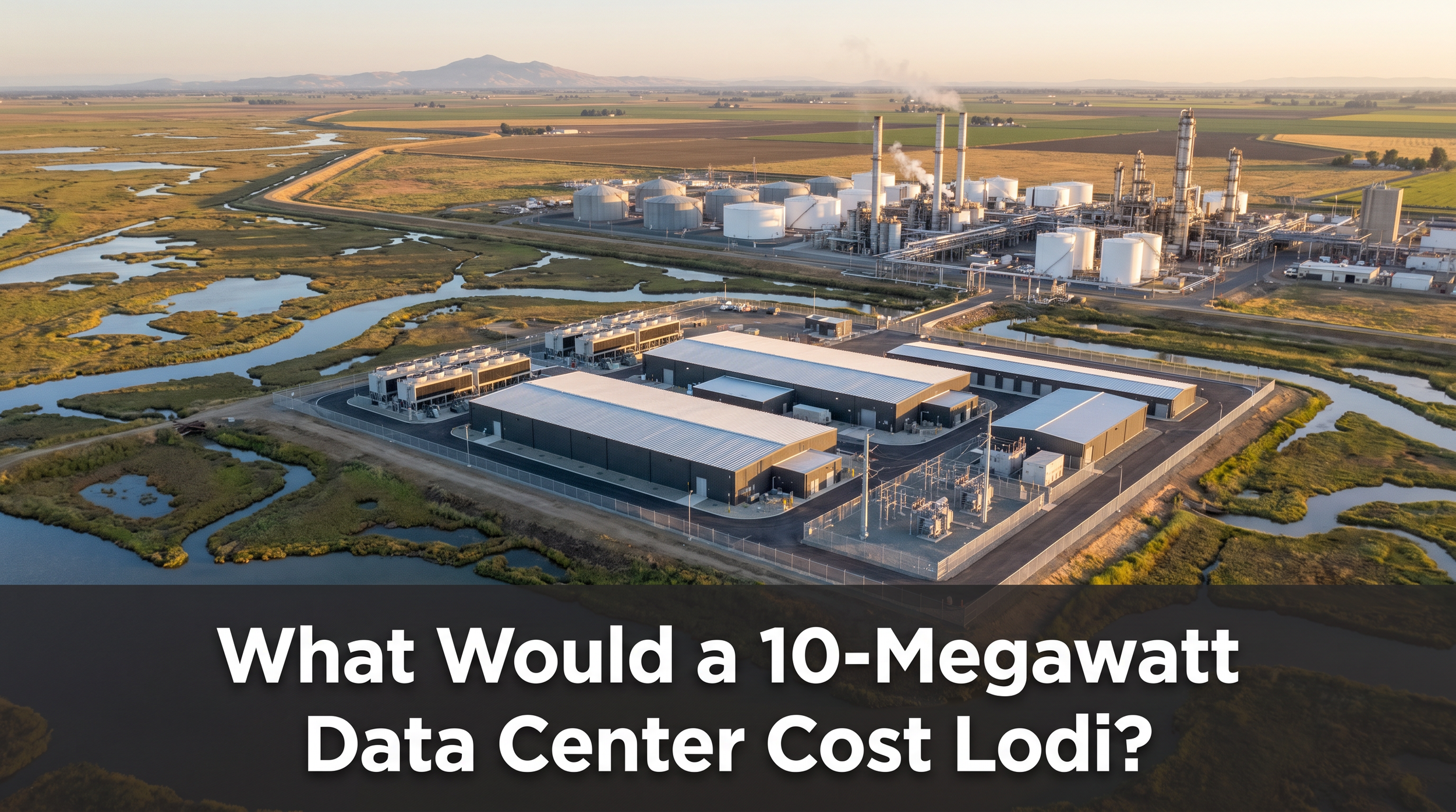
What Would a 10-Megawatt Data Center Cost Lodi?
LodiEye’s earlier article on the data center question asked what kind of facility Lodi could realistically host. The answer was: roughly 10 megawatts — about the size of the Nautilus operation in Stockton, or NTT’s facility in Sacramento. Big enough to matter to the City budget. Small enough to be plausible.
This follow-up moves from “what’s possible” to “what would it cost, and how long would it take.” If Lodi decided to host a 10-megawatt data center at the White Slough complex on Thornton Road, the City would have to commit between $108 million and $221 million in infrastructure investment over the next five to seven years — before any data center operator turns dirt.
That number is on the order of Lodi’s entire annual general fund budget. It is also separate from — and additional to — the $60 to $150 million it would cost a developer to build the data center itself.

The Three-Sided Squeeze on California Orchards
California's tree-fruit orchard system is taking simultaneous hits from three different directions. The Del Monte bankruptcy has cancelled more than half a billion dollars in long-term cling peach contracts and is forcing growers to bulldoze roughly 420,000 trees. Back-to-back weather disasters have cut San Joaquin County's cherry crop by more than 40 percent in 2024 and roughly 30 percent again in 2026. And input and trade shocks — tariffs on can steel, the Strait of Hormuz fertilizer disruption, and continued cheap imports — are compressing margins across every orchard crop at once.
The federal response to date is $9 million in tree-removal aid targeted at one commodity in one bankruptcy. This piece looks at how the three pressures interact, what the San Joaquin County data shows about the local exposure, and why "just plant something else" is not a real answer.
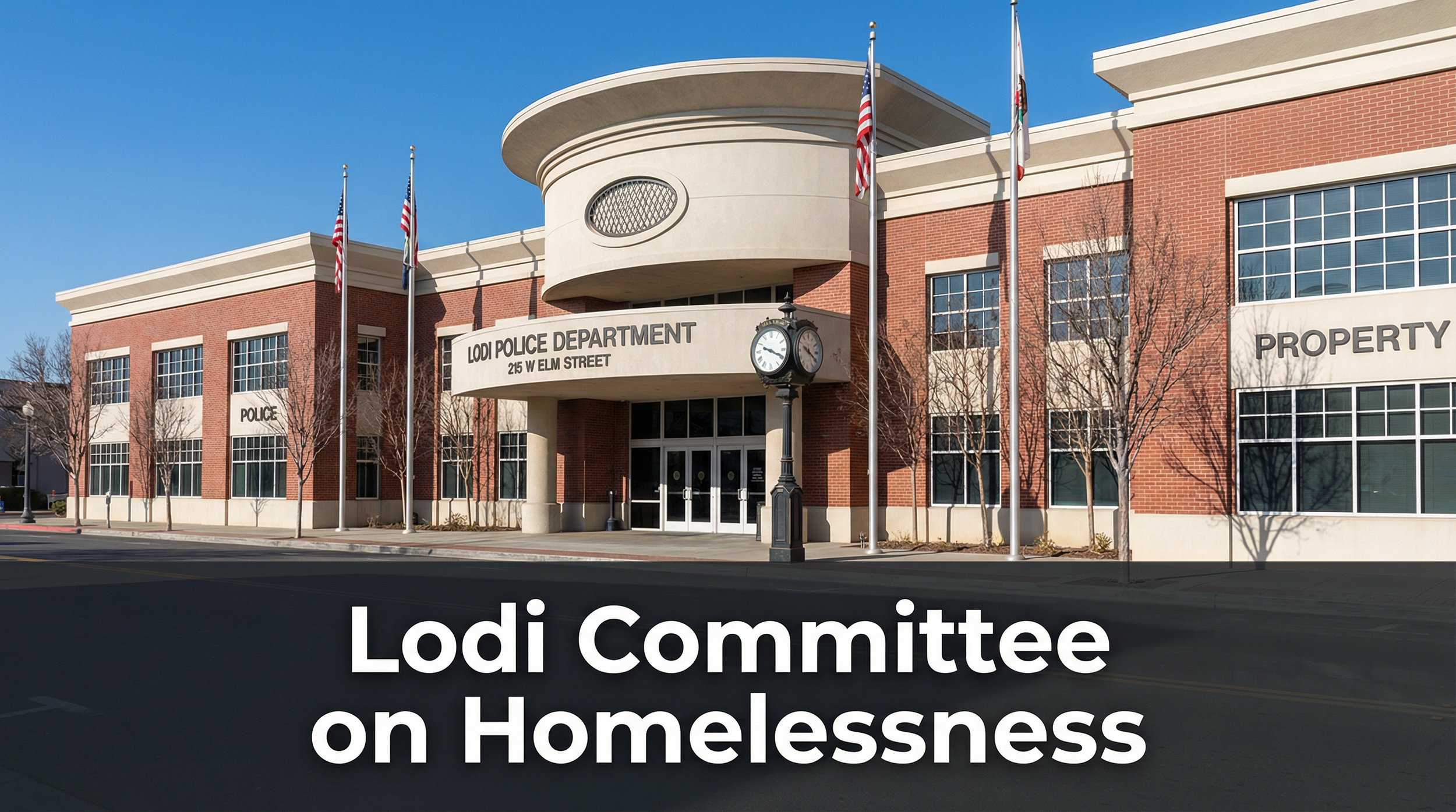
Lodi Committee on Homelessness — May 14, 2026
The Lodi Committee on Homelessness (LCOH) convenes Thursday, May 14, 2026 at 2:30 PM in the LPD Community Room to review April service-provider activity, subcommittee progress, and major capital projects, including the Lodi Access Center (targeted completion September 30, 2026) and the recently opened 40-unit Main Street transitional housing. Agenda highlights include a pet-fostering update from Major Pease, the next committee tour selection, and follow-up on four April action items. The next meeting is June 11, 2026.
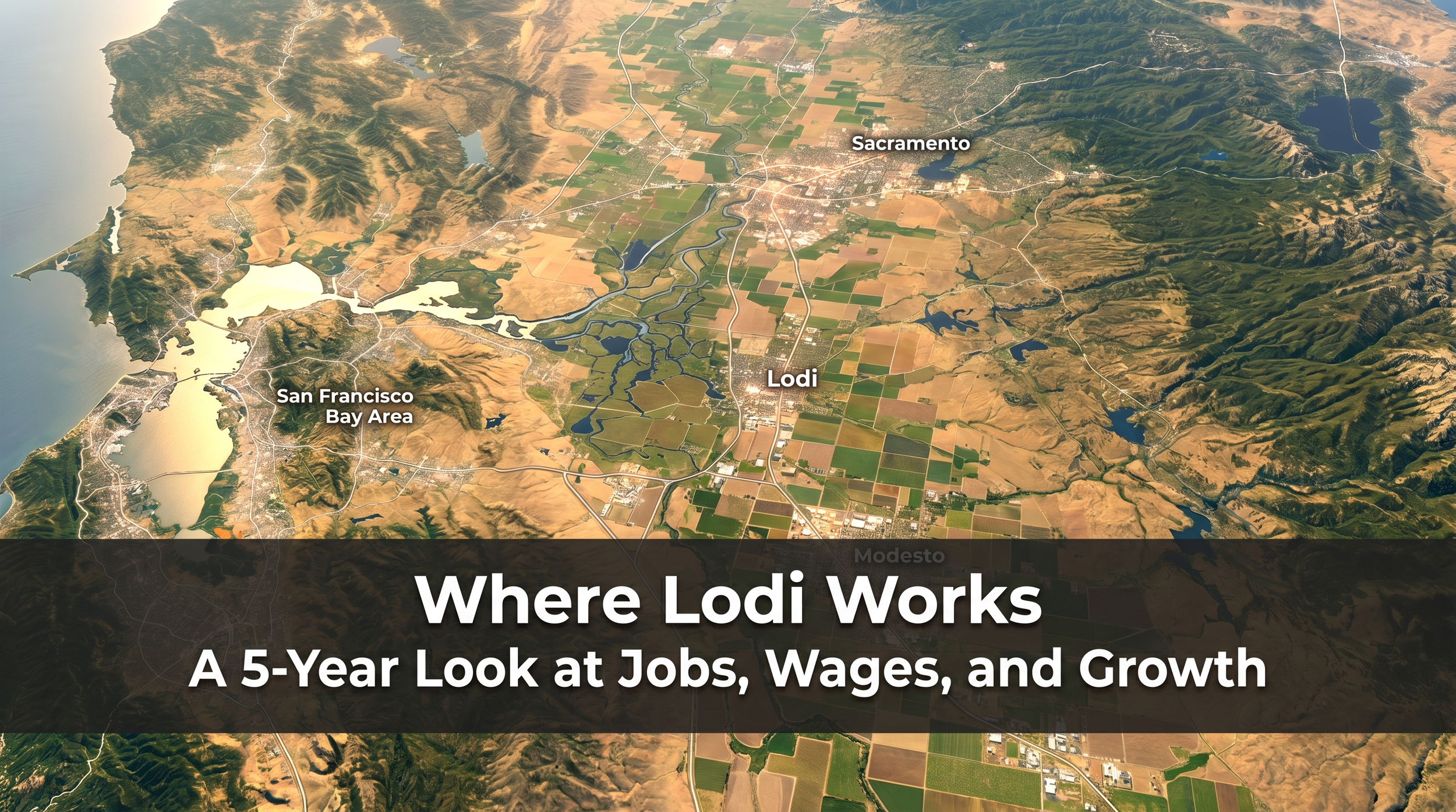
Where Lodi Works: A 5-Year Look at Jobs, Wages, and Growth Within Commute Distance
From the warehouses of Stockton to the data centers of Sacramento, this report maps what's hiring within 60 minutes of Lodi, what's projected to grow, and how local wages compare to what existing Lodi residents earn. Five-year projections from the San Joaquin Council of Governments and U.S. Bureau of Labor Statistics show transportation and warehousing plus healthcare driving roughly two-thirds of net new jobs through 2031, while a separate hyperscale data center buildout in the Sacramento commute corridor represents the highest-velocity wage opportunity in the region. The report identifies four highest-leverage career paths for Lodi residents and flags two structurally declining job categories.
2025 Lodi Crush Report: The Final Numbers
The USDA/CDFA Final 2025 California Grape Crush Report, released April 30, 2026, confirms District 11 crushed 532,409 tons — 14.1% below the August moderate forecast of 620,073 tons and 9.8% below the 2024 D11 total. Statewide, the Final crush settled at 2,761,914 tons, down 6.1% from 2024.
The Final report supersedes the Preliminary numbers analyzed in March. The most consequential revision: the table-grape-to-crush surge that appeared to be reaching District 11 in the Preliminary data turned out to be a District 13 phenomenon all along. D11 ended 2025 with just 2.4 tons of table grapes diverted to crush — essentially zero.
What remains unchanged: a Zinfandel collapse, a cooler-than-normal vintage that delivered exceptional fruit quality, and a widening price chasm between coastal and interior California. What changes: Lodi's exposure to the table-grape-diversion economy is far smaller than the Preliminary suggested.
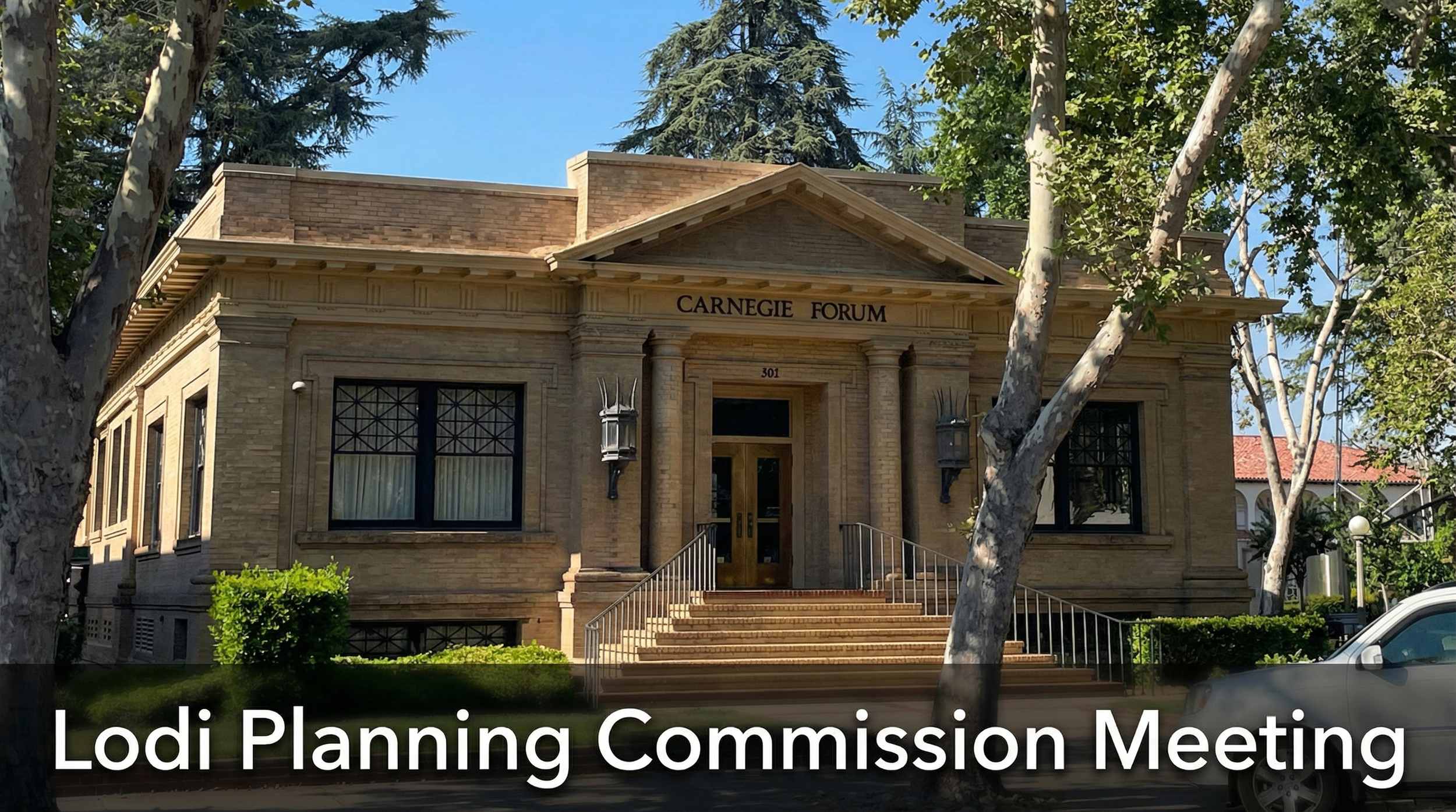
Lodi Planning Commission Agenda - May 13, 2026
The Lodi Planning Commission convenes on May 13, 2026 for a single-topic public hearing: a recommendation to the City Council to adopt the Downtown Specific Plan (DTSP) pursuant to California Government Code §65450 et seq. The DTSP is a long-range policy and implementation framework covering the area from Lodi Avenue to Lockeford Street, and from Pleasant Avenue to Washington Street — including the historic School Street core and the expanded Downtown Mixed Use zone along Main Street east of the Union Pacific Railroad. Environmental review relies on an Addendum to the 2025 Focused General Plan Update SEIR. Staff recommends approval of Resolution P.C. 26-__ forwarding the plan to the City Council.

Is a Data Center in Lodi's Future?
At the May 6, 2025 Lodi City Council Meeting, Councilman Cameron Bregman raised the question of whether Lodi should explore data center opportunities — an idea, in his framing, worth examining seriously. This report accepts that invitation and asks: given Lodi's specific situation, what would actually be involved? Where would such a facility plausibly go, what would it cost, what would it return, and what could go wrong?
San Joaquin County Measure K: What It Is, How It Works, and What It Means for Lodi
Measure K is San Joaquin County's dedicated half-cent (0.5%) transportation sales tax, first approved by voters in November 1990 and renewed for a 30-year extension through March 2041 when nearly 78% of county voters approved the renewal in November 2006. Every taxable retail purchase made in Lodi contributes a half-penny per dollar to this fund, which is distributed to local street repair, highway improvements, public transit (including GrapeLine), bicycle and pedestrian infrastructure, and railroad crossing safety. Over the 30-year renewal period, Measure K is projected to generate approximately $2.64 billion in transportation investment for San Joaquin County.
For Lodi specifically, Measure K is the single most important non-federal source of transportation funding. It directly pays for GrapeLine bus service, annual street repaving, the SR 99/Turner Road interchange reconstruction, active transportation trails, and a pipeline of planned highway, arterial, and bike/pedestrian projects. This report explains the program's origins, funding mechanics, expenditure categories, administration, oversight, and Lodi-specific project history and pipeline.

A Sliding Scale of Ambition: How Four Cities Are Preparing for Valley Rail
Lodi’s new train station will probably be the last of four to open on Valley Rail’s Sacramento Extension. The rail commission chair has called the 2027 published opening date “optimistic” and described 2030 as “an ambitious target.” That gives Lodi an opportunity the other cities do not have: years to watch what works in Stockton, Lathrop, and Elk Grove, and bring those lessons home. Stockton has built electric carshare, e-bike fleets, and an integrated transit app. Lathrop and the Tesla factory are running employee vanpools. Elk Grove bought its station property outright and operates three commuter bus services. Lodi’s plan today is three bus trips a day to the new station. Whether the city uses the next several years to build something more is a choice that has to be made now.
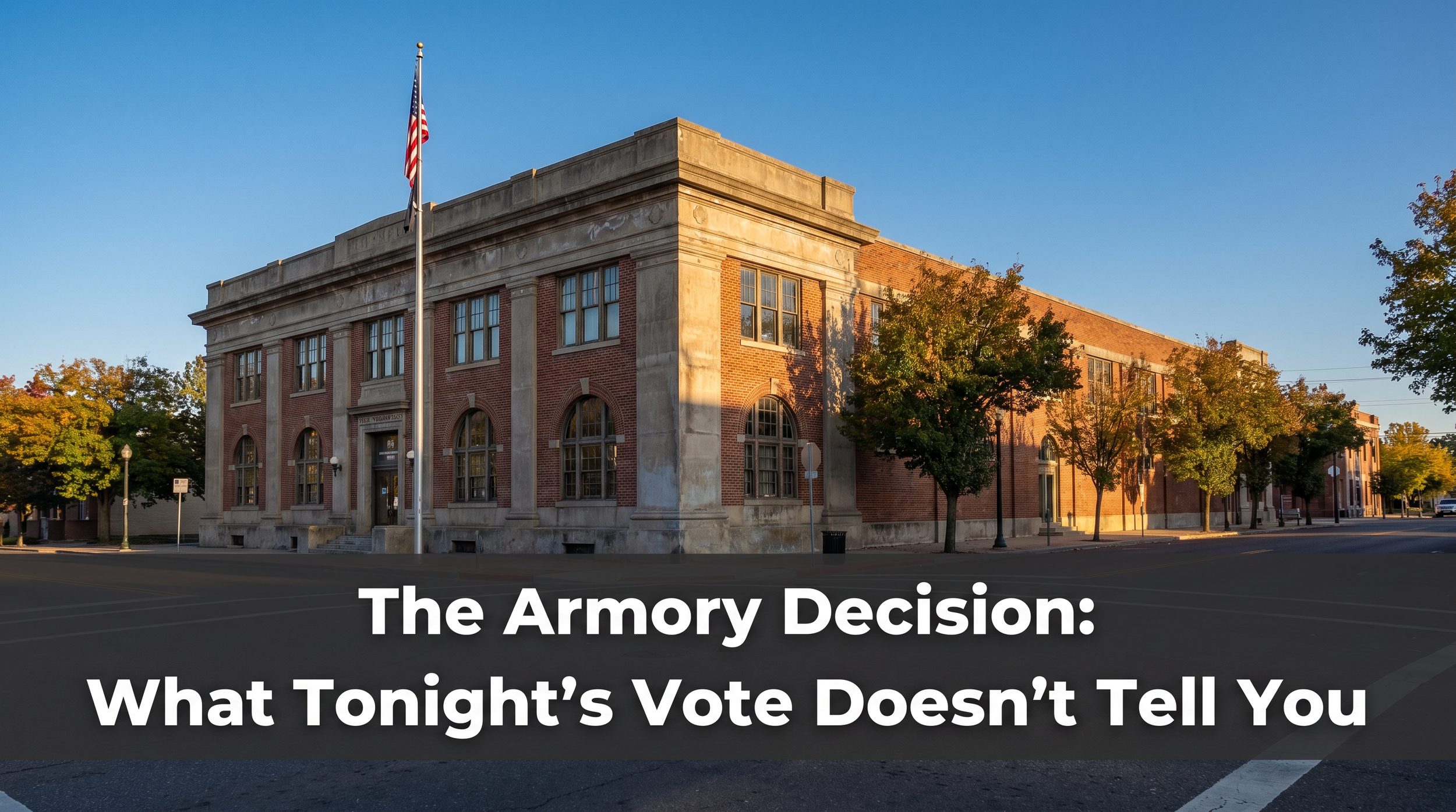
The Armory Decision: What Tonight's Vote Doesn't Tell You
The Lodi City Council votes tonight on whether to file a letter of interest in purchasing the Armory at 333 N. Washington Street under California Senate Bill 855, which authorizes the state to dispose of seven specified armory properties. The procedural deadline is Monday, May 11.
The decision tonight is narrower than the staff report frames it. Filing a letter of interest is not a commitment to buy — it is the procedural foothold that keeps the option alive. The substantive decision is months away, and four pieces of information not in the staff report should drive it: where the other six SB 855 armories are headed and what local agencies have paid for similar properties; what realistic rehabilitation actually costs given that the Lodi Armory is reinforced concrete and already operates as a city-leased gymnasium; whether the federal and state historic tax credits — potentially worth 40 percent of qualified rehabilitation expenditures — can be captured under a public-private structure; and how the active Diede Construction renovation of the American Legion Memorial Building directly across the street reshapes the corridor argument.
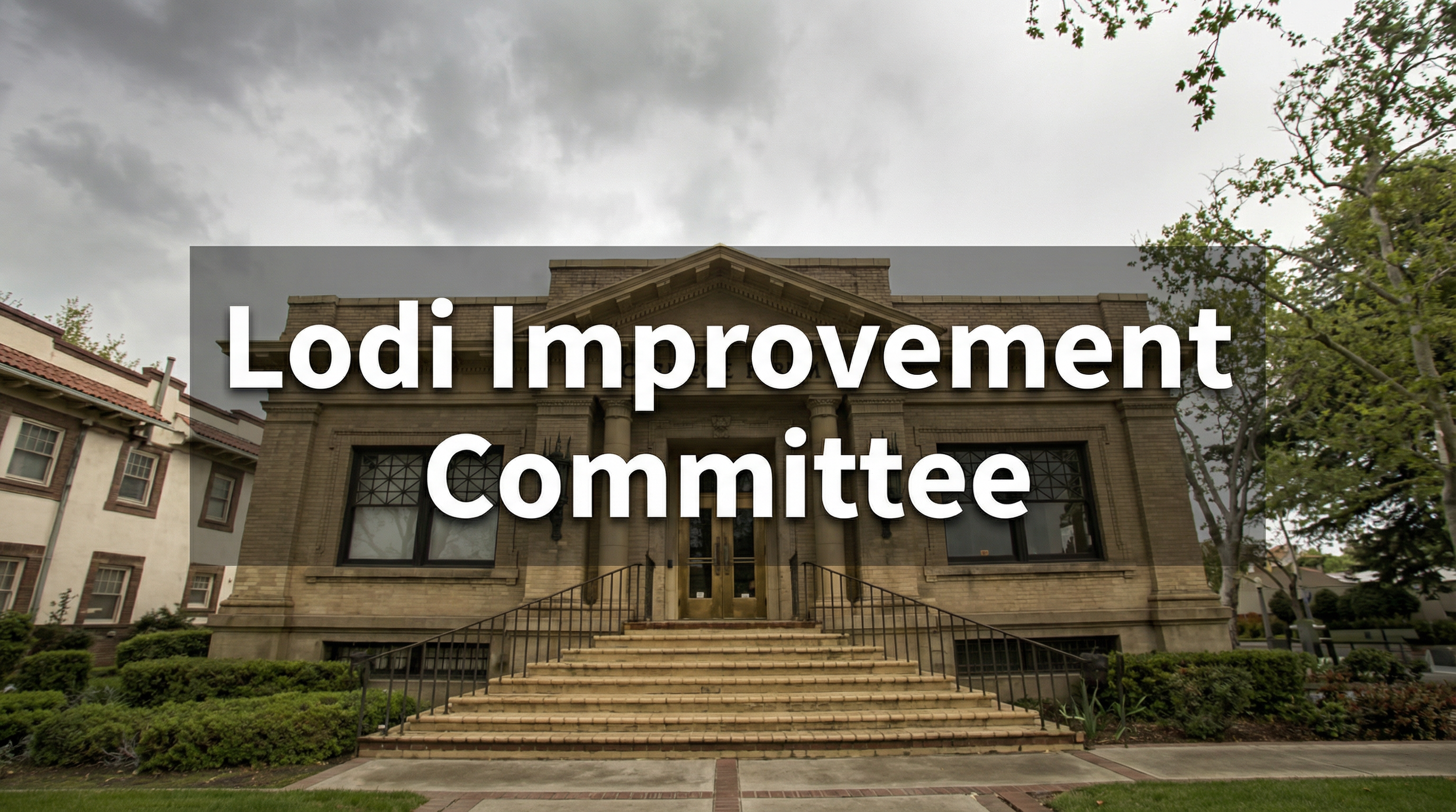
Lodi Improvement Committee - May 12, 2026
The Lodi Improvement Committee (LIC) meets May 12, 2026 at the Carnegie Forum for a focused working session centered on three priorities: shaping the LIC's upcoming semi-annual update to the City Council, reviewing Community Development Block Grant (CDBG) activity including the new 2026–27 Annual Action Plan public review window, and advancing the 2026 annual activities task roster. Public participation is available in person, via Zoom (Meeting ID 880 2451 7154, passcode 191272), by email to LICcomments@lodi.gov, or by mail/hand delivery to the Community Development Department.
This meeting follows an eventful April session where the Committee voted unanimously to recommend the City Council halt ticketing of on-duty downtown employees and build an employee permit system — a recommendation now in the staff pipeline to Council. Staff's memo confirms HUD's 2026–27 CDBG allocation has increased to $665,236 (up from $655,037 in 2025–26), with the draft Action Plan posted for public review May 2 through June 3, 2026.
What Mayor Yepez's Utility Fee Changes Mean for Lodi Households
Mayor Ramon Yepez has proposed two reforms to Lodi's utility billing: a credit card "convenience fee" to recoup the roughly $1.2 million the city pays annually in processing fees, and the elimination of late fees for customers facing financial hardship. LodiEye verified the City's actual 46-day electric shut-off timeline against the August 2022 Council agenda report, confirmed the pandemic-era $19.2 million past-due balance, and benchmarked Lodi's electric disconnection policy against California's SB 998 water standard. The Yepez package is roughly revenue-neutral but rebalances who pays. Aligning electric shut-offs with SB 998's 60-day floor and tying hardship relief to Lodi's existing SHARE/FIDP/Medical/CARE assistance programs would give the city a cleaner, more defensible disconnection policy.