Lodi Eye
LodiEye provides additional information on trending stories / topics published by local media and shared on local social media accounts.
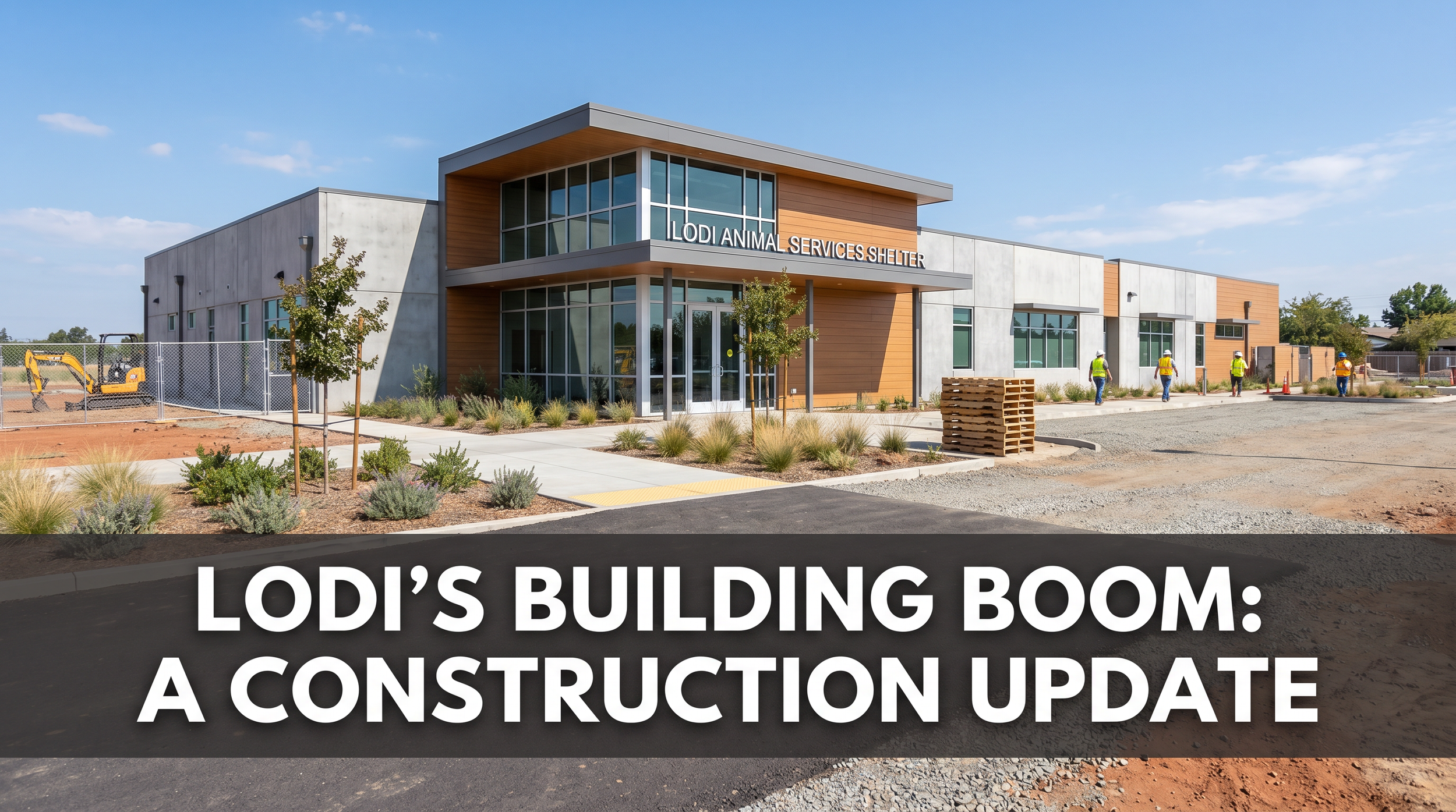
Lodi's Building Boom: A Construction Update
Lodi has more construction projects underway or in the pipeline than at any point in recent memory. A new animal shelter is weeks from opening. A 210-unit apartment complex is breaking ground on Kettleman Lane. A permanent homeless services center is nearing completion on Sacramento Street. A transitional housing project on Main Street just celebrated its grand opening. The city's Downtown Specific Plan was adopted by the City Council in early June, setting a new framework for everything built in the historic core going forward. This report surveys the full landscape of active and emerging development projects reshaping Lodi in 2026.

Filling In or Spreading Out: How Should Lodi Grow?
As Lodi weighs annexation applications like the ~95-acre Westside “F” against downtown housing under its Downtown Specific Plan, this analysis compares infill and greenfield growth across four lenses: the impact on current residents, the city budget, city infrastructure, and how each maps onto Lodi’s published development plans. Across all four, infill carries lower long-term risk — it shares benefits with existing residents, repays its infrastructure faster, returns far more revenue per serviced acre, and reuses systems already in the ground — while greenfield extends a permanent area of pipes and roads the city must keep up — serving only the new subdivision.
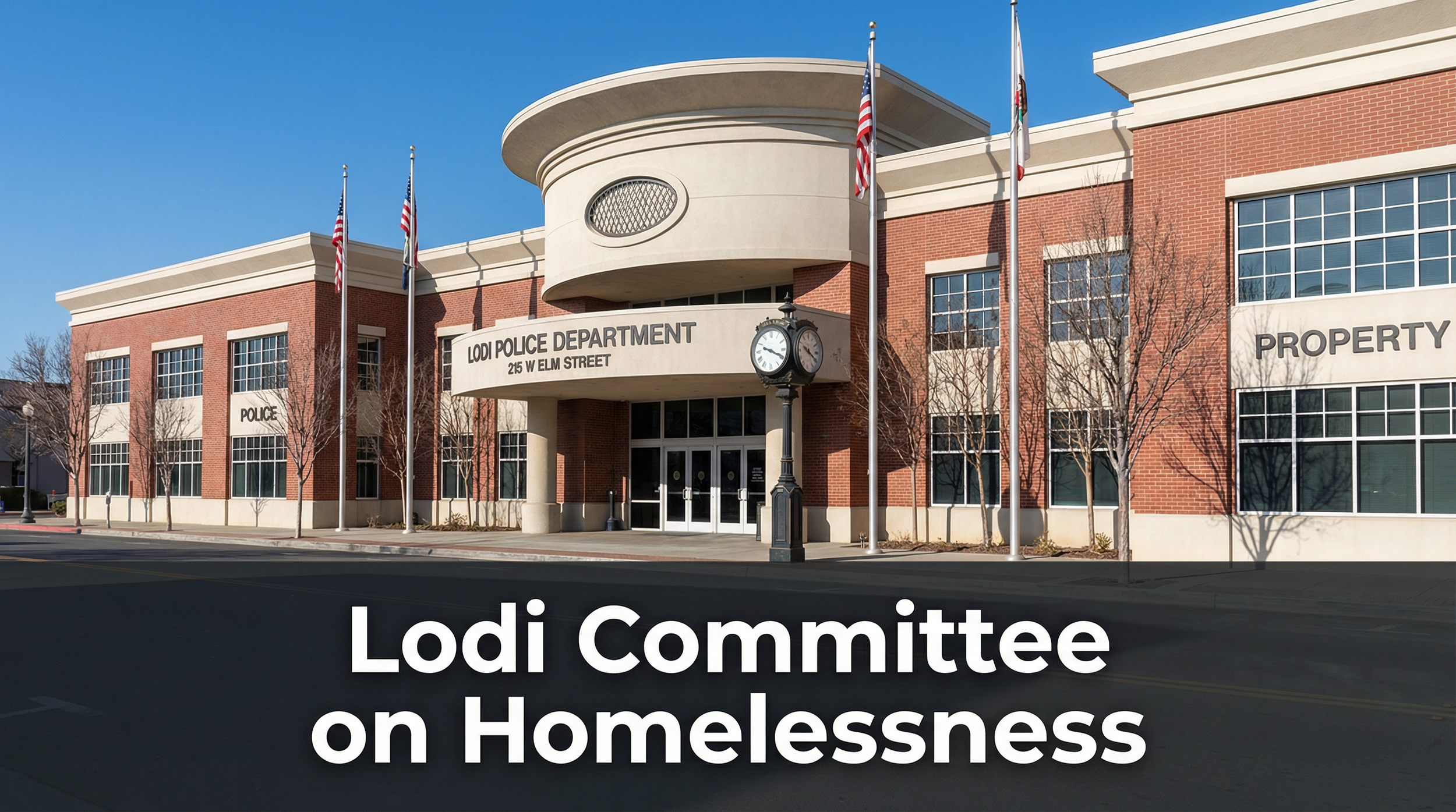
Lodi Committee on Homelessness - June 11, 2026
The Lodi Committee on Homelessness (LCOH) meets June 11, 2026 to review May 2026 reports from eight service providers and six subcommittees. The headline figure is the 2026 Point-In-Time Count, which found unsheltered individuals in San Joaquin County fell 47% (down 1,631) while sheltered individuals rose 16% since 2024. The Lodi Access Center remains the operational hub, delivering roughly 3,400 services per month and facilitating employment for 75 clients since January 2025. Key transitions include the Salvation Army leadership change (Major Pease transferring to Alameda) and Lodi House extending its transitional-housing stay limit from two to three years effective July 1.

Lodi’s Housing Market: Today and Tomorrow
Lodi’s housing market has cooled into balanced territory in 2026, with prices flat-to-down, homes taking longer to sell, and a development pipeline that leans heavily on new construction in the city’s northwest. The typical home is valued around $500,000–$520,000, down roughly 3% year-over-year, and the market has shifted decisively away from the seller’s advantage of recent years. Looking ahead, more than 500 multifamily and senior units are in the pipeline, while the city’s longer-term growth runs through two active annexations and a Sphere of Influence with residential capacity through roughly 2036–2037.

Lodi Wine & Grape Market Update: Gallo's Crush Suspension Lands on a 26-Year Low
E. & J. Gallo Winery's suspension of crush operations at its Turner Road West facility in Lodi — roughly 20 jobs — is a modest event that lands on a stark backdrop. California's 2025 wine grape harvest was the smallest in a generation, and Lodi's District 11 absorbed a steeper decline than the state as a whole. The closure is less a turning point than a marker of where the industry's structural correction now stands.
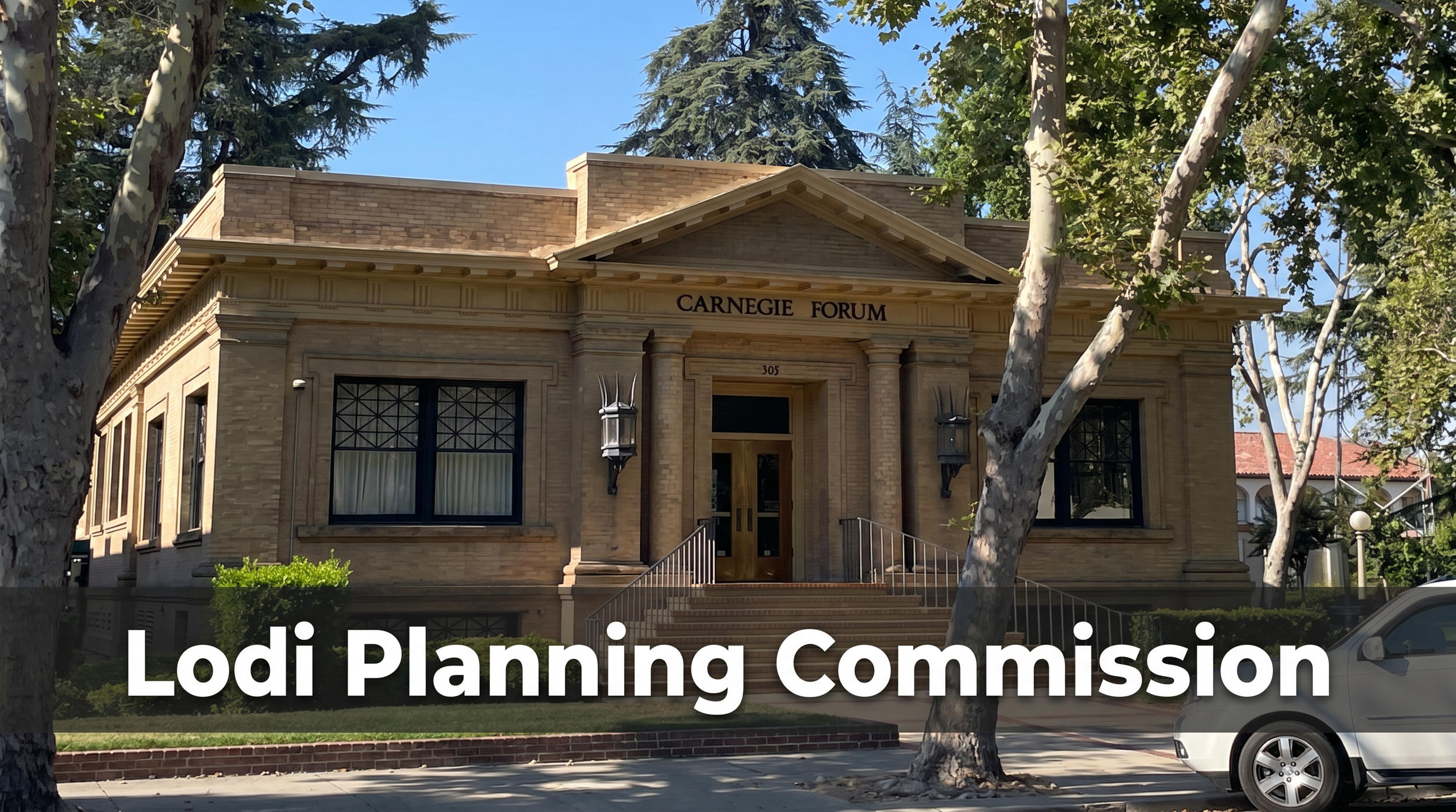
Lodi Planning Commission - June 10, 2026
The June 10, 2026 Regular Planning Commission meeting carries a light agenda anchored by a single public hearing — a Tentative Parcel Map (PL2026-005) to split one Downtown Mixed Use parcel at 116 West Lockeford Street into two lots. The packet also bundles two sets of prior minutes for approval (May 13 and May 27, 2026), the latter of which advanced a significant rewrite of the City's mobile food vending rules under Municipal Code Chapter 9.18, including removal of the long-standing 25-vendor cap.
Heads-up on scheduling: the June 24 and July 8, 2026 Planning Commission meetings are cancelled, and a special City Council meeting on annexations was set for June 9, 2026 at 6 p.m.
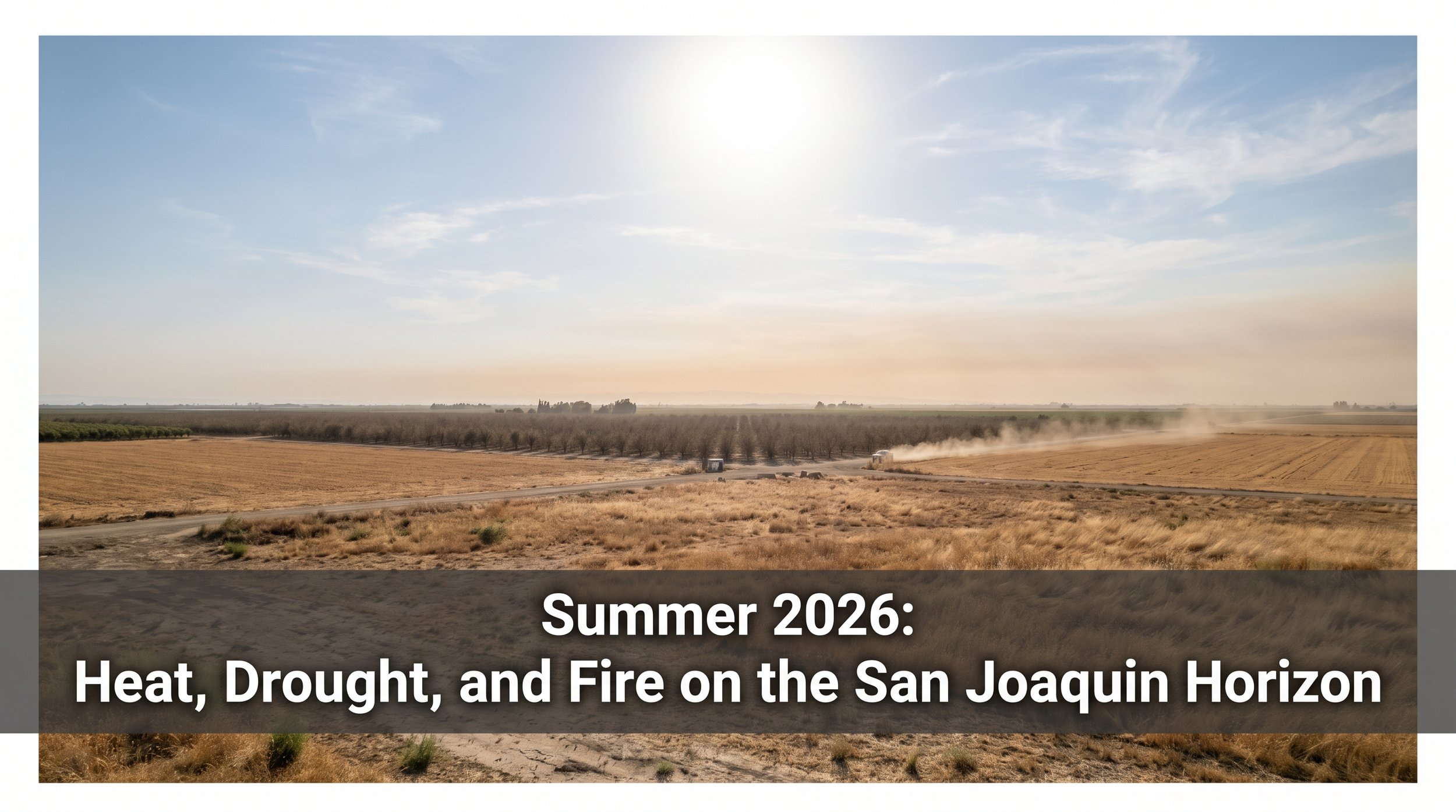
Summer 2026: Heat, Drought, and Fire on the San Joaquin Horizon
A dry winter, an early-melting Sierra snowpack, and an El Niño taking shape in the Pacific have set up a hot, fire-prone summer for the Central Valley. Forecasters expect hotter-than-normal temperatures across California through August and a higher-than-normal risk of large wildfires in northern California from July into September. Reservoir storage offers a cushion, but residents should expect more triple-digit days, warmer nights, and elevated air-quality and fire risk, while growers face tighter water and a fire window that overlaps the Lodi grape harvest.

Lodi Finance Committee - June 10, 2026
The Lodi Finance Committee meets in special session on June 10, 2026 to take up a single substantive item: a comprehensive redline overhaul of the City's Purchasing Policy, last revised May 20, 2022. The new June 4, 2026 draft raises the City Manager's signature authority to $80,000 plus an annual CPI escalator, creates a new 5% local vendor preference (capped at $50,000), lifts public-works and vehicle thresholds, strengthens documentation rules, and adds a new federal-grant procurement section to comply with 2 CFR Part 200 (Uniform Guidance). The Committee will also approve the April 15, 2026 minutes.
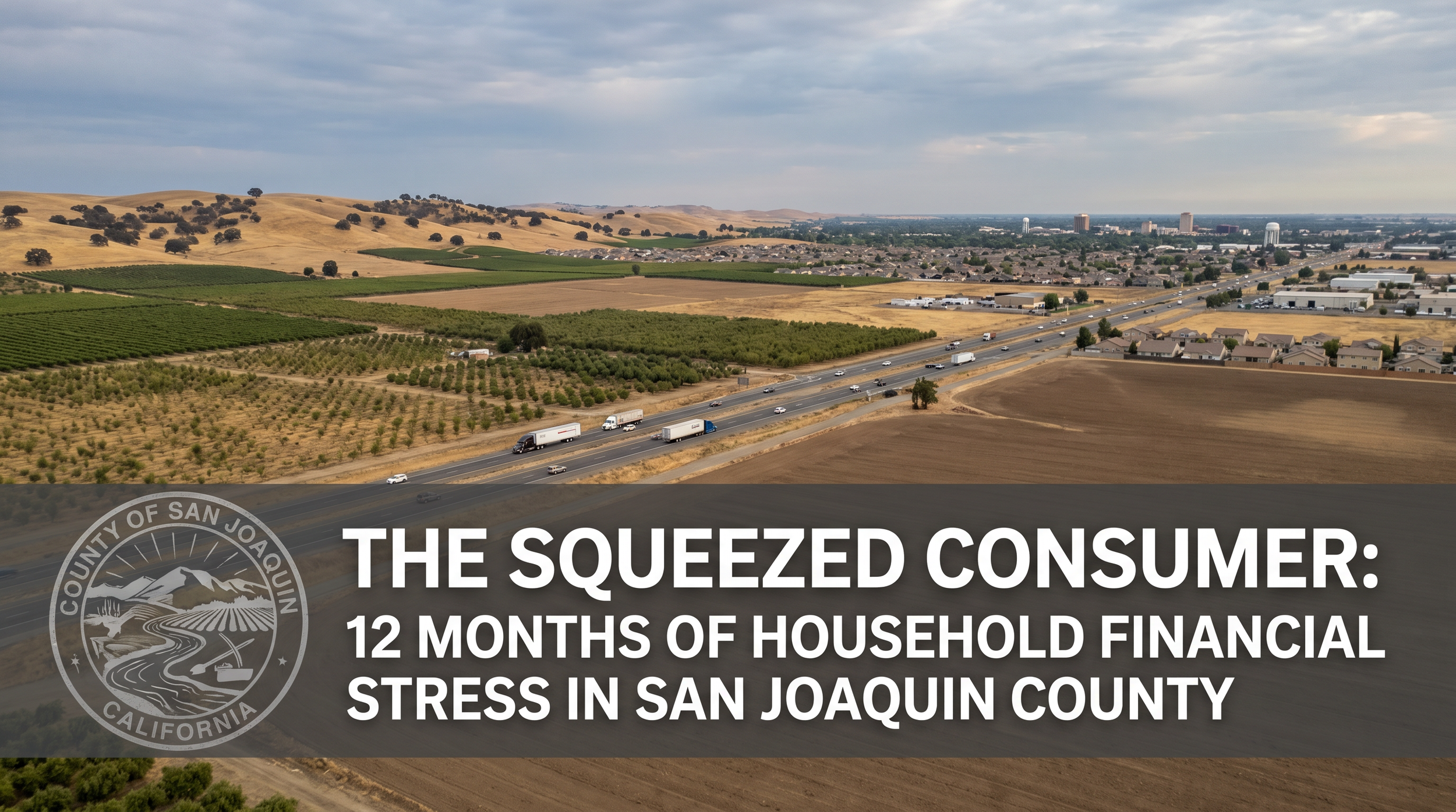
The Squeezed Consumer: 12 Months of Household Financial Stress in San Joaquin County
Over the past year, American consumers saved less, borrowed near-record amounts, and held back on home purchases — a national pattern that lands with extra force in San Joaquin County, where median household income trails the state and unemployment has stayed above 6%. The US personal saving rate fell to just 2.6% in April 2026, credit card balances peaked near $1.27 trillion, and mortgage applications stayed weak and rate-sensitive. This briefing charts those four trends and translates them into ramifications for Lodi, with a closing deep dive on the farmworker households where the squeeze is most acute and least visible in official data.
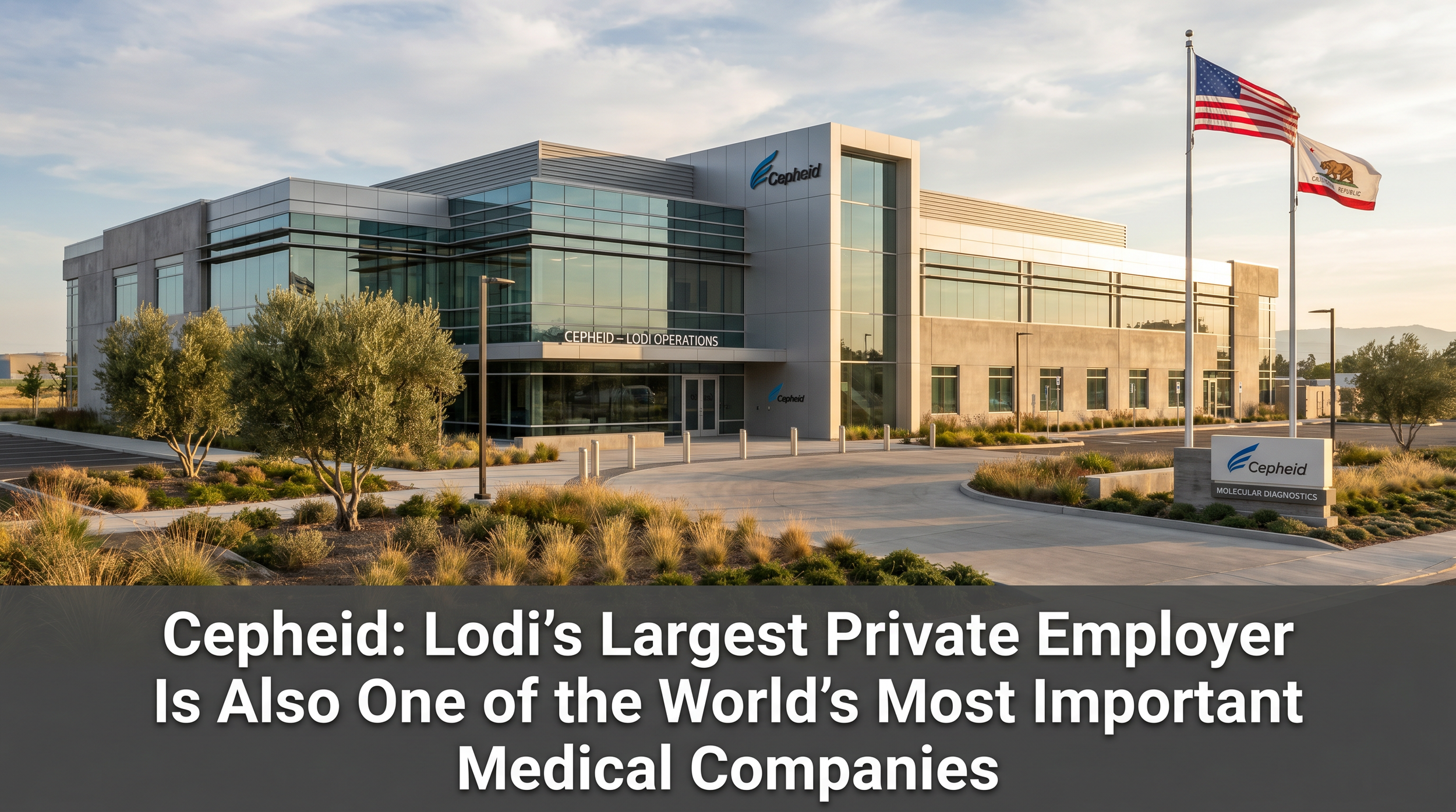
Cepheid: Lodi’s Largest Private Employer Is Also One of the World’s Most Important Medical Companies
On May 28, 2026, Cepheid held the grand opening of Building 5 on its North Guild Avenue campus — the final phase of a multi-year, $200+ million expansion that has made Lodi the company’s primary U.S. manufacturing hub. Cepheid makes the diagnostic test cartridges used in more than 180 countries to detect tuberculosis, COVID-19, MRSA, HIV, and dozens of other infectious diseases. It is a wholly owned subsidiary of Danaher Corporation and is Lodi’s largest private employer. Roughly 40% of Cepheid Lodi jobs pay at or above the Lodi median household income as a single earner’s salary — an unusually high proportion for a Central Valley manufacturing campus. The company is navigating a leadership transition following President Vitor Rocha’s April 2026 departure.

Rivers, Drought, and the 2026 Growing Season
The 2026 water year has produced the worst spring drought in the modern U.S. record. By mid-May, just over half the country — and more than 60 percent of the Lower 48 — sat in drought, according to the U.S. Drought Monitor. Behind the dryness is a single dominant driver across the West: a mountain snowpack that largely failed to arrive, then melted weeks early. This report follows that thread from the high country to the major rivers, into the drought maps of the states those rivers touch, and out to the farm gate, where the costs are now being counted.
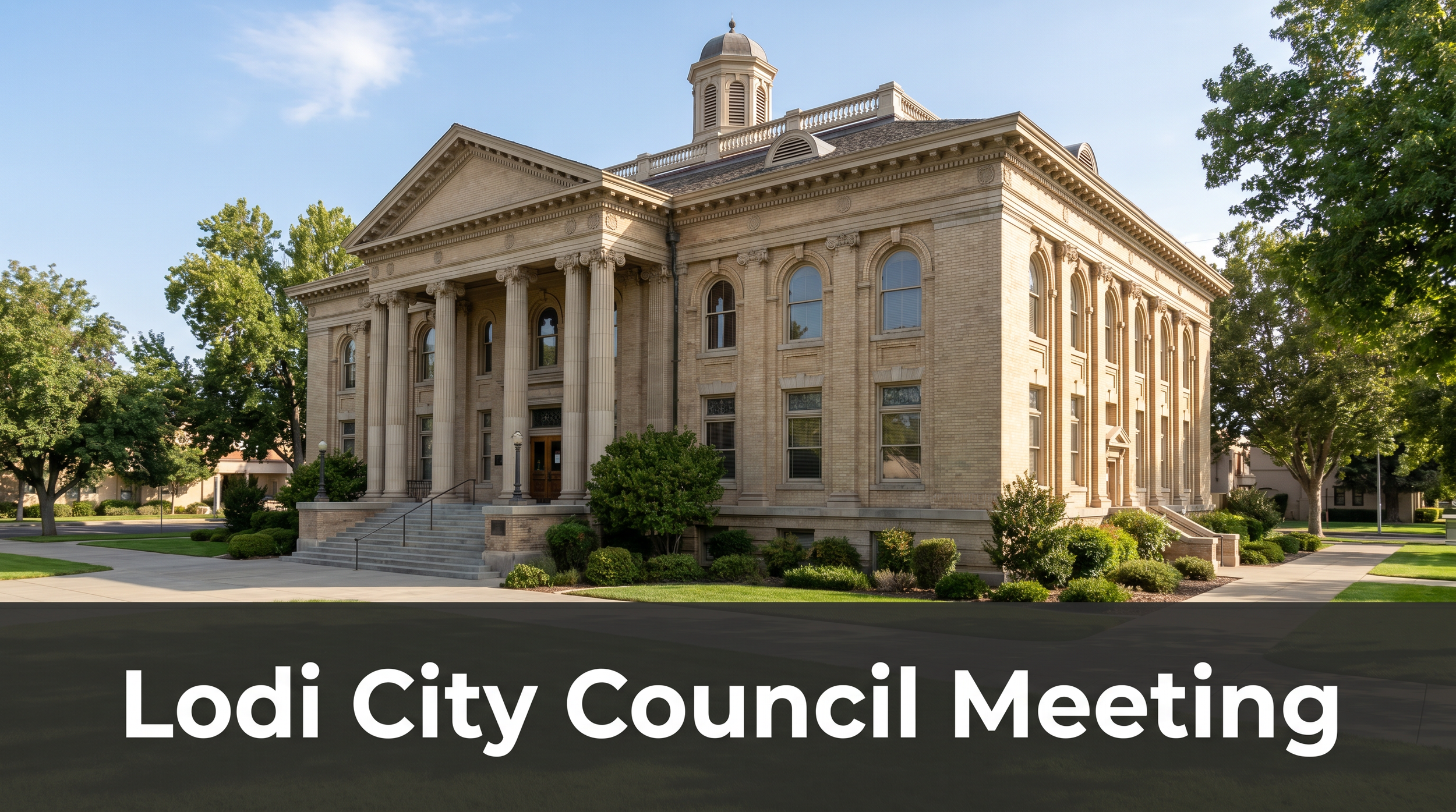
Lodi City Council Agenda - June 3, 2026
The June 3 meeting opens with a 6:30 p.m. closed session on existing litigation (Scott R. Carney v. City of Lodi), then a 7:00 p.m. open session with a heavy policy load. The headline item is the public hearing to adopt the Downtown Specific Plan (DTSP) — a long-range visioning and implementation framework for downtown and the Main Street corridor east of the railroad. Two other public hearings cover the 2026-27 CDBG Annual Action Plan ($665,263 in federal funds) and the annual Military Equipment Use Policy review required under AB 481.
The 13-item Consent Calendar is dominated by professional-services contracts, led by a $2.39 million five-year energy-efficiency administration contract and a $176,268 website-hosting agreement that is actually a renegotiated savings of about $66,000. The Regular Calendar includes a $70,192 funding request from the Downtown Lodi Business Alliance and the FY 2026/27 General Fund and Measure L budget presentation (draft budget ~$96.5 million). The lone ordinance is the second reading of Ordinance No. 2047, a development agreement allowing Rogers Media to install three programmable electronic signs on city property.

The Regional Climate Plan and Lodi's Opportunity
San Joaquin County now has its first coordinated, county-wide climate plan. The Stockton Metropolitan Statistical Area Comprehensive Climate Action and Adaptation Plan, known as the CCAAP, was drafted in March 2026 under the U.S. Environmental Protection Agency's Climate Pollution Reduction Grants program, with the City of Stockton serving as the grant recipient and lead author. The plan covers the entire MSA, which is the county itself: Escalon, Lathrop, Lodi, Manteca, Mountain House, Ripon, Stockton, Tracy, and the unincorporated areas, spanning roughly 1,392 square miles and more than 780,000 residents.
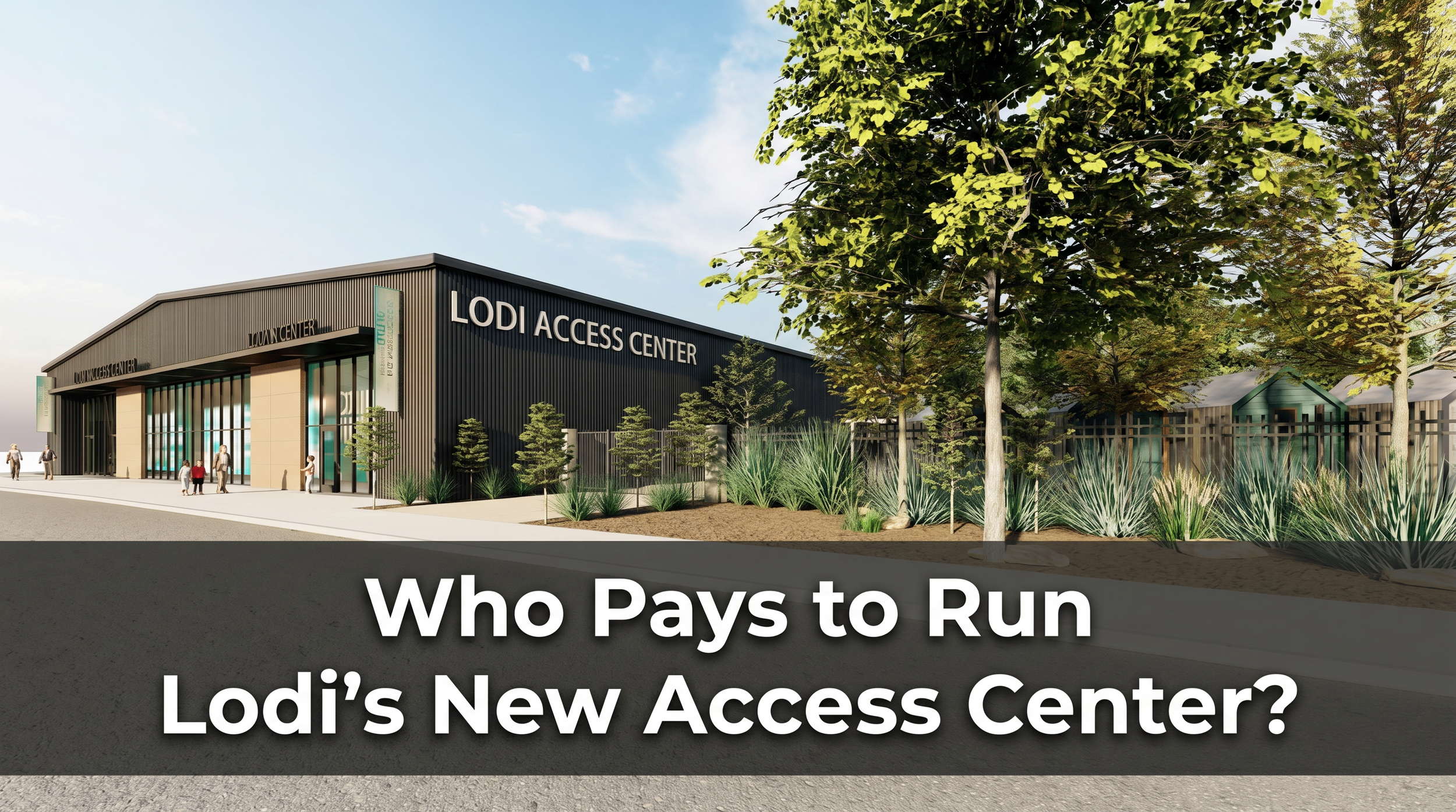
Who Pays to Run Lodi’s New Access Center?
Lodi’s new Access Center, a shelter and services hub for people experiencing homelessness, is expected to open later this year. Operating it will cost an estimated $2 million a year, and the city has identified about one year of funding to cover those costs. A proposal for San Joaquin County to take over the center is already under discussion.

Who Pays to Keep the Lights On? Data Centers, EVs, and the Grid's New Era in California and Lodi
After two decades of flat electricity demand, the American power grid has hit an inflection point. Artificial-intelligence data centers, a wave of electric vehicles, and a generation mix tilting toward solar and wind are changing both how much power the country needs and the architecture of the system that delivers it. The hardest question is not whether the lights stay on, but who pays to keep them on — and whether ordinary households can still afford the bill. Nowhere is that question sharper than in California, and the answer looks different depending on which side of a city limit you live on.
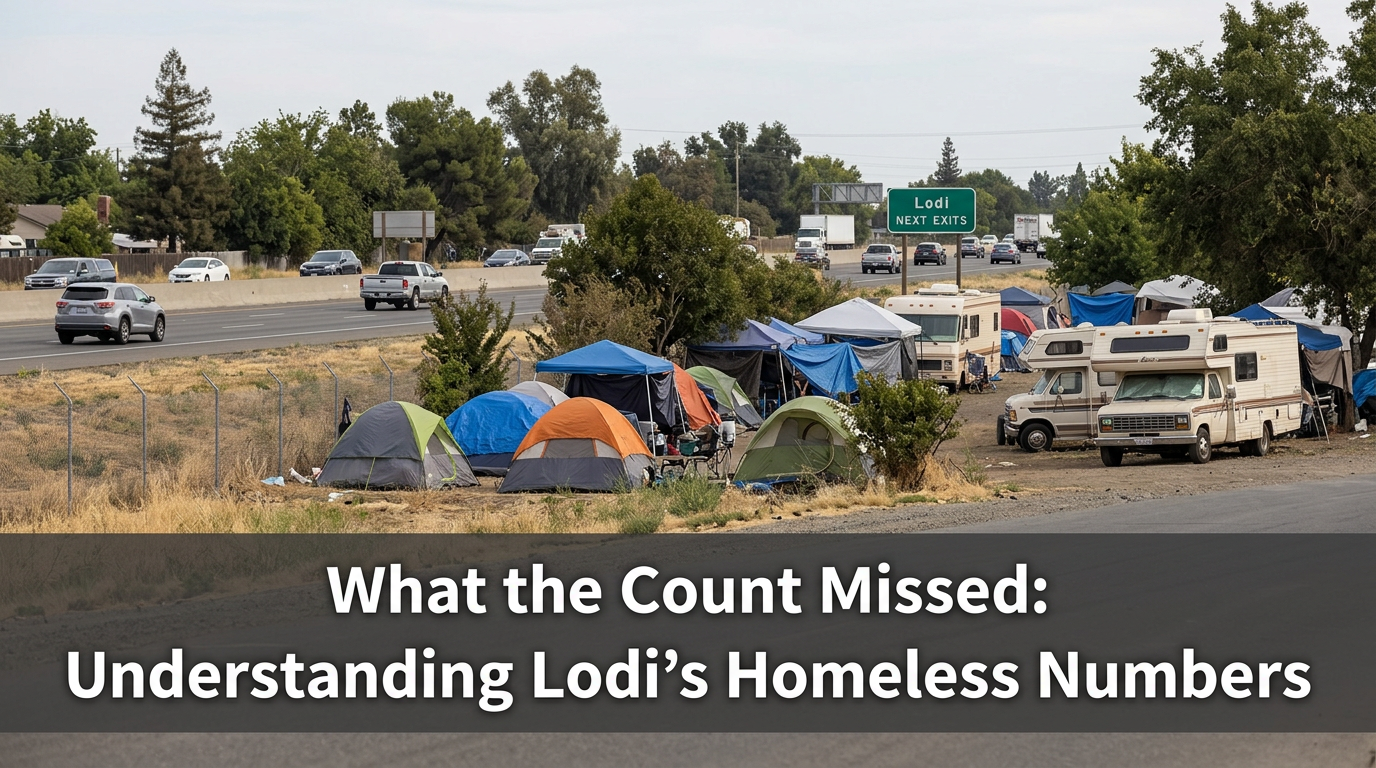
What the Count Missed: Understanding Lodi’s Homeless Numbers
San Joaquin County's Continuum of Care released topline results from its January 27, 2026 Point-in-Time Count on May 11, 2026, reporting 3,306 people experiencing homelessness countywide — a 30% drop from the 2024 total of 4,732. Unsheltered homelessness fell 47% to 1,838; sheltered homelessness rose 16% to 1,468. Those numbers are newsworthy. But they also need context: even a current, well-run PIT count only captures the most visible and narrowly defined slice of homelessness. This explainer documents what the count says, what it doesn’t say, and what Lodi readers should ask before taking any headline figure at face value.
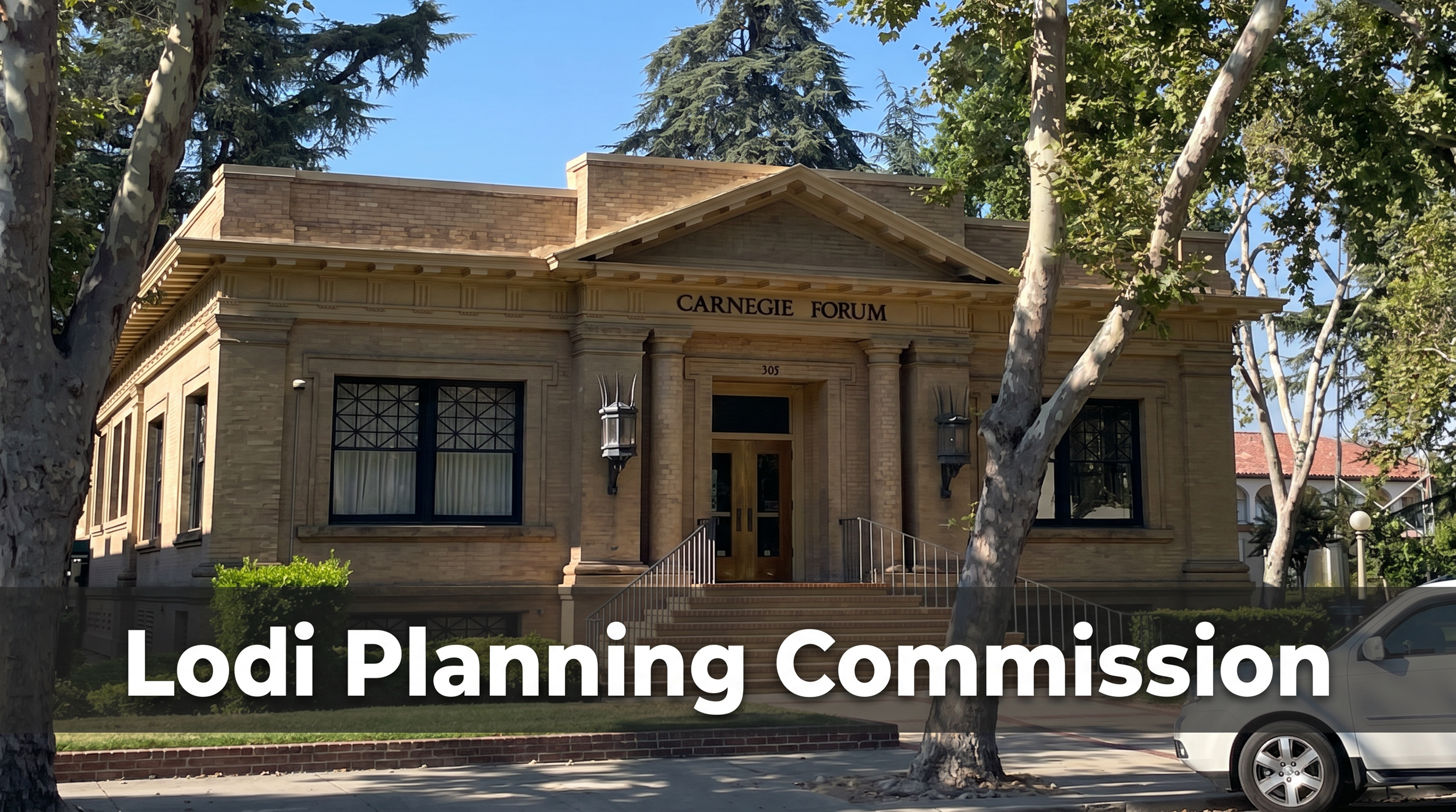
Lodi Planning Commission - May 27, 2026
The Lodi Planning Commission meets Wednesday, May 27 with a single, consequential public hearing: a top-to-bottom rewrite of Lodi Municipal Code Chapter 9.18, the city's mobile food vending ordinance. Staff is asking commissioners to recommend that City Council eliminate the population-based cap on food trucks (currently roughly 25 citywide), ban mobile food vendors west of the Union Pacific Railroad tracks in the historic downtown core, and add new noise, residential-interface, and operational standards. The packet also asks the Commission to approve the May 13 minutes, which document a unanimous 6–0 recommendation to enter into a Development Agreement with Rogers Media for three city-property electronic message signs.
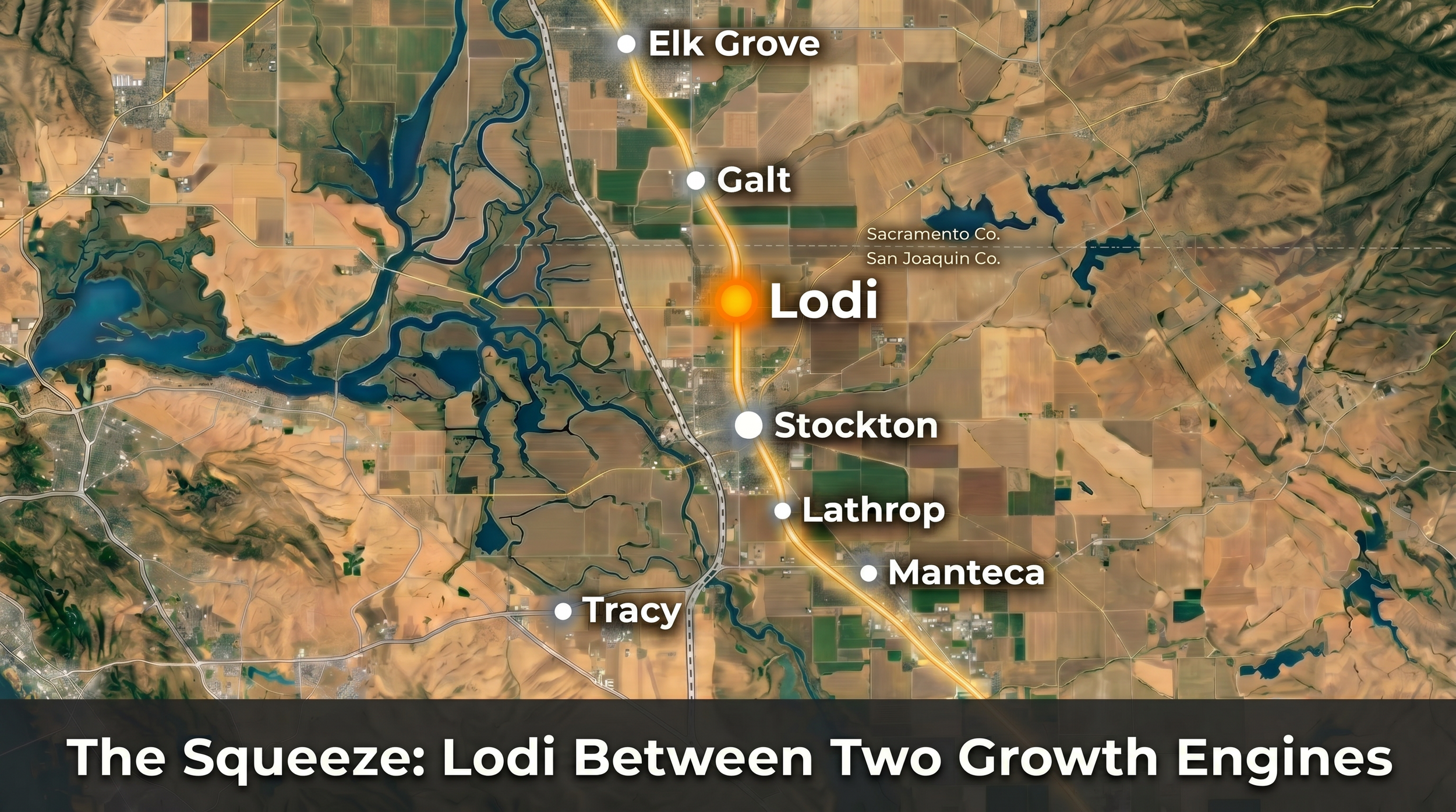
The Squeeze: Lodi Between Two Growth Engines
Lodi has two big plans on the table. One is meant to grow the local economy. The other is meant to revitalize downtown. Both rest on assumptions about regional growth that the numbers no longer support. Over the last six years, California's official population data show Lathrop growing 42.7% while Lodi grew 3.6%. Lodi's housing stock is growing almost twice as fast as its population — a signal worth paying attention to on its own. Meanwhile, every city around Lodi — Manteca, Lathrop, Tracy, Elk Grove, Galt, and Stockton — has its own plan, and those plans are actively competing for the same residents, employers, and state funding Lodi's plans assume the city can attract.
This report identifies which specific parts of the Economic Development Strategic Plan (EDSP) and the Downtown Specific Plan (DSP) are most exposed to what neighboring cities are doing, points out where the plans' description of the broader economy and Lodi's own business profile does not match the available data, and offers residents and city officials a shared factual basis for the conversation about what Lodi's plans need to address head-on.
What Lodi Can Do About Its Budget Gap
When Lodi's budget shortfall comes up at Council meetings or in conversation around town, the choices usually get framed as just two: cut services and staff, or raise taxes. Both are real options, but they aren't the whole list. California cities have a substantially broader toolkit, and most of those tools sit between "cut" and "tax" rather than alongside them.
This report walks through what's actually available. We cover five categories of tools — plus an important clarification about Lodi's pension reserves, which often get described inaccurately in public discussion. For each tool, we cover what it solves, who has to approve it, and what it costs in the long run. None of these tools fixes Lodi's budget gap by itself, and several that look attractive at first turn out to carry hidden costs. But taken together, the categories describe what the City can actually do — and that's a better starting point for a public conversation than a forced choice between cuts to services or city staff and increasing taxes.

The Lodi Armory: A Chronological History, Architecture, and Primary-Source Record, 1910–2026
The National Guard Armory at 333 N. Washington Street is Lodi's most architecturally and historically layered civic building. Built in 1936 under the Works Progress Administration, it is a board-formed reinforced-concrete structure in the Spanish Revival style — one of roughly ten state-owned California National Guard armories built in that era. It served as the home station of the artillery unit that became Alpha Battery, 1st Battalion, 143rd Field Artillery Regiment, for nearly ninety years, while simultaneously operating as the city's primary indoor public gathering space for recreation, concerts, dances, and community events.